
Baking Soda and Vinegar Science Experiment for Kids
This experiment shows kids a real acid-base reaction that produces carbon dioxide gas and visible foam. With simple measurements and an open container, it becomes a safe, repeatable chemistry lesson.
The baking soda and vinegar science experiment is a simple way to show kids how a real chemical reaction works. It is also a useful home or classroom activity because the results are easy to see, easy to repeat, and easy to discuss.
- Real chemistry: Baking soda and vinegar react to make carbon dioxide gas, not just “volcano” foam.
- Best setup: Use an open container on a tray so the reaction stays visible and controlled.
- What to watch: Bubbles, foam height, reaction speed, and leftover residue all help explain the science.
- Common issue: Too much baking soda or too little vinegar weakens the result and leaves powder.
- Learning value: The experiment works best when kids predict, observe, compare, and repeat one variable at.
What the Baking Soda and Vinegar Science Experiment Actually Teaches Kids
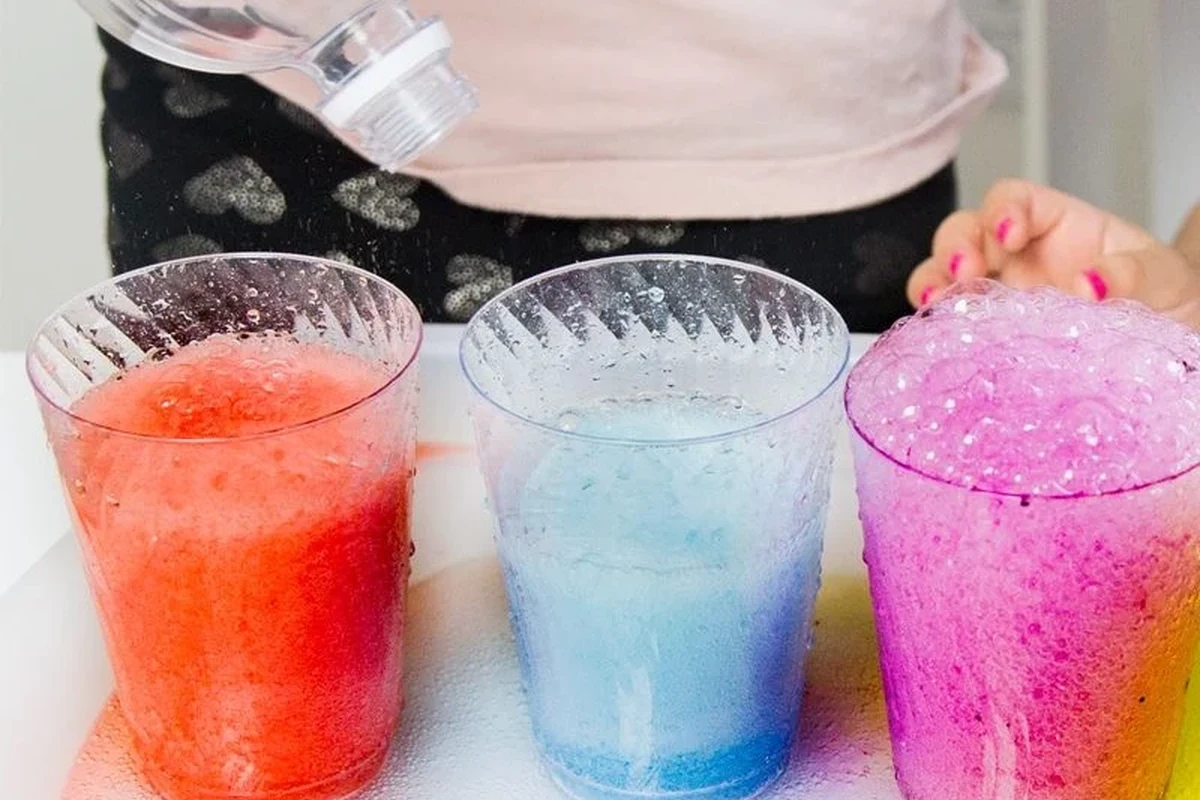
This classic activity is more than a kitchen trick. It demonstrates how two common ingredients can react to form a new substance and a gas, which is the heart of many basic chemistry lessons.
Why this classic reaction is a real chemistry lesson, not just a “volcano” trick
When baking soda meets vinegar, the mixture reacts immediately and produces carbon dioxide gas. That gas is what creates the fizz, foam, and rising action that children usually notice first.
For a deeper explanation of the reaction itself, see our article on the baking soda and vinegar reaction explained simply. This experiment is useful because it turns an invisible process into something children can watch in real time.
What children can observe: gas production, foaming, pressure, and reaction speed
Kids can see bubbles forming almost right away, then foam expanding as gas escapes through the liquid. In a closed container, that gas would build pressure, which is why this experiment should always be done in an open setup.
They can also compare how fast the reaction starts, how high the foam rises, and how long the fizz lasts. Those observations help children connect what they see with what is happening at the particle level.
Baking soda is sodium bicarbonate, a base, and vinegar is a dilute acid. Their reaction releases carbon dioxide, which is the same gas that helps some baked goods rise when the right leavening system is used.
Simple Materials, Measurements, and Safe Setup for Home or Classroom Use
You do not need special equipment for this experiment, but a careful setup makes the reaction easier to observe and easier to clean up. A tray, bowl, or shallow pan can help contain spills and foam.
Ingredient roles: baking soda, vinegar, containers, food coloring, and optional add-ins
Baking soda is the solid ingredient that reacts when it meets vinegar. Vinegar provides the acid that starts the reaction, while the container holds the mixture long enough for the foam to build.
Food coloring can make the reaction more visually engaging, but it does not change the chemistry in any meaningful way. Optional add-ins like dish soap can create thicker foam, though that changes the experiment from a pure reaction demo into more of a sensory activity.
If your goal is chemistry observation, keep the ingredient list simple. Extra ingredients can make the foam look more dramatic, but they can also make it harder for children to tell what the baking soda and vinegar are doing.
Recommended ratios for different ages and how changing amounts changes the result
For young children, a small amount is usually enough to show the reaction clearly. A common starting point is a few spoonfuls of baking soda with enough vinegar to cover it and start a visible fizz, but exact amounts can vary by container size and the level of foam you want.
More vinegar usually makes the reaction move faster and look wetter, while extra baking soda can leave some powder behind after the fizz ends. If you want the reaction to last a little longer, add the vinegar gradually instead of all at once.
Do not seal the container. Carbon dioxide builds pressure quickly, and a closed bottle or jar can burst or spray liquid unexpectedly.
Safety basics: eye protection, spill control, and adult supervision
Use eye protection if children are working close to the container, especially in a classroom or with eager hands. Keep the experiment on a tray or washable surface so the foam has somewhere to go if it overflows.
Adult supervision is important for younger children because vinegar can sting eyes and the setup can tip over. If the experiment is done near food-prep areas, clean the surface afterward before using it for baking.
Use only household vinegar and baking soda for the demo. Do not mix them with bleach, ammonia, or other cleaners, and do not let children taste the mixture.
Step-by-Step Experiment Outline for a Clear, Repeatable Reaction
A repeatable setup helps kids notice cause and effect instead of treating the reaction like a one-time surprise. Small, consistent measurements make it easier to compare results across different trials.
Preparing the workspace and predicting what will happen before mixing
Place the container on a tray and set all ingredients nearby before starting. Ask children to predict what they think will happen, how fast it will start, and whether the foam will rise above the rim.
This prediction step matters because it turns the activity into an observation exercise. It also encourages children to notice that science begins with a question, not just with a reaction.
- Cover the work area with a tray or washable mat
- Measure ingredients before mixing
- Keep towels nearby for spills
- Make sure the container is open and stable
Combining ingredients to create the reaction and observing the foam rise
Add the baking soda to the container first, then pour in the vinegar. The reaction should start almost immediately, with bubbling followed by a foamy rise.
If you want a more controlled result, pour the vinegar slowly. If you want a faster burst, add it all at once and step back to watch the foam expand.
Place the measured baking soda in the container and level it lightly if needed.
Add vinegar steadily and watch for bubbling, fizzing, and foam growth.
Notice when the bubbling slows and how much residue is left behind.
Recording results with timing, volume changes, and visual notes
Older children can time how long the reaction stays active or estimate how high the foam rises. Simple notes like “started fast,” “rose over the rim,” or “left white residue” are useful and easy to compare.
If you repeat the experiment, change only one variable at a time. That makes it much easier to understand what caused the difference in the result.
How to Explain the Science in Kid-Friendly Terms
The best explanation is short, accurate, and tied to what children can see. You do not need advanced chemistry language to make the lesson meaningful.
Acid and base interaction in age-appropriate language
You can explain that vinegar is an acid and baking soda is a base, and when they meet, they react with each other. A useful kid-friendly version is: “They are different ingredients that don’t stay the same after mixing.”
This is also a good place to compare it with baking, where chemical reactions can change texture and structure in a batter or dough. If you want to understand ingredient swaps in baking, our guide on using baking soda instead of baking powder safely explains why the right leavening matters.
Carbon dioxide gas: why bubbles form and why the mixture expands
The bubbles are carbon dioxide gas escaping through the liquid. As more gas forms, it pushes the liquid and foam upward, which is why the mixture appears to grow.
The foam is not magic and it is not air from nowhere. It is the visible result of a gas being made during the reaction and trapped long enough to pile up in the container.
What changes when temperature, container size, or ingredient amounts vary
Warmer liquids often react a little faster because particles move more easily, though the effect is usually modest in a simple home demo. A wider container may spread the foam out, while a narrow one can make the reaction look taller and more dramatic.
Ingredient amounts also matter. Too little vinegar can leave baking soda unused, while too much vinegar can make the reaction look thin and watery instead of foamy.
Common Mistakes That Weaken the Experiment
Most disappointing results come from setup issues, not from the ingredients themselves. A few small corrections usually make the reaction much clearer.
Using too little vinegar or too much baking soda
If there is not enough vinegar, some baking soda will remain dry or clumpy and the fizz will stop early. If there is too much baking soda, the reaction may look weak because there is not enough acid to react with all of it.
The mixture fizzed briefly, then stopped with powder left in the container.
Add a little more vinegar and stir gently if needed. Next time, reduce the baking soda or increase the vinegar slightly so the ratio is more balanced.
Choosing the wrong container shape or forgetting to prep for overflow
A very small cup can overflow too quickly, while a very wide dish may make the foam spread out instead of rise. The best choice depends on the effect you want to show.
For a classroom demo, use a tray under the container so the reaction stays contained even if it climbs higher than expected. If you are also interested in household cleanup uses, our article on baking soda vinegar cleaning ovens explains a different practical application of the same ingredients.
Adding extra materials that distract from the main reaction
Dish soap, glitter, or too much coloring can make the experiment look exciting, but they can also hide the chemistry. If the goal is learning, keep the setup simple enough that children can focus on the gas production and foam.
Once children understand the basic reaction, you can add decorative elements in a second round as a comparison.
- Use a simple setup first
- Change one variable at a time
- Keep the container open
- Overfilling the container
- Sealing the reaction in a jar
- Mixing in unrelated cleaners
Creative Variations for Different Ages and Learning Goals
Once children understand the basic reaction, you can adapt the experiment to match age, attention span, and learning goals. The key is to keep the core chemistry visible.
Colorful sensory versions for preschool and early elementary learners
For younger children, use a shallow dish, a small amount of baking soda, and a little colored vinegar. The bright color and quick fizz provide a strong sensory experience without requiring a long explanation.
At this age, the main goal is noticing that mixing two ingredients can create an exciting change. Keep the language simple and the reaction small.
Measurement-based versions for older kids focused on observation and comparison
Older children can measure ingredient amounts, record reaction time, and compare different container shapes. They can also test whether cold or room-temperature vinegar changes the speed of the fizz in a noticeable way.
This version works well for building observation skills because it encourages careful note-taking. It also helps children learn that good science depends on repeatable methods.
Mini challenges: fastest reaction, tallest foam, and controlled repeats
You can turn the demo into a small challenge by asking which setup makes the foam rise fastest or highest. Just make sure each trial uses the same container and the same measuring method if you want a fair comparison.
A controlled repeat is often more educational than a dramatic one-off burst. It shows that science is about testing ideas, not just creating a mess.
Cleanup, Storage, and Reusing Materials After the Experiment
Cleanup is simple, but it should still be done carefully. The leftover mixture is usually just a diluted, non-dangerous foam of water, dissolved salts, and leftover ingredients, but it should still be handled like any other messy kitchen project.
How to dispose of the mixture safely and clean work surfaces
Let the foam settle, then wipe up the area with a damp cloth or sponge. If there is a large amount of residue, rinse it down the sink with plenty of water unless your local rules say otherwise.
Wash hands after cleanup, especially before returning to food prep. If the experiment was done in a classroom, sanitize the work surface according to the school’s normal cleaning routine.
What can be reused, what should be discarded, and how to store supplies
Unused baking soda and vinegar can usually be stored for later use if the containers are sealed properly and kept in a cool, dry place. Any mixture that has already reacted should be discarded after the demo.
Reusable tools like trays, spoons, and measuring cups should be washed and dried before being put away. If you plan to do the activity again, keep a simple supply kit together so setup is faster next time.
Final Recap: When This Experiment Is Most Useful for Learning
The baking soda and vinegar science experiment is most useful when you want a fast, visual way to teach cause and effect. It works well at home, in classrooms, and as a first science fair-style demonstration because the reaction is easy to see and easy to discuss.
Best use cases for home learning, school demonstrations, and science fair introductions
At home, it is a low-cost activity that can open the door to conversations about chemistry in the kitchen. In school, it is helpful for introducing scientific observation, prediction, and comparison.
For a science fair introduction, it is best used as a starting point for a question such as how ingredient amounts or temperature affect reaction speed. That gives the experiment a purpose beyond the visual effect.
What parents and teachers should look for in a successful result
A successful result is not just a big foam eruption. It is a clear reaction that children can describe, measure, and repeat with small changes.
If kids can explain that baking soda and vinegar react to make carbon dioxide gas, then the experiment has done its job. For the most useful learning, keep the setup simple, the measurements consistent, and the discussion focused on what changed and why.
If you want the clearest teaching moment, run the experiment twice: once as a quick demo, then again with one changed variable such as container shape or vinegar amount. Comparing the two results helps children see that chemistry is predictable, not random.
Frequently Asked Questions
Start small so the reaction stays easy to control. The exact amount depends on the container size and how much foam you want, but the key is to keep the setup open and manageable.
Yes, but it changes the demo by making thicker foam. If your goal is to teach the chemistry clearly, try the plain version first before adding extras.
Baking soda and vinegar react to produce carbon dioxide gas. The gas forms bubbles that push the liquid upward and create foam.
It is generally simple and low-risk when supervised, but vinegar can irritate eyes and spills can be messy. Use an open container, protect the workspace, and keep children from tasting the mixture.
Check whether there is enough vinegar to react with the baking soda. A weak result often means the ratio is off or the container setup is not showing the foam clearly.
Yes, unused ingredients can usually be stored in their original containers if they are kept sealed and dry. Do not store the reacted mixture for reuse; clean it up after the activity.
