Baking soda can be part of a simple ant bait, but it works best for small indoor problems and not as a guaranteed fast fix. Use it with good placement, cleanup, and sealing entry points for better results.
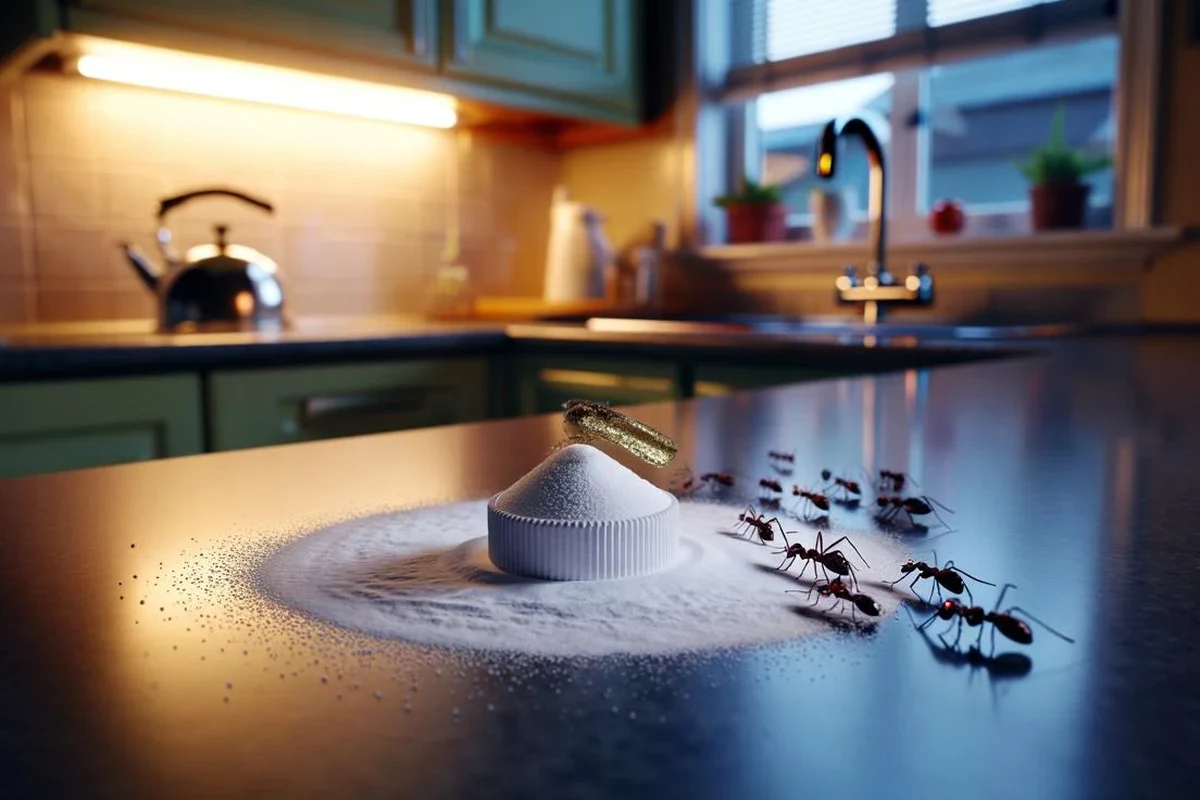
- Best use: Try baking soda with sugar near active ant trails, not as a stand-alone cure.
- Main limit: It is usually too weak for hidden nests or recurring infestations.
- Placement matters: Keep bait near entry points, baseboards, sinks, and pantry edges.
- Safety first: Keep bait away from food prep areas, children, pets, and moisture.
- Long-term fix: Pair baiting with cleaning, sealing gaps, and removing food sources.
Frequently Asked Questions
It may help as part of a bait setup, especially for small indoor trails. It is not a guaranteed solution for hidden colonies or larger infestations.
A common DIY method is equal parts baking soda and sugar. Place a small amount in a shallow dish near active ant trails.
Place it near entry points, baseboards, sinks, pantry edges, or along visible trails. Keep it away from food-prep areas and out of reach of children and pets.
Results, if any, are usually gradual rather than instant. Check the bait daily and watch for reduced activity over several days.
Baking soda alone is unlikely to be very effective. It is usually used with sugar to attract ants to the bait.
Call a professional if ants keep returning, appear in multiple rooms, or seem to be coming from walls or wood. Carpenter ants and recurring infestations often need more than DIY bait.
