
How to Choose a Cooking Oil: The Complete Guide
Walk down any grocery store aisle and you’ll find dozens of bottles claiming to be the “healthiest” or “best” cooking oil — olive, avocado, canola, coconut, sunflower, sesame, ghee, and more. The truth is there’s no single “best” oil for everything. The right choice depends on what you’re cooking, how hot your pan will get, and what flavor you want in the final dish. This guide breaks down exactly how to choose the right oil every time, without needing a chemistry degree.
Why Cooking Oil Choice Actually Matters
Cooking oil isn’t just a neutral medium that keeps food from sticking to the pan. It affects three things directly:
- Flavor — Some oils are bold and distinctive (sesame, extra virgin olive oil), while others are nearly flavorless (canola, refined vegetable oil).
- Nutrition — Oils vary widely in the type of fat they contain: saturated, monounsaturated, or polyunsaturated, along with micronutrients like vitamin E or antioxidants.
- Cooking performance — Every oil has a smoke point, the temperature at which it starts to break down, smoke, and produce compounds that taste bitter and may be harmful in large amounts over time. Using the wrong oil for high-heat cooking can ruin a dish and create unhealthy byproducts.
Getting these three factors right for each recipe is really what “choosing a cooking oil” comes down to.
Understanding Smoke Point First
The smoke point is the single most practical piece of information to know about any oil. Below is a general guide to smoke points for common oils:
- Extra virgin olive oil: 350–410°F (177–210°C) — best for low to medium heat
- Butter: 302°F (150°C) — low heat only
- Coconut oil (unrefined): 350°F (177°C) — medium heat
- Canola oil: 400–450°F (204–232°C) — medium to high heat
- Vegetable/sunflower oil (refined): 440–450°F (227–232°C) — high heat
- Peanut oil: 450°F (232°C) — high heat, great for frying
- Avocado oil (refined): 480–520°F (249–271°C) — very high heat, searing
- Ghee (clarified butter): 450–485°F (232–252°C) — high heat
A simple rule: the more processed and refined an oil is, the higher its smoke point tends to be, because refining removes the particles and compounds that burn easily. Unrefined, cold-pressed, or “virgin” oils have more flavor and nutrients but lower smoke points.
If you use an oil past its smoke point, it doesn’t just taste bad — it starts to break down into free radicals and a compound called acrolein, which is what causes that acrid smell and bitter taste. Repeatedly overheating oil, or reusing oil that has already been overheated, is one of the more avoidable mistakes in home cooking.
Matching Oil to Cooking Method
Deep Frying and Pan Frying
You want oil with a high smoke point that can hold up under sustained heat above 350°F without breaking down. Refined peanut oil, refined avocado oil, canola oil, and refined sunflower oil are all solid choices. Avoid extra virgin olive oil and unrefined coconut oil here — their low smoke points mean they’ll start smoking and turning bitter quickly.
Sautéing and Stir-Frying
Medium-high heat cooking (usually 350–400°F) gives you more flexibility. Canola oil, refined avocado oil, peanut oil, and even light or “pure” olive oil (not extra virgin) work well. For stir-fries specifically, many cooks like a neutral oil for the base cooking and add a small amount of toasted sesame oil at the very end for flavor, since sesame oil has a low smoke point and burns quickly.
Searing Meat
Searing requires very high, sustained heat to get a proper crust. Refined avocado oil and ghee are excellent because they can handle 450°F+ without smoking, and ghee in particular adds a rich, nutty flavor that pairs well with red meat.
Baking
Baking recipes usually call for a neutral oil so it doesn’t compete with other flavors in the batter. Canola, vegetable, or light olive oil are standard choices. Coconut oil is popular in baking too, but note it solidifies at room temperature, so recipes need to account for that.
Salad Dressings and Finishing
This is where flavor matters more than heat tolerance, since the oil isn’t being cooked. Extra virgin olive oil is the classic choice for its fruity, peppery notes. Walnut oil, toasted sesame oil, and unrefined avocado oil are also popular finishing oils because their delicate flavors and nutrients are best preserved when they’re never heated at all.
Roasting Vegetables
Roasting typically happens at 400–450°F, so you need something that can take the heat without breaking down, while ideally still adding some flavor. Avocado oil, canola oil, and refined olive oil (labeled “light” or “pure,” not “extra virgin”) all work well here.
Comparing Oils by Fat Type
Beyond smoke point, the nutritional profile of an oil comes down to its fat composition. Broadly:
- Monounsaturated fats — found in high amounts in olive oil, avocado oil, and canola oil. These are generally associated with heart-healthy benefits, particularly when they replace saturated fat in the diet.
- Polyunsaturated fats — found in sunflower, corn, soybean, and flaxseed oil. These include omega-3 and omega-6 fatty acids, which are essential fats the body can’t produce on its own, though the ratio between omega-6 and omega-3 in a diet matters for inflammation balance.
- Saturated fats — found in high concentration in coconut oil, palm oil, butter, and ghee. These are more heat-stable but are generally recommended to be consumed in moderation.
No oil is purely one type of fat — it’s always a mixture, and the label “healthy” or “unhealthy” oversimplifies what’s really a spectrum. For most people, rotating between a few oils rather than relying on just one is a reasonable approach: an extra virgin olive oil for dressings and low-heat cooking, a refined neutral oil (canola or avocado) for higher-heat cooking, and perhaps a specialty oil like sesame or walnut for flavor accents.
Refined vs. Unrefined: What the Label Actually Means
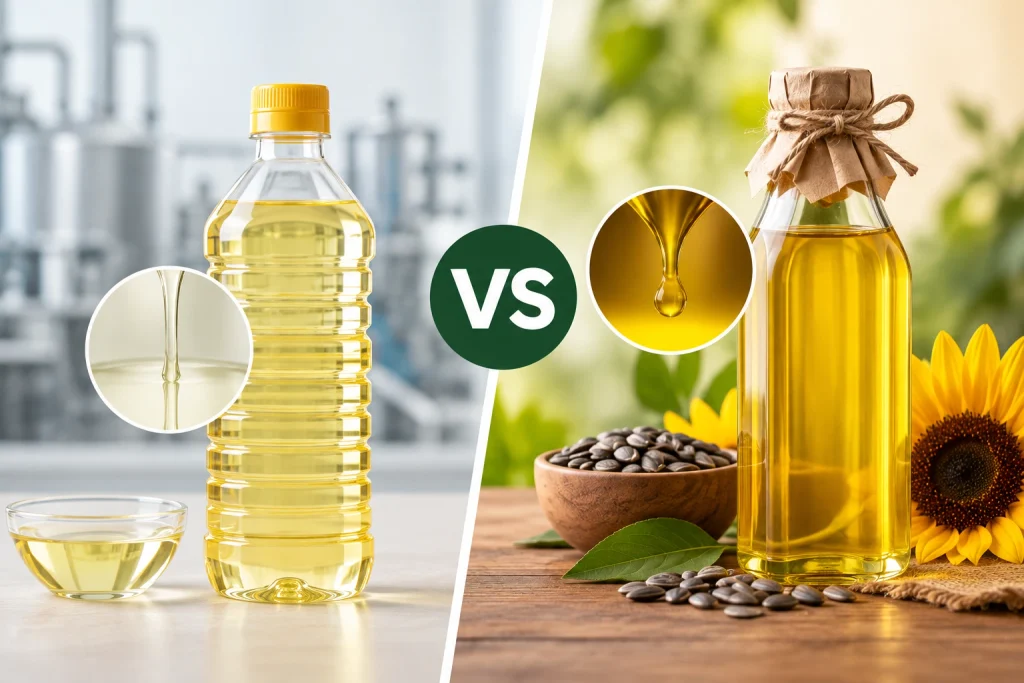
- Unrefined / cold-pressed / virgin oils are extracted mechanically, without heat or chemical solvents. This preserves more of the oil’s natural flavor, color, and micronutrients, but usually results in a lower smoke point and a shorter shelf life.
- Refined oils go through additional processing — often involving heat, filtration, or chemical extraction — to remove impurities. This raises the smoke point and extends shelf life, but strips out some flavor and nutrients along the way.
Neither is universally “better.” Refined oils are the practical choice for high-heat, everyday cooking. Unrefined oils shine when you want the oil’s distinct flavor to come through, such as drizzling olive oil over a finished dish or using unrefined coconut oil in a curry.
Reading the Bottle: What to Look For
When you’re standing in the store deciding between bottles, a few label details are worth checking:
- Cold-pressed or expeller-pressed — indicates minimal processing, generally a good sign for flavor and nutrient retention.
- Harvest or bottling date — oils degrade over time, especially once opened. Fresher is better, particularly for delicate oils like flaxseed or walnut oil.
- Packaging — dark glass bottles or tins protect oil from light-induced degradation better than clear plastic bottles.
- Certifications — labels like “extra virgin,” “organic,” or country-of-origin designations (like Italian DOP olive oil) can be indicators of quality control, though they don’t guarantee it on their own.
- Storage instructions — some oils, especially nut and seed oils, benefit from refrigeration after opening to slow rancidity.
Common Mistakes to Avoid
- Using extra virgin olive oil for deep frying. Its low smoke point means it’ll burn and turn bitter before your food is properly cooked.
- Reusing oil too many times. Each reuse lowers the smoke point further and increases the concentration of breakdown compounds. If you fry regularly, filter and store frying oil properly, and don’t reuse it more than a couple of times.
- Storing oil near the stove or in direct sunlight. Heat and light both accelerate rancidity. A cool, dark cupboard is better than a rack next to the burner.
- Assuming “vegetable oil” is one specific thing. It’s often a blend of soybean, corn, or canola oil, and the exact blend can vary between brands.
- Ignoring rancidity. Oil that smells sharp, sour, or “off” — rather than neutral or pleasantly nutty — has gone rancid and should be discarded, even if it’s before the printed expiration date.
A Simple Framework for Choosing
If you want a quick mental shortcut rather than memorizing smoke points, this three-question framework covers most situations:
- How hot will the pan get? Low heat (dressings, light sautéing) → unrefined or extra virgin oils are fine. High heat (frying, searing) → go refined and heat-stable.
- Do I want the oil’s flavor to show, or stay neutral? Want flavor → sesame, extra virgin olive oil, walnut oil. Want neutral → canola, refined avocado, refined sunflower.
- What’s the dish’s cultural context? Mediterranean dishes lean on olive oil, East Asian stir-fries often use sesame or peanut oil, Indian cooking frequently uses ghee or mustard oil, and Southeast Asian cooking often uses coconut oil. Matching the oil to the cuisine usually gets you the most authentic flavor.
Building a Practical Kitchen Oil Lineup
Most home cooks don’t need ten different oils. A practical, budget-conscious lineup covers nearly every situation:
- One neutral, high-smoke-point oil for everyday high-heat cooking (canola or refined avocado oil)
- One good extra virgin olive oil for dressings, dips, and finishing
- One specialty oil for flavor (toasted sesame oil is a versatile choice for Asian-inspired dishes)
- Optional: ghee or butter for richness in searing and baking
Starting with these three or four bottles, most people can cook the vast majority of recipes they’ll come across, and can always add a specialty oil later for a specific cuisine or diet they’re exploring.
Frequently Asked Questions
Is olive oil bad for high-heat cooking? Extra virgin olive oil isn’t ideal above roughly 375–400°F because its smoke point is lower than more refined oils, and its delicate flavor compounds break down with prolonged high heat. However, “light” or “pure” olive oil — which is more refined — has a higher smoke point and can handle medium-high sautéing reasonably well.
Which oil is best for weight management? No single oil is inherently better for weight management, since all cooking oils are calorie-dense at roughly 120 calories per tablespoon regardless of type. Portion control matters more than which oil you choose. That said, oils rich in monounsaturated fats, like olive and avocado oil, are often recommended as part of an overall balanced eating pattern.
Can I mix different oils together? Yes. Many home cooks and professional kitchens blend a neutral oil with a flavorful oil — for example, mixing canola oil with a small amount of toasted sesame oil — to get the heat tolerance of the neutral oil with a hint of the specialty oil’s flavor, without paying for a full bottle of the pricier option.
How long does cooking oil actually last? Most refined oils last 12–24 months unopened and 3–6 months once opened, if stored in a cool, dark place. Unrefined and cold-pressed oils, along with nut and seed oils, have shorter shelf lives — often just a few months once opened — and benefit from refrigeration.
Is coconut oil healthy? Coconut oil is high in saturated fat, more so than butter by some measurements, which has made it a subject of ongoing nutritional debate. It’s heat-stable and works well in certain baking and frying applications, and it carries a distinct tropical flavor, but it’s generally recommended in moderation rather than as an everyday primary cooking oil.
What’s the difference between canola oil and vegetable oil? Canola oil is made specifically from canola seeds and has a well-defined nutritional profile, primarily monounsaturated fat. “Vegetable oil” is a broader labeling term that can refer to a single oil or a blend of soybean, corn, sunflower, or canola oil, so its exact composition varies by brand and isn’t always disclosed on the label.
Final Thoughts
Choosing a cooking oil doesn’t need to be complicated once you separate the decision into its two real components: how much heat the dish requires, and how much flavor you want the oil itself to contribute. Match those two factors, pay attention to how the oil is processed and stored, and you’ll get better results in the kitchen — and avoid the common trap of burning a good bottle of olive oil in a hot frying pan. Over time, most cooks settle into a small, practical rotation of two or three oils that cover nearly everything they cook, adjusting only when a specific recipe calls for something special.
