
Is an Air Fryer Good for Frozen Meals? A Practical Guide for Better Results
If you already use an air fryer, frozen meals are one of the easiest places to get real value from it. The short answer is yes: an air fryer is good for many frozen meals, especially foods that benefit from browning, crisping, or a drier finish than a microwave can give.
That said, it is not the best tool for every frozen dinner. Breaded snacks, frozen fries, nuggets, fish fillets, and many smaller entrees usually do well. Saucy casseroles, delicate pasta dishes, and tightly packed meals are more hit-or-miss. The air fryer can improve texture, but it does not magically fix a meal that is poorly suited to circulating hot air.
If your goal is a frozen meal that tastes less soggy and more freshly cooked, the air fryer is often a strong choice. If your goal is simply the fastest possible heat-up, the microwave still wins.
Why Air Fryers Work So Well for Frozen Food
Air fryers cook with concentrated hot air moving quickly around the food. That matters because frozen food usually needs two things at once: enough heat to thaw and heat through the center, and enough dry heat on the outside to keep the texture from turning limp.
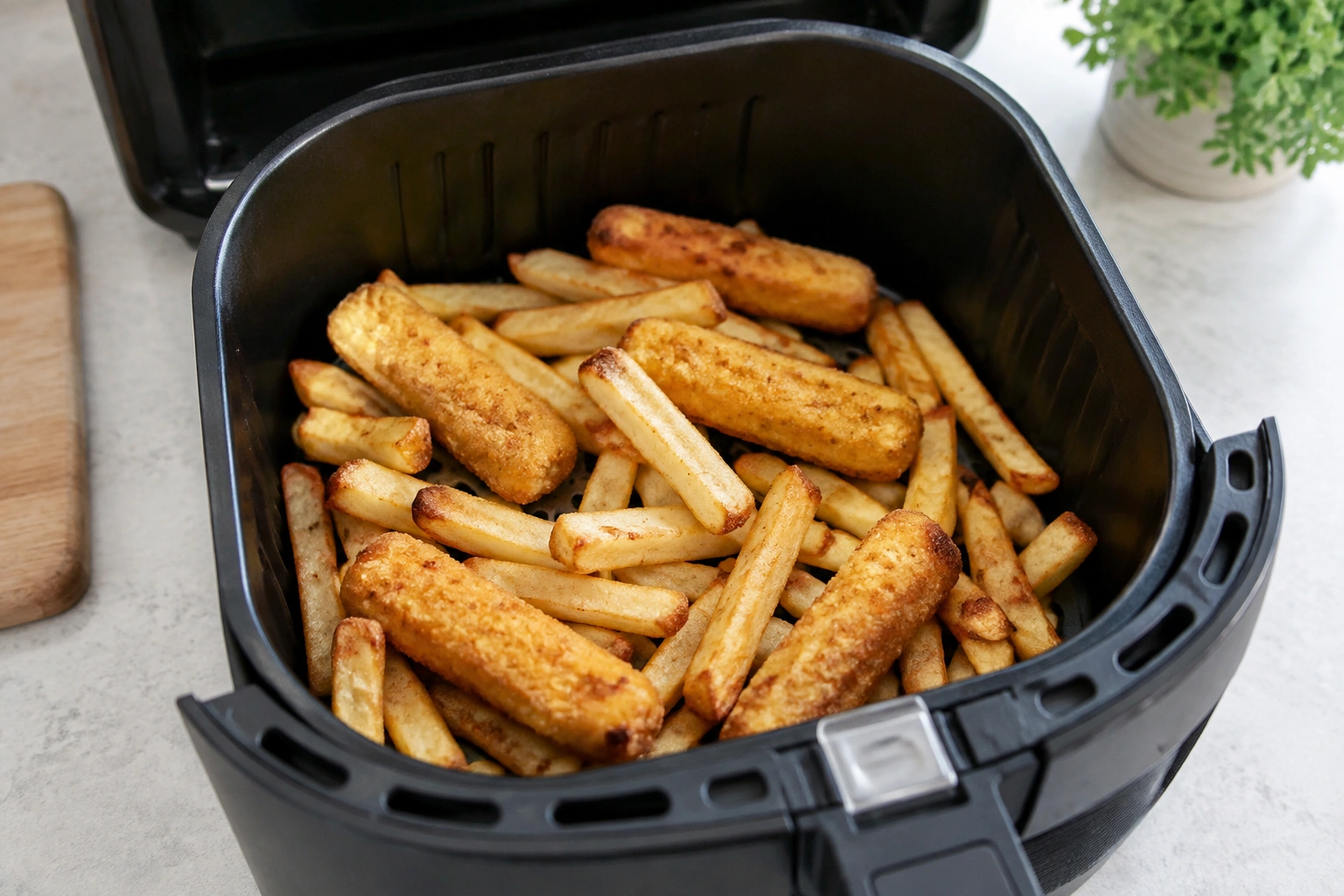
That is why frozen breaded foods often do especially well. A basket of frozen mozzarella sticks, potato wedges, or chicken tenders can come out crisp on the outside instead of soft the way they often do in the microwave. Frozen vegetables can also take on a roasted or lightly crisp texture instead of steaming in their own moisture.
A microwave heats food fast, but it tends to soften breading and leave exteriors pale. An oven can brown food well, but it usually takes longer to preheat and cook. The air fryer often lands in the middle on speed, while usually giving better texture than the microwave.
The main reason this works is airflow. If the food has room around it, the hot air can move across the surface and help dry, brown, and finish the outside while the inside catches up. That is also why overcrowding causes trouble, which I will cover later.
Which Frozen Meals Turn Out Best in an Air Fryer
Some frozen foods are practically built for the air fryer. In general, the best candidates are foods that already come breaded, breaded-and-filled, or shaped in a way that lets air reach most surfaces.
Best frozen meal types for the air fryer
Here are the categories I would reach for first:
- Frozen snacks: mozzarella sticks, egg rolls, mini tacos, potato skins, fries, onion rings
- Breaded proteins: chicken tenders, fish fillets, chicken patties, breaded shrimp
- Small frozen entrees: single-serve burritos, hand pies, stuffed sandwiches
- Frozen vegetables: especially when you want a roasted or lightly crisp texture
- Reheated leftovers that were frozen flat and evenly portioned
These foods tend to improve because the air fryer gives them a better surface finish. A frozen sandwich or breaded fillet often benefits from crisping the coating while the center heats through. The same is true for many snack foods that would otherwise come out soft in the microwave.
A good rule: if the food is supposed to be crisp or browned, the air fryer is worth considering. If the food is supposed to stay soft, saucy, or creamy, the microwave or oven may be the safer bet.
A few practical examples by food type
These are not one-size-fits-all rules, but they give you a better starting point than a generic time range:
- Tray dinners or frozen entrees in a foil or cardboard tray: often 350°F to 375°F for about 15 to 25 minutes, depending on size and thickness. These are frequently better in the oven unless the package specifically says the tray is air fryer-safe.
- Breakfast sandwiches: often 330°F to 360°F for about 6 to 10 minutes, with a flip or rotation if needed. English muffin sandwiches and similar items usually need gentler heat so the bread does not overbrown before the center warms.
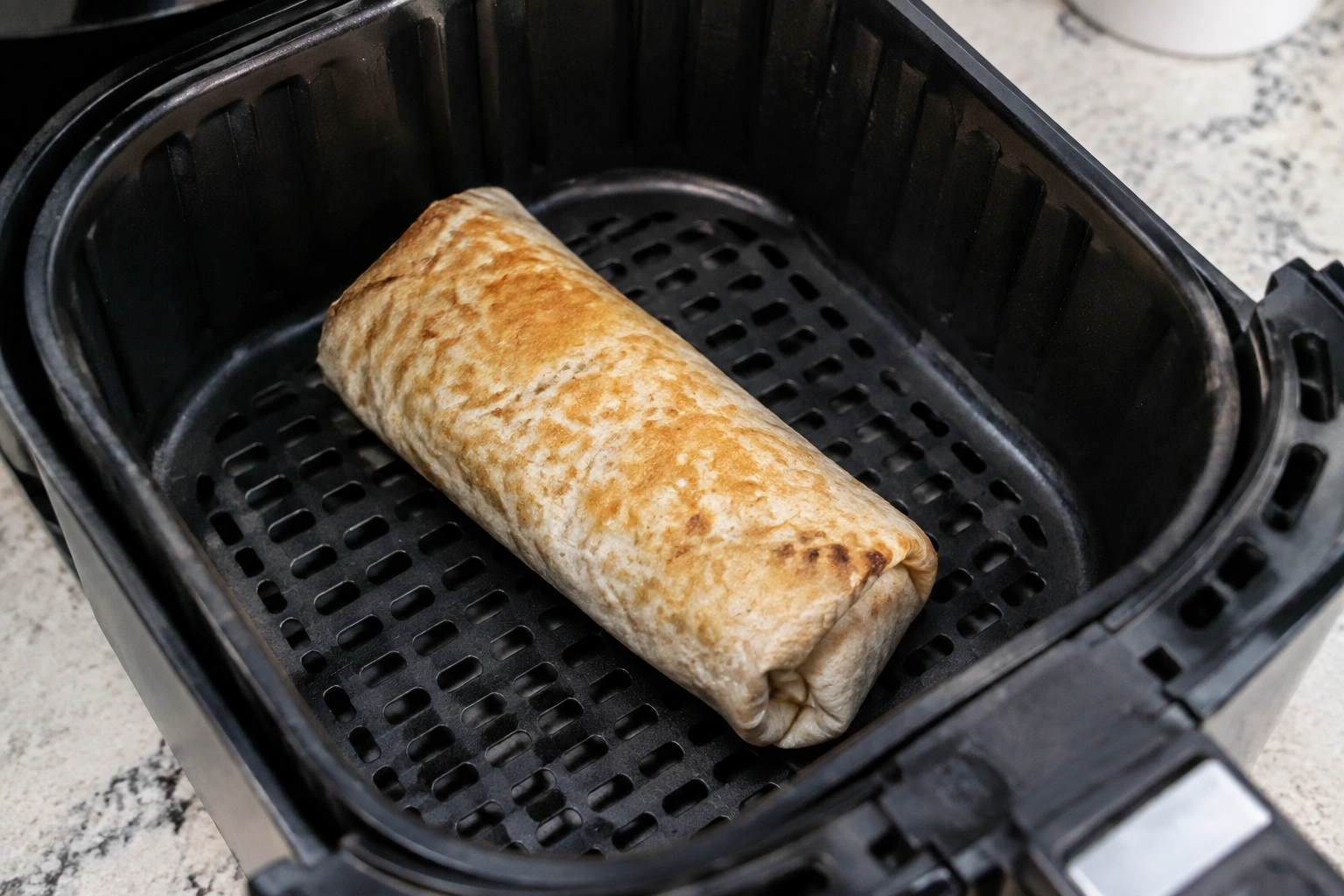
- Burritos: often 350°F to 375°F for about 8 to 15 minutes, depending on thickness. A thicker burrito may need a lower temperature and a longer finish so the center heats safely.
- Pasta-based meals: often not ideal in the air fryer unless they are in a form designed for it, such as a breaded pasta snack or a pasta bake specifically labeled for air frying. If you do try one, keep the heat modest and follow the package closely.
- Rice-based bowls or mixed grain meals: usually better in the microwave or oven, since the air fryer can dry the edges before the center is fully hot.
Foods that often do well with a little monitoring
Some frozen meals can work, but they need more attention:
- Burritos
- Pot pies
- Stuffed sandwiches
- Mixed meals with meat and vegetables
- Breaded meals with a sauce packet on the side
These can turn out well if you use a moderate temperature and check the center before serving. They are more likely to need a lower heat setting than frozen fries or nuggets, because the outside can brown before the inside is fully hot.
Frozen Meals That Are Usually Not Ideal for the Air Fryer
Not every frozen meal is a good fit. I would be cautious with meals that are very wet, very delicate, or packed tightly into a tray.
Usually poor candidates
- Saucy pasta bakes
- Creamy casseroles
- Meals with loose cheese sauce
- Frozen dinners in sealed plastic trays not meant for dry heat
- Very large, thick, or dense entrees
- Foods that can leak a lot of sauce or filling
These meals often heat unevenly in an air fryer. The outside may dry out or overbrown before the center is hot enough. Saucy meals can also splatter, which makes cleanup harder and can affect texture.
A frozen lasagna, for example, may be better in the oven because it needs even, gentle heating through a thick center. A frozen mac and cheese tray may also do better in the microwave or oven unless the package specifically says it can be air fried.
Packaging matters here. Some frozen meals should stay in their original tray, while others need to be removed from non-air-fryer-safe packaging before cooking. If the box does not clearly say the tray is air fryer-safe, do not assume it is safe to put in the basket. In many cases, it is better to transfer the food to an air fryer-safe dish only if the package instructions allow it and the food can hold together without spilling.
Another issue is fit. If the meal does not sit flat in the basket, or if it blocks airflow around the sides, the air fryer loses one of its biggest advantages. A meal that is too large for the basket is often better handled in the oven.
Do You Need to Thaw Frozen Meals First?
Usually, no. Most frozen meals that work well in an air fryer can go in straight from frozen.
That is one of the main conveniences of the appliance. You can move a frozen meal from freezer to basket without waiting for it to thaw on the counter or in the fridge.
When to cook from frozen
Cook from frozen when the food is:
- Breaded
- Pre-portioned
- Small enough to fit in a single layer
- Designed to be heated through rather than assembled
- Already partially cooked, as many frozen snacks are
When thawing may help
Thawing can help when the food is:
- Very thick
- Dense in the center
- Saucy or cheesy
- Prone to burning on the outside before the middle heats
- A homemade frozen portion that was packed tightly
If you are unsure, think about texture first. Crisp foods usually go straight from frozen. Soft, layered, or saucy foods often do better with a gentler method or a thaw-first approach.
General Time and Temperature Guidance for Air Frying Frozen Meals
Because frozen meals vary so much, there is no single correct setting that works for everything. Still, there are useful starting points.
For many frozen snacks and breaded foods, a range of 350°F to 400°F is a practical place to begin. Smaller items and crisp snacks often do well closer to 400°F. Thicker items and meals with a center filling usually need a lower temperature, around 350°F to 375°F, so the outside does not overcook before the middle heats through.
Simple starting points
- Frozen fries, nuggets, and snacks: 375°F to 400°F
- Breaded fish or chicken patties: 360°F to 390°F
- Burritos and stuffed items: 350°F to 375°F
- Vegetables: 375°F to 400°F
- Thicker frozen entrees: 350°F to 375°F
Cook times vary by brand and size, but many frozen foods need somewhere in the 8-20 minute range. Smaller snacks are faster; thicker meals take longer. The package instructions can still help, but they usually need adjustment because an air fryer cooks differently than a microwave or oven.
A useful habit is to check earlier than you think. Air fryers can brown quickly, especially on foods with breading or a light coating of oil.
If you are cooking a specific frozen meal type, these rough starting points can help:
- Breakfast sandwich: about 330°F to 360°F for 6 to 10 minutes
- Frozen burrito: about 350°F to 375°F for 8 to 15 minutes
- Tray dinner or entree: about 350°F to 375°F for 15 to 25 minutes
- Pasta-based frozen meal: often better in the oven or microwave; if air frying is allowed, use the package directions and keep the temperature moderate
- Breaded chicken or fish meal: about 360°F to 390°F for 10 to 18 minutes
These are starting points only. Always adjust based on the size, shape, and packaging of the specific product.
How to Tell When a Frozen Meal Is Done Safely
Do not rely on color alone. Golden brown does not always mean fully heated, and some foods can look finished before the center is hot enough.
Better doneness checks
Use a combination of these checks:
- Shake, flip, or stir halfway through so heat reaches all sides
- Check the center of stuffed foods, burritos, or thick entrees
- Look for steaming or bubbling in the middle of saucy meals
- Use an instant-read thermometer when the meal contains meat, poultry, or mixed fillings
For food safety guidance, official sources such as USDA FSIS and Foodsafety.gov are the best references for internal temperature and handling advice. If a frozen meal contains meat or poultry, use the package directions and food-safety guidance together rather than guessing from texture alone.
As a practical rule of thumb, aim for about 165°F in meals containing poultry or mixed fillings that include poultry. Many reheated leftovers and fully cooked frozen meals are also commonly brought to 165°F for safety. For beef-based meals, check the package directions carefully, since the right target can vary depending on whether the product is fully cooked, stuffed, or mixed with other ingredients. If the package gives a specific temperature, follow that first.
A practical example: a frozen chicken sandwich may look crisp after 10 minutes, but the center still needs to be hot enough throughout. A frozen burrito can brown on the outside while the filling remains cool, so it needs a center check before serving.
Air Fryer vs Microwave vs Oven for Frozen Meals
Each appliance has a clear job.
| Appliance | Best for | Texture | Speed | Main drawback |
|---|---|---|---|---|
| Air fryer | Breaded snacks, crispy entrees, smaller portions | Crispy, browned | Fast | Smaller capacity, needs monitoring |
| Microwave | Saucy meals, quick reheating, convenience | Soft, moist, less browning | Fastest | Soggy breading, uneven texture |
| Oven | Larger frozen meals, casseroles, even heating | Balanced, more even than microwave | Slower | Longer preheat and cook time |
| Toaster oven | Small baked meals, open-faced items, light browning | Similar to oven, sometimes less crisp than air fryer | Moderate | Less intense airflow than air fryer |
If texture matters most, the air fryer usually has the edge. If speed matters most and texture is secondary, the microwave is easier. If you are cooking a larger frozen dinner or something that needs gentler, more even heating, the oven is often the safer choice.
A toaster oven can be a decent middle ground, especially for meals that need browning without the strong airflow of an air fryer. But for crisp frozen foods, the air fryer usually does the better job.
Common Mistakes That Lead to Soggy or Uneven Results
The biggest air fryer mistakes with frozen meals are simple, but they matter.
1. Using package directions without adjusting
Microwave and oven instructions do not always translate directly to an air fryer. If you copy the same time and temperature without thinking about airflow, you may end up with burnt edges or an underheated center.
2. Overcrowding the basket
This is one of the fastest ways to ruin texture. If the basket is packed too tightly, the food steams instead of browns. Leave room for air to move around the pieces.
3. Skipping the halfway shake or flip
Frozen fries, nuggets, and similar foods usually need a shake. Thicker items may need a flip. Without it, one side often ends up darker or crispier than the other.
4. Using too much heat too soon
High heat is useful for crisping, but it can burn breaded exteriors before the inside is ready. Lower the temperature for stuffed or thicker meals.
5. Trusting appearance alone
A meal can look ready and still be cold in the middle. That is especially true for burritos, pot pies, and dense frozen entrees.
6. Adding foil or parchment when it blocks airflow
Some air fryer recipes use parchment liners or foil, but they should not cover the basket in a way that blocks circulation. Use them only if the product instructions allow it and they fit safely in your model. For very saucy meals, it is often better to choose another cooking method instead of trying to line the basket heavily.
Simple Troubleshooting for Better Results
If a frozen meal is not turning out well, a small adjustment is often enough.
If the outside is too dark but the center is cold
Lower the temperature by 25°F and cook a little longer. This helps heat the middle without scorching the outside.
If the food is soggy
Give it more space in the basket and avoid covering it unless the manufacturer specifically suggests it. Excess moisture needs a way to escape.
If the food is cooking unevenly
Shake or flip earlier in the cook time. Also check whether the basket is too full or whether the pieces are stacked.
If the meal is drying out
Use a slightly lower temperature and check sooner. For some items, a short rest after cooking helps the heat redistribute.
If sauce is splattering
Choose a lower temperature and a deeper basket if your model allows it. Very saucy frozen meals may simply be better in another appliance.
Quick Decision Guide: Is This Frozen Meal Right for the Air Fryer?
Use this fast rule set when you are standing in front of the freezer.
Choose the air fryer if the meal is:
– Breaded
– Crispy by nature
– Small or medium in size
– Meant to be browned
– Able to fit in a single layer
Choose the microwave if the meal is:
– Very saucy
– Soft or creamy
– Meant to be eaten quickly with little texture concern
– Too delicate for dry heat
Choose the oven if the meal is:
– Large
– Thick
– Dense
– Better with even heating than fast browning
If you are deciding between two methods, ask one question: do I care more about texture or convenience? The air fryer usually wins on texture. The microwave usually wins on convenience. The oven often wins on evenness for larger meals.
Final Takeaway
An air fryer is a very good tool for many frozen meals, especially breaded snacks, crispy entrees, and smaller portions that benefit from browning. It is less ideal for saucy, delicate, or oversized meals that need gentler and more even heating.
The best results come from matching the food to the appliance, using moderate temperatures, and checking the center instead of trusting the timer alone. If you treat the air fryer as a texture tool first and a reheating tool second, frozen meals usually come out better than they do in the microwave.

