
Is an Air Fryer Good for Crispy Vegetables? A Practical Guide for Better Results
If your goal is crisp edges, browned surfaces, and vegetables that still taste like vegetables, an air fryer can do a very good job. It usually will not give you the same texture as deep frying, but it can produce crisp-tender vegetables with plenty of caramelization and some real crunch on the outside.
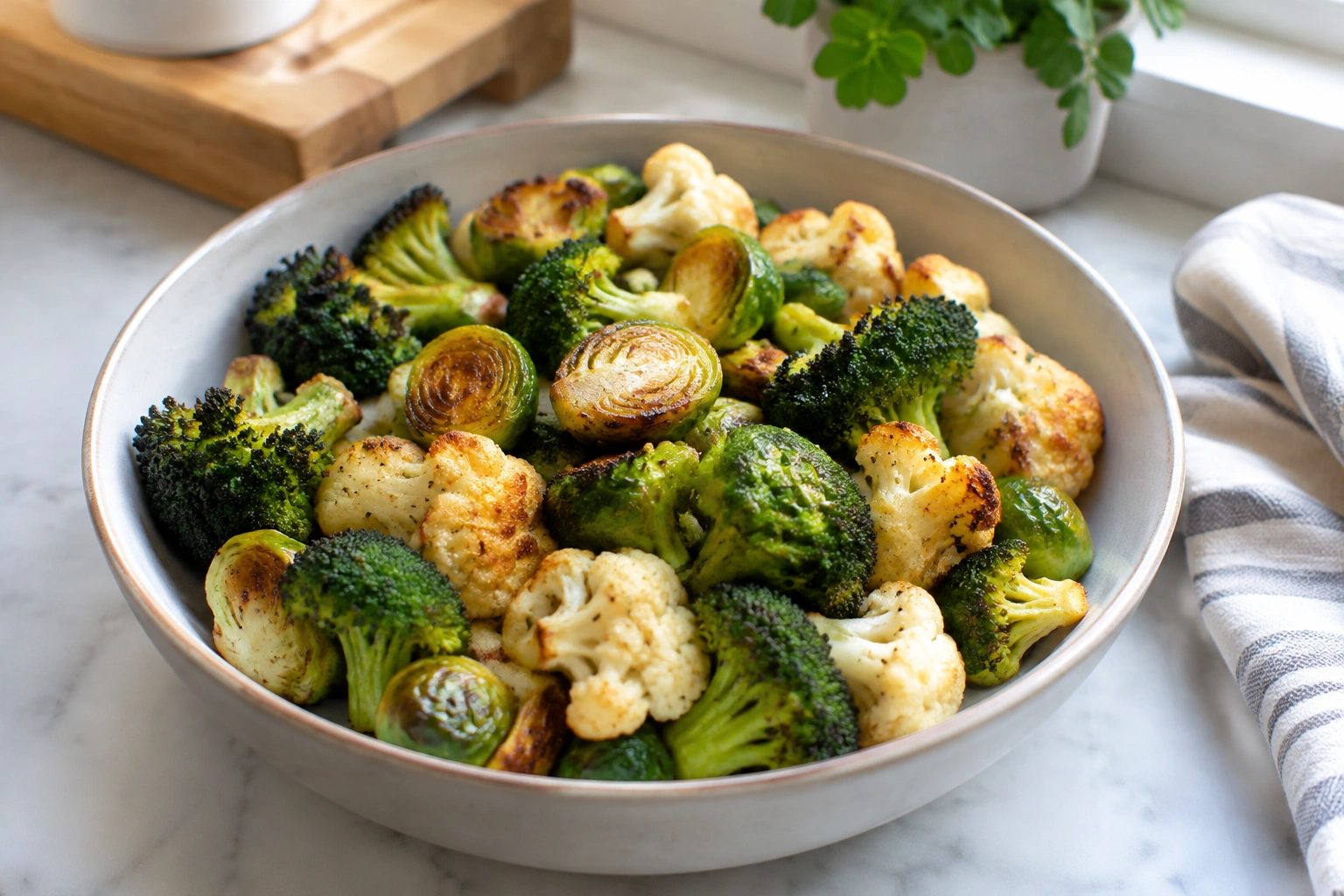
That said, the result depends on the vegetable, the cut size, how much moisture is on the surface, and how full the basket is. Get those basics right and an air fryer becomes one of the easiest ways to make vegetables taste more appealing without a lot of extra oil.
Can an air fryer make vegetables crispy?
Yes — within reason.
An air fryer works by moving hot air quickly around food, which helps the surface dry out and brown. For vegetables, that often means crisp edges, lightly blistered spots, and a roasted texture that feels firmer than oven-baked vegetables cooked in a crowded pan.
What it usually does not do is create the same hard, deep-fried crunch you would get from batter or a full oil fry. Think “crispy edges” or “crisp-tender” rather than “fried.” Air fryer vegetables are usually closer to roasted with extra browning than to deep-fried, and they are not the same as dehydrated vegetables, which are much drier and more brittle.
That distinction matters because it sets the right expectation. Broccoli florets, Brussels sprouts, cauliflower, and green beans can get pleasantly browned. Very watery vegetables, like zucchini or mushrooms, are more likely to turn soft unless you manage moisture carefully.
One helpful way to think about it: an air fryer is best for vegetables that can brown quickly without collapsing. That is why many home cooks love it for vegetables that already roast well in the oven.
Which vegetables crisp best in an air fryer?
Some vegetables are simply better candidates than others. Lower-moisture vegetables and vegetables with a bit more starch tend to crisp more easily. Dense cuts also hold up better than thin, watery slices.
Here is a practical comparison:
| Vegetable | Crispiness Potential | Best Result You Can Expect | Starting Temp | Starting Time |
|---|---|---|---|---|
| Brussels sprouts, halved | High | Crisp outer leaves, tender center | 375–400°F | 12–16 min |
| Broccoli florets | High | Browned edges, crisp-tender stems | 380–400°F | 8–12 min |
| Cauliflower florets | High | Golden edges, firm bite | 380–400°F | 10–14 min |
| Green beans | High | Wrinkled, lightly crisp skins | 380–400°F | 8–10 min |
| Carrot sticks | Medium | Tender with browned edges | 380–400°F | 12–16 min |
| Bell peppers | Medium | Soft with some charred edges | 375–400°F | 8–10 min |
| Zucchini | Lower | Soft, lightly browned if dried well | 375–390°F | 7–10 min |
| Mushrooms | Lower | Browned and juicy, not truly crisp | 375–400°F | 8–10 min |
The vegetables at the top of the list are the easiest place to start if you want reliable crispiness. Brussels sprouts and cauliflower are especially forgiving because they brown well and still hold their shape.
Vegetables that are naturally wetter, like zucchini and mushrooms, can still taste excellent in the air fryer, but they are less likely to become genuinely crisp. They usually end up tender with browned edges instead.
What makes vegetables crisp or soggy?
Three things matter most: moisture, airflow, and surface contact.
Moisture on the surface
If vegetables are wet when they go into the basket, they are more likely to steam before they brown. That is why rinsed vegetables should be dried well, and why washed produce with a lot of water clinging to it often disappoints.
Airflow around the food
A basket-style air fryer works best when hot air can move around the pieces. If the basket is packed, the vegetables block one another and trap steam. The result is softer vegetables and uneven browning.
Surface area and cut size
Smaller pieces brown faster because more of the surface is exposed. But if the pieces are too small, they can dry out or burn before the inside is tender. Uniform cutting matters more than people expect. A basket full of mixed sizes usually gives mixed results.
There is also a simple rule about texture: starch helps crisp, water fights crisp. That is why potatoes crisp so well and zucchini does not. You can still make good air-fried zucchini, but the method needs more care.
How to prep vegetables for better crispiness
A few small prep steps make a big difference.
Dry the vegetables well
After washing, pat them dry with a kitchen towel. If you are using vegetables that release a lot of water, like zucchini, let them sit for a few minutes after salting and then dry them again before cooking. Mushrooms also benefit from being dried well and cooked in a less crowded layer so they can brown instead of steam.
Cut them evenly
Try to keep pieces similar in size so they finish at the same time. For broccoli and cauliflower, aim for florets that are close in thickness. For Brussels sprouts, cut them in half so the cut side can brown.
Use a light coating of oil
A small amount of oil helps the surface brown more evenly. You do not need much — just enough to lightly coat the vegetables. Too much oil can make them greasy and sometimes soften the surface instead of crisping it.
Season before cooking
Salt, pepper, garlic powder, paprika, and Italian seasoning all work well. Dry seasonings tend to perform better than wet sauces if crispiness is the goal. If you want sauce, add it after cooking.
One practical example: broccoli tossed with a little oil, salt, pepper, and garlic powder usually browns better than broccoli that is dry and unseasoned. The oil helps the seasoning cling and improves surface browning.
Best temperature and timing for crispy vegetables
For most vegetables, a moderate-high temperature works well. Many recipes land somewhere in the 375°F to 400°F range, and a practical starting point is usually in that window rather than a single fixed time for every vegetable. The exact time depends on the vegetable and the size of the pieces.
A good starting approach:
- Brussels sprouts: 375°F to 400°F, about 12 to 16 minutes
- Broccoli: 380°F to 400°F, about 8 to 12 minutes
- Cauliflower: 380°F to 400°F, about 10 to 14 minutes
- Green beans: 380°F to 400°F, about 8 to 10 minutes
- Carrots: 380°F to 400°F, about 12 to 16 minutes
- Bell peppers: 375°F to 400°F, about 8 to 10 minutes
- Zucchini: 375°F to 390°F, about 7 to 10 minutes
- Mushrooms: 375°F to 400°F, about 8 to 10 minutes
If you are new to air frying vegetables, start at the lower end of the recommended range and check early. You can always add a few minutes. If you start too hot, the outside can brown before the inside is tender.
A simple timing rule
- Thin or small pieces: check early
- Dense vegetables: give them more time
- Mixed vegetables: cook the densest vegetables first or cut everything to a similar size
For example, cauliflower florets may need a little more time than broccoli if the florets are large. Carrot sticks usually take longer than peppers. This is why mixed vegetable blends often turn out uneven unless you sort them by density.
Should you preheat, shake, or flip?
Preheating helps when you want quicker surface browning. It gives the vegetables a hotter starting environment, which can improve crisping. That is especially useful for smaller pieces that need to brown before they soften too much. If your model heats quickly, preheating is helpful but not always strictly necessary; if it heats slowly or you want more consistent browning, it is worth doing.
Shaking or flipping is just as important. It exposes new surfaces to the hot air and helps prevent one side from staying pale while another side overcooks.
A practical rhythm:
– Preheat if your air fryer model heats slowly or if you want stronger browning
– Shake the basket halfway through cooking
– Flip larger pieces, such as Brussels sprouts or thick carrot sticks, if needed
If you are cooking delicate vegetables, shake gently so you do not break them apart. For sturdier vegetables, a more vigorous toss is fine.
How full should the basket be?
Less full is usually better.
This is one of the biggest reasons air fryer vegetables go soft. When the basket is crowded, the vegetables sit close together, release moisture, and block airflow. Instead of browning, they steam. A crowded basket also makes it harder for the hot air to reach every surface evenly.
A good rule: keep vegetables in a single layer when possible, and if you need to stack, do it lightly and expect less crispiness. If crispiness matters most, cook in batches.
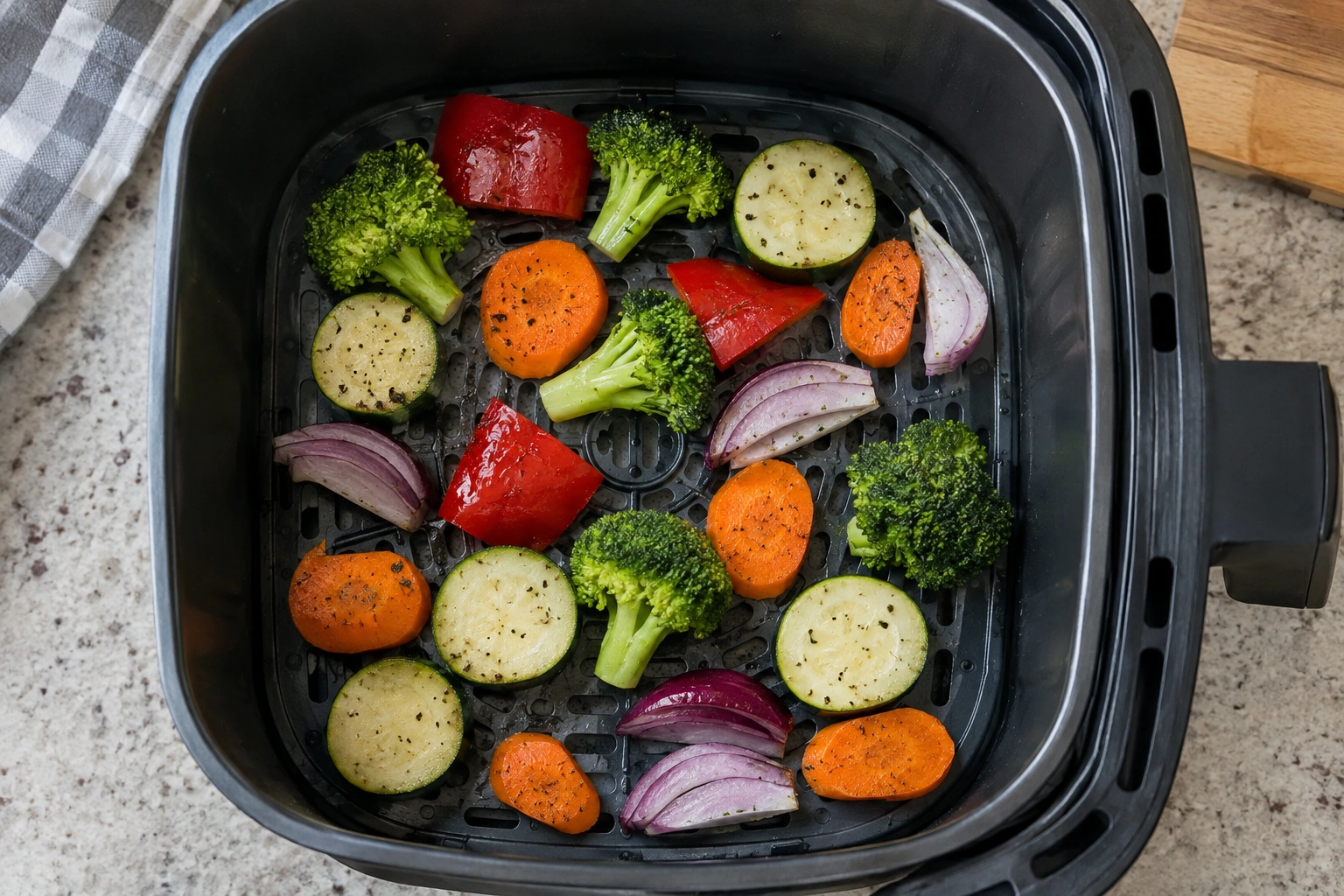
That trade-off is worth it. One crowded batch is faster, but two smaller batches usually taste better.
Troubleshooting soggy, dry, or burnt vegetables
If your vegetables did not turn out the way you wanted, the fix is usually straightforward.
If they are soggy
- The basket was probably too full
- The vegetables may have been wet
- They may need more time at a slightly higher temperature
Next time, dry them better and cook in a looser layer.
If they are dry
- The pieces may have been too small
- The temperature may have been too high
- They may have cooked too long
Try a slightly lower temperature or cut the vegetables a little larger.
If they are burnt on the outside but underdone inside
- The heat was too aggressive for the size of the pieces
- The vegetables were cut unevenly
- Dense vegetables needed more time at a lower temperature
In that case, reduce the temperature and give the vegetables more even cuts. For thick vegetables like carrots or Brussels sprouts, a little extra time at a moderate temperature usually works better than blasting them at the highest setting.
If they brown unevenly
- The basket may need more shaking
- The vegetables may have been stacked
- Oil may not have been distributed evenly
Tossing with oil and seasoning before cooking usually helps a lot here.
Air fryer vs oven-roasting for crispy vegetables
Both methods work, but they are not identical.
An air fryer is usually faster and more direct. In many models, the concentrated hot airflow helps vegetables brown faster, especially in small batches and basket-style cookers. That makes it a strong choice when you want dinner on the table fast or when you are cooking just a few servings.
Oven-roasting is better when you need volume. A sheet pan can handle more vegetables at once, which is useful for family dinners or meal prep. But ovens often take longer to brown vegetables, and if the pan is crowded, the vegetables can soften before they color.
So the decision is usually simple:
– Choose the air fryer for speed, smaller batches, and crisp edges
– Choose the oven for larger amounts and less batch cooking
If you are cooking just a few servings, the air fryer often wins on texture and convenience.
A simple method for consistently crispy vegetables
Here is the method I would use for a reliable first try:
- Choose a vegetable that crisps well, such as broccoli, cauliflower, Brussels sprouts, or green beans.
- Wash and dry it thoroughly.
- Cut it into even pieces.
- Toss with a light coating of oil and your seasonings.
- Preheat the air fryer if your model benefits from it.
- Arrange the vegetables in a single layer or close to it.
- Cook at 375°F to 400°F, shaking halfway through.
- Check for browning and tenderness, then cook a few minutes more if needed.
This method is simple, but it solves most of the common problems. Dry vegetables brown better. Even cuts cook evenly. A little oil improves texture. And a less crowded basket gives the hot air room to do its job.
FAQ
Can you make vegetables crispy without oil?
Yes, but the results are usually more limited. Without oil, vegetables can still brown and become tender with some crisp edges, especially if they are naturally lower in moisture and not overcrowded. But they are less likely to develop the same even, golden exterior you get with a light coating of oil.
The vegetables that still perform reasonably well without oil are the ones that already roast well: broccoli, cauliflower, Brussels sprouts, green beans, and some carrot pieces. Watery vegetables like zucchini and mushrooms are more likely to turn soft without oil because they already release a lot of moisture. If you skip the oil, dry the vegetables very well, keep the basket loose, and expect a lighter roasted result rather than a truly crisp one.
Why do my air fryer vegetables taste roasted but not crispy?
That usually means they browned but did not dry enough on the surface. Too much moisture, too much crowding, or too little oil can all lead to that result.
Are basket air fryers better than oven-style air fryers for vegetables?
Basket models often crisp vegetables faster because airflow is stronger and the food is more exposed. Oven-style air fryers can still work well, but they may need more attention and more space between pieces.
Which vegetables are the easiest for beginners?
Broccoli, cauliflower, Brussels sprouts, and green beans are the most forgiving choices if you want your first batch to turn out well.
Final take
So, is an air fryer good for crispy vegetables? Yes — especially if you want crisp edges, good browning, and a faster method than oven-roasting. It works best with vegetables that naturally roast well, a light coating of oil, and enough space in the basket for air to move freely.
If you treat it as a tool for crisp-tender vegetables rather than deep-fried texture, it becomes very reliable. That is usually the sweet spot for home cooks.

