
Why Your Air Fryer Turns On but Won’t Heat: A Practical Troubleshooting Guide
If your air fryer powers on but seems to blow cold air, the problem is usually one of a few things: a setting issue, a basket or drawer that is not seated correctly, a blocked heating area, or a hardware fault. The good news is that you can check most of the likely causes without taking the appliance apart.
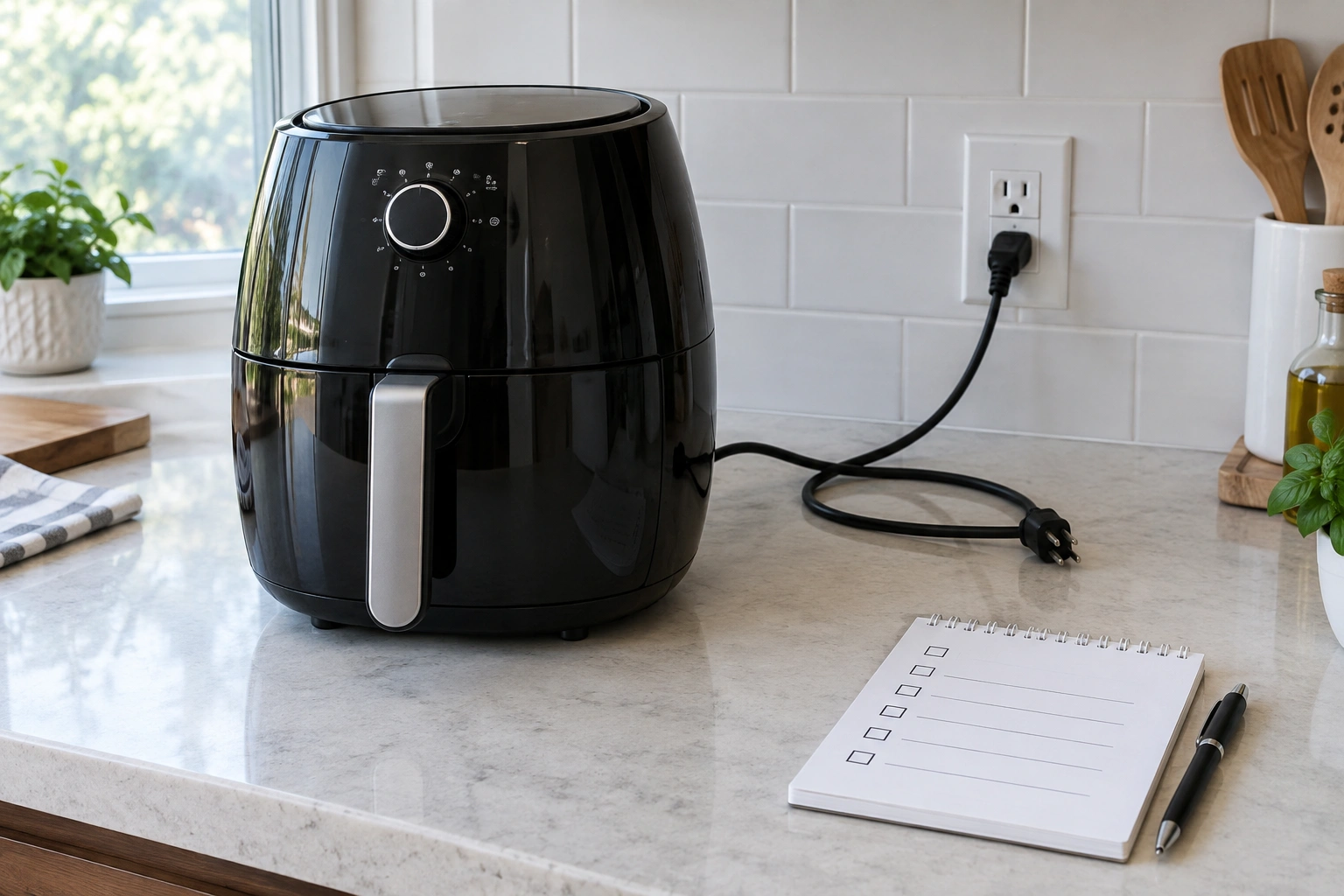
The key is to separate a true no-heat failure from normal startup behavior. Some air fryers run the fan before the heating element fully kicks in, so a short preheat delay or a few seconds of cool air does not always mean something is broken. But if the unit stays cold for the full cycle, never reaches temperature, or only works intermittently, it is time to troubleshoot methodically.
First, confirm it is really a heating problem
Before assuming the appliance has failed, look at what it is actually doing.
A true no-heat issue usually looks like this:
– the display lights up and the fan may run
– the basket area stays cool or only slightly warm
– food never browns or crisps
– the unit finishes a cycle without ever getting hot
That is different from weak heating or uneven heating. In those cases, the air fryer does heat, but not well enough to cook evenly. You might see pale food, long cook times, or one side browning faster than the other. That often points to airflow issues, dirty components, or a control problem rather than a completely dead heating element.
Check the power source before anything else
A surprising number of “dead” air fryers are really power-delivery problems. A faulty power connection can cause an air fryer to power on but still not heat. Make sure the plug is fully inserted into the outlet, and test the outlet with another appliance if you can do that safely. A lamp, toaster, or phone charger can tell you whether the outlet is actually delivering power.
Also check:
– the power cord for cuts, kinks, or burn marks
– the plug for discoloration or looseness
– the circuit breaker if the outlet seems dead
– any reset button on a GFCI outlet in the kitchen
A lit display does not prove the heating circuit is receiving power, so do not stop at “the screen came on.” If the plug or cord feels hot, looks damaged, or the breaker trips repeatedly, stop using the air fryer and treat it as a possible electrical fault.
For general kitchen electrical safety, the U.S. Consumer Product Safety Commission is a useful reference point.
Make sure the settings are not fooling you
Air fryers are easy to misread when the settings are wrong. I have seen people think their unit failed when the real issue was a low temperature setting, the wrong mode, or a timer that never actually started.
Check these basics:
– Temperature: If it is set very low, the air fryer may feel like it is not heating.
– Timer: Some models will not fully start heating until the timer is engaged.
– Mode: A reheat, keep-warm, or dehydrate mode may run cooler than expected.
– Preheat: Some units need a preheat cycle before they reach full temperature.
If your model has a preheat function, use it once as a test. A short warm-up period is normal, but prolonged cold air is not. If the basket warms during preheat but not during cooking, the problem may be with the selected mode or the basket sensor rather than the heating element itself.
A simple example: if you accidentally set 250°F instead of 400°F, the air fryer may be working normally but still seem underpowered. That is a settings issue, not a repair issue.
Reseat the basket or drawer fully
Many air fryers will not heat unless the basket or drawer is fully locked into place. This is one of the most common things to check because it is easy to miss.
On basket-style models, the drawer has to sit correctly so the safety switch or basket sensor is engaged. If the drawer is even slightly misaligned, the control panel may light up and the fan may run, but the heating element will stay off.
What to do:
1. Unplug the air fryer.
2. Remove the basket or drawer.
3. Inspect the rails, latch, and contact points for crumbs or grease.
4. Reinsert the basket firmly.
5. Listen and feel for a solid click or secure fit.
If the unit starts heating after reseating the drawer, the issue was likely the safety switch or sensor not being triggered. If it only works when you press on the basket or wiggle it, the fit may be worn or the sensor may be failing.
If your model uses a basket sensor or drawer switch, cleaning the contact area can help when debris is the problem, but a misaligned, worn, or damaged switch usually needs replacement rather than adjustment.
Clean the heating area and vents
Grease buildup and food debris can interfere with airflow and heat transfer. Even if the heating element itself is not broken, a dirty heating area can make the air fryer act weak, slow, or inconsistent.
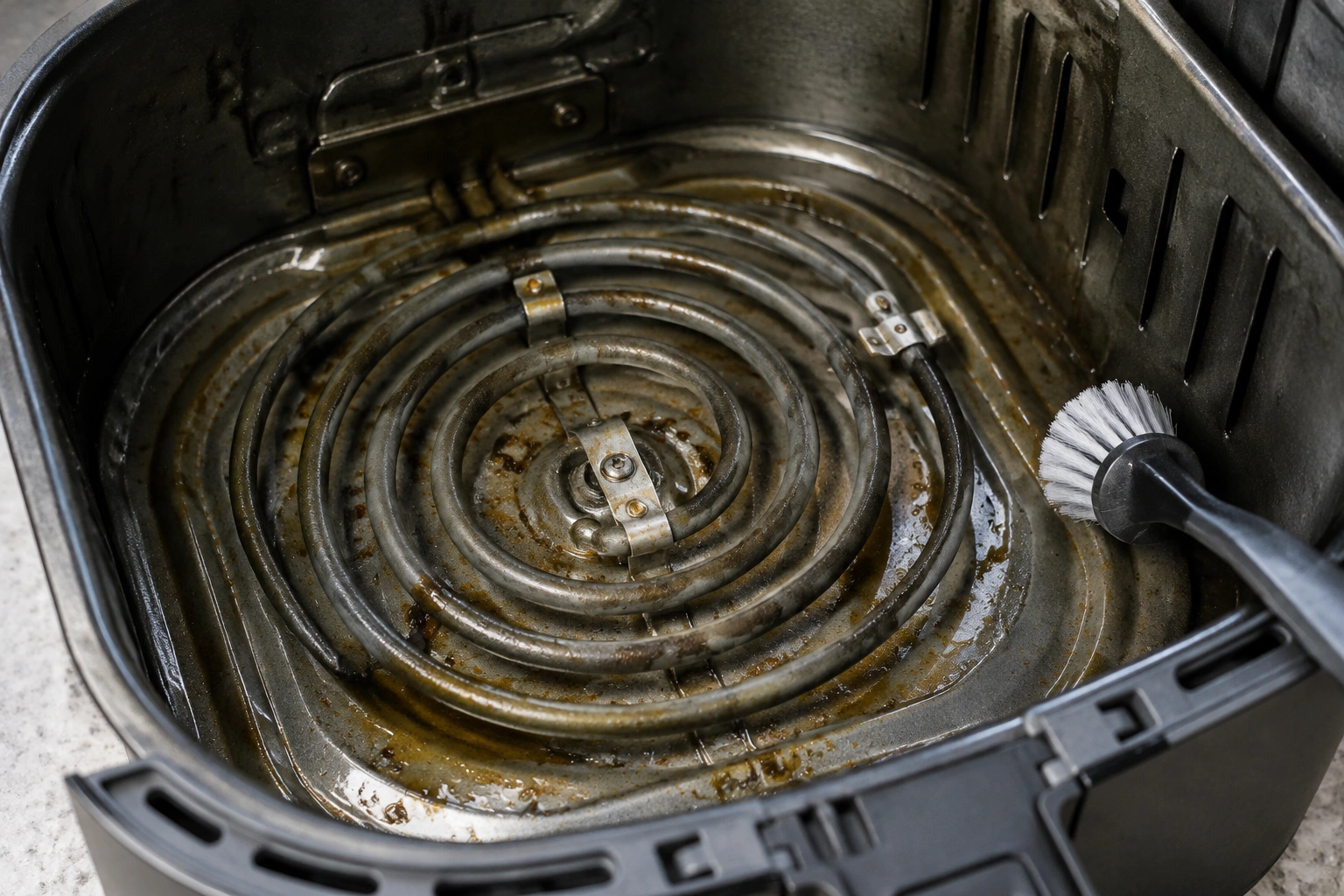
Focus on these areas:
– the top heating element
– the fan cover or vent openings
– the upper interior around the cooking chamber
– the basket and drawer rails
Unplug the appliance and let it cool completely before cleaning. Use a soft brush or cloth to remove loose debris. For stuck-on grease, a damp cloth with mild soap is usually enough on accessible surfaces. Avoid soaking any electrical parts.
A dirty heating element often causes poor heating, longer cook times, or uneven browning. A failed heating element usually causes a more complete loss of heat. That distinction matters because cleaning can fix one problem, but not the other.
If you want a food-safety reference for handling cooked foods once your air fryer is working again, USDA FSIS guidance is a reliable place to check safe temperatures and handling basics.
What the symptoms can tell you about the hardware
Once you have checked power, settings, seating, and cleanliness, the remaining clues can help narrow down the faulty part.
Heating element symptoms
A heating element problem often shows up as:
– fan runs but no heat at all
– heat comes and goes
– a faint burning smell with no visible food residue
– one area of the basket warms while the rest stays cold
If the element looks damaged, bent, or heavily corroded, that is a strong sign the problem is internal. At that point, external troubleshooting usually will not fix it.
Fan symptoms
The fan helps move hot air around the food. If the fan is weak, noisy, or not spinning properly, the air fryer may seem underheating even if the element is working. You may notice hot spots, uneven browning, or food that stays pale on one side. A fan failure is more likely when the unit gets hot in one spot but the air circulation sounds weak, rattly, or stops and starts.
Thermostat or control board symptoms
If the thermostat or control board is malfunctioning, the appliance may:
– shut off heat too early
– never reach the set temperature
– behave differently from one cycle to the next
– show a normal display while staying cold inside
That kind of problem is harder to confirm without service tools, so the practical test is whether the unit still fails after a reset, a different outlet, and correct settings.
Try a safe reset or power cycle
A simple reset can help if the control panel is stuck or the appliance glitched after a power interruption.
The safest version is:
1. Turn the air fryer off.
2. Unplug it from the wall.
3. Wait several minutes.
4. Plug it back in and test it again with the correct settings.
This is most useful after a power interruption or a control-panel glitch, but it usually will not fix a persistent hardware failure. If the air fryer starts working again after a power cycle, the problem was likely electronic rather than mechanical.
If the unit still powers on but refuses to heat after a reset, do not keep repeating the same test over and over. At that point, you are probably dealing with a deeper fault.
Comparison table: likely cause vs next step
| Symptom | Likely cause | Best next step |
|---|---|---|
| Powers on, fan runs, no heat | Drawer not seated, wrong settings, safety switch not engaged | Reseat basket, verify settings, test again |
| Powers on, no heat, outlet seems dead | Outlet, breaker, or plug issue | Test another outlet, check breaker, inspect cord |
| Weak heat, uneven cooking, longer cook times | Dirty heating area or airflow blockage | Clean heating element area and vents |
| Works after reset, then fails again | Temporary control glitch or unstable electronics | Monitor closely, then contact support if it repeats |
| Burning smell, sparking, hot plug, or tripped breaker | Electrical fault or internal damage | Stop using it and seek service |
| No heat after all basic checks | Failed heating element, thermostat, fan, or control board | Contact manufacturer or repair service |
When the problem points to internal electrical failure
Some signs mean you should stop troubleshooting and treat the air fryer as unsafe to use.
Watch for:
– burning smell that does not go away after cleaning
– sparking
– smoke from the base or plug area
– a cord that is frayed, melted, or discolored
– plug or outlet that feels unusually hot
– breaker trips or fuse blows again after resetting
– unit still will not heat after outlet, settings, seating, and reset checks
These symptoms suggest more than a simple user error. Internal parts such as the heating element, thermostat, wiring, or control board may be involved. Opening the appliance yourself is not a good idea unless you are qualified to work on electrical devices.
Repair, warranty, or replacement: how to decide
If the air fryer is still under warranty, contact the manufacturer before paying for repairs. Keep your model number, purchase receipt, and a short description of the symptoms ready. That usually saves time and avoids guesswork.
If it is out of warranty, the decision comes down to age, condition, and repair cost. For a small countertop appliance, a simple rule of thumb is that replacement starts to make more sense when the repair cost gets close to about half the price of a new unit, especially if the air fryer is older or shows visible electrical damage.
Repair makes more sense when the issue is minor, the appliance is otherwise in good shape, and the manufacturer or a local repair shop can fix it without major work. Replacement is usually the cleaner choice when electrical faults are involved or the unit has repeated failures.
If you are comparing whether to repair or replace, think in practical terms: a clean, well-kept air fryer with a simple sensor issue is worth more effort than one with repeated heating failures and visible electrical damage.
Common mistakes to avoid
A few troubleshooting mistakes can waste time or create safety risk.
Avoid these:
– assuming the heating element is dead before checking the basket fit
– testing the same bad outlet multiple times
– ignoring a damaged cord because the display still lights up
– cleaning only the basket and never the upper heating area
– continuing to use the unit after a burning smell or sparking
– opening the appliance for internal repairs without proper training
The biggest mistake is skipping the easy checks. In practice, settings, seating, and power delivery cause a lot of “not heating” complaints that feel more serious than they are.
When to consult a professional
If your air fryer still will not heat after you have checked the outlet, cord, settings, basket fit, and cleanliness, it is reasonable to stop troubleshooting and contact the manufacturer or a qualified repair technician. That is especially true if the unit trips a breaker, smells burnt, or shows signs of internal electrical damage.
For a countertop appliance, the safest decision is often the simplest one: if the problem looks electrical, or if the repair path is unclear, get professional help rather than forcing the issue.
Quick takeaway
If an air fryer turns on but does not heat, the most practical order is: check power, verify settings, reseat the basket, clean the heating area, then try a reset. If none of that works, the problem is more likely a failed internal part than a simple user error. At that point, warranty support, repair, or replacement becomes the better next step.
FAQ
Why does my air fryer turn on but stay cold?
Common causes include a loose plug, wrong settings, a basket that is not seated correctly, a dirty heating area, or a failed internal component such as the heating element, thermostat, fan, or control board.
How long should an air fryer take to start heating?
A brief startup delay can be normal, especially during preheat. But if it stays cold for the whole cycle or never gets meaningfully warm, that is not normal.
Can I fix a basket sensor or drawer switch myself?
You can clean the contact area and make sure the basket is seated properly. If the switch or sensor is worn, misaligned, or damaged, it usually needs replacement.
Is it worth repairing an older air fryer?
Often only if the repair is minor and the appliance has no visible electrical damage. If repair costs approach about half the price of a replacement, replacement is usually the more practical choice.

