
Why Your Air Fryer Smells Like Chemicals and What to Do About It
If your air fryer smells like chemicals, the first question is whether you’re dealing with normal first-use odor or a real problem.
Here’s the quick rule: a faint smell during the first few uses can be normal in a brand-new unit and is usually temporary, but it is not the same as smoke, melting plastic, or an electrical-burning smell. Burning plastic, hot wiring, smoke, or melting parts are unsafe and mean you should stop using the appliance right away.

Some air fryers do release odor at first because the housing, drawer, basket, or coated parts are heating up for the first time. That kind of smell should fade, not intensify. If it keeps getting stronger, lingers after cleaning, or comes from the cord or back of the unit, treat it as a warning sign.
Why an air fryer can smell like chemicals
A chemical-like smell usually comes from one of four places:
1. New-appliance off-gassing
Brand-new appliances sometimes give off a factory smell when they heat up for the first time. That can come from manufacturing residue, packaging materials, or the normal “break-in” of plastic and coated parts. It’s often most noticeable the first time you run the machine empty or at a high temperature.
This smell is usually described as plasticky, rubbery, or “new appliance” odor. It tends to be strongest during the first one to three uses and then fades.
2. Plastic or coating odor from food-contact parts
Many air fryers have plastic outer housing, plastic handles, and coated baskets or trays. When the basket, drawer, tray, or other food-contact parts get hot, they can release a smell even if nothing is technically wrong.
If the odor seems to come from the cooking chamber area and fades after a few uses, that points more toward normal off-gassing or coating odor. If the smell is strongest near the basket, tray, or drawer, the source is more likely to be food-contact materials or residue on those parts.
3. Grease, food residue, or packaging film
A lot of “chemical” smells are actually burnt residue. A thin layer of oil, cooking spray, sauce, or leftover food bits can smell sharp or plasticky when heated. Packaging film or stickers left on a basket or tray can do the same thing.
This is especially common if the air fryer was used once, wiped quickly, and then put back into service without a proper wash. The smell may show up only at higher temperatures because that’s when residue starts to break down.
4. Overheating or electrical issues
This is the category you do not want to ignore. If the smell is closer to hot wiring, melting plastic, or scorched insulation, the source may be the heating element, cord, plug, or internal wiring. That’s different from a normal new-unit odor.
A smell from the cooking chamber is one thing. A smell from the back of the appliance, the power cord, or the plug area is a much bigger concern.
Normal new-air-fryer odor vs. a warning sign
Use this comparison to sort out what you’re smelling.
| What it smells like | More likely cause | What to do |
|---|---|---|
| Mild plasticky smell during first 1–3 uses | Normal off-gassing or factory residue | Wash removable parts, run a burn-in cycle, ventilate the room |
| Smell only when food grease or sauce splatters | Residue buildup | Deep clean basket, tray, and interior surfaces |
| Sharp burning-plastic smell that gets stronger | Overheating part or defect | Stop using it and inspect for damage |
| Electrical burning smell near cord or plug | Wiring or power issue | Unplug immediately and contact support |
| Smoke plus odor | Grease, residue, or malfunction | Stop cooking, let it cool, and inspect before reuse |
A useful rule: normal odor fades. Problem odor repeats, intensifies, or comes with smoke.
Another clue is temperature. If the smell only appears at very high heat and disappears once the unit cools, residue or off-gassing is more likely. If it happens at normal temperatures too, I’d be more suspicious of a damaged part or electrical issue.
What to clean and inspect before using it again
Before you run the air fryer one more time, check the removable parts carefully.
Compact first-use checklist
Clean and inspect these before a burn-in cycle:
- basket
- tray
- drawer
- interior cooking chamber
- exterior touchpoints like the handle and control panel
- any removable accessories
Also check that there is no packaging film, sticker, tape, or cardboard left anywhere on the unit.
Clean the basket, tray, and drawer
Wash the basket, pan, and tray with warm soapy water if the manual allows it. Dry them fully before reinstalling. Even a thin film of detergent, oil, or food residue can create a smell once heated.
If you’ve been using cooking spray, pay extra attention to sticky buildup. Some sprays leave a coating that doesn’t look dramatic but smells harsh when warmed.
Remove packaging, stickers, and protective film
Check for:
- any plastic film on the display or control panel
- stickers on the basket, drawer, or inside surfaces
- twist ties, tape, or cardboard inserts
- protective wraps left around accessories
A missed piece of packaging can smell surprisingly strong when it gets hot.
Inspect for damage
Look for:
- warped basket or drawer parts
- discoloration or browning
- melted edges
- cracked plastic
- unusual shine or pitting on coated surfaces
- a cord that feels hot, brittle, or damaged
If anything looks deformed or scorched, don’t keep testing it casually. That’s the point where “one more try” stops being worth it.
How to do a safe first-use cleaning and burn-in cycle
If the smell seems mild and the unit looks normal, a simple burn-in cycle can help clear factory odor.
Step 1: Clean and dry everything removable
Wash the basket, tray, and drawer, then dry them completely. Reassemble only when the parts are fully dry.
Step 2: Follow the manual first
Use the manufacturer’s first-use instructions if they’re provided. Some brands give a specific temperature, time, or ventilation recommendation, and that should take priority over generic advice.
If the manual is silent, a short empty cycle at a moderate-to-high temperature is a reasonable starting point for mild new-appliance odor.
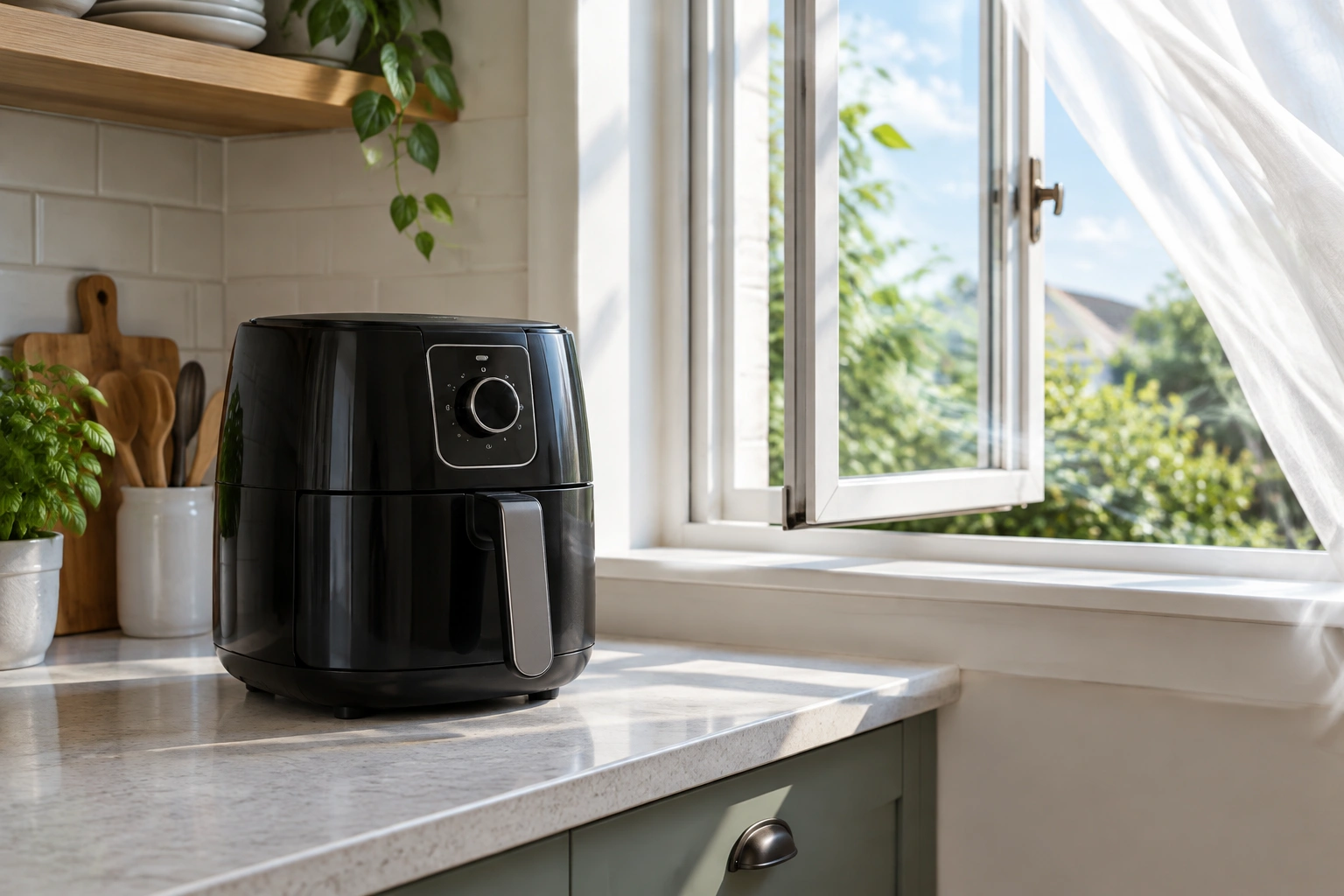
Step 3: Place the air fryer in a ventilated spot
Run it near an open window or under a range hood if possible. Keep some space around the back and sides so heat can escape.
Step 4: Run it empty for a short cycle
If the manual allows it, run an empty cycle at a moderate-to-high temperature for a short period.
Do not use this step to push through a strong burning-plastic smell, smoke, or an electrical odor. If the smell is sharp or gets worse as the unit heats up, stop the cycle instead of trying to “burn it off.”
Step 5: Let it cool fully, then repeat only if needed
If the smell was mild and there was no smoke, one or two additional short cycles may help. If the odor is still strong after that, stop and reassess instead of assuming it just needs more time.
Step 6: Cook a simple, low-odor food next
A plain batch of fries, vegetables, or another simple food can help you tell whether the smell is gone. Avoid greasy or saucy foods for the first test after cleaning, because they can muddy the diagnosis.
How long the smell should last
A new air fryer smell should not hang around forever.
In many cases, it fades after a few uses or after a few hours of runtime. A practical threshold for concern is when the smell is still noticeable after about 3–5 uses, or after repeated cleaning and burn-in cycles, depending on the unit.
If your air fryer still smells chemical-like after that, it’s worth looking harder at the cause. Persistent odor usually means one of three things:
- residue is still trapped somewhere
- the appliance is overheating a part
- the unit has a defective component
If it only smells during the first minute or two of heating and then settles down, that’s much less concerning than a smell that builds throughout the cook.
When the smell is really grease, food residue, or packaging
Not every sharp odor means the appliance itself is faulty.
Grease can smell surprisingly chemical
Old grease and burnt oil can smell plasticky or acrid once they get hot. The same goes for sugary sauces and glazes. If the smell appears after cooking wings, bacon, marinated chicken, or sticky vegetables, residue is a likely suspect.
A deep clean often changes the diagnosis fast. If the odor drops off after washing the basket, tray, and interior surfaces, the air fryer itself may be fine.
Leftover packaging can mimic a defect
If you just unboxed the machine, double-check that every piece of protective material is gone. A small strip of film or a sticker near a hot area can create a smell that sounds much worse than it is.
Accessories matter too
Not every accessory is truly heat-safe for every air fryer. If the smell started after adding a liner, rack, silicone mold, or replacement basket, remove it and test again using only the original parts that came with the appliance.
Warning signs that mean you should stop using the air fryer
Stop the appliance right away if you notice any of these:
- strong burning-plastic smell
- electrical burning smell
- smoke that doesn’t clear quickly
- sparks
- hot cord, plug, or outlet area
- melted, warped, or cracked parts
- discoloration around the heating area
- smell that gets stronger each time you use it
Those signs point away from normal off-gassing and toward a safety issue. Unplug the unit, let it cool, and don’t keep “testing” it.
If the smell is coming from the back of the machine or the cord area rather than the basket, I’d treat that as a bigger red flag than odor from the drawer or tray.
When to contact the manufacturer, return the unit, or replace it
Reach out to support if:
- the smell is still there after proper cleaning and a short burn-in
- the odor gets stronger instead of fading
- you see warping, melting, or discoloration
- the smell comes from the cord, plug, or electronics area
- the manual says nothing about the odor you’re experiencing
If the air fryer is new and the smell is severe, a return or exchange is often the safest path. If it’s an older unit and the smell has started suddenly, replacement is usually more practical than trying to nurse it along.
Manufacturer instructions should always override generic advice. If the manual says not to run the appliance empty or gives a specific first-use procedure, follow that first.
Can you still eat food cooked in it?
If the smell is mild, brief, and clearly tied to first-use off-gassing or residue that has now been cleaned, the food is usually not the issue. But if the appliance smells like burning plastic, electrical components, or smoke, do not eat food cooked during that event if it has absorbed the odor.
A good practical test is this: if the cooked food tastes normal and the appliance smell is fading, you’re probably dealing with a temporary issue. If the food tastes off, smells contaminated, or picks up a chemical aftertaste, discard it and fix the appliance problem first.
When in doubt, don’t use a questionable appliance to “see if it’s okay.” That’s how small problems turn into bigger ones.
Quick troubleshooting order that saves time
If you want the shortest path to a diagnosis, follow this order:
- Unplug and inspect for visible damage.
- Remove all packaging, stickers, and inserts.
- Wash and dry the basket, tray, and drawer.
- Run a short burn-in cycle in a ventilated area only if the smell is mild.
- Test again with a simple food at moderate heat.
- If the smell persists, worsens, or comes from the cord/electrical area, stop using it and contact support.
That sequence catches most harmless causes first and gets you to the real problem faster if there is one.
FAQ
Is a new air fryer smell toxic?
Usually, a mild new-appliance smell is temporary and not inherently toxic. The bigger concern is a smell that resembles burning plastic, melting parts, smoke, or electrical burning, which can signal a safety problem.
How many uses should it take for the smell to go away?
Often, the smell fades after a few uses. If it’s still noticeable after about 3–5 uses, or after repeated cleaning and a short burn-in cycle, it’s worth investigating further.
Can I use my air fryer if it smells like plastic?
If the smell is faint and only happens during the first few uses, cleaning and ventilation may be enough. If it is strong, gets worse, or smells like burning plastic, stop using it and inspect the unit.
What if the smell is coming from the cord or plug?
Unplug it immediately. A smell from the cord, plug, or back of the appliance is more concerning than odor from the basket or drawer and may indicate an electrical problem.
Final takeaway
A chemical smell from an air fryer is often harmless when it’s a brand-new appliance and the odor is mild, temporary, and tied to the first few uses. Clean the removable parts, remove any leftover packaging, and run a short ventilated burn-in only if the smell is mild and the manual allows it.
But if the odor smells like burning plastic, hot wiring, smoke, or melting parts, stop using the unit right away. That’s the clearest sign you’re dealing with a safety issue, not normal break-in odor.

