
B0F62RXD8G Review: A Practical Look at This Extra-Large Glass Food Storage Container Set

What Is B0F62RXD8G? Product Snapshot and Package Contents
B0F62RXD8G is an Amazon product listing for a 6-pack of extra-large glass food storage containers with lids. The listing appears under the MCIRCO name, and the product is described as a gray, see-through, airtight snap-closure set. Based on the available retailer information, the set is positioned for people who want sturdy containers for leftovers, meal prep, and freezer storage.
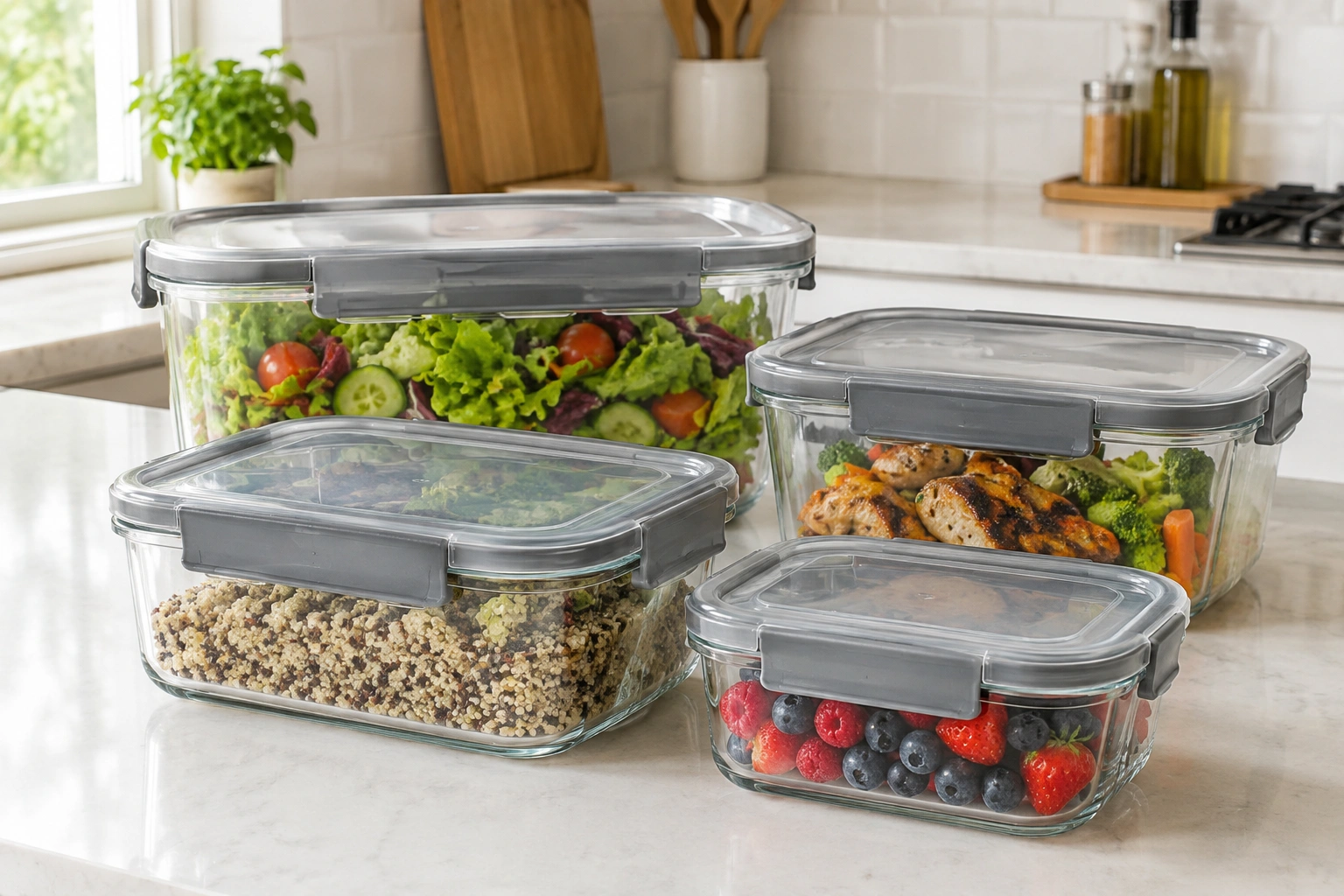
What is included in the box appears to be straightforward: six glass containers and six matching lids. I did not find evidence of extra accessories, inserts, or compartment dividers, so this looks like a plain storage set rather than a multi-piece organizer kit. One point worth stressing: the product pages and reseller listings do not all present the same exact capacity breakdown, so the safest way to read this listing is as a 6-piece glass container set with mixed sizes rather than assuming one single standardized volume per container across every marketplace. One listing describes the set as including sizes up to 67.4 oz, 33.8 oz, and 18.6 oz, while another shows a similar 6-pack with capacities listed as 74.7 oz, 40.9 oz, and 19.3 oz. That inconsistency is a reason to double-check the current Amazon listing before buying.
For readers who want the broad takeaway first: this is not a tiny snack set. It is aimed at households that actually store dinner leftovers, lunch portions, and batch-cooked food in containers big enough to matter.
At a Glance: Is This Container Set Worth Buying?
If you want glass containers that can move between storage, reheating, and cleanup without much fuss, this set looks promising. The listing-based evidence points to a practical, all-purpose container set with airtight snap lids and broad appliance compatibility. That combination is useful for busy kitchens because it reduces the number of containers you need to keep around.
My verdict, based on the available information, is yes for meal prep and leftovers, maybe for portability, and only if the size mix matches your routine. Glass is a smart choice when you care about odor resistance, stain resistance, and a cleaner reheating experience. The trade-off is weight and breakability. If you carry lunch every day or pack food for kids, plastic may still be easier. If you mostly store food at home and reheat it later, glass is often the better long-term buy.
The main reason this set stands out is that it seems designed for everyday use rather than specialty storage. That makes it attractive for families trying to simplify the fridge, reduce disposable containers, and keep leftovers from going to waste.
How We Evaluate It: Quality, Leak Resistance, Safety, and Value
For a food storage container set, four questions matter more than flashy photos:
1) Does it feel durable enough for repeated use?
A container that cracks, warps, or stains quickly becomes clutter. Glass usually has an advantage here because it handles repeated washing and reheating better than many budget plastics.
2) Are the lids secure enough to trust?
Airtight is not just a marketing word. For soup, chili, saucy pasta, or marinated food, the lid is what decides whether the container is useful outside the fridge.
3) Does it fit normal kitchen routines?
Microwave, freezer, and dishwasher compatibility matter because most families do not want a separate system for every step.
4) Is the value real?
Value is not just the cheapest price. It is the combination of container count, size variety, lid quality, and how long the set is likely to stay useful.
When a set performs well in all four areas, it earns its place in a busy kitchen. When it misses on one of them, the weakness usually shows up quickly in daily use.
Build Quality and Durability: What the Materials Suggest in Real Use
The available listings describe these containers as high-quality glass, and that is an encouraging sign for everyday storage. Glass is generally the better material when you want containers that resist staining from tomato sauce, curry, or oily leftovers. It also tends to hold odors less than plastic, which matters if you rotate between savory meals and more neutral foods like rice or cut fruit.
That said, glass brings a real trade-off: it is heavier and can break if dropped. So while this set may be a good fit for countertop-to-fridge-to-microwave use, it is not the best match for someone who wants ultra-light containers to toss into a backpack every day.
For families, the durability question is not just “Will it survive?” It is “Will it still look and function well after months of dishwashing and reheating?” Glass often wins that test. Plastic may be lighter, but it usually shows wear sooner through clouding, staining, or warping.
A practical rule: if your containers mostly stay at home, glass is usually worth the extra weight. If they spend a lot of time in lunch bags or car commutes, the convenience gap narrows.
Lid Fit and Leakproof Performance
The listing describes the containers as airtight with a snap closure. That is the right starting point, because lid design matters more than the container body when you are judging leak resistance. A solid glass base does not help much if the lid lifts at one corner.
For everyday use, airtight snap lids are most valuable in three situations:
- transporting soups, sauces, and dressings
- keeping cut produce from drying out too fast
- protecting leftovers from absorbing fridge odors
The question is not whether the lid closes. It is whether it closes consistently and stays closed when the container is moved, stacked, or tipped slightly. Because the available information is listing-based rather than lab-tested, I would treat the leakproof claim as promising but not proven. In practice, airtight does not automatically mean fully leakproof for thin liquids, so I would be cautious with broth, curry, or dressing until you have tested the seal yourself.
A smart buying rule: if you need containers for broth, curry, or any food you would hate to spill in a bag, inspect the lid seal carefully after the first wash and test it at home before trusting it on the road.
Microwave, Freezer, and Dishwasher Safety
One listing says the containers are microwave, oven, freezer, and dishwasher safe, and another says they are dishwasher and freezer safe. That is a strong convenience profile if accurate, but it is still worth reading the product instructions closely after purchase.
For real-world use, the safety hierarchy is simple:
- Glass bases are the part most clearly suited to storage and reheating, based on the listing claims.
- Lids are the part that usually need more caution, especially with heat.
- Freezer-safe glass matters if you batch cook and portion meals ahead of time.
- Microwave-safe glass matters if you reheat directly in the container.
- Dishwasher-safe parts matter if you want the set to stay practical instead of becoming hand-wash only.
- Oven-safe glass can be useful, but only if the manufacturer clearly confirms temperature limits and lid guidance.
One caution: lids are often the weak point in heat tolerance. Even when the glass base handles temperature changes well, lids may need different care. If the listing or packaging does not clearly explain whether the lid is dishwasher-safe, microwave-safe, or oven-safe, assume the lid deserves more caution than the glass container itself.
For a busy household, the best containers are the ones you can use without thinking through a separate rulebook every time.
For general food-safety guidance on storage and reheating, the USDA’s food handling resources are a useful reference point: USDA food safety basics.
Size Variety, Capacity, and Everyday Usability
This is where B0F62RXD8G may make or break the buying decision. The set is described as extra-large, and the available listings suggest a mix of generous capacities rather than a bunch of tiny portion cups.
That matters because container size should match the food you actually store:
- Large containers are useful for family leftovers, roasted vegetables, pasta, and batch-cooked grains.
- Medium containers work well for lunch portions, chopped fruit, or side dishes.
- Smaller containers help with sauces, snacks, or single servings.
If your current problem is leftover dinner taking over your fridge, larger glass containers are a real improvement. If your problem is packing tiny snacks for school lunches, extra-large containers may be overkill.
A practical decision rule: if at least half of your weekly storage needs involve full meals or family-size leftovers, this set fits the job better than a mixed set of small containers. If you mostly store sauces, dips, or pre-portioned snack items, you may prefer a smaller, more compartmentalized set.
Stackability, Nesting, and Storage Efficiency
Storage efficiency matters because a container set that eats cabinet space can become annoying fast. The listing does not give detailed nesting dimensions, so I would not assume perfect space-saving behavior. Still, glass container sets like this one usually help more in the fridge than loose plastic containers because they stack more cleanly and keep food visible.
The see-through design is a practical advantage. You can tell what is inside without opening every lid, which reduces waste and helps families use leftovers before they are forgotten.
In a small kitchen, the best-case scenario is this: the containers stack neatly in the fridge, the lids store in one place, and you can see what needs to be eaten first. If the set does not nest well, that does not make it a bad purchase, but it does mean you should plan for a dedicated shelf or bin.
Pros and Cons
Pros
- Glass construction is a strong choice for stain resistance and odor control
- Airtight snap lids should be useful for everyday leftovers and meal prep
- See-through design makes fridge organization easier
- Broad appliance compatibility, based on listing claims, adds convenience
- Extra-large sizes are practical for family meals and batch cooking
Cons
- Heavier than plastic, so less convenient for commuting or kids’ lunches
- Glass can break if dropped
- Size details vary across listings, so buyers need to verify the exact package
- Lid performance is promising but not independently verified here
- Extra-large containers may be too big if you mostly store small snacks
What Real Buyers Tend to Like and Complain About
The strongest customer-driven signal available here is the Amazon Egypt rating of 4.5 out of 5 stars from 217 reviews. That is a decent sign that many buyers found the set useful in real kitchens.
From the listing details and the way similar glass sets are typically reviewed, the most likely positives are straightforward: sturdy feel, good visibility, easy cleanup, and less odor retention than plastic. Those are the reasons people switch to glass in the first place.
The most common complaints with this kind of set usually fall into a few predictable categories:
- lids that are harder to close than expected
- containers that feel heavier than buyers wanted
- size confusion because photos make containers look larger or smaller than they are
- breakage risk if the glass is handled carelessly
That is why I keep coming back to the same practical advice: check the exact dimensions and capacity before ordering. A set can be excellent and still be wrong for your household if the size mix does not match your routine.
How B0F62RXD8G Compares With Similar Food Storage Container Sets
Compared with plastic container sets, this one likely wins on durability of appearance, stain resistance, and food odor control. Plastic is usually lighter and sometimes cheaper, but it tends to show wear sooner. If you reheat tomato-based meals often, glass is usually the better long-term choice.
Compared with other glass container sets in the same budget range, the tradeoff is usually between lid quality, size mix, and total value per container. Some competing sets may give you more pieces for the money, but not necessarily the same extra-large sizes. Others may include more consistent sizing or better nesting, but feel less sturdy. This set looks competitive if you want a simple, heavy-duty option and do not mind verifying the exact capacity breakdown before buying.
Compared with smaller sets, this one is better for families and batch cooks because it gives you more flexibility across meal sizes. Compared with larger sets, it may be easier to store and less expensive, but you may still need to buy additional containers if you prep a lot of food at once.
If you are choosing between glass and plastic, ask one question: will these containers mostly stay in the kitchen, or will they travel every day? That answer usually settles the debate.
Best For: Ideal User and Use Cases
B0F62RXD8G makes the most sense for:
- home cooks who store dinner leftovers regularly
- meal preppers who portion lunches for several days
- families who want fewer stained, flimsy plastic containers
- anyone who prefers glass for reheating and visibility
It is less ideal for:
- people who need ultra-light lunch containers
- shoppers who want tiny snack cups more than large storage
- households that drop containers often or need kid-proof portability
- buyers who need exact size certainty and cannot tolerate listing variation
If your kitchen routine centers on cooking once and eating twice, this set is aligned with that habit.
When to Ask a Food Safety Expert
If you plan to use these containers for unusual storage situations, ask a food safety expert or follow manufacturer guidance closely. That includes cases where you want to store food for long periods, reheat very frequently, or use the containers in ways not clearly explained by the listing. When a product page is vague about heat limits or lid instructions, it is better to verify than assume.
Bottom Line: Should You Buy It?
B0F62RXD8G looks like a solid glass food storage set for everyday kitchen use, especially if your priorities are leftovers, meal prep, and reducing plastic clutter. The strengths are practical: glass construction, airtight snap lids, and a size profile that appears geared toward real family storage rather than novelty use.
The main reasons to hesitate are also practical: the exact size breakdown is inconsistent across listings, glass is heavier than plastic, and leakproof performance is not independently verified here. If you want a lighter lunch system, look elsewhere. If you want a sturdy, reusable set for home storage and reheating, this one deserves serious consideration.
My recommendation is more specific: meal preppers and families who mainly store leftovers at home should find this set useful, while buyers who need reliable leakproof transport for soups, dressings, or other liquids should test the lids carefully and not assume airtight means spill-proof. If you want a versatile glass set for home meal prep and leftovers, and you verify the exact sizes before checkout, this is a sensible buy.