
GoodCook EveryWare B0D3412VJQ Review: Is This Extra-Large Square Container Worth Buying?

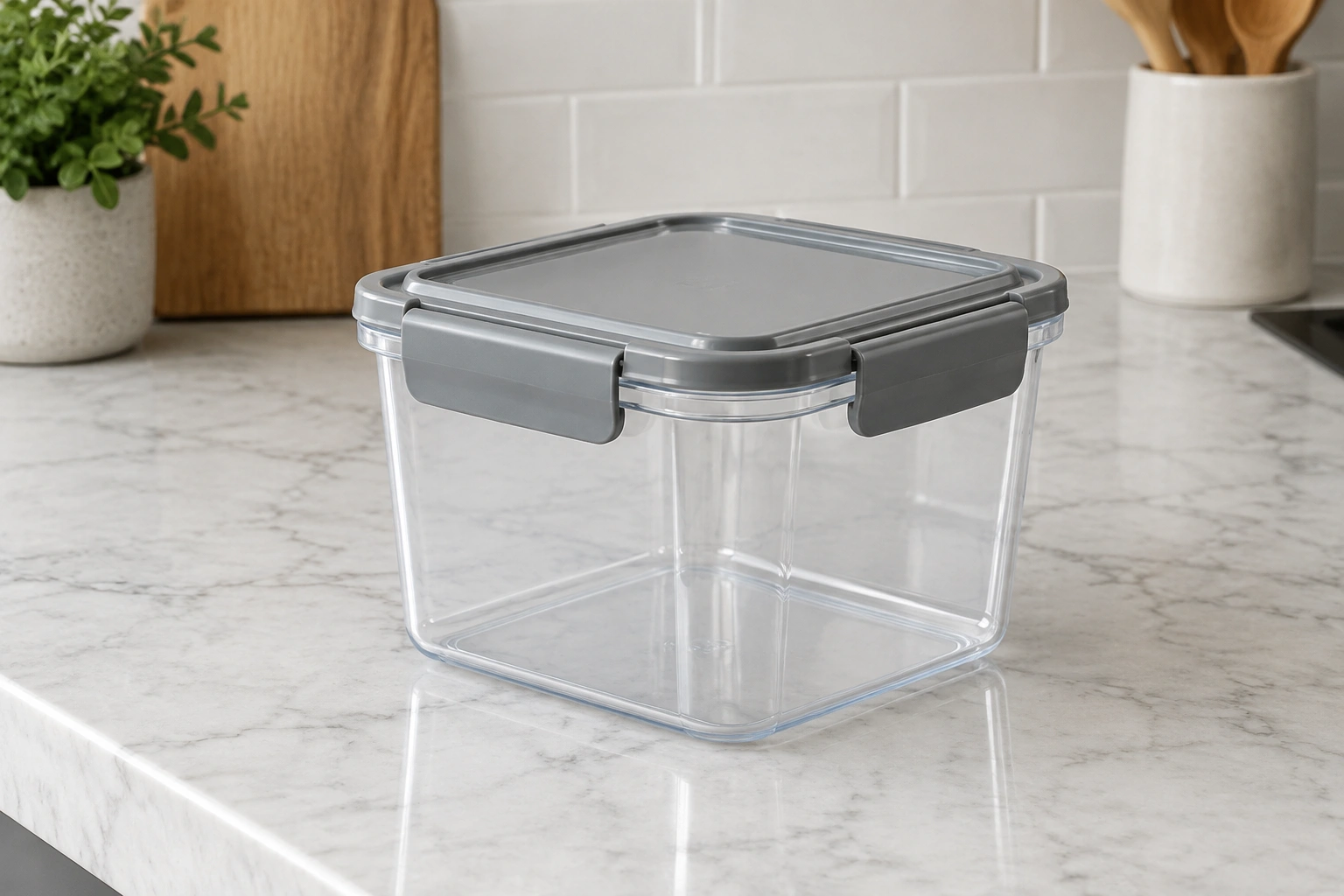
If you found B0D3412VJQ in a search and want a fast answer, this is the GoodCook EveryWare extra large square food storage container listing. The product page identifies it as a square, clear/gray container with a snap closure and an airtight description, and the listing also says it is dishwasher safe and microwave safe. Another product description gives the capacity as 11.7 cups, which is the key number most shoppers need to judge whether it fits leftovers, batch cooking, or pantry storage.
For busy households, the main question is not whether a container exists, but whether it solves a real kitchen problem. A single extra-large container can be useful when you regularly store a full batch of chili, pasta salad, roasted vegetables, or a large pile of leftovers after a family meal. It is less useful if you mostly portion out lunches in smaller servings. That trade-off matters more than the product code itself.
What B0D3412VJQ Is and Who It Fits
B0D3412VJQ is not a mystery gadget or a specialty storage system. It is a GoodCook EveryWare extra large square food storage container. The listing language points to a practical, everyday container with a lid designed for food storage, transport, and reheating. GoodCook’s own product page describes the 11.7-cup square container as ideal for storing or transporting large batches of treats, snacks, or leftovers.
That makes this container most relevant for three kinds of shoppers:
- Meal preppers who batch-cook grains, pasta, roasted vegetables, or chopped produce
- Families who need one container that can hold a lot of leftovers after dinner
- Budget-conscious buyers who want a simple container that can move from fridge to microwave to dishwasher
The square shape is worth noticing. Square containers usually waste less shelf space than round ones because they line up more cleanly in the fridge and cabinet. The downside is that very large square containers can be awkward if you are trying to fit them beside a crowded stack of smaller bins.
Key Specs: Size, Capacity, Material, and BPA-Free Status
The clearest verified figure here is the capacity: 11.7 cups. That is a genuinely large size for a food storage container. In practical terms, it is the sort of capacity that works for a family-sized side dish, a large salad base, or a substantial batch of leftovers. If you are packing single lunches, though, this size may be more container than you need.
The product is described as clear/gray and square. The listing also says the closure type is snap, which usually means a lid that fastens down rather than one that simply rests on top. That matters because snap closures are generally easier to trust for fridge storage and transport than loose-fitting lids.
The source data reviewed here does not clearly verify the exact material composition beyond the product being a GoodCook EveryWare food storage container, so it is safest not to overstate the material. One secondary product description states that the container is BPA-free, but that should be treated as a listing-level claim rather than a fully independent material certification. If BPA-free status matters to you, confirm that the specific seller listing says it directly.
Leakproof and Airtight Performance: How Reliable Is the Seal?
The listing describes the container as airtight, which is encouraging, but buyers should read that as a design claim rather than a guarantee of perfect leakproof performance in every situation. In real kitchens, the seal quality depends on how evenly the lid snaps down, whether the rim is clean, and whether the contents are very liquid.
For thick foods, this kind of container is usually a better fit than for thin soups. Think of chili, pasta salad, cut fruit, or rice dishes with sauce. Those foods are easier to transport because they do not put constant pressure on the lid. Very watery foods are a tougher test for any snap-lid container, especially if it will be jostled in a backpack or lunch bag.
A simple decision rule helps here: if you need a container mainly for fridge storage and occasional transport, an airtight snap lid is useful. If you need something for soup-heavy commuting or frequent bag tipping, you may want to keep shopping for a container with a stronger gasket-style seal or a design specifically marketed for leakproof carry.
Microwave, Freezer, and Dishwasher Use: What It Handles Well
The listing says the container is microwave safe and dishwasher safe. That combination is convenient because it lowers the friction of everyday use. A container that can go from leftovers to reheating to cleanup without special handling is usually easier to keep in rotation.
Still, “microwave safe” does not mean “use however you want.” With plastic containers, the practical rule is to reheat in moderate bursts, avoid overheating oily or sugary foods, and stop using any lid that shows warping or stress. If you routinely reheat very hot foods, it is wise to leave the lid slightly loose unless the manufacturer gives different instructions.
For freezer use, the source data here does not clearly confirm that the container is freezer safe. So the honest answer is that freezer-safe use is unconfirmed. Plastic containers can be fine in the freezer, but not every lid and container combination handles freezing equally well. If you plan to freeze meals, verify that feature before relying on this product for long-term freezer storage.
For dishwasher use, the main concern is lid wear. Repeated high-heat cycles can sometimes make plastic lids lose their snap or sit less snugly over time. If you want the longest possible life from a budget container, top-rack washing or gentler cycles are usually the safer habit.
For official food safety guidance on reheating and handling containers, the FDA’s consumer food safety pages are a useful reference point.
Build Quality and Durability Over Time
GoodCook positions this as a practical everyday container, not a premium heavy-duty system. That matters because expectations should match the price tier. A container like this is usually chosen for convenience and capacity, not for the rigid feel of glass or the indestructible reputation of high-end commercial storage.
The likely durability questions are the same ones most families eventually run into:
- Will the lid keep snapping securely after repeated washing?
- Will the plastic discolor from tomato sauce or curry?
- Will the container warp if it is microwaved often?
- Will the lid still feel aligned after months of use?
Those are fair questions because storage containers live a hard life. They get stacked, dropped, microwaved, and washed often. The best way to judge this product is not by expecting flawless longevity, but by asking whether the lid and body are sturdy enough for routine use at the price point.
If you are rough on containers, glass may outlast plastic in shape retention and stain resistance. If you are trying to keep things light, inexpensive, and easy to handle, plastic usually wins on convenience.
Storage Efficiency: Stackability, Fridge Space, and Cabinet Organization
The square shape is one of this container’s strongest practical advantages. Square containers generally sit more efficiently in cabinets and refrigerator shelves than round ones because they pack into corners and edges more cleanly. That matters in small kitchens where every inch counts.
An extra-large 11.7-cup container can also reduce clutter when you need to store a big batch in one place instead of splitting it across several small boxes. For example, a tray of roasted vegetables or a large pasta salad often fits better in one large square container than in two mismatched smaller ones.
The trade-off is footprint. A large square container can dominate shelf space, especially if your fridge already holds milk, produce bins, and lunch containers. If your household mostly stores individual servings, a set of smaller containers may organize better overall.
Best Uses: Meal Prep, Leftovers, Pantry Storage, and Lunch Packing
This container makes the most sense when the food itself is large, bulky, or awkward to split.
Best use cases
- Big leftovers: lasagna, casseroles, roasted chicken pieces, cooked grains, or a family-size salad base
- Meal prep batches: chopped vegetables, cooked rice, pasta, beans, or bulk-prepped lunch components
- Transporting treats or snacks: cookies, bars, muffins, or party leftovers
- Pantry storage for dry foods: only if the lid fit and your storage environment suit that use
Less ideal use cases
- Single lunch portions
- Very liquid foods that need a more secure leakproof system
- Small fridges where large containers become clutter quickly
If you are meal prepping for one or two people, I would not make this your only container. It is more of a “big batch” tool than a daily single-serving solution.
Strengths and Limitations at a Glance
| Feature | B0D3412VJQ | Typical Budget Plastic Container | Typical Glass Container |
|---|---|---|---|
| Capacity | 11.7 cups | Often smaller or mixed sizes | Often mixed sizes |
| Shape | Square | Varies | Varies |
| Lid style | Snap closure | Snap closure or basic lid | Snap or locking lid |
| Microwave use | Listing says yes | Often yes, but varies | Usually yes, with care |
| Dishwasher use | Listing says yes | Often yes, but varies | Usually yes |
| Weight | Light | Light | Heavier |
| Stain resistance | Moderate, depending on use | Moderate to lower | Better |
| Best for | Large leftovers, batch prep | Everyday general storage | Reheating and longer-term durability |
Main strengths
- Large 11.7-cup capacity
- Square shape helps with shelf efficiency
- Microwave and dishwasher safe per listing
- Simple, practical design for everyday kitchen use
Main limitations
- Large size may be too much for portioned lunches
- Plastic can stain, warp, or wear faster than glass
- “Airtight” does not automatically mean perfect leakproof transport
- Freezer-safe use is not clearly verified in the source data provided
B0D3412VJQ vs Similar Food Storage Container Options
Compared with similar budget plastic containers, B0D3412VJQ stands out mainly because of size. Many bargain sets are built around smaller 2-cup to 8-cup pieces. This one is aimed at bigger batches, which is useful if you cook once and store a lot at once.
That makes it a better fit for households that regularly need one container for a full casserole, a large side dish, or a batch of leftovers after dinner. If your main goal is packing lunches or storing smaller portions, a smaller multi-piece set is usually more efficient and easier to organize.
Compared with premium plastic sets, the difference is usually in lid precision, long-term durability, and the consistency of the seal after repeated use. If you use storage containers every day, that can matter.
Compared with glass containers, this GoodCook option is lighter and easier to handle. Glass is usually better for oven-style reheating and tends to resist stains and odors better. Plastic is easier to carry, easier to store in bulk, and usually cheaper. For a busy family, that lighter weight can be a real advantage when you are moving food from counter to fridge to lunch bag.
Value for Money: Is the Price Worth It?
Because the exact price can vary by seller, the better value question is this: do you need a large-capacity, microwave-safe, dishwasher-safe container that is easy to store and simple to use?
If yes, this product has a strong case. The 11.7-cup size alone can replace several smaller containers when you are storing one big batch. That can reduce clutter and make leftovers easier to manage.
If you mostly pack lunches or store individual servings, the value drops. You may pay for capacity you rarely use. In that case, a mixed-size set is often better value because it covers more kitchen tasks.
My practical verdict on value: good value for households that store large batches; less compelling for people who need a versatile full set of smaller portions.
When to Ask a Food Safety Expert
If you plan to use this container for unusual storage situations—such as repeated high-heat reheating, freezing foods for long periods, or storing foods with special handling needs—it is wise to check current food-safety guidance from a qualified source. For general safe handling and storage basics, the USDA’s food safety and storage guidance is a reliable place to start.
Final Verdict: Should You Buy B0D3412VJQ?
Buy B0D3412VJQ if you want a large, practical, square food storage container for leftovers, batch cooking, or transport of bulky foods. The verified 11.7-cup capacity, snap closure, and microwave/dishwasher-safe listing make it appealing for busy kitchens that value simplicity.
Keep shopping if you need guaranteed leakproof transport for soups, a freezer-first container, or a smaller set for meal-prep portions. Those needs call for a different design.
For most home cooks, this is a sensible utility container rather than a premium upgrade. It works best as a straightforward storage piece for big batches, not as the one container that does everything.