
MACTANO 8 oz Snack Containers Review: Is B0F8J62Y2D Worth Buying?

If you are trying to figure out whether B0F8J62Y2D is the right storage buy, this review keeps the decision simple. The listing identifies it as MACTANO 8 oz Reusable Snack Containers with Lids, New 3 Compartment Condiment Snack Pack Containers, 20 Sets. In plain terms, this is a small, reusable container set aimed at snacks, condiments, and portioned food storage rather than full-size leftovers.
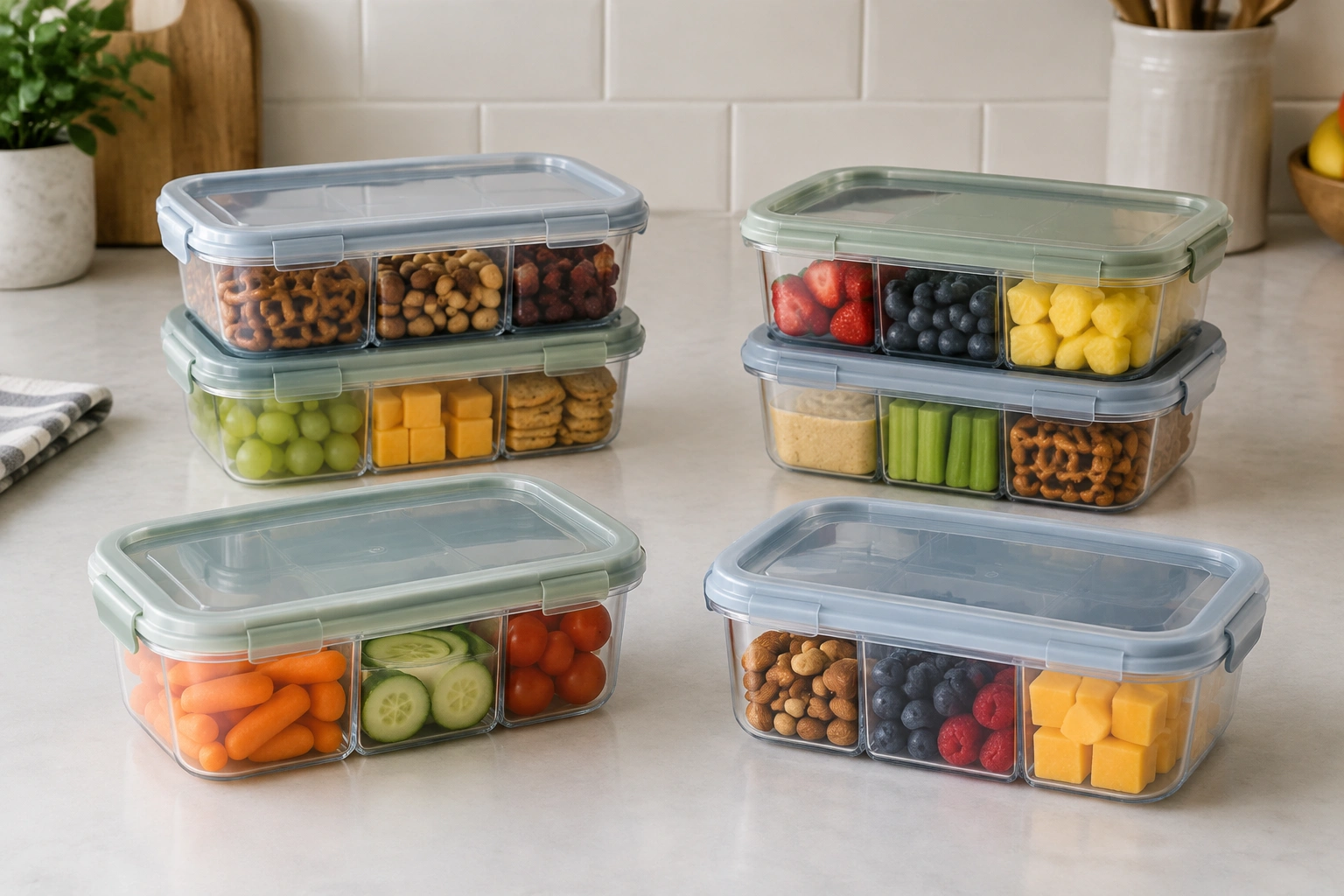
That matters because the best container is not the one with the biggest marketing claim. It is the one that matches how you actually pack food. A busy home cook usually needs a container that opens easily, stacks neatly, and does not leak when tossed into a lunch bag. A meal prepper needs repeatable portions. A budget-conscious family needs something that earns its keep through frequent reuse.
This product is built for those smaller, more specific jobs. It is not trying to replace every storage container in the kitchen. It is trying to solve the “I need a small, divided, reusable container” problem.
Quick Verdict: Is It Worth Buying?
If you want small, divided containers for snacks, condiments, or portion control, B0F8J62Y2D looks like a sensible candidate. If you need containers for soup, big leftovers, or freezer meal batches, this is probably too small to be your main set.
The strongest reason to buy a set like this is convenience. Three compartments let you separate foods that would otherwise get soggy or mixed together. That is useful for crackers and dip, fruit and yogurt toppings, sliced vegetables and hummus, or small lunch portions. For families packing school snacks or adults packing workday bites, that division can be more practical than a single open cavity.
The main trade-off is obvious: divided snack containers are less flexible than plain rectangular meal prep containers. You gain organization, but you lose capacity. If your household mostly stores pasta, rice bowls, or dinner leftovers, a larger undivided container or a glass set will usually fit better.
What Comes in the Set: Sizes, Count, and Real-World Capacity
The verified listing title says this is a 20-set product and that each container is 8 oz. That is enough to understand the basic use case, even if the listing images or packaging may provide more detail on exact dimensions.
Quick specs
- Product: MACTANO 8 oz Reusable Snack Containers with Lids
- Count: 20 sets
- Capacity: 8 oz per container
- Design: 3-compartment snack/condiment container
- Included: Containers with lids
Eight ounces is a helpful size for small portions, not full meals. In real life, that usually means:
– a snack portion of cut fruit
– a side of vegetables
– a dip or condiment
– a small portion of nuts, crackers, or trail mix
– lunchbox add-ons that need to stay separate
The “3 compartment” design matters more than the raw ounce count. A divided 8 oz container does not behave like an 8 oz open cup. Each compartment is intended for smaller portions, which helps with variety and portion control, but it also means you should not expect it to hold a generous single serving of anything wet or bulky.
If you are comparing value, do not count containers alone. Count usable portions. Twenty small divided containers can be a strong value for families who pack snacks daily, but not if you really need larger meal prep boxes.
Material and Build Quality
The listing presents these as reusable snack containers with lids, and the product title on its own does not clearly state the exact container and lid material. So the safest reading is that this is a plastic snack-container set, but the precise material should be confirmed on the product page or packaging before purchase.
For this category, plastic is usually the practical choice because it keeps the containers light, stackable, and affordable. That makes sense for lunch bags and everyday snack use.
The trade-off is durability over time. Plastic snack containers can stain more easily than glass, especially with tomato-based foods, curry, or oily dressings. They can also pick up odors if they are used repeatedly for strongly flavored foods. That does not make them a bad buy; it just means they are best treated as everyday utility containers, not premium long-life storage.
If you want containers that feel substantial and resist staining better, glass is still the safer long-term choice. If you want low-cost, lightweight containers for frequent use, plastic makes more sense.
Lid Seal and Leak Resistance
A divided snack container lives or dies by the lid. If the lid is loose, the compartments lose their value because foods can shift, leak, or mix during transport.
The listing shows a lid-based reusable snack pack design, but it does not give enough evidence here to call the seal truly leakproof. Based on the product type, I would treat it as a snack container with a lid rather than a verified leakproof food container.
Here is the practical rule:
– Good fit: dry snacks, cut produce, thick dips, yogurt toppings
– Caution: salsa, dressing, thin sauces, anything sloshing in a backpack
– Poor fit: soups and hot liquids
If you want transport security, test one container at home before relying on it for a commute or school bag. Fill it with water, close it, tilt it, and shake it over the sink. That simple check tells you more than a product title ever will.
Microwave, Dishwasher, and Freezer Performance
The listing details available here do not clearly confirm the exact microwave-safe, dishwasher-safe, or freezer-safe status. So the direct answer is: do not assume those uses are approved unless the product page or packaging says so.
That said, buyers usually care about these three things for a reason:
Microwave use
If you plan to reheat food in the container, confirm it is actually microwave-safe. Not every plastic container should be used that way, and not every lid should go into the microwave. Even when a container is labeled microwave-safe, venting matters.
Dishwasher use
Dishwasher-safe containers save time, especially in a meal-prep household. But repeated high heat can shorten the life of cheaper plastic and can eventually weaken lid fit. If the set is dishwasher-safe, top-rack washing is often the safer habit unless the manufacturer says otherwise.
Freezer use
Freezer-safe storage is useful for pre-portioned foods, but small snack containers are usually more about short-term convenience than long freezer storage. If you freeze them, leave room for expansion and avoid overfilling wet foods.
If the listing confirms all three, that makes the set much more useful. If one of those features is missing, you can still use the containers well — you just need to match them to the right job.
Stackability, Storage Convenience, and Ease of Use
For busy households, storage convenience matters almost as much as leak resistance. A container set is only helpful if you can find the lids, stack the boxes, and grab one quickly when packing lunch.
A 20-set snack container pack can be a strong choice if it nests or stacks neatly. Small containers are usually easier to store than bulky meal prep boxes, especially in a crowded cabinet. They also fit better in lunch bags and fridge drawers, which makes them practical for grab-and-go routines.
Ease of use is where divided containers often shine. They reduce the need for multiple small bags or extra cups. Instead of packing fruit in one container and crackers in another, you can keep a snack together in one unit. That saves time and cleanup.
The limitation is that tiny compartments can be fiddly if you are packing larger hands or trying to wash sticky food from corners. A smooth interior and a lid that closes without too much force are both useful signs of a well-designed everyday container.
Durability Over Time: Staining, Warping, and Odor Resistance
Long-term durability is where budget containers separate from better ones. Many plastic sets look fine on day one. The real question is how they behave after repeated washing, refrigeration, and use with real food.
Watch for three common issues:
1. Staining from tomato sauce, turmeric, or oily foods
2. Warping from heat exposure or rough dishwasher cycles
3. Odor retention after storing pungent foods
A divided snack container like this is most likely to stay in good shape if you use it for dry snacks, fruit, vegetables, and thicker dips rather than strongly colored or oily meals. If you treat it as a snack and condiment container, it should have an easier life.
A practical buying rule: if a plastic set costs little but starts warping or losing lid fit quickly, it is not cheap anymore. Replacement cost matters. A slightly better-made set that lasts through regular school lunches and weekly meal prep often wins on value.
Strengths and Limitations
Strengths
- Small size is useful for snacks and portion control
- Three compartments help separate foods cleanly
- Lightweight and likely easier to carry than glass
- 20 sets give you enough pieces for family routines or batch packing
Limitations
- 8 oz is small for leftovers or full meals
- Divided compartments reduce flexibility for larger portions
- Plastic may stain or hold odors more than glass
- Leak performance needs verification for wet foods and transport
The biggest strength is organization. The biggest limitation is capacity. That is the core trade-off.
How It Compares with Similar Food Storage Container Sets
Compared with similar plastic snack container sets, B0F8J62Y2D looks like a practical, budget-friendly option if the lid fit and material quality hold up. Many low-cost snack sets are useful on paper but frustrating in daily use because lids loosen, containers bend, or the compartments are too shallow to matter. A 20-set pack is attractive only if the pieces remain usable after repeated washing.
Compared with glass containers, this set is lighter, less breakable, and usually easier on the budget. Glass wins for stain resistance, odor control, and reheating confidence. Plastic wins for portability and cost. If you pack lunch every day and want something light, plastic makes more sense. If you mostly store leftovers at home and want a longer-lasting container, glass is usually the better investment.
Compared with larger meal prep containers, this product serves a different job. It is for small items, not full meals. That means it should be judged on convenience and portion control, not on whether it can replace your dinner storage system.
Best Uses: Meal Prep, Leftovers, Family Storage, or Pantry Organization
This container set makes the most sense for:
– packed snacks
– school lunch add-ons
– condiment portions
– veggie-and-dip combinations
– portioned nuts, fruit, or crackers
– small side items for meal prep
It is less ideal for:
– soup
– large leftovers
– saucy casseroles
– bulk freezer meals
– pantry items that need wider, deeper containers
If your household needs a “small things stay together” solution, this kind of container can save time every day. If your main problem is storing dinner leftovers, you will probably want a larger container style.
Value for Money and Final Recommendation
The value of B0F8J62Y2D comes down to whether you will actually use the divided 8 oz format. If you pack snacks often, portion food for kids, or want a simple way to separate small items, the set has a clear purpose and can be worth considering.
On a price-per-container basis, a 20-set pack is only a good deal if the lids hold up and the size is genuinely useful for your routine. That is where this kind of set can beat a bigger all-purpose container bundle: you are paying for a very specific snack-container job, not extra bulk you may never use. Compared with cheap mixed-size plastic sets, this one may be more useful if you specifically need uniform small portions. Compared with glass sets, it should be cheaper and easier to carry, but not as sturdy or stain-resistant.
If you only need general storage, this is probably not the best spend. You would get more usefulness from a mixed-size set or a sturdier glass option.
My practical verdict: buy it if you want a lightweight, divided snack container set for regular portioned use; skip it if you need confirmed leakproof meal containers for soups, leftovers, or freezer batches. That is the cleanest way to think about it.
Common Questions About B0F8J62Y2D
Is B0F8J62Y2D a meal prep container set?
It is better described as a snack container set than a full meal prep system. It may help with meal prep, but mainly for sides, snacks, and portioned items.
Are the containers leakproof?
The listing shows a lid-based reusable design, but I would not assume perfect leakproof performance without verification. Treat them as best for dry foods and thicker foods unless the product page clearly confirms leak resistance.
Can I use them for school lunches?
Yes, if the lunch items are small and separated. They are especially useful for crackers, fruit, vegetables, and dips.
Are they a good choice for families?
Yes, for families who pack snacks often. Twenty sets is a useful quantity for recurring lunch and snack routines.
Should I choose these or glass containers?
Choose these if you want lightweight, low-cost, portable containers. Choose glass if you want better stain resistance, odor control, and a sturdier feel for leftovers.
Do they replace larger storage containers?
No. They fill a narrower role. Think of them as a helper set, not your main kitchen storage solution.
Are they worth buying at a budget price?
They can be, but only if the lid fit and material quality are decent. A low price is not a bargain if the containers stop closing properly after a short time.
What should I check before ordering?
Confirm the exact material, microwave/dishwasher/freezer compatibility, and whether the lid design matches the foods you plan to store.
When to Ask a Food Safety Expert
If you plan to use any container for hot foods, long storage, or repeated reheating and the product labeling is unclear, check the manufacturer guidance or ask a food safety professional. For food-contact items, the details matter more than the marketing language.