
Can Tupperware Go in the Freezer? A Practical Guide to Safe Storage

Yes—some Tupperware can go in the freezer, but not every container is meant for it. The safest rule is simple: check the specific container, not just the brand name. That matters because freezer use is about more than just “plastic in cold air.” The container has to handle low temperatures, food expansion, and repeated use without cracking or losing its seal.
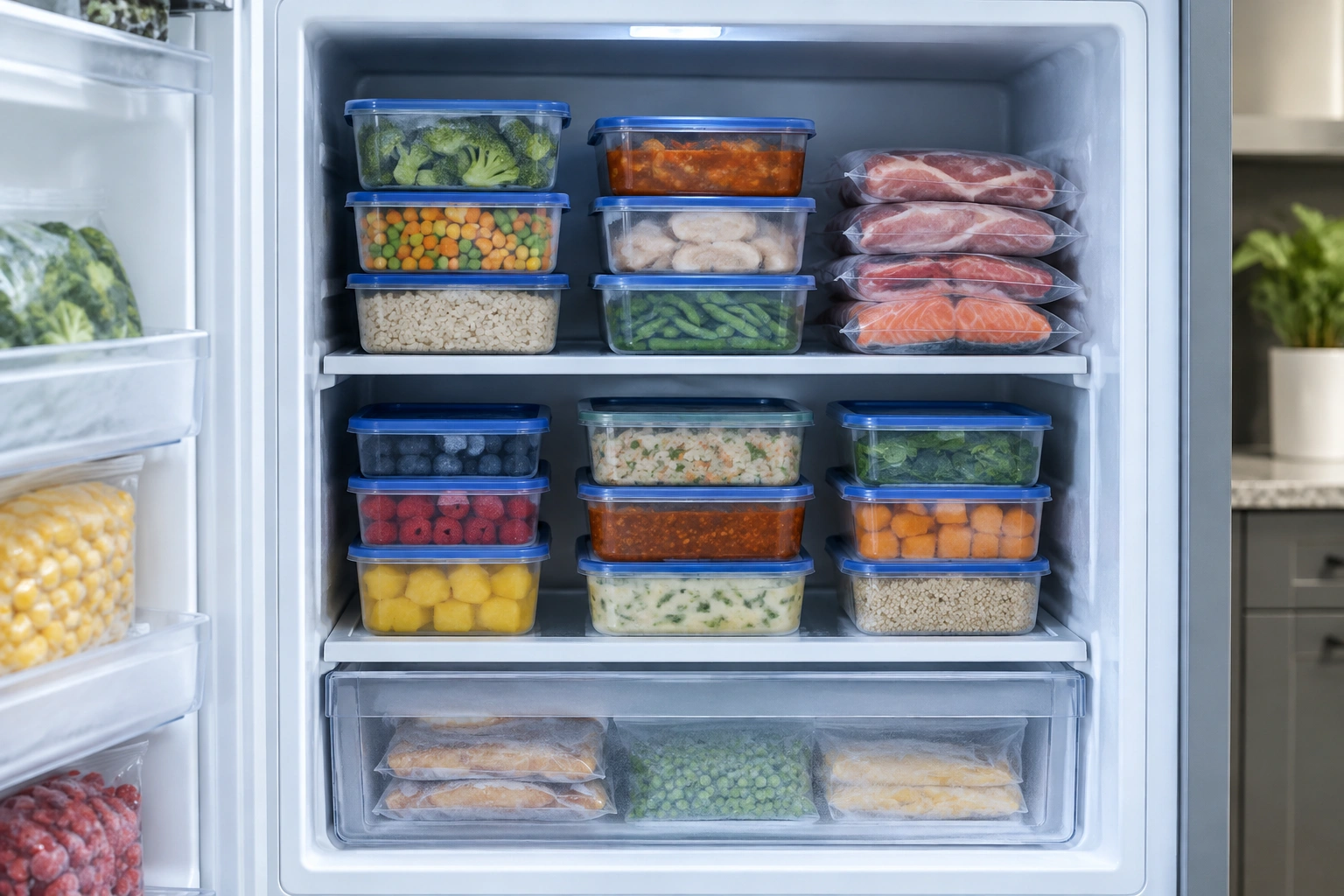
If you’re freezing soup, chili, rice, cooked vegetables, or leftover casseroles, Tupperware can be a very practical choice—when the container is labeled for freezer use and you pack it correctly. If the container is older, scratched, warped, or missing a clear freezer-safe marking, treat it as questionable and use a different storage option.
Can Tupperware Go in the Freezer?
The short answer is: sometimes, yes.
The more useful answer is: only if that specific container is designed for freezer storage. That does not mean every Tupperware container in your cabinet is suitable.
This distinction matters because people often assume that if a container is:
– BPA-free,
– microwave-safe, or
– dishwasher-safe,
then it must also be freezer-safe. Those labels do not mean the same thing.
For a busy household, the practical takeaway is this: if you want to freeze leftovers regularly, keep a few containers that are clearly marked for freezer use and reserve the rest for fridge storage or dry goods.
How to Tell if Your Tupperware Is Freezer-Safe
The safest decision comes from the container itself, not from memory or guesswork.
Check the label or product listing first
Look for wording such as:
– freezer-safe
– freezer storage
– freezer use
– suitable for freezer
If you still have the packaging or product page, that is the best place to verify it. If the container was sold as part of a freezer collection, that is a strong sign it was designed for cold storage.
Look for symbols on the bottom
Some containers use icons or markings rather than long instructions. If the bottom has no freezer indication at all, do not assume it is safe.
Read the plastic recycling code, but do not rely on it alone
Plastic recycling codes can help you identify the material type, but they do not automatically tell you whether the container is freezer-safe. In practice, polypropylene, often marked with recycling code 5, is commonly used in freezer-friendly containers because it tends to handle cold storage well. But the code is only a clue—the manufacturer’s freezer-safe labeling is the deciding factor.
Don’t confuse these labels
A container can be:
– microwave-safe but not freezer-safe,
– dishwasher-safe but not freezer-safe,
– BPA-free but still not suitable for freezing.
That is why the label matters. One label does not cover every use.
What Happens to Plastic in the Freezer
Plastic behaves differently in cold temperatures. Some containers stay flexible enough to handle freezing. Others become more brittle, which is when cracks and lid failures show up.
Why cracking happens
A container can crack for a few common reasons:
– the plastic becomes brittle in the cold,
– the food expands as it freezes,
– the container was filled too full,
– the container already had small stress marks or scratches.
Soup, stew, broth, and sauce are especially likely to create pressure because liquids expand when frozen. That pressure can push against the walls or lid enough to split a weaker container.
Why warping matters
Warping is more than a cosmetic issue. Once a base or lid changes shape, the seal may no longer sit tightly. That can lead to:
– leaks,
– freezer burn,
– odors transferring into the food,
– and containers that no longer stack well.
Why temperature shock matters
Temperature shock is the stress created when a container goes from one extreme to another too quickly. A hot container moved straight into the freezer is much more likely to fail than one that has been cooled first. The same idea applies in reverse: a very cold container should not be rushed into harsh heat unless the product is explicitly designed for that.
Best Foods to Freeze in Tupperware
Tupperware works best for foods that are already portioned and not too expansion-heavy.
Good candidates
These usually freeze well in freezer-rated plastic containers:
– cooked rice
– beans
– shredded cooked meats
– soups and stews, if you leave headspace
– pasta sauce
– casseroles
– leftover grains or vegetables
– portioned meal prep servings
These foods are useful because they stack neatly, reheat in manageable portions, and are easy to label.
Foods that need extra caution
Be more careful with:
– very liquid-heavy soups,
– broths,
– foods with a lot of steam still trapped inside,
– foods that expand a lot as they freeze.
For those, container shape and headspace matter a lot more. If the food fills the container to the top, even a freezer-safe container may leak or bulge.
When another storage option may work better
If you need to save space or freeze something very flat, freezer bags can be more efficient. If you want a rigid container that resists odors and stacking pressure, glass may be better—provided it is explicitly freezer-safe.
How to Freeze Food in Tupperware Without Cracking or Leaks
Use a simple process and you avoid most of the common failures.
1. Cool the food first
Let hot food cool before sealing and freezing it. This reduces steam pressure inside the container and protects the plastic from sudden temperature change.
2. Leave headspace
Frozen food expands. Leave room at the top, especially for soups, sauces, and other liquids. If you pack a liquid to the brim, the pressure has nowhere to go.
3. Seal the lid evenly
Press the lid on all the way around so it sits flat. A partial seal can let air in, which increases freezer burn and odor transfer. It can also pop loose if the food expands.
4. Use the right container shape
A shallow, wide container often freezes more evenly than a deep one. It also cools faster in the fridge before freezing, which helps reduce stress on the container.
5. Label before it goes in
Write the food name and date on the container before freezing it. That saves time later and helps you use food while quality is still good.
6. Freeze on a level surface
Set the container flat until the food is solid. If the container tilts while the contents are still soft, the lid can shift or the food can freeze unevenly.
Can You Freeze Hot Food in Tupperware?
You should not put hot food directly into a closed freezer container and send it straight into the freezer.
Here’s why:
– steam builds pressure,
– the lid may bow or pop,
– the plastic may be stressed by the temperature change,
– the food takes longer to freeze, which is not ideal for quality.
A better routine is to let the food cool first, then portion it into the container, then refrigerate it briefly if needed before moving it to the freezer. That extra step is worth it for soups, chili, and freshly cooked sauces.
For food safety, follow standard cooling guidance from trusted sources like FoodSafety.gov and the USDA rather than guessing based on the container alone.
Can Tupperware Go from Freezer to Microwave or Dishwasher?
Only if the product is labeled for those uses.
Freezer-safe does not mean microwave-safe
A freezer-rated container may still not tolerate microwave heat. If you microwave it anyway, you risk warping the lid or softening the plastic.
Dishwasher-safe does not mean freezer-safe
A container can survive a dishwasher cycle but still become brittle in the freezer. Heat tolerance and cold tolerance are separate issues.
The practical rule
Before reheating or washing, check the container’s care instructions:
– freezer-safe for cold storage,
– microwave-safe for reheating,
– dishwasher-safe for machine washing.
Frozen food can usually be thawed or reheated in the same container only when the container is explicitly microwave-safe and the manufacturer allows that use. In practice, that often means removing or venting the lid before microwaving so steam can escape safely.
If the label does not clearly say a container can handle a specific use, do not assume it can.
Older Tupperware vs Newer Freezer-Rated Containers
Older containers sometimes still work, but they are not the safest default.
Older containers
Older plastic can be fine if it is:
– still flexible,
– not cloudy from wear,
– not cracked,
– not warped,
– and clearly marked for freezer use.
If it has been through years of washing, stacking, or repeated temperature changes, the plastic may have weakened even if it looks acceptable at a glance.
Newer freezer-rated containers
Newer freezer-focused containers are usually the better choice for regular meal prep because they are designed around cold storage needs.
If you freeze food often, it is worth separating your containers into two groups:
– freezer-only containers,
– everyday fridge or pantry containers.
That keeps the decision simple and reduces mistakes.
Tupperware vs Glass Containers vs Freezer Bags
| Storage option | Best for | Main advantage | Main trade-off |
|---|---|---|---|
| Freezer-safe Tupperware | leftovers, meal prep, stacked portions | lightweight, reusable, easy to stack | can crack or warp if not freezer-rated |
| Glass freezer containers | sauces, casseroles, odor-sensitive foods | rigid, easy to see contents, less likely to absorb smells | heavier and can break if not freezer-safe |
| Freezer bags | flat storage, soups, space-saving portions | saves space and reduces air exposure when used well | less protective against crushing and spills |
A useful example: if you’re freezing several portions of chili, a freezer-safe plastic container is convenient for stacking. If you’re freezing a casserole you want to reheat in the same dish, a freezer-safe glass container may be better. If you need to fit a week’s worth of soup into a crowded freezer, a freezer bag may be the smartest space-saving option.
For more on glass containers in the freezer, see our guide on freezing glass containers with plastic lids safely.
When to Replace a Container
Do not keep using a container that has crossed the line from “worn” to “unreliable.”
Replace it if you notice:
– cracks, even small ones,
– warping that prevents a tight seal,
– brittle spots,
– lids that no longer close evenly,
– deep scratches or cloudiness that suggest heavy wear,
– a container that leaks after freezing.
Stop using any container that cracks, warps, or leaks in the freezer, and replace it rather than repurposing it for freezing again. A damaged container may still look usable, but freezer storage depends on a good seal and stable structure. Once those are gone, the risk of leaks and food waste usually outweighs the savings.
When to Ask a Food Safety Expert
Ask a food safety professional or your local extension service if you are unsure about:
– whether a specific container is freezer-safe,
– whether a lid system is meant for cold storage,
– how to handle food that was cooled or frozen improperly,
– or whether a container should be retired after damage.
That is especially useful if you are freezing large batches for a family, meal-prepping for several days, or storing food that will be kept for a long time.
Final Takeaway
Can Tupperware go in the freezer? Yes, if the specific container is designed and labeled for freezer use. The safest approach is to verify the label, cool food before freezing, leave room for expansion, and retire any container that is cracked, warped, or no longer sealing well.
If you freeze food often, the easiest system is to keep a few containers reserved for freezer storage and use them consistently. That small habit reduces leaks, protects your food, and makes meal prep much easier to manage.