
What Mixing Bowls Are Used For: A Practical Guide to Everyday Kitchen Jobs

If you cook at home with any regularity, a mixing bowl is one of the few tools that earns its cabinet space every week. It is not just for baking. A good bowl helps you combine ingredients cleanly, keep your prep organized, and move from chopping to cooking without cluttering the counter.
In plain terms, mixing bowls are used to stir, whisk, toss, fold, and combine ingredients for cooking and baking. They also help with meal prep, serving, and short-term storage when the size and material fit the job.
For busy households, that matters. A well-chosen bowl can make dinner prep easier by keeping ingredients contained while you work. It can also save money, because one bowl may handle mixing, tossing, resting, and even short-term storage.
What a mixing bowl is designed to do
A mixing bowl is a general-purpose kitchen bowl made to hold ingredients while you stir, whisk, fold, beat, toss, or combine them. The shape is usually deeper and more open than a typical soup or cereal bowl, with enough room to move ingredients around without sending them over the edge.
That shape is practical in everyday use. If you are whisking pancake batter, for example, the wider opening gives you room to move the whisk without scraping constantly against the sides or splashing batter onto the counter.
Wirecutter also points out that deep metal bowls are useful for containing drips from spinning beaters and for everyday mixing jobs. That is a good reminder that the bowl’s main job is control: keep ingredients together while you work.
Common ways home cooks use mixing bowls
Mixing bowls show up in more kitchen tasks than many people expect. The most obvious use is combining ingredients, but the real value is how often they simplify the whole prep process.
Baking prep
For baking, a mixing bowl is where dry ingredients get whisked together, wet ingredients get blended, and batter comes together before it goes into a pan. A medium or large bowl gives you room to mix cake batter, pancake batter, muffin batter, or cookie dough without chasing ingredients up the sides.
That extra space matters. If you have ever tried to whisk flour into milk in a shallow bowl, you know how quickly dust and drips can spread across the counter. A deeper bowl gives you a safer margin.
Everyday cooking tasks
Mixing bowls are just as useful outside baking. You can scramble eggs in one, stir together a quick sauce, toss cooked noodles with seasoning, or combine a salad before serving. America’s Test Kitchen says it uses these bowls every day for things like scrambling eggs, eating lunch salads, and noodles. That is a practical reminder that a mixing bowl is often a day-to-day cooking tool, not a special-occasion one.
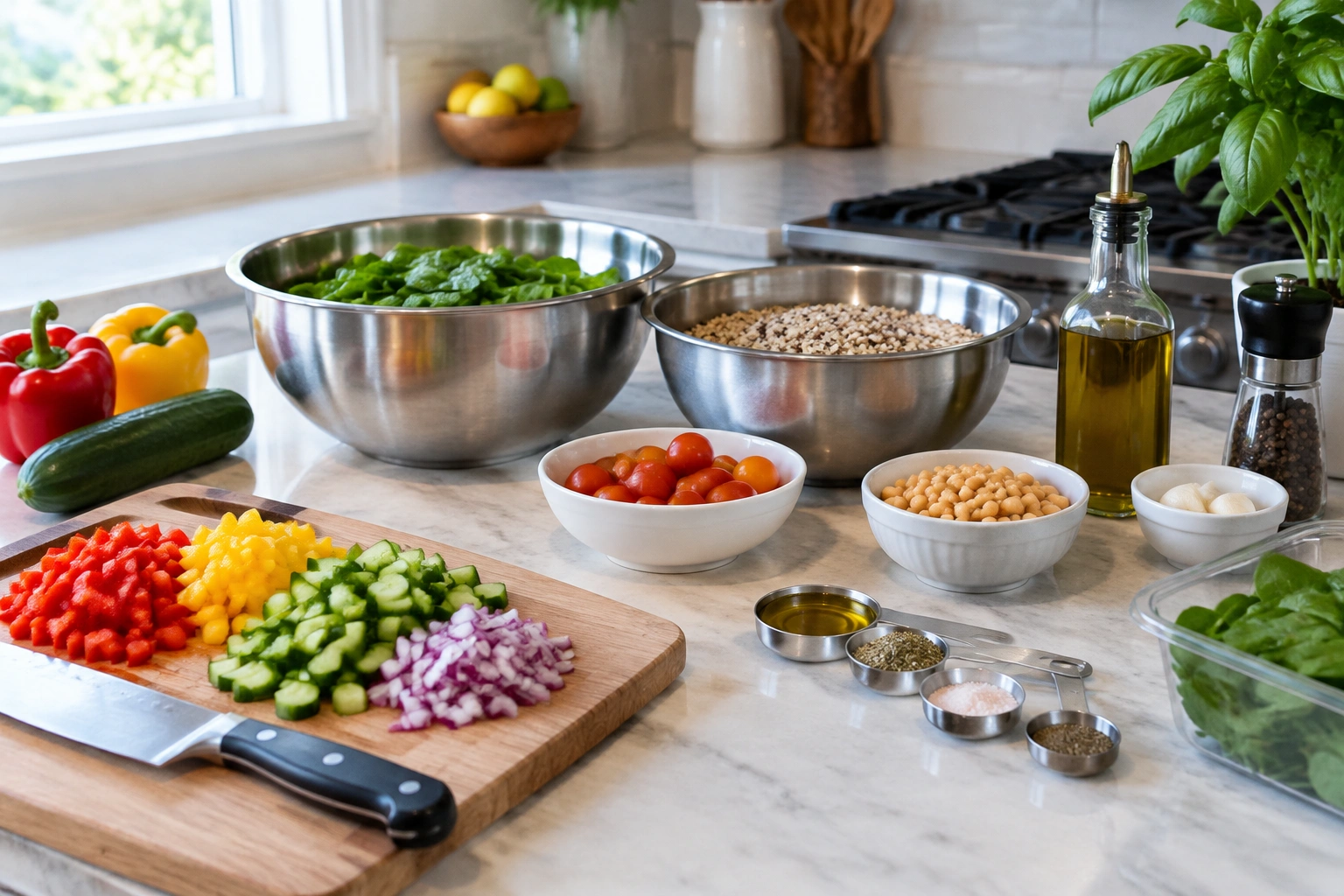
For weeknight cooking, this is where a bowl earns its keep. You can hold chopped onions in one bowl, whisk dressing in another, and toss the finished vegetables in a third. That kind of staging keeps the workflow moving and reduces the odds of forgetting an ingredient.
Meal prep and ingredient staging
Small and medium mixing bowls are especially helpful during meal prep. Use them to hold chopped vegetables, measured spices, grated cheese, or pre-portioned toppings. This is the kitchen version of laying out your tools before you begin: it keeps the counter orderly and makes the next step faster.
If you batch-cook on weekends, bowls are useful for separating components before they are assembled. One bowl for cooked grains, one for chopped vegetables, one for sauce—simple, visible, and easy to manage.
When a mixing bowl can also serve another purpose
A mixing bowl can sometimes pull double duty, but only when the task fits the bowl’s design.
A pretty glass mixing bowl can work as a serving bowl in a pinch, especially for salad, fruit, or a side dish. Wirecutter notes that glass bowls can serve this role, and that is often enough for home kitchens where storage space is limited. If the bowl looks presentable and is the right size, there is no need to transfer food twice.
A mixing bowl can also replace a regular bowl for everyday use if you are eating at home and do not need a more decorative dish. That is especially true for simple meals, snacks, or family-style serving. It is less ideal if you want something smaller, lighter, or more polished for the table.
Mixing bowls can also be used for short-term food storage, especially if they come with lids. That said, a mixing bowl is not automatically a replacement for a true storage container. If you need something airtight, stackable, or leak-resistant for transport, a dedicated container is usually the better choice.
For leftovers in the fridge, a lidded bowl can be convenient. For lunch to-go, it is usually less reliable than a proper storage container.
Mixing bowls vs. serving bowls, prep bowls, and storage containers
These categories overlap, but they are not identical.
Mixing bowls vs. serving bowls
Serving bowls are chosen mainly for presentation and table use. Mixing bowls are chosen for function first. A serving bowl may be shallower, wider, or more decorative. A mixing bowl is usually deeper and more practical for stirring and tossing.
If you want one bowl to do both jobs, glass is often the easiest compromise. It is attractive enough to bring to the table, and it still functions well for prep.
Mixing bowls vs. prep bowls
Prep bowls are usually smaller and meant for holding ingredients before cooking. Mixing bowls are larger and better for combining those ingredients. A prep bowl might hold chopped herbs or a measured spice blend. A mixing bowl is where those ingredients get turned into a sauce, batter, or salad.
If your kitchen is small, you may not need a separate set of prep bowls. A few small mixing bowls can do both jobs.
Mixing bowls vs. storage containers
Storage containers are built for sealing, stacking, and carrying. Mixing bowls are built for access and movement. That difference is why a bowl is better for whisking and tossing, while a container is better for keeping leftovers contained.
If you are deciding between the two, ask one question: will the food stay in the kitchen, or does it need to travel? If it needs to travel, choose the container.
How to choose the right material
The most common mixing bowl materials are stainless steel, glass, ceramic, and plastic. Each has trade-offs, and the best choice depends on how you cook.
| Material | Best for | Main strengths | Main trade-offs |
|---|---|---|---|
| Stainless steel | Everyday mixing, whisking, tossing | Lightweight, durable, easy to handle | Not microwave-safe |
| Glass | Serving, visible prep, some microwave use | You can see inside; can work for serving | Heavier and breakable |
| Ceramic | Table use, stable mixing | Attractive, sturdy feel | Heaviest and more fragile than steel or plastic |
| Plastic | Budget-friendly prep, light handling | Affordable and lightweight | Can stain, scratch, or retain odors |
Stainless steel
For most busy kitchens, stainless steel is often the most practical all-around choice. It is light, durable, and easy to move around the counter, which makes it especially useful for frequent meal prep, whisking, and tossing.
If you only want one bowl, a medium stainless steel bowl is usually the simplest buy. It handles a wide range of everyday jobs without taking up much space.
Glass
Glass is useful when you want to see what is happening inside the bowl. That makes it handy for batters, salads, and ingredient prep where visibility helps. It can also work well if you want a bowl that can move from prep to serving.
The trade-off is weight and breakability. Glass is less forgiving if dropped, and it can be awkward if you frequently move bowls from counter to table to fridge.
Ceramic
Ceramic can be appealing if you want a bowl that feels stable and looks good on the table. It can work well for serving and for some mixing jobs, but it is usually heavier than stainless steel and more fragile than plastic.
For a kitchen where bowls get used hard and often, ceramic is usually not the first choice. For occasional use or table service, it can make sense.
Plastic
Plastic is often the budget-friendly option and can be very convenient for light prep work. It is easy to lift, easy to store, and often sold in nesting sets that save space.
For kids’ cooking, plastic is often the easiest material to handle because it is lightweight and less likely to break if dropped. The trade-off is durability over time. Plastic may stain, scratch, or hold odors, especially if you use it with strongly colored or aromatic foods. If you want the cheapest practical option, plastic can work. If you want the longest-lasting everyday bowl, stainless steel usually wins.
What size mixing bowl you need
Size matters more than many buyers expect. A bowl that is too small turns whisking into splashing. A bowl that is too large can be awkward to store and clumsy for small tasks.
Small bowls
Small bowls are best for ingredient staging, sauces, toppings, and small batches. They are useful when you want to keep chopped items separate before cooking. Think minced garlic, spice blends, or a quick dressing.
Medium bowls
Medium bowls are the workhorses. They are a good fit for scrambled eggs, pancake batter, salad dressing, and small to medium meal-prep jobs. If you only buy one bowl, this is usually the most useful size.
Large bowls
Large bowls are worth having if you make family-size salads, cookie dough, bread dough, or large batches of batter. They are also helpful when you need extra room to toss ingredients without spilling.
A practical rule: if the bowl will be used for whisking or tossing, choose one that leaves visible empty space above the ingredients. That extra headroom reduces mess and makes mixing easier.
Do you need a single bowl or a nesting set?
A single bowl costs less and takes less space, but a nesting set gives you flexibility. For most households, a set is the better long-term buy because different tasks need different sizes.
If your kitchen is small, nesting bowls are especially useful. They stack neatly, which means less cabinet clutter. They also let you separate tasks: one bowl for dry ingredients, one for wet, one for finished salad, one for leftovers.
If you want the simplest decision rule, use this: if you want one bowl, buy a medium stainless steel bowl; if you want more versatility, buy a small nesting set with lids.
The downside is that sets can include sizes you rarely use. If budget is tight, buy the size you use most often first, then add another bowl later if you need it.
Helpful features that make a bowl more useful
Some features are worth paying for because they solve real kitchen problems.
Lids
Lids are the most useful extra feature for meal prep. They let you refrigerate chopped vegetables, partial sauces, or leftover salad without transferring to another container. If you cook ahead for the week, lids can save time and reduce dishwashing.
Non-slip bases
A non-slip base helps keep the bowl steady while whisking or mixing heavier ingredients. That matters when you are working with thick batter or trying to stir one-handed while adding ingredients. The trade-off is that these bowls may be bulkier and not nest as tightly.
Pour spouts
Pour spouts are handy when you are transferring batter or sauce to another container or pan. They are not essential, but they can reduce drips and make pouring cleaner.
Measurement markings
Measurement markings are useful if you want fewer measuring cups on the counter. They are not a replacement for accurate measuring tools, but they can speed up simple prep work.
Safety and care: what to check before you use a bowl
Do not assume every mixing bowl is safe for every job. Check the manufacturer’s instructions for dishwasher, microwave, and oven use before you rely on a bowl for hot food.
- Dishwasher-safe: stainless steel, many glass bowls, many plastic bowls, and many ceramic bowls are dishwasher-safe, but not all of them are. Check the label.
- Microwave-safe: glass and ceramic are generally the safest bets for microwave use, and some plastics are microwave-safe if the manufacturer says so. Stainless steel should not go in the microwave.
- Oven-safe: some glass and ceramic bowls are oven-safe, but many are not. Plastic and stainless steel are generally not oven-safe unless the manufacturer specifically says otherwise.
Be careful with hot ingredients and sudden temperature changes, especially with glass and ceramic. They can crack or break if handled roughly or exposed to thermal shock. Plastic can also become soft or warp if it is not made for heat. For stainless steel, the bowl itself can handle hot ingredients well, but it is still not microwave-safe.
For general food safety guidance on handling and storing food properly, the USDA’s food safety resources are a solid reference point: USDA Food Safety and Inspection Service.
Best mixing bowl choices for different kitchen needs
If you want the simplest buying decision, use this approach:
- Best all-around choice: stainless steel nesting bowls
- Best for serving and visibility: glass bowls
- Best for budget and light use: plastic bowls
- Best if table presentation matters: ceramic bowls
- Best for meal prep: lidded nesting bowls
- Best for small kitchens: one medium bowl plus a compact nesting set
For families trying to stretch space and budget, a practical starter setup is one medium bowl, one large bowl, and one small bowl. That covers most cooking and prep jobs without filling the cabinet.
If you are choosing on a tight budget, prioritize one medium bowl first. If you can afford a very small set, look for nesting bowls with lids so you get both everyday mixing and basic storage in one purchase.
If you want to see a real-world example of a lidded meal-prep style bowl set, this review of a GoodCook 4-cup set shows how size, lids, and safety features can shape everyday usefulness: GoodCook 4-Cup Meal Prep Bowl Set review.
FAQ
Can a mixing bowl replace a regular bowl?
Yes, sometimes. For everyday eating, serving, or simple prep, a mixing bowl can stand in for a regular bowl if the size and material work for the task. It is less ideal if you want something more decorative, smaller, or easier to carry.
Are mixing bowls safe for hot ingredients?
Usually, yes, but it depends on the material. Glass and ceramic are often used for hot ingredients if the manufacturer says they are heat-safe. Stainless steel handles hot ingredients well, but it should not go in the microwave. Plastic is only a good choice for hot food if it is labeled safe for that use.
What is the best material for a mixing bowl?
For most households, stainless steel is the most practical everyday choice because it is durable, lightweight, and easy to use for meal prep. If you want to microwave food in the bowl, glass is usually the better option, as long as the label says it is microwave-safe.
Are mixing bowls dishwasher-safe?
Many are, but not all. Stainless steel, glass, ceramic, and some plastics are often dishwasher-safe, but you should always check the manufacturer label before washing them that way.
Final take
Mixing bowls are everyday kitchen tools for stirring, whisking, tossing, prep, serving, and short-term storage. The best choice depends on how you cook, but a medium stainless steel bowl is a strong first buy, and a small nesting set with lids gives you more flexibility. If you match the material and size to your routine, a mixing bowl can cover far more than one job in the kitchen.