
How to Use a Bench Scraper for Baking Without the Mess

A bench scraper is one of those simple tools that quietly makes baking easier. If you work with dough, flour, chopped ingredients, or sticky scraps, it gives you more control than a bare hand and more precision than a spatula. For busy home bakers, that means less frustration at the counter and less waste in the bowl.
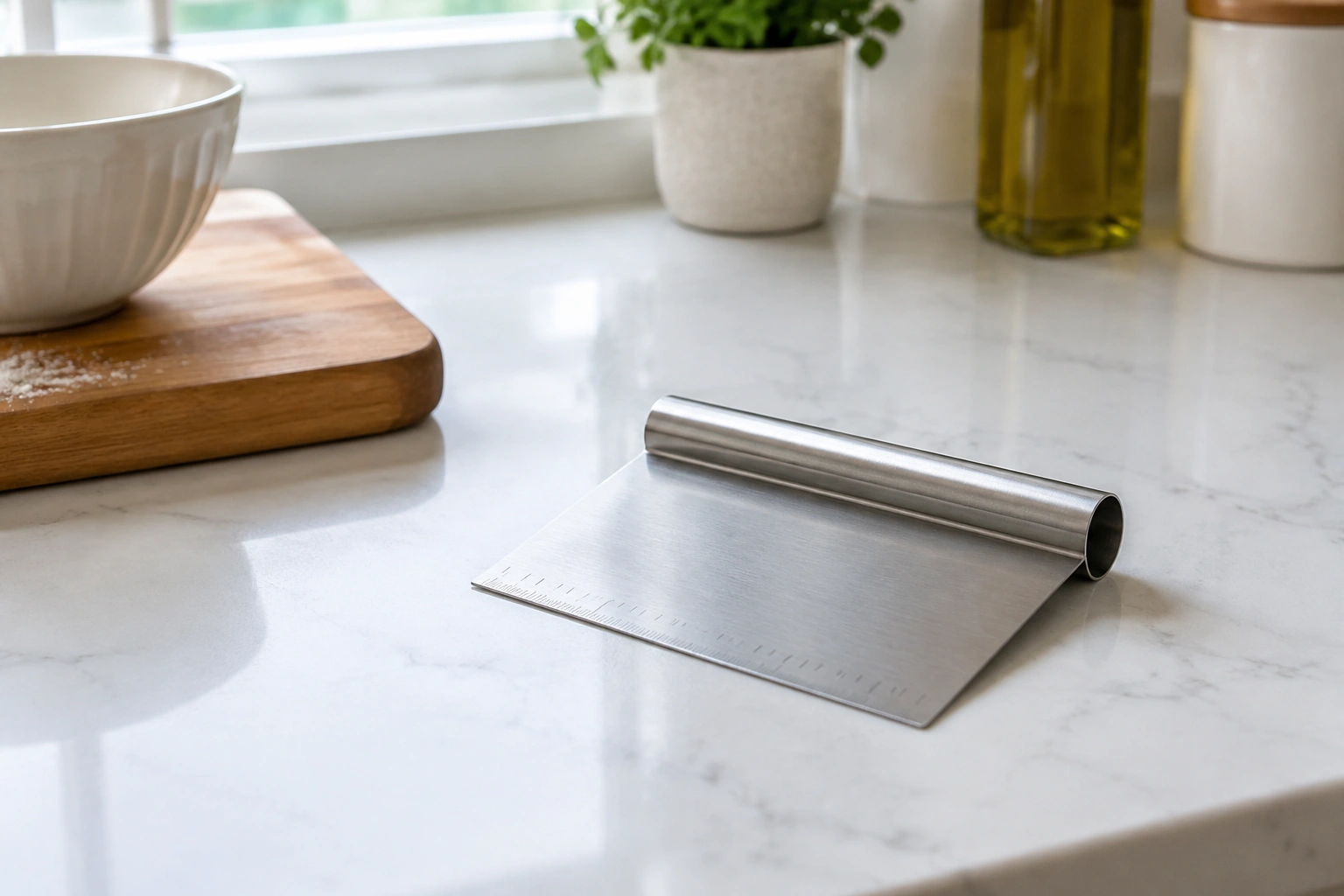
The tool itself is straightforward: a flat rectangular blade with a handle. You may also see it called a dough scraper, dough cutter, bench knife, or pastry scraper. In practice, it helps with four jobs that come up constantly in home baking: cutting dough, lifting dough, transferring ingredients, and cleaning the work surface. One of the best things about it is that it does all of those jobs without needing much force.
If you bake on weekends, batch-cook for the week, or try to stretch ingredients carefully, a bench scraper earns its spot in the drawer. It helps you portion dough evenly, gather flour before it spreads everywhere, and move sticky pieces without handling them too much. That matters because the less you manhandle dough, the more likely it is to stay in the shape and texture you want.
What a Bench Scraper Is and Why Bakers Use It
A bench scraper is a flat, hand-held tool with a straight edge. In baking, that edge is useful because it can press down cleanly through dough and slide under soft or sticky mixtures. Bakers reach for it when they need a quick, controlled motion instead of a knife, spoon, or fingers.
The most common baking uses are practical rather than fancy:
- dividing bread dough into equal pieces
- lifting sticky dough from the counter
- transferring cut dough to a tray
- scraping flour, crumbs, and dough bits off the work surface
- moving chopped nuts, herbs, or chocolate chips into a bowl
A bench scraper is not just for bread dough. It can also make cleanup and ingredient transfer faster, which is useful when you are trying to keep a baking session efficient and contained.
A useful way to think about it: if a task involves a flat surface and loose or sticky ingredients, a bench scraper probably helps.
Bench Scraper vs. Dough Scraper vs. Pastry Cutter
These names often overlap, so it helps to sort them out before buying anything.
In everyday home baking, bench scraper, dough scraper, bench knife, and pastry scraper are often used for the same basic tool: a flat rectangular scraper with a handle. Store labels vary, but for most home bakers these names usually point to the same kind of scraper.
A pastry cutter, by contrast, is usually the wheel or pastry wheel tool used to cut dough into strips or decorative edges. That is a different tool and not the same thing as a bench scraper.
Here is the practical difference:
| Tool | Main use | Best for | Trade-off |
|---|---|---|---|
| Bench scraper | Cutting, lifting, scraping, transferring | Dough portions, cleanup, ingredient transfer | Less specialized for decorative pastry cuts |
| Dough scraper / bench knife / pastry scraper | Same general job as a bench scraper in home baking | Bread dough, sticky dough, bench cleanup | Naming can be inconsistent across brands |
| Pastry cutter / pastry wheel | Cutting pastry or dough with a wheel | Pie dough strips, lattice work, decorative cuts | Not as useful for scraping or lifting |
If you already own a pastry wheel, that does not replace a bench scraper. The wheel cuts, but it does not do the cleanup and lifting jobs nearly as well.
How to Hold a Bench Scraper for Control and Safety
Grip matters more than people expect. Hold the handle firmly enough that the tool does not wobble, but not so tightly that your wrist locks up. Your other hand should stay clear of the edge when you cut or scrape.
A simple beginner cue: keep your thumb on top of the handle and your fingers wrapped underneath, with the scraper upright when cutting dough.
A practical starting position looks like this:
- keep the scraper upright for cutting dough
- angle it slightly when sliding under sticky dough
- use short, controlled motions instead of long, sweeping ones
- keep your fingers above the handle and away from the cutting edge
If the scraper feels slippery, pause and dry your hand or the handle. Flour dust can make surfaces slick, especially on crowded counters. A controlled grip is safer and usually gives a cleaner result than trying to force the tool through the dough.
For metal scrapers, check the edge before use. Some are sharper than others, and a nicked or bent edge will catch instead of glide.
How to Use a Bench Scraper to Cut and Portion Dough
This is the core skill most bakers want first. A bench scraper works well for dough because it gives a straight, decisive cut.
Here is the simplest method:
- Put the dough on a lightly floured work surface.
- Decide on the portion size before you cut.
- Press the bench scraper straight down through the dough.
- Lift the scraper and repeat for the next cut.
- Use the flat side to nudge each piece apart if needed.
The key is the downward motion. If you drag instead of pressing, the dough can stretch and stick. A straight cut gives cleaner edges and more even portions, which matters when you want rolls, buns, cookies, or dough balls to bake at the same rate.
If you are dividing bread dough, cut once, then check the pieces before shaping. Uneven portions bake unevenly, and that can leave you with some pieces overdone while others are still underbaked.
For a deeper walkthrough focused only on cutting dough, see our guide on how to use a bench scraper to cut dough.
How to Lift Sticky Dough Without Tearing It
Sticky dough is where a bench scraper really earns its keep. The goal is not to pry hard. The goal is to get under the dough with a shallow angle and let the tool do the work.
Use this approach:
- slide the edge under one side of the dough
- keep the scraper low and close to the counter
- lift a little at a time rather than trying to scoop the whole mass at once
- if the dough resists, pause and slide farther under before lifting again
This matters because wet dough can stretch and tear if you pull too quickly. A shallow angle gives you more surface contact, which helps support the dough. If the dough is very sticky, dusting the scraper lightly with flour can help, but avoid overdoing it. Too much flour can change the dough texture and make cleanup messier later.
A bench scraper is especially useful when you need to move dough that has relaxed during resting. Instead of grabbing it with your hands, you can free the edges first and keep the dough more intact.
How to Transfer Dough Pieces and Chopped Ingredients
Once dough is cut, the scraper also helps move it where it needs to go. That can mean a baking tray, a proofing container, or a bowl for the next step.
To transfer dough pieces:
- slide the scraper under the piece
- support the side if needed with your free hand
- move the piece directly to the tray or bowl
- use the flat edge to release it cleanly
The same idea works for chopped ingredients. A bench scraper can gather chopped nuts, herbs, garlic, or chocolate chips from the board and move them without scattering them across the counter. That makes it useful far beyond bread dough.
This is one of the easiest ways to reduce waste. Instead of leaving small pieces behind on the board, you can collect nearly everything in one pass.
How to Scrape and Clean Your Work Surface Efficiently
Cleanup is where the tool feels almost unfairly useful. After kneading or portioning, flour and dough bits tend to spread into corners and cling to the surface. A bench scraper gathers that debris quickly.
Use a short scraping motion:
- hold the scraper at a low angle to the counter
- push flour, crumbs, and dough bits into one pile
- scoop the pile into a bowl, trash, or compost bin
- repeat once more for any thin residue
This is usually faster than using a cloth alone, and it avoids smearing sticky dough around the surface. It also helps protect the work area by removing residue before it dries hard.
If you use a cutting board for prep, the scraper can clean that too. Just use steady pressure rather than scraping aggressively. The point is to collect, not gouge.
Metal vs. Plastic Bench Scrapers: Which One Should You Buy?
For most home bakers, the main decision is material.
Metal bench scraper
A metal bench scraper is usually the better all-around choice for baking. It tends to be better for cutting dough, lifting sticky pieces, and scraping dried residue from the counter. If you want one tool to handle the widest range of baking jobs, metal is usually the safer bet.
Plastic bench scraper
A plastic scraper is lighter and can feel more forgiving in the hand. It may be fine for basic cleanup or lighter-duty tasks, especially if you want a gentler tool for certain surfaces. The trade-off is that it may not cut through dense dough as cleanly as metal.
A simple decision rule:
– choose metal if dough handling is your main goal
– choose plastic if you mainly want a light cleanup tool
– choose metal first if you only plan to buy one scraper
If budget is tight, one solid metal bench scraper usually gives the best value because it covers the most tasks.
Common Mistakes to Avoid When Using a Bench Scraper
Most frustrations come from technique, not the tool itself.
Watch for these mistakes:
- Dragging instead of cutting. This stretches dough and makes uneven portions.
- Using too much flour. Extra flour can hide a handling problem but leave you with dry dough or a messy counter.
- Trying to lift sticky dough too fast. That usually tears the dough instead of supporting it.
- Holding the scraper too steeply while scraping. A steep angle can dig into the surface or make the tool skip.
- Using a bent or dull scraper. A damaged edge makes clean work harder.
If the dough is resisting, slow down and adjust the angle before adding more flour. That small pause usually saves more time than forcing the issue.
How to Clean, Dry, and Store a Bench Scraper
Most bench scrapers are easy to care for, but a few habits help them last longer.
After use:
– wash with warm water and dish soap
– remove stuck dough before it dries
– dry it right away, especially if it is metal
– store it where the edge will not get bent
If your model is dishwasher-safe, that can simplify cleanup, but hand washing still gives you more control over drying and edge condition. A dry scraper is also less slippery to handle the next time you use it.
Store it with your baking tools rather than loose in a drawer if you can. That keeps the edge from getting damaged and makes it easier to grab when you need it.
Simple Bench Scraper Uses Beyond Baking
A bench scraper is most useful in baking, but it can help in regular prep too.
A few practical examples:
- moving chopped onions, herbs, or garlic into a pan
- gathering shredded cheese from a cutting board
- lifting brownies or blondies for cleaner slicing
- moving soft butter into measured pieces
- transferring chopped chocolate from the board to a bowl
Those uses are not fancy, but they are real. The tool saves time because it turns a loose pile into a controlled transfer.
When to Ask a Food Safety Expert
If dough, fillings, or other ingredients have been left out longer than expected, or if you are unsure whether a food is still safe to use, check a trusted food safety source before proceeding. For general home food safety guidance, FoodSafety.gov is a reliable place to start.
Final Takeaway
If you want one small tool that makes baking cleaner, faster, and less wasteful, a bench scraper is hard to beat. Use it straight down for cutting, low and shallow for lifting, and flat against the counter for cleanup. Once that becomes routine, dough handling feels much less messy and much more manageable.