
Is Baking Soda an Acid or Base Explained Simply
Baking soda is a base, not an acid, and it reacts with acids in recipes to create carbon dioxide for lift. That is why it works best in batters and doughs that already include ingredients like buttermilk, yogurt, vinegar, or molasses.
Baking soda is a small ingredient with a big job, and its chemistry affects rise, color, and flavor in many baked goods. If you have ever wondered is baking soda an acid or base, the simple answer is that it is a base, and that matters every time you mix, bake, and taste a recipe.
- Core fact: Baking soda is a mildly alkaline base called sodium bicarbonate.
- Best use: It works when a recipe includes an acid to trigger gas production.
- Common benefit: It can improve browning, spread, and texture in the right formula.
- Main risk: Too much baking soda can leave a bitter or soapy taste.
- Practical rule: Mix and bake promptly once the reaction starts.
What Baking Soda Is and Why Its Chemistry Matters in Baking
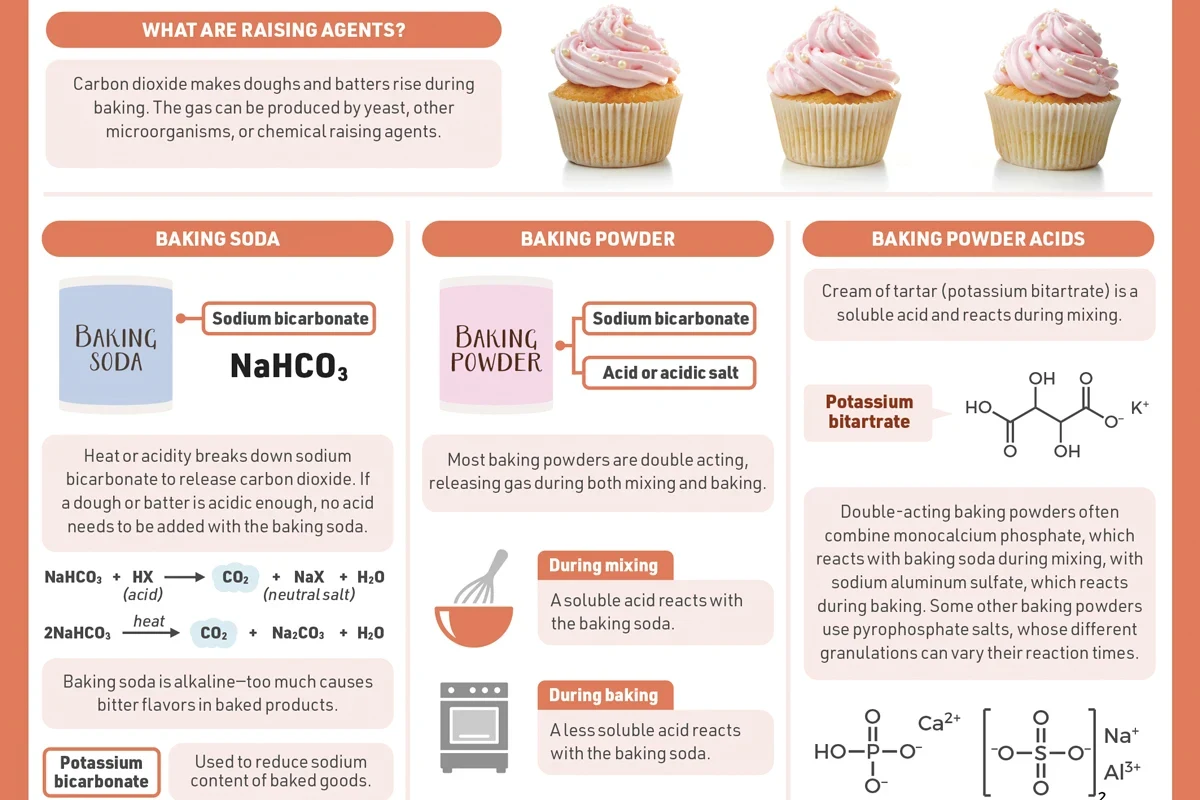
Baking soda is sodium bicarbonate, a white alkaline powder used as a leavening agent. In baking, it does not work alone for long; it needs an acidic ingredient and moisture to start producing gas.
How sodium bicarbonate behaves in batter, dough, and heat
When baking soda hits liquid, it begins to dissolve. If acid is present, it starts reacting right away and releases carbon dioxide, which creates bubbles in batter or dough.
Heat then helps expand those bubbles and set the structure around them. That is why a batter can look smooth in the bowl, then rise in the oven and turn into a lighter cake, muffin, or pancake.
Why bakers care about acidity, lift, and flavor balance
Acidity controls how fully baking soda reacts. Too little acid can leave unreacted soda behind, which may taste sharp, bitter, or soapy.
At the same time, the right acid-base balance can improve browning and soften texture. That is one reason formula matters so much in baking, not just ingredient lists.
Baking soda can raise pH in a batter, which often encourages faster browning during baking. That is useful in cookies and some quick breads, but only when the recipe is balanced correctly.
Is Baking Soda an Acid or a Base?
The simple answer: baking soda is a base
Baking soda is a base, not an acid. More specifically, it is mildly alkaline, which means it has the opposite behavior of an acid in water-based mixtures.
If you are comparing it with acidic ingredients like lemon juice, yogurt, or buttermilk, baking soda works on the other side of the scale. That is why the two are often paired in recipes.
What makes it alkaline in plain language
In plain language, an alkaline ingredient tends to reduce acidity. Baking soda does this because it can neutralize acids when they are present, and that reaction produces carbon dioxide gas.
That gas is the lift bakeries and home kitchens rely on. Without an acid to react with, baking soda has much less leavening power and may not behave the way a recipe expects.
How it reacts when it meets acids like buttermilk, yogurt, or vinegar
Buttermilk, yogurt, sour cream, vinegar, molasses, brown sugar, and some fruit purees all contain acids at different levels. When baking soda meets one of these ingredients, the mixture begins to fizz at a microscopic level as carbon dioxide forms.
The reaction can be immediate, so timing matters. If a batter sits too long after activation, some of the gas escapes before it reaches the oven.
Not every recipe needs a strong acid ingredient, but baking soda usually performs best when the formula gives it enough acidity to react fully. Ingredient brands, ripeness, and measuring method can all change how acidic a recipe really is.
How Baking Soda Works in Real Baking Situations
Common acid-base reactions that create carbon dioxide
The main job of baking soda in baking is to create carbon dioxide through an acid-base reaction. Those bubbles are trapped by flour, eggs, starch, and other structure builders until heat sets the final crumb.
This is different from fermentation, where yeast slowly produces gas over time. Baking soda works fast, which is helpful for quick batters but less forgiving if you delay baking.
Examples from cookies, cakes, quick breads, and pancakes
In cookies, baking soda often supports spread and browning, especially when the dough includes brown sugar or another acidic ingredient. In cakes and muffins, it can help create a lighter crumb when paired with buttermilk or yogurt.
Quick breads like banana bread often use baking soda because mashed fruit and other acidic ingredients can help activate it. Pancake batter is another common example, since a quick cook time benefits from a fast-acting leavener.
Baking soda can encourage spread, a darker edge, and a more tender bite when the formula has enough acid and sugar balance.
The acid in buttermilk helps baking soda make quick lift, which is useful because pancakes bake fast on the griddle.
Why the reaction starts fast and what that means for timing
Once baking soda meets moisture and acid, the reaction starts quickly. That means your oven should be ready before you mix wet and dry ingredients together if the recipe depends on that gas for rise.
For batters that sit too long, the bubbles may weaken before baking. For that reason, many bakers mix gently, portion promptly, and get the pan into the oven without unnecessary delay.
Measure ingredients first, preheat the oven, and prepare pans before combining the wet and dry ingredients.
Get the batter or dough into heat soon after activation so the carbon dioxide can expand before the structure sets.
Let the baked item set fully before removing it from the pan, since the crumb is still finishing as it cools.
How to Tell When Baking Soda Is the Right Choice
Recipes that already contain acidic ingredients
Baking soda makes the most sense when the recipe already includes an acidic ingredient. Think buttermilk, yogurt, sour cream, natural cocoa, molasses, citrus juice, or vinegar.
If a recipe has no obvious acid, baking soda may still appear in a small amount, but it usually needs a reason to be there. In that case, the formula may depend on browning, flavor, or pH adjustment rather than lift alone.
When baking soda helps with browning, spread, and texture
Because it raises alkalinity, baking soda can deepen browning in baked goods. That is useful when you want golden edges, a more pronounced cookie color, or a softer crumb in some cakes.
It can also affect spread. Cookie dough with baking soda often spreads more than dough made with baking powder, though flour type, butter temperature, and chilling time also play a role.
When baking powder is the better leavening option
Baking powder is usually the better choice when a recipe does not have enough acid to activate baking soda. Baking powder contains both a base and an acid, so it can create lift on its own once it gets wet and heated.
If you are unsure which one to use, look at the ingredient list and the recipe formula. A batter with no acidic dairy, fruit, or cocoa often leans toward baking powder instead of baking soda.
- Helps recipes with acid rise quickly
- Supports browning and spread in some bakes
- Uses a simple, inexpensive pantry ingredient
- Can taste bitter if overused
- Needs the right acid balance to work well
- Acts fast, so timing is less flexible
Common Mistakes Bakers Make With Baking Soda
Using too much and causing soapy or bitter flavor
Too much baking soda can leave a harsh flavor behind. In finished baked goods, that can read as soapy, metallic, or bitter, especially if the batter did not contain enough acid to neutralize it.
Excess baking soda can also weaken structure by pushing the pH too high. The result may look overly spread out, oddly dark, or coarse instead of tender.
Confusing baking soda with baking powder
These ingredients are not interchangeable in a one-to-one way. Baking soda is a base that needs acid, while baking powder already contains its own acid component.
If you swap them without adjusting the recipe, the texture can fail quickly. A cake might not rise enough, or a cookie may spread too much and taste off.
Skipping the acid balance and ending up with poor rise
When baking soda has no acid to react with, the batter may not produce enough gas. You may still see some browning or a slightly different flavor, but the lift can be weak and inconsistent.
That is why recipe developers balance ingredients carefully. A small change in citrus juice, cocoa type, or dairy product can affect the final result.
Mixing, resting, and baking too slowly after activation
Once the reaction starts, the clock is running. If you mix a batter and leave it on the counter for too long, some of the gas escapes before the oven can trap it.
For best results, have your pans ready and bake soon after mixing unless the recipe specifically tells you to rest the batter. Resting can help in some formulas, but it should be intentional, not accidental.
Do not assume a recipe will self-correct if you add extra baking soda. Too much can damage flavor and texture, and the right adjustment depends on the full formula, not just one ingredient.
Practical Measurement and Substitution Guidance
How to measure baking soda accurately in small amounts
Baking soda is usually used in small quantities, so accuracy matters. Level the measuring spoon carefully instead of scooping a heaping spoonful, unless the recipe clearly says to do so.
For very small amounts, a digital scale can help if the recipe provides gram measurements. Since brand density and spoon packing can vary, weighing is often more consistent than guessing by eye.
What happens when you reduce or increase the amount
Reducing baking soda too much can leave a recipe dense, pale, or less tender than intended. Increasing it can create too much gas, too much browning, and a noticeable alkaline aftertaste.
If you are adjusting a recipe, make one change at a time and keep notes. Oven calibration, pan size, and ingredient brand can all influence how a small change shows up in the final bake.
Safe substitution limits when a recipe calls for baking powder instead
Do not treat baking soda as a simple replacement for baking powder unless you also add enough acid to support it. Baking powder is designed to work differently, so a direct swap usually changes both flavor and structure.
If a recipe calls for baking powder and you only have baking soda, it is safer to find a recipe written for baking soda or use a trusted substitution formula from a reliable cooking source. The exact conversion depends on the recipe, so there is no universal swap that works every time.
- Measure carefully and match baking soda to acidic ingredients
- Preheat first so the batter can go into a hot oven quickly
- Check the recipe for cocoa, yogurt, buttermilk, or fruit
- Guessing with large spoonfuls
- Swapping it for baking powder without adjusting the formula
- Letting activated batter sit too long before baking
Storage, Freshness, and Safety for Home Bakers
How to store baking soda so it stays effective
Store baking soda in a tightly closed container in a cool, dry place. Moisture and odors can reduce quality over time, and an open box may absorb smells from the pantry or refrigerator.
For baking use, keep a dedicated container separate from cleaning supplies. That reduces the risk of cross-contact and helps you avoid confusion in a busy kitchen.
How to test freshness before baking important recipes
If you are unsure whether your baking soda is still active, test a small amount with a splash of vinegar or another strong acid. A quick, lively fizz is a good sign that it is still usable.
This test is helpful before holiday baking or other important recipes, but it is not a guarantee of perfect performance in every formula. Recipe balance still matters.
Safety notes for food use versus cleaning use
Food-grade baking soda is commonly used in the kitchen, but cleaning products or opened boxes used for scrubbing should not be treated as baking ingredients. Keep food and cleaning supplies clearly separated.
For food safety questions involving ingredient storage, contamination, or spoilage, follow recognized guidance from official food safety sources such as USDA or FDA. When in doubt, replace an old box rather than risk a failed bake.
Label pantry containers clearly if you store baking soda near cleaning products. A small mix-up can ruin a recipe and create a food safety problem.
Final Recap: The Simple Rule for Using Baking Soda Correctly
Why baking soda is a base, not an acid
The simplest answer is that baking soda is a base. It becomes useful in baking because it reacts with acids to form carbon dioxide, which helps batter and dough rise.
The easiest way to remember when to use it in baking
Use baking soda when the recipe already has an acidic ingredient and you want fast, efficient lift plus possible browning benefits. If the recipe does not have enough acid, baking powder is often the better choice.
What to check in a recipe before you start mixing
Before you begin, check the acid source, the leavener type, and the mixing-to-baking timing. Also consider oven temperature, pan size, and ingredient freshness, since all of them can affect the final result.
If you remember only one rule, remember this: baking soda is a base, and it works best when the recipe gives it acid to react with. That single detail explains most of the rise, browning, and flavor differences bakers notice at home.
Baking soda is a base, not an acid, and it needs acid plus moisture to do its best work in baking. Check the recipe for acidic ingredients, measure carefully, and bake soon after mixing for the most reliable result.
Frequently Asked Questions
Baking soda is sodium bicarbonate, which behaves as a mild base. In recipes, it reacts with acids to release carbon dioxide gas that helps baked goods rise.
Common acids include buttermilk, yogurt, sour cream, vinegar, lemon juice, molasses, brown sugar, and some natural cocoa powders. The exact reaction depends on how acidic the full recipe is.
Not usually as a direct one-to-one swap. Baking soda needs acid to work, while baking powder already contains its own acid, so the recipe must be adjusted carefully.
That usually happens when too much baking soda is used or the recipe does not contain enough acid to neutralize it. The leftover alkaline taste can read as soapy or bitter.
Store it in a tightly sealed container in a cool, dry place away from odors and cleaning products. Moisture and contamination can reduce quality or make it unsafe for food use.
Add a small amount to an acid like vinegar and look for a quick fizz. A strong reaction suggests it is still active, though the recipe formula still matters for final results.

