
What Are the Side Effects of Air Fryers?

Quick Answer
Air fryers do not normally cause a unique set of health side effects when used correctly. The main concerns are burns, smoke or fire from grease and poor placement, damage to nonstick coatings, and compounds such as acrylamide that can form when starchy foods are cooked at high temperatures. The FDA’s acrylamide guidance makes clear that acrylamide can form during frying, roasting, and baking, not just air frying.
The main air fryer downsides to know
- High-heat browning: Potatoes, bread, and other starchy foods can form more acrylamide when cooked darker or longer.
- Burn risk: The basket, exhaust vent, and exterior surfaces can become hot enough to cause injury.
- Smoke and odors: Grease buildup, food crumbs, or excess oil can smoke when reheated.
- Coating wear: Scratched or peeling nonstick surfaces should not be ignored.
- Food-safety mistakes: Crispy food is not always fully cooked inside, especially poultry and thick meat.
Best way to reduce the risks
- Avoid excessive browning, keep the basket clean, protect the coating, leave space around the exhaust, and use a food thermometer for raw meat.
Air fryers have become an everyday kitchen appliance, so it makes sense to ask whether using one regularly has downsides. As of 2026, the evidence points more toward manageable cooking and appliance hazards than a special illness caused by air fryers themselves.
I treat an air fryer much like a compact convection oven. It is convenient and fast, but the combination of intense heat, moving air, grease, and a coated basket deserves the same attention I would give any hot cooking appliance.
In This Guide
- What are the side effects of air fryers?
- Can air fryers create harmful compounds in food?
- Can an air fryer’s nonstick coating be harmful?
- Can air fryers cause burns, smoke, or fires?
- Do air fryers have negative effects on nutrition?
- How can you reduce air fryer side effects and risks?
- Frequently asked questions
What Are the Side Effects of Air Fryers?
The most realistic air fryer side effects are related to high-temperature cooking and appliance safety. These include excessive browning, smoke, hot surfaces, coating damage, and undercooked food when appearance is mistaken for doneness.
An air fryer itself is not a deep fryer. It cooks with rapidly moving hot air inside a small chamber.
Definition: An air fryer is a compact convection-style appliance that circulates heated air quickly around food. This concentrated airflow helps dry and brown the surface without submerging the food in oil.
That basic design explains both its strengths and its weaknesses. Fast circulating heat produces crisp surfaces quickly, but it can also brown thin foods before a thick center finishes cooking.
King Arthur Baking’s air fryer guidance describes the appliance as essentially a small convection oven with a powerful fan. For baking, that concentrated heat often means shorter cooking times and lower settings than a conventional oven.
Are the side effects different from ordinary oven cooking?
Not completely. Many concerns associated with air frying also occur during roasting, baking, grilling, and traditional frying.
- Browning reactions occur whenever suitable foods reach high surface temperatures.
- Oil oxidation can occur whenever cooking fats are exposed to heat and oxygen.
- Burns are possible with any appliance operating at several hundred degrees Fahrenheit.
- Food poisoning remains possible if raw foods do not reach a safe internal temperature.
- Smoke can develop when grease, crumbs, marinades, or oils become overheated.
The practical difference is concentration. An air fryer places strong airflow and heating elements close to a relatively small quantity of food.
This is why I pay attention to cooking progress earlier than I would with a full-size oven. A few extra minutes can make the difference between golden fries and dark, dried edges.
Section Takeaway: Air fryers do not appear to create a unique category of everyday health problems. Their main downsides come from high heat, hot surfaces, food chemistry, poor cleaning, and improper cooking technique.
Can Air Fryers Create Harmful Compounds in Food?
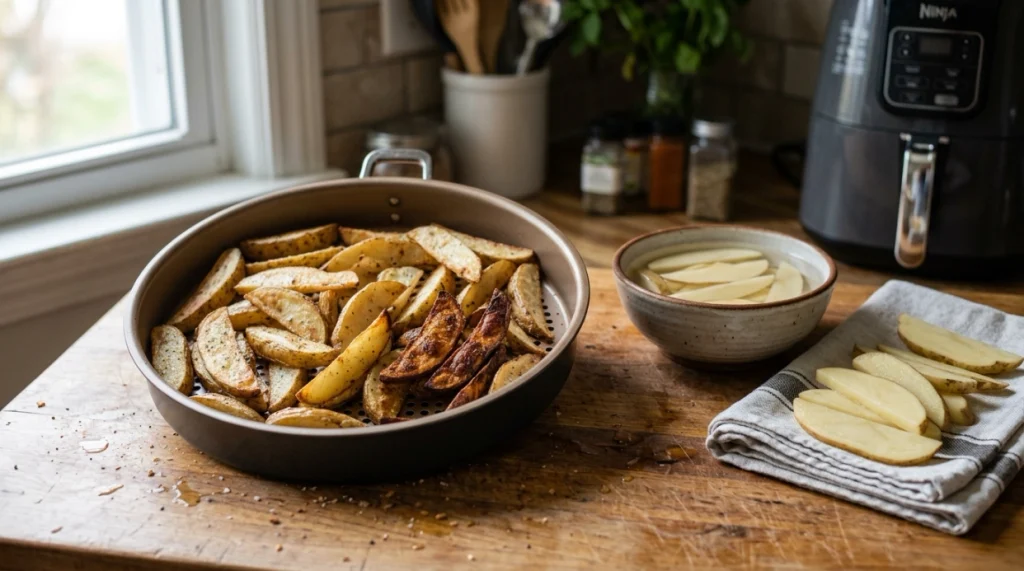
Yes, certain compounds can form during air frying, especially when carbohydrate-rich foods become heavily browned. The best-known example is acrylamide.
Acrylamide forms naturally from sugars and the amino acid asparagine during high-temperature cooking. Potatoes and grain-based foods are common sources.
Does air frying cause acrylamide?
Air frying can produce acrylamide because it uses high heat. However, acrylamide is not specific to air fryers.
It also forms during conventional frying, roasting, and baking. Boiling and steaming generally produce much less because food surfaces remain wetter and cooler.
- French fries: Darker browning usually means more acrylamide than light golden browning.
- Toast and bread: Very dark areas generally contain more than lightly browned areas.
- Potato storage: Cold storage can increase sugars that later contribute to acrylamide formation.
- Long cooking: More time and higher temperature can increase formation.
The FDA reports that animal studies found cancer effects at exposures much higher than those normally found in food. It also says the health risk from the much lower amounts people consume through food remains uncertain.
That distinction matters. Saying that air fryers “cause cancer” goes beyond what the evidence establishes.
How do I reduce acrylamide when air frying potatoes?
I use color as a simple visual cue. I aim for golden yellow rather than deep brown when cooking fries, wedges, or sliced potatoes.
- Soak raw potato slices in water for about 15 to 30 minutes before cooking.
- Drain and dry them well before placing them in the basket.
- Avoid keeping raw potatoes in the refrigerator.
- Cook until golden instead of pushing for very dark crispness.
- Remove small pieces early if they brown faster than larger pieces.
What about oxidized cooking oil?
Heating oil in the presence of oxygen can create oxidation products. Temperature, heating duration, oil type, and repeated use all affect that process.
Air frying usually requires far less oil than deep frying, so there is often less bulk oil undergoing prolonged heating. Still, repeatedly heating old grease trapped in a dirty basket is not a good habit.
I clean visible grease rather than letting it season the machine indefinitely. A clean basket also reduces smoke and stale flavors.
Section Takeaway: The main food-chemistry concern is not the air fryer itself but excessive high-temperature browning. Keep starchy foods golden rather than dark and avoid repeatedly overheating old grease.
Can an Air Fryer’s Nonstick Coating Be Harmful?
Many basket-style air fryers use a nonstick coating. Questions about PTFE and PFAS are common, but the details are more nuanced than social-media warnings often suggest.
The FDA explains that approved PFAS-containing nonstick cookware coatings are highly polymerized and tightly bound during manufacturing. Available FDA data indicate negligible migration to food from these finished coatings under their intended use.
You can read the agency’s explanation in its PFAS and food contact Q&A.
When should I worry about the basket coating?
I focus less on panic over an intact coating and more on its physical condition. A basket that is badly scratched, blistered, flaking, or peeling deserves attention.
- Avoid metal tools: Use silicone, wood, or other utensils approved by the manufacturer.
- Skip harsh abrasives: Steel wool can damage many coated baskets.
- Check the manual: Dishwasher compatibility varies by model.
- Do not exceed rated temperatures: Use only the settings approved for that appliance.
- Replace damaged parts: Contact the manufacturer when the food-contact coating visibly deteriorates.
Some air fryers instead use stainless-steel racks, ceramic-style coatings, or other surfaces. That can be useful if avoiding a particular coating is personally important.
However, a “PFAS-free” marketing label does not automatically make an appliance better at cooking, easier to clean, or more durable. Construction quality still matters.
Should you run an empty air fryer to burn off chemicals?
Follow the manufacturer’s setup instructions. Some manufacturers recommend a short initial run, while others do not.
I would not invent a high-temperature “burn-off” routine. Unnecessary empty heating can create odors and may expose surfaces to more heat than needed.
Section Takeaway: An intact, properly used nonstick basket is different from a visibly damaged coating. Protect the surface, stay within the appliance’s rated settings, and replace parts that peel or deteriorate.
Can Air Fryers Cause Burns, Smoke, or Fires?
Yes. In everyday use, heat-related injury is one of the clearest air fryer risks.
The cooking chamber may be set around 350°F to 400°F, but heat does not stay inside the basket. Exhaust vents and exterior surfaces can also become dangerously hot.
Consumer Reports tested five air fryers and measured several external areas that became hot enough to cause burns. The figures below come from that 2024 safety evaluation.
| Air fryer area | Measured temperature | Practical concern |
|---|---|---|
| Basket interior | 428°F average | Severe contact-burn hazard |
| Rear exhaust area | 193°F average; 232°F maximum | Can burn skin or overheat nearby objects |
| Basket exterior | 180°F average; 206°F maximum | Can cause a burn within seconds |
| Basket handle | Remained in the safe-touch range in the five tested models | Still follow model-specific instructions |
Why does an air fryer start smoking?
Smoke usually means something inside has become too hot. Grease and food debris are common causes.
- Fat has dripped beneath the basket and reached a hot surface.
- Old grease or crumbs are burning during the next cooking cycle.
- Too much oil was added to the food.
- Loose parchment has moved toward the heating element.
- A sugary marinade or sauce has scorched.
- An electrical or mechanical fault is developing.
Normal cooking smells are different from an electrical burning odor. If I smelled melting plastic, saw sparks, or noticed smoke coming from the appliance body rather than food residue, I would unplug the unit once safe and stop using it.
How much space should an air fryer have around it?
Consumer Reports recommends leaving at least 5 inches of space behind the appliance. Your own manual may require different clearances, so follow whichever instruction is more specific.
Keep the exhaust away from curtains, paper towels, plastic containers, outlets, and the appliance’s own cord. Do not operate the fryer underneath a low cabinet unless the manufacturer says the clearance is safe.
Section Takeaway: Burns and overheating are more immediate risks than many of the dramatic health claims associated with air fryers. Treat the basket, exhaust, and surrounding air as hot until the appliance has fully cooled.
Do Air Fryers Have Negative Effects on Nutrition?
Air frying changes food because all cooking changes food. Heat can reduce some nutrients while improving digestibility, texture, flavor, or availability of others.
There is no single rule saying air-fried food loses more nutrients than oven-baked food. Results depend on the ingredient, temperature, cooking time, size of the pieces, and whether oil is added.
Is air-fried food healthier than deep-fried food?
It can be, particularly when the comparison involves the same food cooked with much less added oil. Deep frying surrounds food with hot fat, while air frying mainly uses hot moving air.
That does not automatically turn every air-fried meal into a nutritious one. Frozen fries, breaded snacks, and processed chicken products remain the same basic foods after they enter the basket.
- Vegetables: Air frying can make them more appealing with a small amount of oil.
- Potatoes: Less oil may reduce total added fat, but heavy browning increases acrylamide concerns.
- Chicken: Skin and breading can still contribute substantial fat, sodium, and calories.
- Pastries: Air frying changes cooking method, not the sugar and butter already in the recipe.
Can air frying destroy vitamins?
Heat-sensitive nutrients can decline during cooking, particularly with longer heating. However, shorter cooking times can sometimes reduce total heat exposure compared with slower methods.
This is why I do not judge an appliance as “healthy” or “unhealthy” on its own. The food being cooked matters more.
A basket filled with lightly oiled Brussels sprouts and a basket filled with frozen cheese snacks use the same technology. Nutritionally, they are completely different meals.
Can eating air-fried food every day be a problem?
Daily use of the appliance is not the same as eating the same fried-style food every day. Variety matters more than the machine.
I would rotate vegetables, fish, poultry, beans, potatoes, reheated leftovers, and small baked items rather than treating the air fryer as a frozen-snack machine.
Section Takeaway: Air frying often reduces the amount of oil needed compared with deep frying, but it cannot make a nutrient-poor food automatically healthy. Ingredient choice, portion size, browning, and overall diet still matter.
How Can You Reduce Air Fryer Side Effects and Risks?
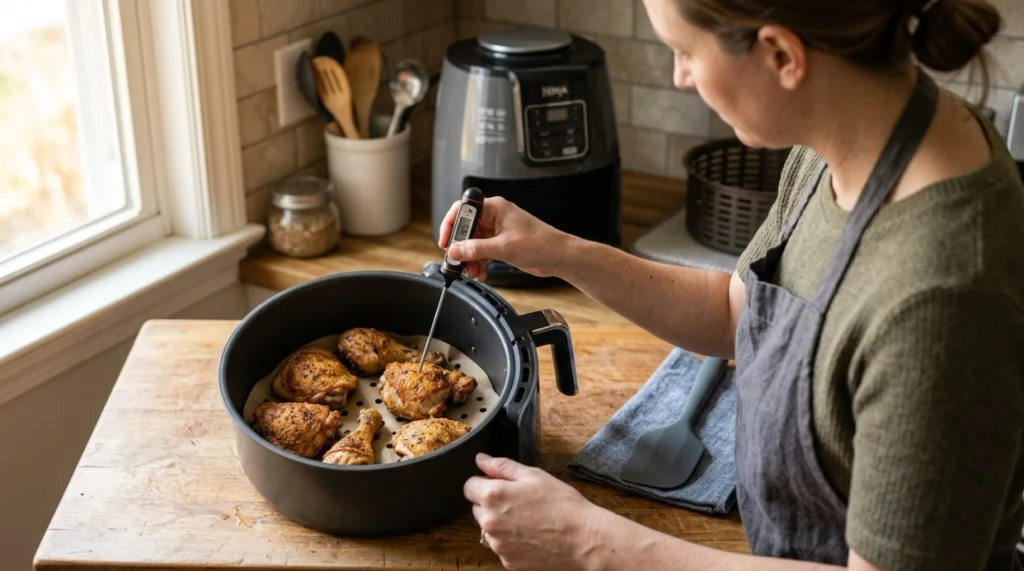
The safest approach is simple: control browning, control grease, protect the coating, give the appliance ventilation, and verify that raw food is fully cooked. Those habits address most practical air fryer concerns.
Use this air fryer safety checklist
- Read the model manual. Temperature limits, clearances, dishwasher instructions, and accessory rules differ by manufacturer.
- Place it on a heat-resistant surface. Keep the exhaust away from walls, plastic, paper, cords, and curtains.
- Clean grease regularly. Remove crumbs and oily residue once the appliance has cooled.
- Avoid overfilling the basket. Crowding can slow cooking and create uneven doneness.
- Keep potatoes and toast golden. Do not chase dark brown color just for extra crunch.
- Protect nonstick surfaces. Avoid scratching tools and abrasive cleaning methods unless specifically approved.
- Secure parchment or liners. Never let lightweight paper blow freely toward the heating element.
- Check raw meat with a thermometer. Do not judge safety by exterior crispness alone.
What internal temperatures should air-fried meat reach?
Air fryer recipes often list minutes, but cooking time changes with thickness, starting temperature, basket load, and appliance power. Internal temperature is the safer endpoint.
- Poultry: 165°F (74°C).
- Ground meat and sausage: 160°F (71°C).
- Whole cuts of beef, pork, veal, and lamb: 145°F (63°C), followed by the recommended rest period.
- Fish: 145°F (63°C), or follow the applicable safe-doneness guidance.
- Leftovers: 165°F (74°C).
Pro tip: Use the current FoodSafety.gov minimum internal temperature chart rather than relying on air-fryer cooking time alone.
When should you stop using an air fryer?
Some problems call for more than cleaning. Stop using the appliance if you notice signs that suggest an electrical or structural fault.
- A damaged, frayed, unusually hot, or melted power cord.
- Sparks or repeated electrical burning smells.
- A basket that no longer locks or sits correctly.
- Visible melting or warping near the heating area.
- Heavy smoke that continues after grease and food residue are removed.
- A badly peeling or deteriorating food-contact coating.
Check the manufacturer’s support information and recall notices when a fault appears. Do not keep operating a defective appliance to see whether the problem “goes away.”
Section Takeaway: Most air fryer risks are controllable. Good placement, moderate browning, regular cleaning, intact food-contact surfaces, and thermometer-based cooking make the biggest practical difference.
Frequently Asked Questions About Air Fryer Side Effects
Are air fryers toxic?
Air fryers are not considered inherently toxic when used as intended. Concerns usually involve high-temperature food compounds, overheated grease, fumes from burning residue, or deterioration of food-contact surfaces rather than the basic convection-cooking technology.
Can air fryers cause cancer?
There is no established evidence that simply owning or normally using an air fryer causes cancer. Acrylamide can form in heavily browned starchy foods during air frying, baking, roasting, and conventional frying, but the human health risk from normal dietary exposure remains uncertain.
Are air fryers safe to use every day?
Daily appliance use can be reasonable when the fryer is maintained and operated correctly. Keep the basket clean, prevent excessive browning, maintain ventilation, protect the coating, and vary the foods you eat rather than relying mainly on processed fried-style meals.
Do air fryers release PFAS into food?
Some nonstick cookware coatings are made with fluoropolymer chemistry. FDA information indicates negligible migration from authorized, highly polymerized nonstick coatings under intended use, but you should still replace baskets with badly damaged or peeling food-contact surfaces.
Is dark air-fried food more harmful?
Dark browning can matter for starchy foods because acrylamide generally increases with longer and hotter cooking. For potatoes and toast, aim for a light golden color rather than very dark brown or blackened areas.
Can air fryer smoke make you sick?
Smoke from burnt grease or food residue can irritate the eyes and airways, so stop cooking, ventilate the area, and clean the appliance after it cools. Persistent electrical smoke or melting-plastic odors are reasons to stop using the unit and investigate a possible fault.
Is an air fryer safer than deep frying?
Air frying avoids a large pot of hot oil, so it eliminates some splash, spill, and grease-fire hazards associated with deep frying. It still creates very hot surfaces and exhaust, so it should not be treated as a cool-touch appliance.
Final takeaway: The side effects of air fryers are usually better described as manageable cooking and appliance risks. Avoid extreme browning, clean away old grease, leave room around the exhaust, protect the basket coating, and use a food thermometer when cooking raw meat.
Used that way, an air fryer can remain a practical tool for vegetables, small-batch baking, reheating, and crisp cooking without treating the appliance as either completely risk-free or something to fear.