Are Air Fryers Safe Around Pets? A Practical Guide for Pet-Friendly Kitchens
If you live with pets, the short answer is yes—air fryers are generally safe to use around pets when you handle them sensibly. But the risks are not all the same: the appliance itself can still cause burns or tip-over accidents, while smoke, fumes, and strong odors are a separate concern for breathing and comfort.
That means the question is less “Is an air fryer dangerous to pets?” and more “How do I use one without creating avoidable hazards?” In a home with dogs, cats, birds, or small mammals, a little setup goes a long way.
Quick Answer: Are Air Fryers Safe Around Pets?
In most homes, air fryers can be used safely around pets if you keep animals away from the cooking area, manage smoke and odors, and never leave the appliance where a curious pet can touch it or knock it over.
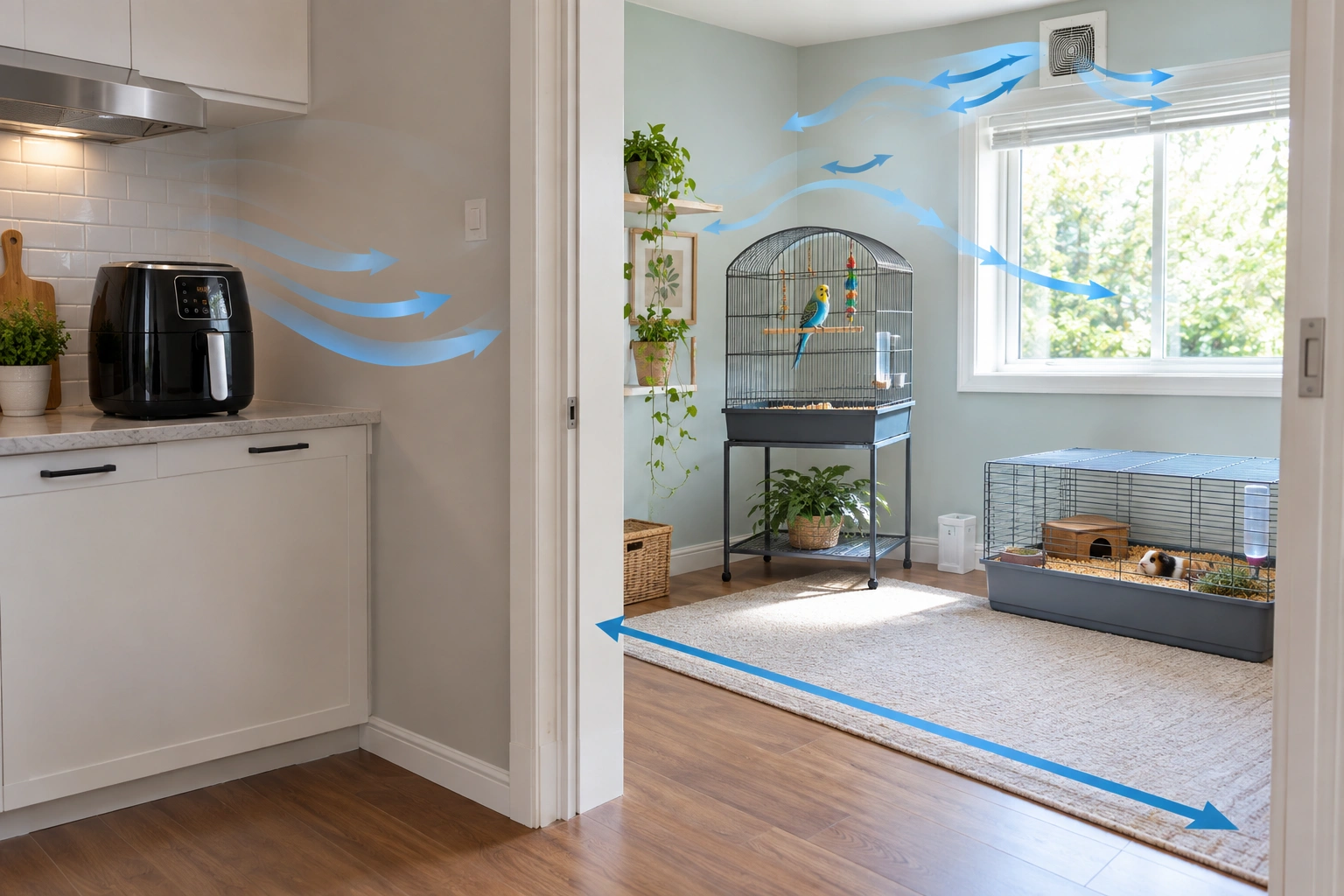
For dogs and cats, the biggest concerns are burns, startling noise, and access to cords or a hot basket. For birds, rabbits, guinea pigs, hamsters, and similar pets, the concern is often more serious because their respiratory systems can be more sensitive to kitchen fumes and airborne irritants.
A useful rule of thumb: if the food is likely to smell strong, smoke, or spit grease, give pets more distance and supervision than you would for a simple batch of vegetables or reheated leftovers.
What the Real Risks Are for Pets
Air fryers are not typically “toxic” in the way a poisonous food or chemical would be. The risks are practical kitchen hazards.
Heat and burn hazards
An air fryer gets hot enough to cook food quickly, and that means the basket, tray, and sometimes the exterior can become a burn risk. A dog brushing against the side of the unit or a cat jumping onto the counter and touching the basket handle can get hurt fast.
The danger is highest right after cooking, when the basket and food can stay hot for several minutes. Even if the cooking cycle is over, the appliance should still be treated like a hot pan. It can also be a tip-over hazard if a pet bumps the counter or pulls on the cord.
Smoke, grease, and odors
Air fryers use less oil than deep frying, which is one reason they’re popular. The USDA notes that overcrowding can interfere with air circulation, and that cooking in batches may be best for larger amounts of food. That same airflow issue matters for pets too: overcrowding and greasy foods can increase smoke and odor exposure, especially if food drips or splatters.
Strong smells are not automatically harmful, but they can irritate some pets, particularly if the kitchen is small or poorly ventilated. If the air fryer starts smoking, that’s a sign to reassess the food, the temperature, and the placement of the appliance. For food-safety basics on air frying, the USDA’s air fryer guidance is a good reference.
Noise and sudden sounds
Air fryers are usually not loud enough to be a major issue, but the fan, timer beep, basket slide, and sudden clicking can startle nervous pets. A startled cat may bolt onto a counter. A dog may rush toward the kitchen. In a tight space, that can turn a minor distraction into a burn or spill risk.
Electrical cord hazards
Pets chew cords. Some also tug on dangling wires or trip over them. In a kitchen, that creates two problems: the appliance may be pulled down, and the pet may get shocked or burned if the unit tips while hot.
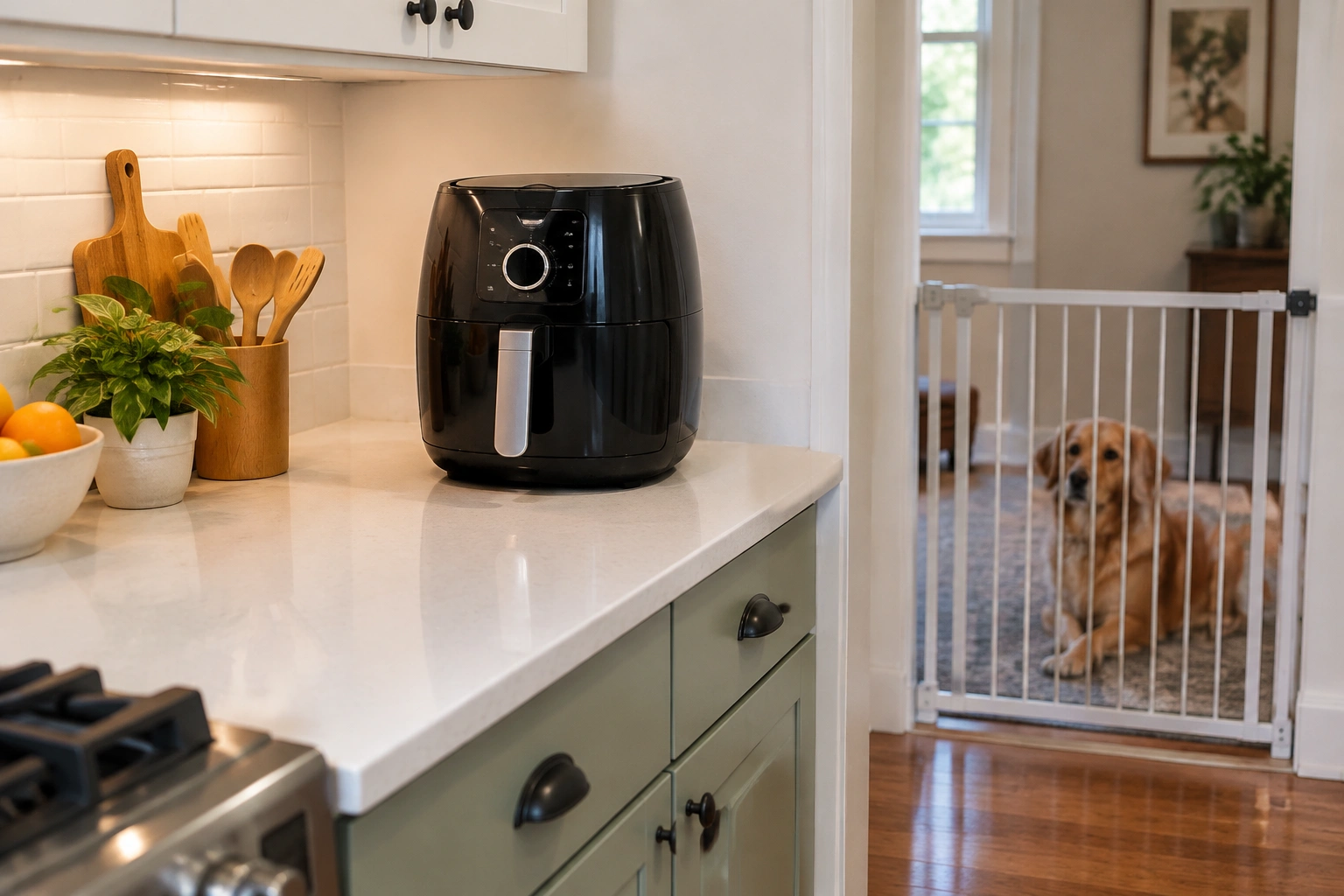
If your cord runs across a walkway or hangs near a counter edge, treat that as a fixable safety issue, not a small inconvenience.
Which Pets Are Most Vulnerable
Different pets face different levels of risk. Dogs and cats are not equally vulnerable to every hazard, and birds and small mammals deserve extra caution.
| Pet type | Main concern | Why it matters | Best precaution |
|---|---|---|---|
| Dogs | Burns, cords, excitement around food smells | Dogs may crowd the kitchen or try to investigate food | Keep them out of the cooking area and away from the counter |
| Cats | Counter access, hot surfaces, cords | Cats jump, climb, and can reach the basket or cord | Place the fryer well back from edges and block counter access |
| Birds | Fumes, smoke, odors | Birds can be especially sensitive to airborne irritants | Move birds to another room with clean air during cooking |
| Rabbits | Smoke and strong odors | Small mammals can react strongly to poor air quality | Keep them in a separate, well-ventilated room |
| Guinea pigs, hamsters, other small mammals | Fumes, stress, heat nearby | Their respiratory systems can be delicate | Avoid cooking smoky foods near them and keep distance |
Dogs and cats: lower respiratory risk, still real burn risk
Dogs and cats usually tolerate normal kitchen activity better than birds or small mammals, but that does not make them safe around a running air fryer by default. A curious cat can get burned. A food-motivated dog can get underfoot and knock the appliance or bowl of hot food.
In other words, dogs and cats are often more of a physical safety problem than an air-quality problem.
Birds and small mammals: the strictest precautions
Birds are the species that should make you slow down and think twice. Their respiratory systems can be especially sensitive, so smoke, grease fumes, and strong cooking odors may be a bigger issue than they are for dogs or cats. Rabbits, guinea pigs, hamsters, and other small mammals can also be affected more easily than a typical household dog.
If your bird cage or small-animal habitat is in an open-plan kitchen area, I would not rely on “they seem fine” as a safety test. Move them farther away before cooking, especially for greasy foods.
How to Use an Air Fryer Safely in a Pet-Friendly Home
A few small habits make a big difference.
Put the appliance where pets cannot reach it
Set the air fryer on a stable counter or surface with enough space around it so the vents are not blocked. Keep it away from the edge where a tail, nose, or paw could bump it. If your pet can jump onto counters, assume it can reach more than you think.
For homes with active pets, the back of the counter is usually safer than the front. If the kitchen layout is cramped, compare it to using any other hot appliance: the more traffic around it, the more likely an accident becomes.
Keep cords short, tucked, and out of chewing range
Do not leave the power cord hanging where a dog can pull it or a cat can bat at it. If the cord crosses a path, reroute it. If the outlet is awkward, move the appliance rather than letting the cord become a hazard.
This is one of the easiest fixes in the kitchen, and one of the most overlooked.
Supervise the cooking process
If pets are in the house, avoid treating the air fryer like a set-it-and-forget-it appliance. You do not need to stand over it the whole time, but you should be close enough to notice smoke, a pet getting curious, or a basket being pulled open too soon.
That matters even more when you are cooking something greasy or using a new recipe that may run hotter than expected.
Keep pets out of the immediate cooking area
A baby gate, closed door, or even a simple habit of moving pets to another room can prevent a lot of problems. For many households, this is the cleanest solution.
If your dog tends to wait for dropped food or your cat likes to investigate counters, a separate room is safer than trying to “watch closely” while cooking. Supervision helps, but distance helps more.
Extra Precautions for Greasy or Strong-Smelling Foods
Some foods are simply more likely to create smoke, splatter, or heavy odors.
Think bacon, sausage, wings, breaded foods with excess oil, and very fatty cuts of meat. These can produce more smell and more airborne grease than a basket of vegetables or a batch of frozen fries.
Here’s a practical decision rule:
- If the food usually smokes in a skillet, expect it to be a bigger issue in an air fryer too.
- If the smell lingers in your kitchen for a long time, keep pets farther away.
- If your pet has a history of coughing, sneezing, hiding, or breathing oddly around cooking odors, choose a different time or location.
For birds and small mammals, I would be especially careful with greasy foods. If you cannot ventilate well or move them to another room, it may be better to wait until they are housed elsewhere.
A clean air fryer basket may help reduce smoke from old residue, but the bigger point is this: the more grease and smoke the food creates, the less “pet-friendly” the cooking environment becomes.
Signs Your Pet May Be Stressed or Affected
Pets do not always react the same way. Some will leave the room. Others will stay nearby and show subtle signs.
Watch for:
- coughing or sneezing
- wheezing or noisy breathing
- heavy or faster-than-normal breathing
- drooling
- hiding or trying to leave the area
- agitation, pacing, or restlessness
- unusual lethargy
- pawing at the face or rubbing at the nose
- reluctance to eat or settle down after the appliance is off
A single sneeze is not necessarily an emergency. But repeated coughing, wheezing, or obvious distress is not something to ignore.
What to Do If a Pet Gets Too Close or Seems Distressed
If a pet approaches the air fryer while it is running, the immediate goal is simple: separate the pet from the hazard and stop the problem from escalating.
If the pet may have a burn
- Turn off the air fryer if needed.
- Move the pet away from the kitchen.
- Let the appliance cool before touching the basket or exterior.
- Check for signs of a burn, especially on paws, nose, ears, or whisker areas.
For a suspected burn, especially on the face, paws, or any area that looks blistered, swollen, or very painful, seek veterinary care promptly.
If you notice smoke or strong fumes
- Stop cooking if the smoke is more than minor.
- Improve ventilation by opening a window or turning on a fan if that does not spread the fumes toward the pet.
- Move birds and small mammals to cleaner air immediately.
- Avoid staying in a smoky kitchen with a bird or small animal nearby.
If a bird or small mammal has significant smoke exposure, or if it shows breathing changes, weakness, or collapse, treat that as an emergency and contact a veterinarian right away.
If the pet seems stressed
Sometimes the issue is not a burn but a reaction to the environment. If your dog is panting heavily, your cat is hiding and acting unusually, or a bird seems fluffed up, quiet, or breathing differently, take that seriously.
The best response is usually to remove the pet from the area, reduce the smell or smoke, and monitor closely.
When to Consult a Professional
Call a veterinarian promptly if your pet:
- has a suspected burn
- keeps coughing or wheezing after the appliance is off
- is breathing with obvious effort
- seems weak, unusually sleepy, or disoriented
- drools excessively or cannot settle
- acts distressed after possible smoke or fume exposure
If your pet is a bird and you suspect significant exposure to smoke or fumes, do not wait for it to “clear on its own.” Birds can deteriorate quickly, and they are the species where kitchen air quality deserves the most caution.
If you are unsure whether the reaction is serious, it is better to call and describe what happened than to guess.
Air Fryers vs. Other Kitchen Appliances Around Pets
Compared with deep frying, air fryers are usually the calmer option because they use less oil and generally create less mess. That said, they still produce heat and can still smoke, so they are not automatically safer than every other countertop appliance.
A toaster oven, skillet, or stovetop can create similar or greater risks depending on what you are cooking. The practical difference is that an air fryer often sits on the counter, which makes placement and cord management especially important in homes with pets.
If your kitchen is busy and your pets like to roam, the safest setup is often the simplest one: keep the pet out of the room while the appliance is running, then bring them back once everything has cooled down.
FAQ
Can I use an air fryer if I have a cat or dog?
Yes, as long as you keep them away from the hot appliance, manage cords, and supervise cooking so they cannot get burned or knock it over.
Are air fryer fumes harmful to birds?
They can be a concern. Birds can be more sensitive to smoke, strong odors, and airborne irritants, so it is best to keep them in another room with clean air during cooking.
Should I move small pets away from the kitchen when using an air fryer?
Yes, especially rabbits, guinea pigs, hamsters, and similar pets. Keeping them away from smoke, fumes, and heat is the safer choice.
What if my air fryer starts smoking?
Turn it off if needed, ventilate the area, and move pets away. If a bird or small mammal has significant smoke exposure or breathing changes, contact a veterinarian promptly.
Final Takeaway
Air fryers are generally safe around pets when you treat them like the hot countertop appliances they are. The main risks are burns, smoke, odors, noise, and access hazards.
Dogs and cats usually need basic kitchen boundaries. Birds and small mammals need stricter protection from fumes and strong smells. If you keep the appliance stable, the cord out of reach, and pets away from the immediate cooking area, you can use an air fryer in a pet-friendly home with far less worry.