
Are Glass Containers Freezer Safe? A Practical Guide for Busy Home Kitchens

Yes—some glass containers are freezer safe, but not all of them are. The difference matters because glass usually fails in the freezer for a few predictable reasons: the wrong glass type, too little headspace, a damaged container, or a sudden temperature change.
If you want the short decision rule, use this: freeze in glass only when the container is specifically labeled freezer safe, the food has cooled first, and you leave room for expansion. That simple checklist prevents most breakage.
For meal prep, glass can be a strong choice because it resists stains and odors and can move food from storage to reheating more cleanly than many plastic containers. But it is heavier, more breakable, and less forgiving if you rush the process. That trade-off is why freezer-safe glass works well for organized households, but not for careless handling.
What Makes a Glass Container Safe for the Freezer
Freezer safety is not just about the glass itself. It depends on the full container system:
- Glass type
- Container shape and thickness
- Whether the lid and seal are freezer safe
- How the food is packed
- Whether the manufacturer says it is safe
A container can be made of strong glass and still fail in the freezer if the lid traps too much pressure or the shape creates weak points. Wide, shallow containers usually handle freezing better than tall, narrow ones because the food expands with less force against the sides.
The safest approach is to treat the manufacturer’s instructions as the final word. If the label or product page does not clearly say freezer safe, do not assume it is.
Tempered Glass vs. Borosilicate Glass vs. Regular Glass
Not all glass behaves the same way in cold storage.
| Glass type | Freezer performance | Main advantage | Main drawback |
|---|---|---|---|
| Borosilicate glass | Often a strong freezer option when the manufacturer specifically approves it | Better resistance to thermal shock | Often costs more |
| Tempered glass | Can be freezer safe when the manufacturer says so | Strong and widely used | Still not immune to sudden temperature changes |
| Regular glass | Higher risk | Usually inexpensive | More likely to crack under stress |
Borosilicate glass is often favored for freezer storage because it handles temperature change better than ordinary glass. Tempered glass can also be a solid freezer choice when the manufacturer specifically approves it.
Regular glass is the one to be cautious with. A jar, bowl, or dish may look sturdy, but if it is not designed for freezing, it can crack when the contents expand or when the temperature changes too quickly.
How to Tell If Your Container Is Actually Freezer Safe
Here is the practical checklist I use when evaluating a container:
Look for a clear freezer-safe label
If the packaging, bottom stamp, or product page says freezer safe, that is the best starting point. If the language is vague—“durable,” “multi-use,” or “good for storage”—that is not enough.
Check the lid and seal
A freezer-safe glass body is only half the story. The lid should also be rated for freezer use and should close securely without forcing the container. A tight seal helps reduce freezer burn, but a lid that is too rigid or too hard to close can create stress if the container is overfilled.
Inspect for chips or cracks
Even a tiny chip can become the weak point where a crack spreads. If you would not trust the container with hot soup, do not trust it in the freezer.
Consider the shape
Straight-sided containers generally freeze more predictably than oddly shaped ones. Narrow necks, shoulders, and curved transitions can concentrate stress as food expands.
If you want a deeper look at glass-and-lid combinations, this guide on freezing glass containers with plastic lids covers the lid side of the decision in more detail.
A cold glass container from the fridge can go straight into the freezer if it is freezer-safe and the food inside is already cool, but do not do that with a warm or recently cooked container.
Why Glass Breaks in the Freezer
Most freezer breakage comes down to one of three problems:
1. Expansion pressure
Liquids expand as they freeze. If a container is filled to the top, the expanding food has nowhere to go. That pressure pushes outward until the glass gives way.
2. Thermal shock
Glass does not like sudden temperature changes. Moving a warm container into a freezing environment—or thawing a frozen one too fast—can create stress that causes cracking.
3. Weak points in the container
Chips, scratches, thin spots, and poor-quality seals all make breakage more likely. A container can survive many uses and still fail once the stress is high enough.
The key idea is simple: the freezer itself is not the only risk. The risk often comes from the transition into or out of the freezer.
How Much Headspace to Leave for Soups, Sauces, and Other Liquids
This is where many people lose food and containers at the same time.
For anything liquid-heavy—broth, soup, sauce, chili, stew, or cooked beans—leave visible headspace so the food can expand as it freezes. The exact amount depends on the container shape and the food’s thickness, but the rule is the same: do not fill to the rim.
A practical method:
- For thin liquids like broth or soup, leave about 1 to 2 inches of headspace.
- For thicker liquids and sauces, leave about 1 inch of headspace.
- For semi-solid foods like chili, stew, rice dishes, or mashed vegetables, leave enough room that the food is below the rim and can still expand without pressing against the lid.
- For jars and narrow containers, leave extra space because the opening and shoulders give expansion less room to spread.
If you need a simple habit, aim for more headspace than you think you need rather than trying to rely on one universal fill line. Jars and narrow containers need the most caution because their shape concentrates pressure.
What Foods Freeze Well in Glass and What Foods Are Risky
Glass is a good freezer choice for foods that are already cooked and cooled, especially when the portion size is manageable.
Good candidates for glass containers
- Soups and stews
- Sauces
- Cooked grains
- Casseroles
- Leftover vegetables
- Portion-sized meal prep bowls
Foods that need extra caution
- Very full jars of broth or stock
- Large volumes of thin liquid
- Foods with a lot of trapped air that may expand unevenly
- Containers packed too tightly with no room for movement
A useful example: freezing a single dinner portion of soup in a freezer-safe glass container is usually more practical than freezing a nearly full quart jar of broth. The smaller portion gives expansion room and is easier to thaw evenly.
If you are freezing a meal for later reheating, this review of a borosilicate glass container set can help you think through size and lid features for meal prep.
How to Freeze Food in Glass Without Cracking It
Use this process when you want the best chance of success:
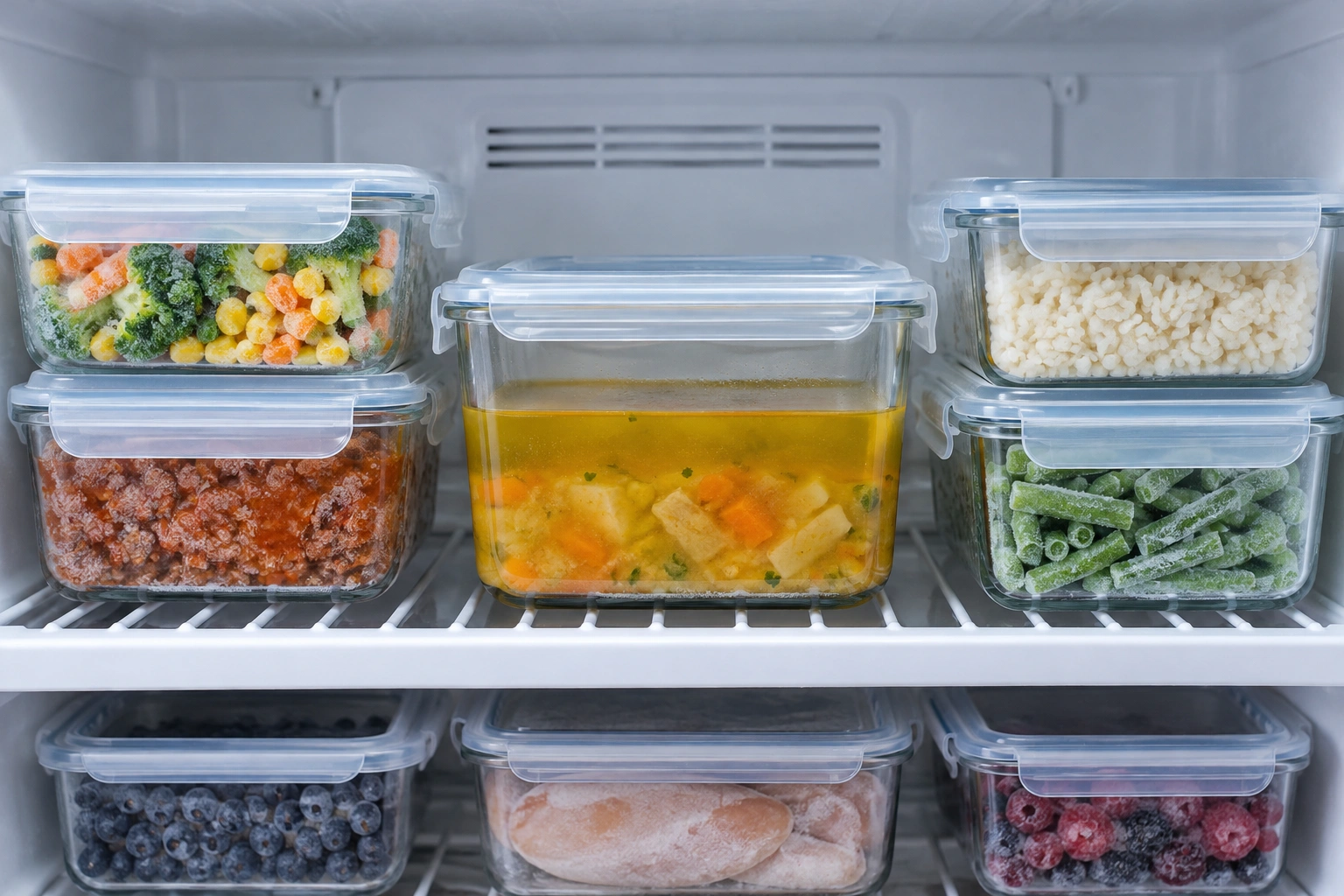
-
Cool the food first.
Let it cool until it is no longer steaming and is close to room temperature. -
Choose the right container size.
Smaller portions freeze more evenly and reduce pressure on the glass. -
Leave headspace.
The more liquid the food contains, the more room it needs. -
Seal the lid without forcing it.
You want a secure closure, not a strained one. -
Set the container on a flat surface in the freezer.
A stable shelf or drawer reduces the chance of tipping or impact. -
Avoid stacking too soon.
Let the container freeze solid before piling heavy items on top of it.
This is especially helpful for soups, sauces, and leftovers that you plan to eat within a few days after thawing.
How to Thaw Frozen Food in Glass Safely
Thawing is where many people accidentally create thermal shock.
The safest method is to move the container from the freezer to the refrigerator and let it thaw gradually. That slower change is gentler on the glass and helps the food thaw more evenly.
If the container comes out of the freezer with frost or condensation on the outside, let it sit briefly in the refrigerator or on a stable surface until the surface moisture clears before handling it too much. Avoid running it under hot water or setting it near direct heat to speed things up.
Avoid these mistakes:
- Putting frozen glass directly under hot water
- Moving it from freezer to oven without the manufacturer’s approval
- Leaving a frozen container on a very hot counter or near a heat source
- Trying to pry out frozen food with force
If the food is partially thawed and you need to release it from the container, give it time. Rushing usually causes more damage than waiting.
Lids, Seals, and Container Shape: What Matters Most
A good lid helps protect food from freezer burn and odor transfer, but it should not create unnecessary stress.
Plastic lids
Plastic lids are common and practical. They are lightweight and usually easier to open after freezing. For freezer use, a snug plastic lid that the manufacturer approves is often the most practical option because it seals well without adding the weight or fragility of glass-on-glass contact.
Silicone seals
Silicone can improve the airtight fit and make the lid more forgiving. That is useful for freezer storage, especially if you want to reduce moisture loss.
All-glass containers
All-glass containers avoid plastic contact, which some households prefer. They can also feel sturdier in the long term, but the lid design still matters, and the container may be heavier.
Shape matters just as much as the lid. Straight walls and broad bases are usually safer than narrow, tall containers because they distribute freezing pressure more evenly.
Best Glass Container Features to Look for When Buying
If you are buying containers specifically for freezer storage, look for these features:
- Explicit freezer-safe labeling
- Borosilicate or tempered glass
- A lid rated for freezer use
- A secure but not overly rigid seal
- Straight-sided or gently rounded shapes
- Sizes that match real meal portions
- Clear care instructions from the manufacturer
A practical shopping rule: if the product description is vague about cold storage, skip it. Freezer storage is one of those areas where clear instructions matter more than marketing language.
Glass vs. Plastic or Silicone for Freezer Storage
Glass is not automatically better than everything else. It is better for some jobs.
Glass
Best when you want:
– Less staining and odor retention
– A reusable container that feels sturdy
– Easy reheating in the same dish, if approved by the manufacturer
Trade-off:
– Heavier
– More breakable
– Requires more careful handling
Plastic
Best when you want:
– Lightweight storage
– Less breakage risk
– Easy transport for busy households
Trade-off:
– More likely to stain or hold odors
– May not feel as durable over time
Silicone
Best when you want:
– Flexible freezer storage
– Easy space-saving
– Lower breakage risk
Trade-off:
– Less rigid structure
– Not always ideal for neatly stacked meal prep
For a budget-conscious household, the best material is often the one that matches the food and the way you actually use the freezer. Glass is excellent for organized, repeatable meal prep. Plastic or silicone may be better for rougher handling, travel, or very tight freezer space.
Common Mistakes That Cause Freezer Breakage
These are the errors that most often turn a good container into wasted food:
- Freezing hot food in glass
- Filling the container to the top
- Using chipped or cracked glass
- Ignoring the freezer-safe label
- Thawing too quickly
- Using a lid that is not meant for freezing
- Choosing the wrong container shape for liquid-heavy foods
If you avoid those mistakes, freezer-safe glass becomes much more dependable.
When to Ask a Food Safety Expert
Ask a food safety expert or the container manufacturer if:
– The product does not clearly state freezer compatibility
– The container is an unusual shape or vintage glass
– You are unsure whether a lid, gasket, or seal is freezer safe
– You need guidance for freezing a large batch of very liquid food
When in doubt, the safest answer is usually the simplest one: use a container that is clearly designed for freezer storage.
Quick Takeaway
Glass containers can be freezer safe, but only when the container is designed for it and used with care. The safest routine is straightforward: cool the food, leave headspace, use a labeled freezer-safe container, and thaw slowly. That approach protects both your food budget and your freezer.