
Are Meal Prep Containers Microwave Safe? A Practical Guide for Busy Kitchens

If you rely on meal prep containers for lunches, leftovers, and batch-cooked dinners, the short answer is this: some are microwave safe, some are not, and the lid matters just as much as the container itself. The safest approach is to check the material, look for a microwave-safe label or symbol, and follow the manufacturer’s instructions for both the body and the lid.
That may sound cautious, but it saves money and prevents the common mistakes that ruin containers: warping plastic, cracked glass, steam spills, and accidental sparks from metal. When reheating food for a busy household, the goal is not just convenience. It is also keeping the food safe, heating it evenly, and avoiding a container you have to throw away after one bad microwave session.
Quick Answer: Are Meal Prep Containers Microwave Safe?
Meal prep containers can be microwave safe, but not all of them are. Safety depends on three things:
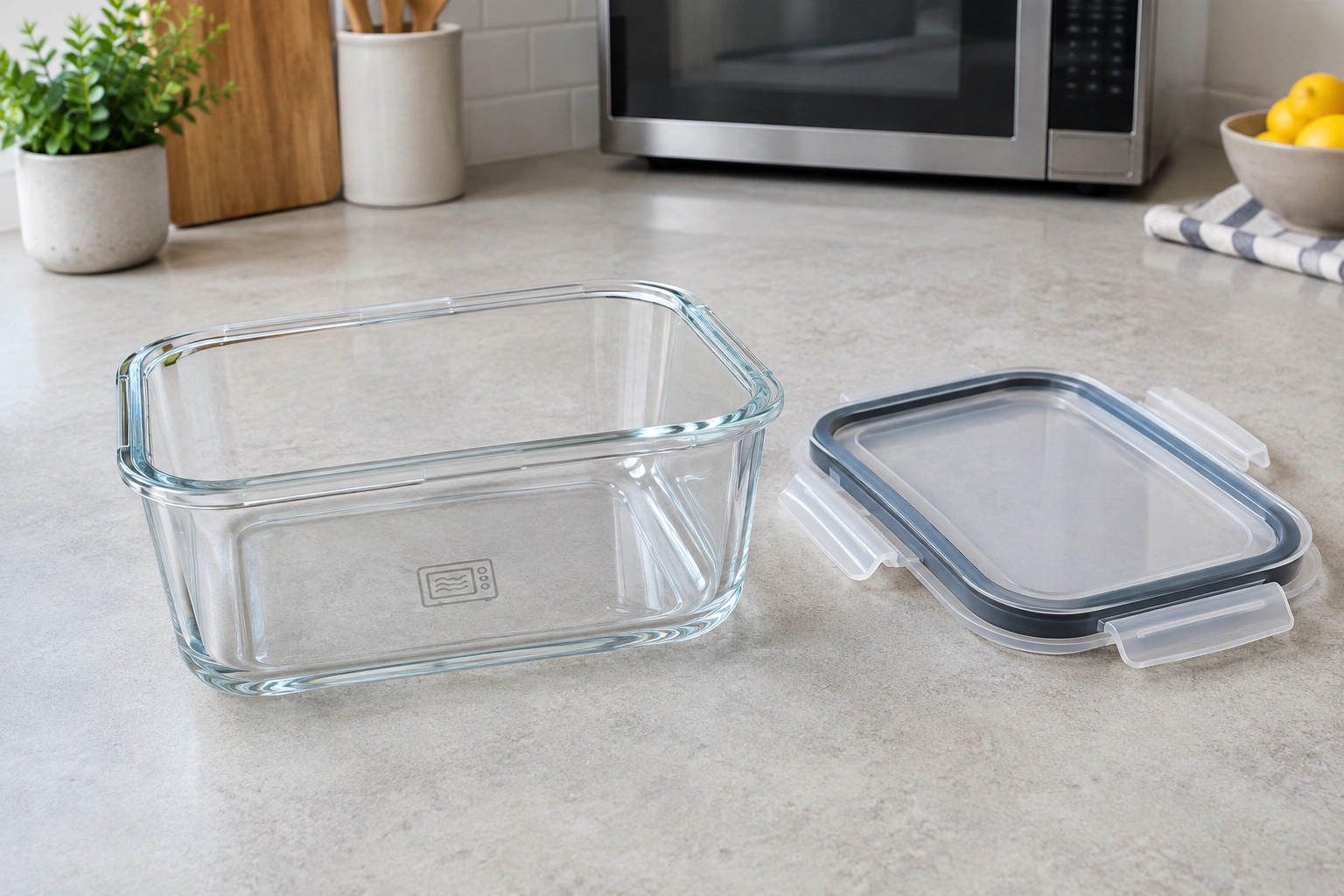
- The material
- The manufacturer’s instructions
- The condition of the container and lid
A plastic container marked microwave safe may handle reheating well for a while, while a stainless steel lunch container should stay out of the microwave completely. Glass is often the easiest option for reheating, but only if it is made for microwave use and does not have metal trim or damage.
If you are unsure, the safest move is simple: transfer the food to a clearly microwave-safe dish. That rule is consistent with USDA guidance to use cookware specially manufactured for microwave use, and to treat unlabeled or uncertain containers cautiously. USDA FSIS microwave oven guidance
What Microwave-Safe Actually Means
A microwave-safe label means the container was made to tolerate microwave heating under the manufacturer’s stated conditions. It does not mean the container can handle every food, every temperature, or endless reheating.
That distinction matters. A container may be fine for warming soup for a couple of minutes, but not for long, high-heat sessions with oily food or repeated daily use. Some plastics soften or discolor over time. Some lids seal too tightly and trap steam. Some glass containers are microwave safe but still get extremely hot from the food inside. A container labeled microwave-safe may still be unsuitable for very hot, oily, or long reheating sessions.
So think of “microwave safe” as a limited permission, not a blanket guarantee. It tells you the container is suitable for microwave use when used correctly. It does not override common-sense checks like cracks, warping, metal parts, or a lid that should not be microwaved.
How to Tell If a Meal Prep Container Is Microwave Safe
Use this simple decision rule when you are standing in the kitchen with a container in your hand:
1) Check the bottom and the packaging
Look for a microwave-safe symbol, wording, or care instructions on the back or bottom of the container. Whirlpool recommends checking there first, and if you cannot tell what the item is made of, to leave it out of the microwave. Whirlpool microwave safety guide
2) Confirm the material
If the label is missing, identify the material. Glass and microwave-safe plastic are the most common options. Stainless steel is not microwave safe. Metal trim, foil lining, and decorative metallic finishes are also a problem.
3) Check the lid separately
The container body may be microwave safe while the lid is not. A lid with a tight seal can also trap steam and pop open or spill.
4) Inspect for damage
If the container is cracked, warped, cloudy, or badly stained, retire it from microwave use. Damage can make heating less predictable and increase the chance of failure.
5) When in doubt, transfer the food
If the label is missing and the material is unclear, do not guess. Move the food to a known microwave-safe dish.
What about plastic resin codes?
Resin codes can help identify the plastic type, but they do not guarantee microwave safety by themselves. A container marked with a code still needs a microwave-safe label or manufacturer confirmation. That is especially true with older containers or repurposed packaging.
Which Meal Prep Container Materials Are Safe in the Microwave?
Here is a practical comparison to help you choose the right container for your routine.
| Material | Microwave Safe? | Main Benefits | Main Trade-offs |
|---|---|---|---|
| Microwave-safe plastic | Sometimes | Lightweight, inexpensive, easy to pack | Can warp, stain, or wear out faster |
| Glass | Usually if labeled | Good for reheating, easy to inspect, durable over time | Heavier, breakable, can get hot |
| Stainless steel | No | Strong, durable for storage | Must be transferred before microwaving |
| Silicone | Sometimes, if labeled | Flexible, lightweight, useful for some lids or containers | Must still be verified for microwave use |
| Foil or metal-lined packaging | Usually no | Convenient for transport | Can spark or heat unevenly unless manufacturer specifically says otherwise |
Microwave-safe plastic
Plastic meal prep containers are common because they are light, cheap, and easy to stack. If the container is specifically labeled microwave safe, it can be a practical choice for reheating leftovers or lunches.
The trade-off is durability. Plastic can stain from tomato sauce, absorb odors, and soften if overheated. Some manufacturers are more conservative about plastic reheating than others, so follow the container’s own instructions if they are stricter than the general label.
If you use plastic regularly, inspect it often. Once it starts warping or looking tired, retire it from microwave duty.
Glass
Glass is often the most reliable option for microwave reheating because it does not have the same melt risk as plastic. Some borosilicate glass meal prep containers are designed for multiple uses, but the key point is still the same: only use glass in the microwave if the manufacturer says it is safe for that purpose. That makes glass a strong all-around choice for people who want one container that can move from storage to reheating with less hassle.
The trade-off is weight and breakability. Glass is heavier to carry in a lunch bag, and it can chip or crack if handled roughly.
Stainless steel
Stainless steel should not go in the microwave. It reflects microwaves rather than letting them heat the food properly, which can cause arcing or sparks. If your meal prep container is stainless steel, transfer the food to a microwave-safe dish before reheating.
That is not a flaw in stainless steel as a storage material. It is simply the wrong material for microwave heating.
Silicone
Silicone shows up in some lids and some food containers. It can be microwave safe if the manufacturer says so, but do not assume that all silicone products are. Silicone is useful because it is flexible and light, yet it still needs the same label check as any other material.
Which Materials Should Not Go in the Microwave?
Some materials are clear no-gos:
- Stainless steel
- Aluminum
- Foil containers unless the package specifically says they are microwave safe
- Any container with metal trim, inserts, or decorative metal accents
- Damaged containers with cracks, warping, or peeling surfaces
For everyday meal prep, it helps to separate disposable takeout or foil packaging from reusable meal prep containers. Disposable foil trays and similar packaging should generally stay out of the microwave unless the package specifically says they are microwave safe. Reusable containers should be checked by material, label, and lid instructions before heating.
The USDA notes that some food packaged in foil containers can be microwaved only if the heating instructions specifically say so. That is the exception, not the rule. For everyday meal prep, assume metal and foil are unsafe unless the package says otherwise. USDA FSIS microwave oven guidance
Are Lids Microwave Safe Too?
Do not treat the lid as an afterthought. The container body and the lid may be made from different materials and have different heat limits.
A lid can be microwave safe, partially microwave safe, or not microwave safe at all. Even if the lid is made from a safe material, it may still need to be loosened or vented so steam can escape. A tight seal can build pressure and cause food to splatter or the lid to pop off.
Practical lid rule
- Remove the lid if the manufacturer says to do so.
- Loosen or vent the lid if it is designed for venting.
- Do not seal the container tightly for microwave reheating.
That is a useful reminder that “microwave safe” does not mean “microwave however you want.”
If your lid has a silicone seal, snap-lock tabs, or a steam vent, read the care instructions before assuming it is safe to microwave closed.
What Can Go Wrong When You Microwave the Wrong Container?
The problems are not theoretical. They show up fast in real kitchens.
Warping and softening
Plastic can soften when it is exposed to heat it was not designed to handle. Once a container warps, the lid may stop sealing properly and the container may no longer stack well.
Melting
If the container is not microwave safe, it may melt, deform, or stick to the food. That is a waste of both the container and the meal.
Cracking
Glass that is not meant for microwave use, or glass that has been damaged, can crack under stress. Even microwave-safe glass should be handled carefully if it is already chipped.
Arcing and sparks
Metal containers, metal trim, and foil can cause arcing. That is the classic “sparks in the microwave” problem and the main reason stainless steel should stay out.
Steam buildup and spills
A tightly closed lid can trap steam. When that pressure releases, it can spill food or send sauce across the microwave.
Possible chemical leaching
With some plastics, overheating or using the wrong container can increase concern about chemicals moving into food. That is why it is smart to use only containers labeled for microwave use and to replace worn-out plastic rather than pushing it past its limit.
Best Practices for Microwaving Food in Meal Prep Containers
A safe container still needs safe handling.
Use short heating intervals
Heat food in shorter bursts rather than one long run. This helps reduce hot spots and gives you a chance to stir or check the temperature.
Stir or rotate the food
Rice, pasta, soups, and casseroles heat unevenly. Stirring redistributes the hotter and cooler parts so the whole portion reheats more evenly.
Vent the lid
If the lid is microwave safe and designed to stay on, vent it. If not, remove it. Steam has to escape somewhere.
Avoid long microwave sessions in plastic
Even microwave-safe plastic is not the best choice for extended heating. If you need a longer reheat, glass is usually the more durable option.
Let the container rest briefly
After microwaving, let the food sit for a moment before handling the container. The food may be hotter than the container itself, and steam can burn.
Watch for hot spots
A container can be safe while the food inside is still unevenly heated. That matters most with dense foods like rice, pasta, and leftovers packed tightly into corners.
When to Replace the Container or Transfer Food to Another Dish
Replace the container if you see any of these signs:
- Warping
- Cracks
- Cloudiness that keeps getting worse
- Missing or unreadable labeling
- A lid that no longer fits properly
- Melted edges or rough spots
- Persistent odor or staining that suggests the container is aging out
Transfer the food to another dish if:
- The container is stainless steel or contains metal
- The label is missing and the material is unclear
- The lid is not microwave safe
- The container is damaged
- The food needs a longer reheat than the container is comfortable handling
This is one of those moments where replacing a cheap container is better than risking a bad microwave session. A fresh, clearly labeled container is easier to trust than an old one you have to second-guess every time.
Choosing the Best Meal Prep Container for Future Microwave Use
If microwave reheating is part of your regular routine, choose containers with that in mind.
Best all-around choice: glass
Glass is the most dependable option for people who want a container they can reheat in often. It is sturdy, easy to clean, and less likely to degrade from repeated microwave use. The trade-off is weight and breakage risk.
Best budget-friendly choice: microwave-safe plastic
Plastic works well if you want something light, affordable, and easy to replace. Just plan on a shorter lifespan and check it often for wear.
Best for storage only: stainless steel
Stainless steel is excellent for durability and transport, but not for microwaving. It makes sense if you are happy to transfer food before reheating.
Best lid style: vented or easy-to-loosen lids
A lid that can vent steam is more practical than a fully sealed lid for microwave use. It helps prevent pressure buildup and mess.
If you are building a set from scratch, it is usually smarter to buy fewer containers that clearly match your reheating habits than to stock up on mixed containers and hope they all work the same way.
When to Ask a Food Safety Expert
In most cases, you do not need a food safety expert. The practical answers are usually enough: follow the manufacturer’s instructions, and if the container is unclear, damaged, or not clearly microwave safe, replace it.
Ask the manufacturer or a food safety expert only if you have a genuinely ambiguous case, such as:
- An unlabeled container you cannot identify
- A container with confusing mixed materials
- A product that claims multiple functions but gives unclear reheating instructions
- Questions about whether a specific food should be reheated in a particular container and the instructions do not settle it
For most busy kitchens, the safest and fastest rule is still the same: use a clearly labeled microwave-safe dish when in doubt.
For anyone managing family meals, leftovers, and batch prep, that habit reduces guesswork and keeps the kitchen calmer. The goal is not to become an expert in plastics or glass chemistry. The goal is to reheating food safely, without wrecking your containers or creating avoidable problems.
FAQ
Can I microwave a meal prep container without a microwave-safe symbol?
Only if the manufacturer clearly says it is safe for microwave use. If you cannot confirm that, transfer the food to a known microwave-safe dish.
Are BPA-free containers automatically microwave safe?
No. BPA-free only refers to one chemical concern. You still need a microwave-safe label or manufacturer instructions.
Can I microwave the lid if the container is microwave safe?
Not always. Check the lid separately, and vent or remove it if the instructions say to do so.
Is glass always better than plastic for the microwave?
Not always, but it is often the more durable choice for repeated reheating. The key is whether the glass is labeled for microwave use and free of damage.