
Are Souper Cubes Dishwasher Safe? A Practical Cleaning Guide for Busy Kitchens

If you use Souper Cubes for soups, sauces, broth, or meal prep portions, the short answer is yes: Souper Cubes says both the trays and lids are dishwasher safe. The company also recommends using the dishwasher on a normal cycle after each use.
That answer matters because silicone freezer trays are one of those kitchen tools people want to clean quickly, but not at the cost of warping, lingering odors, or shortening the life of the product. The good news is that Souper Cubes gives clear guidance, so you do not have to guess.
For most households, the simplest routine is this: wash the trays and lids in the dishwasher on a normal cycle, then let them dry fully before storing. If you prefer hand washing, that can work too, especially when you want more control over greasy residue or you’re trying to keep odors from building up.
Quick Answer: Are Souper Cubes Dishwasher Safe?
Yes. According to Souper Cubes’ FAQ, both the trays and lids are dishwasher safe, and the brand recommends a normal cycle for cleaning after each use. That is the safest default if you want the manufacturer’s recommended method.
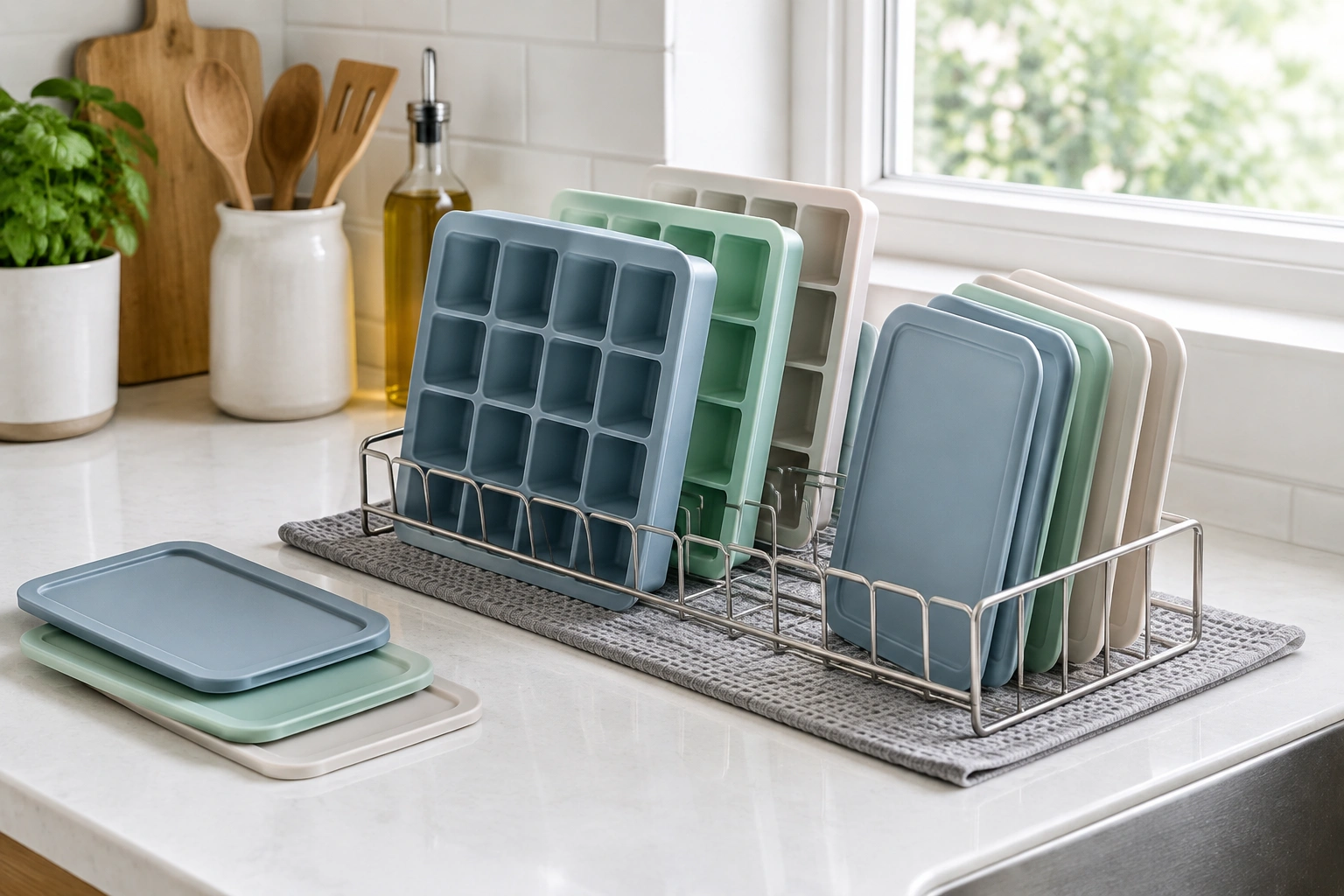
The practical takeaway is simple:
- Use the dishwasher if you want the easiest routine and the company’s preferred cleaning method.
- Use hand washing if a tray has oily residue, stubborn smell, or you want gentler handling.
- Avoid assuming every cycle is the same. A normal cycle is the clearest official guidance, so there is no reason to push the heat settings higher unless the manufacturer specifically says to.
If you are deciding in the middle of a busy weeknight cleanup, the dishwasher is the straightforward answer. For long-term care, the key is not just “dishwasher safe,” but “dishwasher safe in the right way.”
Image placeholder 1
What Parts You Can Wash in the Dishwasher
Souper Cubes’ guidance covers both trays and lids. That is useful, because some kitchen products have mixed care instructions: the tray may be dishwasher safe while the lid needs gentler handling. Souper Cubes does not make that distinction in its FAQ, so you can treat both parts as dishwasher safe.
Trays
The silicone trays are the main part most people wash after freezing and portioning food. Because they are dishwasher safe, you do not need to reserve them for hand washing after soups, sauces, or broth.
Lids
The lids are also dishwasher safe, which saves time when you are cleaning a full batch of meal prep containers. That matters if you are freezing several meals at once and do not want to hand wash each piece separately.
Why this matters
When a tray and lid are cleaned differently, people often make the wrong assumption and damage the more delicate part. Here, the manufacturer removes that guesswork: both pieces can go in the dishwasher. That makes Souper Cubes easier to fit into a real household routine, especially when you are washing several kitchen tools at once.
Best Dishwasher Placement and Settings
Souper Cubes says to use a normal cycle, but it does not spell out rack placement in the FAQ. So there is no product-specific manufacturer instruction that says “top rack only.” As a practical precaution, many people prefer the top rack for silicone items because it is usually farther from the heating element, but that is general dishwasher caution rather than official Souper Cubes guidance.
Placement: top rack is a cautious preference, not a manufacturer rule
If your dishwasher setup allows it, the top rack is a sensible place for silicone trays and lids. If you use the bottom rack, there is no clear Souper Cubes statement saying that is prohibited; just make sure the pieces are secure and not exposed to unnecessary heat.
Settings: keep them moderate
Souper Cubes specifically recommends a normal cycle, so there is no reason to default to more intense options. In general, if your dishwasher offers settings like:
- heated dry
- sanitize
- high-heat wash
- extra hot drying
those are the settings most likely to add unnecessary heat. That makes them better treated as precautionary settings to avoid when you want gentler care, not as settings the manufacturer explicitly forbids.
A simple rule of thumb: if your dishwasher has a normal cycle with air drying, choose that first. If it has a heated dry option, skipping it is a cautious choice if you want to minimize heat exposure.
For general food-contact cleaning principles, the FDA’s consumer guidance on food contact surfaces is a useful reminder that clean, well-maintained kitchen tools matter as much as the food you put in them.
How to Wash Souper Cubes Step by Step
The easiest routine depends on whether you are using the dishwasher or washing by hand. Here is the practical version.
Dishwasher method
- Empty any remaining food scraps.
- Rinse first only if the tray held something especially greasy, sticky, or heavily seasoned.
- Place the trays and lids in the dishwasher.
- Run a normal cycle, which matches Souper Cubes’ recommendation.
- Remove them when the cycle is done and let them dry fully before storing.
That is the simplest path for soups, broth, and most meal prep foods.
Hand-washing method
- Wash with warm water and dish soap.
- Use a soft sponge or cloth.
- Rinse thoroughly so no soap film remains.
- Dry completely before stacking or storing.
Hand washing gives you more control when you are dealing with oily foods or a stubborn odor. It also lets you inspect the corners and edges more closely.
When to rinse before either method
If the tray held something thick, oily, or strongly seasoned, a quick rinse before washing can help. That extra step reduces the chance of residue clinging to the silicone or settling into corners. For plain broth or soup, pre-rinsing is usually optional.
When Hand Washing Is the Better Choice
The dishwasher is the manufacturer’s recommended method, but hand washing has a few practical advantages.
Choose hand washing when:
- the tray has a lot of oil or grease
- the food left a strong smell, like curry or garlic-heavy sauce
- you want to inspect the tray for residue immediately
- your dishwasher runs especially hot
- you are trying to be extra cautious with a tray that already shows signs of wear
The trade-off
Dishwasher cleaning is easier and matches Souper Cubes’ official guidance. Hand washing takes more time, but it gives you more control. If a tray has a stubborn smell, hand washing can be the better reset before it goes back into regular use.
A realistic example
If you froze tomato sauce in a tray and it comes out with a faint orange tint, the dishwasher may clean it just fine. If the tray also smells like olive oil or sautéed garlic after washing, a quick hand wash with warm soapy water may be the better follow-up.
How to Clean Off Soup, Sauce, Broth, and Oily Residue
Different foods leave different cleaning problems. That is where a little judgment helps.
Soup and broth
Most soups and broths are easy to clean because they leave mostly liquid residue. A normal dishwasher cycle should handle them well, especially if you empty the tray promptly after use.
Sauce
Tomato-based sauces can leave color behind, even when the tray is clean. That stain does not always mean the tray is dirty. If the color bothers you, wash promptly rather than letting the residue sit overnight.
Oily foods
This is where hand washing can help. Oil can cling to silicone surfaces and leave a slippery film. A warm soapy wash before or after the dishwasher can remove that film more effectively than a single rinse.
Strong-smelling foods
Garlic, curry, onion, and spiced sauces can leave lingering odors. If that happens, wash the tray right away and let it dry fully in open air. Storing it damp can trap the smell longer.
One useful habit
Do not let food residue sit in the tray for days. Even when the tray is dishwasher safe, prompt cleaning makes the job easier and reduces the chance of lingering odor or staining.
Common Mistakes to Avoid
Most problems with dishwasher-safe silicone come from overdoing heat or underdoing drying.
1. Using a high-heat cycle when a normal cycle will do
Souper Cubes recommends a normal cycle. There is no upside to using more heat than needed.
2. Assuming heated dry is harmless
Heated dry is convenient, but it adds extra exposure to heat. If you are trying to protect the shape and flexibility of the silicone, air drying is the safer habit.
3. Scrubbing with abrasive tools
Avoid harsh scrubbers that can scratch or damage surfaces. A soft sponge usually does the job.
4. Storing them while damp
This is a common mistake. Damp storage can lead to odors and make the trays feel less fresh the next time you use them.
5. Ignoring the lids
Because both trays and lids are dishwasher safe, they deserve the same care. Don’t clean the trays well and then toss the lids aside wet or dirty.
Troubleshooting: Signs of Wear, Warping, or Damage
Dishwasher-safe does not mean indestructible. Over time, repeated heat exposure or rough handling can show up in the material.
Watch for these signs:
- the tray no longer sits flat
- the silicone feels less flexible than before
- the lid does not fit as securely
- there is visible warping
- the surface looks unusually dull or damaged
- the tray has cracks, tears, or edges that no longer hold their shape
A little discoloration from food is not the same as damage. The bigger concern is a change in shape or fit.
What those signs mean
If a tray is warped, it may still be usable, but it may no longer perform as intended. If the lid no longer seals or sits properly, that affects convenience and possibly how well the tray functions in your routine. If you notice cracks, splitting, or distortion that affects the fit, it is a good sign that replacement is warranted.
When to stop using the dishwasher
If a tray or lid starts to warp, crack, or lose its shape after repeated dishwasher cycles, it is reasonable to switch to gentler care and watch whether the issue continues. If the damage is functional rather than cosmetic, stop using the item in the dishwasher and consider replacing it.
How to Keep Souper Cubes in Good Condition Longer
A few small habits make a real difference.
Rinse sooner rather than later
Prompt cleaning keeps food from drying onto the silicone.
Stick with normal dishwasher cycles
That matches the manufacturer’s recommendation and avoids unnecessary heat.
Let them dry completely
Drying matters as much as washing. A fully dry tray is less likely to hold odor or feel sticky.
Store them without crushing
Silicone is flexible, but it still lasts longer when it is not bent, pinched, or packed under heavy items.
Wash lids and trays together when practical
Since both are dishwasher safe, cleaning them in the same routine keeps the whole set ready for the next meal prep session.
FAQ: Souper Cubes Dishwasher Cleaning
Can I put Souper Cubes on the top rack?
Souper Cubes does not specifically say “top rack only.” The top rack is a practical precaution because it is usually gentler in many dishwashers, but that is general care advice rather than official manufacturer guidance.
Can I use heated dry?
Souper Cubes’ official guidance says to use a normal cycle. Heated dry is not part of that recommendation, so skipping it is a cautious choice if you want to minimize heat exposure.
Are the lids dishwasher safe too?
Yes. Souper Cubes says both the trays and lids are dishwasher safe.
Is hand washing better?
Not necessarily better, but sometimes more useful. Hand washing gives you more control over oily residue and odors. The dishwasher is still the company’s recommended method.
What if the tray smells after washing?
Wash it promptly, dry it fully, and avoid storing it damp. If the smell comes from oily or strongly seasoned food, a hand wash can help remove the residue more effectively.
Bottom Line
If you want the shortest answer: yes, Souper Cubes are dishwasher safe, and the manufacturer says both the trays and lids can go in the dishwasher on a normal cycle. That makes them a practical choice for busy households that want easy cleanup without a lot of fuss.
Souper Cubes does not specify top-rack-only placement, so top-rack use is best treated as a cautious preference rather than an official rule. Likewise, heated dry, sanitize, and other high-heat settings are better treated as heat-minimizing precautions unless the manufacturer says otherwise.
Use the dishwasher for routine cleaning, choose gentler settings when possible, and switch to hand washing when you are dealing with grease, stubborn odor, or a tray that already shows wear. That approach keeps cleanup simple while helping the trays last longer.