
B09N4ZKCH6 Review: Is This 24-Piece JoyJolt Glass Storage Set Worth Buying?

If you are looking at B09N4ZKCH6 and wondering whether it is a smart buy, here’s the short version: this is the JoyJolt 24-piece borosilicate glass storage container set, sold as a 12-container system with lids. It is positioned for fridge storage, freezer use, microwave reheating, dishwasher cleaning, and general meal prep. That makes it relevant for busy kitchens where leftovers, lunches, and batch-cooked food all need to move through the week without creating a cabinet mess.
The main question is not whether it sounds convenient. It is whether the size mix, lid design, and glass construction actually fit the way you cook and store food. For a family that rotates leftovers, a meal prepper packing lunches, or a budget-minded shopper trying to replace flimsy plastic, those details matter more than the marketing.
What Is B09N4ZKCH6? Product Overview and Key Specs
B09N4ZKCH6 refers to the JoyJolt 24pc Borosilicate Glass Storage Containers with Lids. Based on the verified listing details, the set uses borosilicate glass containers and is sold as a 24-piece bundle, meaning 12 containers plus 12 lids. The product listing also identifies it with UPC 810071427091 and EAN 081007142709.
The clearest practical takeaway is that this is not a pantry bin set or a dry-goods organizer. It is a food storage and meal prep set built for cooked food, leftovers, and leftovers that need reheating later. The listing also states that the containers are fridge, freezer, dishwasher, oven, and microwave safe, which gives them broader kitchen utility than basic plastic tubs. A separate product details source lists the set’s list price at $42.95, which helps frame the value discussion later.
For shoppers comparing options, the biggest decision point is simple: do you want glass durability and reheating convenience, or do you want a lighter, cheaper plastic set? This product leans toward the first choice.
What’s Included: Container Count, Sizes, and Capacity
The set includes 12 containers and 12 lids, but the verified sources provided here do not spell out the exact size breakdown of each container. That matters, because container count alone can be misleading. A 12-container set can be useful or frustrating depending on whether the pieces are mostly lunch-sized, snack-sized, or large enough for family leftovers.
Practically speaking, a set like this usually makes the most sense when it includes a mix of small, medium, and larger containers rather than 12 near-identical tubs. That would support a range of jobs: snacks, sauces, sides, lunches, and leftover dinners. But because the exact dimensions are not verified here, the safest approach is to treat the size mix as unconfirmed until you check the product page.
Before buying, verify these details on the listing:
– Exact dimensions for each container
– Exact capacity in ounces or cups
– How many sizes are included
– Whether the lid snaps on or uses a gasket-style seal
– Whether lids are vented, airtight, or both
– Whether the lids are safe for microwave use
– Whether the containers nest or stack when empty
– Whether replacement lids are available
If you are shopping for meal prep, the right question is not “How many pieces?” but “How many of those pieces will I actually use every week?” For example:
- A parent packing school lunches usually benefits from several medium containers and only a few small ones.
- A batch cook who portions rice, protein, and vegetables may care more about uniform sizes than sheer piece count.
- A family storing casserole leftovers needs at least a few larger containers that can handle a full meal’s worth of food.
Because the verified data here does not include the exact dimensions or capacities for each container, I would treat this set as promising but not fully size-transparent. If you need precise portion planning, check the retailer listing carefully before buying. That is especially important if your fridge shelves are narrow or if you want containers that fit one standard lunch bag.
Materials and Build Quality
The main material claim here is borosilicate glass. In practical kitchen terms, that usually means a harder-working storage vessel than thin plastic. Glass does not absorb odors the way many plastics do, and it is generally a better choice when you want to reheat food without worrying about container flavor transfer.
That said, glass comes with its own trade-off: weight and breakability. The shipping weight listed for this product is 12.87 lbs, which is a reminder that this is not a lightweight set. You will feel that in your hands, and you may notice it when moving a full stack from freezer to counter.
For daily use, borosilicate glass is appealing because it tends to suit repeated heating and cooling better than many bargain plastic containers. The lid construction is equally important, though, and that is where many storage sets either succeed or disappoint. A glass base can be excellent while the lid becomes the weak point after repeated washing or rough handling. Since the verified sources here do not provide a detailed lid-material breakdown, I would judge the set as strong on container material and more “check the listing carefully” on lid longevity.
If your household is rough on kitchen gear, the best durability test is this: can the set survive being used several times a week, stacked in a fridge, washed often, and handled by tired hands? Glass helps, but lids usually determine how long a set feels reliable.
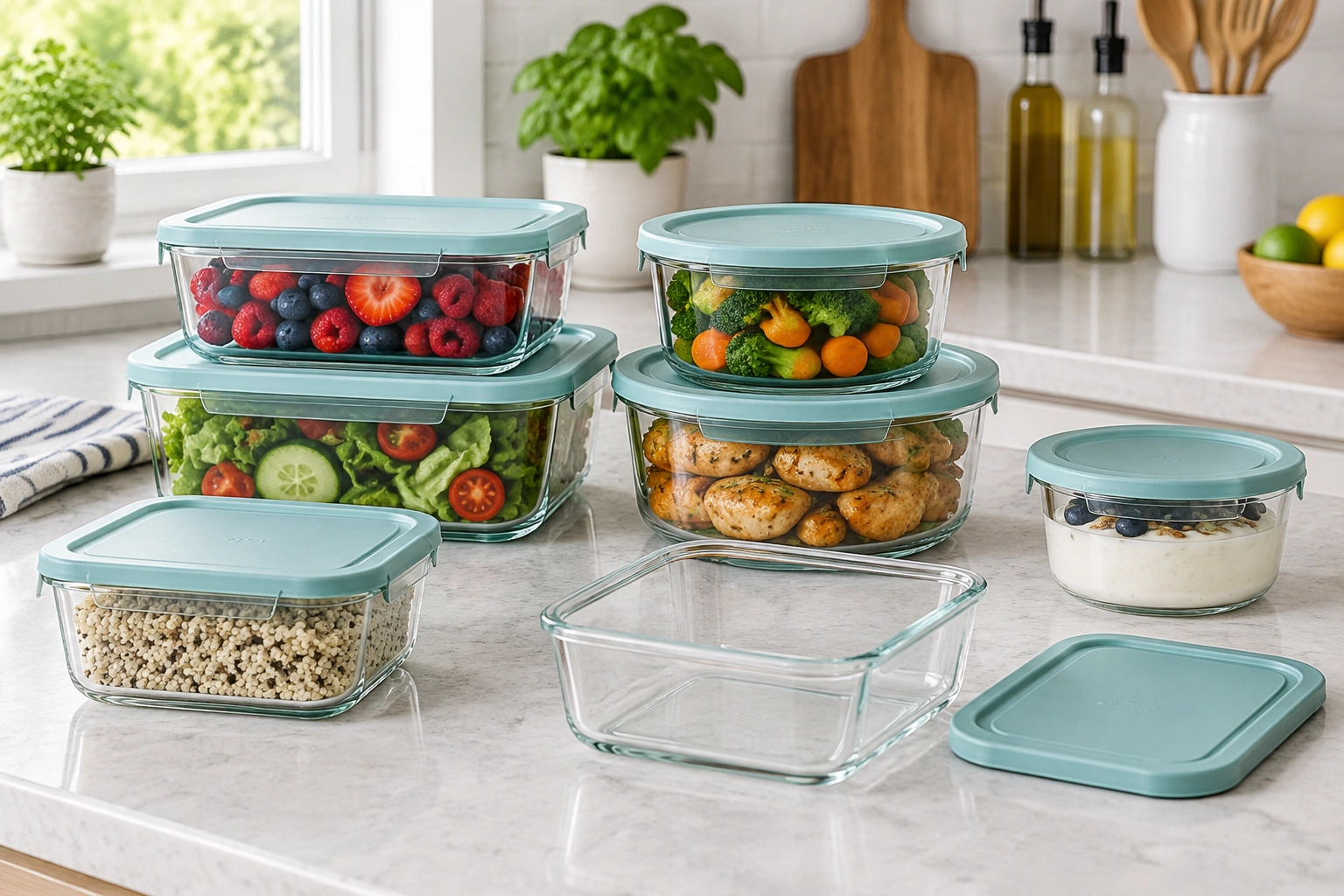
Leakproofness and Seal Performance
The listing language points toward airtight and freezer-safe use, which suggests the lids are designed to seal securely for storage. That is useful for keeping leftovers contained in the fridge or freezer and for limiting odors from spreading through the kitchen.
But airtight storage is not the same as truly leakproof transport. A lid can seal well enough for stacked fridge storage and still be less dependable for soup, sauce, or oily dressings if the container gets tipped, shaken, or packed loosely in a bag. So I would avoid assuming this is automatically a spill-proof lunch container unless the product page specifically demonstrates that use case.
Here is the practical rule:
– Airtight usually means better freshness and a stronger storage seal.
– Leakproof means you can carry the container around with much less worry about spills.
For this set, the verified information supports the first idea more clearly than the second. That makes it a better fit for home storage, leftovers, and fridge/freezer use than for carry-everywhere liquid transport.
If your main goal is storing pasta, roasted vegetables, casseroles, or meal-prep bowls, the seal claim is more than enough to matter. If you plan to carry broth-heavy food every day, I would want stronger proof of spill resistance before depending on it.
Microwave, Freezer, and Dishwasher Safety
One of the strongest selling points of B09N4ZKCH6 is its broad compatibility claim. The listing says the containers are fridge, freezer, dishwasher, oven, and microwave safe. That is a major convenience advantage for busy households because it reduces food transfer steps. You can store, freeze, reheat, and clean without changing containers.
That said, real-world convenience depends on following the lid rules. Even when a glass container is microwave-safe, lids often have different heat limits than the glass base. The verified sources here do not give detailed temperature limits or lid-care instructions, so the safest reading is this: the glass itself is built for heat, but you should verify the lid guidance before microwaving with the lid on.
For families, the freezer-safe claim is especially useful. It lets you portion soup, sauce, or cooked meals in advance and pull out only what you need. For meal preppers, dishwasher safety is just as important because a set that requires hand-washing usually becomes annoying within a week.
If you want the most practical use case, think of this set as a “cook once, store once, reheat later” system rather than a fragile presentation container. That is where glass earns its keep.
Stackability, Storage, and Everyday Convenience
Storage convenience can make or break a container set. A good set should reduce clutter, not create a cabinet avalanche every time you open the door. The 12-container format is useful because it gives you enough pieces for rotation without becoming absurdly large.
Glass containers do tend to stack more neatly than odd-shaped plastic leftovers, especially when the set uses matching lid and base sizing. Even without exact dimensions, the product’s design intent is clear: this is meant to be a coordinated system, not a random drawer full of mismatched tubs.
For a small kitchen, that matters. A family with limited cabinet space usually benefits more from a set that nests or stacks consistently than from a cheaper bundle with more pieces but worse organization. The trade-off is weight. Glass stacks well, but it is heavier to lift and store than plastic, especially when fully loaded.
A practical buying rule: if you often move containers between fridge, freezer, counter, and lunch bag, the better stackability of a coordinated glass set can save time and irritation. If you need ultra-light containers for kids or for frequent travel, glass may feel less convenient.
Real-World Performance for Meal Prep, Leftovers, and Lunches
This is where B09N4ZKCH6 either earns its place in the kitchen or ends up as “nice but not used enough.” For meal prep, the combination of glass and broad temperature compatibility is genuinely helpful. You can portion food on Sunday, refrigerate or freeze it, then reheat without switching containers.
For leftovers, glass is especially useful because it handles odor and staining better than many budget plastics. That matters after tomato sauce, curry, chili, or anything strongly seasoned. A plastic set may be lighter, but it often looks tired much sooner.
For lunches, the main advantage is confidence. A sturdy glass container with a reliable lid is easier to trust than a thin takeout-style tub. The main drawback is weight. If you pack lunches for a commute, school bag, or long day out, glass may be less appealing than lighter containers.
The best use scenarios are:
– pre-portioned dinners for the week
– freezer portions for later meals
– leftovers that need reheating
– home lunch packing where weight is not a major issue
The weaker use case is daily carry for very light bags or situations where breakage risk is a concern.
Pros and Cons: The Main Strengths and Limitations
Pros
- 24-piece set gives you a full storage system, not a few random pieces
- Borosilicate glass is a strong fit for reheating and repeated use
- Listing claims broad compatibility: fridge, freezer, dishwasher, oven, and microwave
- Better than many plastics for odor and stain resistance
- Good fit for leftovers, meal prep, and freezer portions
Cons
- Exact container sizes are not clearly verified in the sources provided here
- Glass is heavier than plastic
- Lids may be the long-term wear point
- Not ideal if you want ultra-light lunch containers
- Likely more expensive than basic plastic sets
The biggest trade-off is simple: you are paying for a more durable, more versatile storage experience, but you accept more weight and a little more care.
Common Buyer Complaints and Long-Term Durability Concerns
For this type of container set, the usual long-term complaints are predictable even when the product starts strong. Lids can loosen with frequent use. Seals can wear. Glass can chip if it is knocked against a sink or dropped onto tile. And even good lids can become less satisfying to close after repeated dishwasher cycles.
Because the verified sources here do not include a full review dataset, I would not claim specific complaint patterns as fact. But if you are evaluating any glass storage set, those are the areas to watch over time.
A smart habit is to inspect containers before each use. If you notice a crack, chip, warped lid, or sealing ring damage, retire that piece from food storage. That is not being fussy; it is basic kitchen risk management. A container set is only valuable if you can trust it.
Value for Money: Is B09N4ZKCH6 Worth the Price?
With a verified list price of $42.95, this set sits in a range that many shoppers will compare against plastic bundles and other glass sets. The value question is not just “Is it cheap?” It is “Will it replace multiple lower-quality purchases?”
If you have been buying inexpensive plastic containers that stain, warp, or lose lids, a glass set can save frustration even if the upfront price is higher. In that sense, the JoyJolt set looks like a practical upgrade for households that store and reheat food often.
Compared with a budget plastic option, this set should offer better durability and a cleaner reheating experience. Compared with a premium glass brand, the main test is whether the lid quality and size assortment justify the price. Because the exact size breakdown is not verified here, I would call it a reasonable buy for people who value glass convenience more than ultra-low cost.
Best Alternatives and How This Set Compares
If you are comparing options, it helps to look at this set against two common alternatives: budget plastic sets and similar glass meal prep sets.
Compared with typical budget plastic sets
Budget plastic sets are usually cheaper upfront and lighter to carry. They can be fine for dry snacks, casual leftovers, and short-term use. But they often offer less variety in useful sizes, and they are more likely to stain, warp, or feel disposable over time.
This JoyJolt set is stronger if you care about reheating, odor resistance, and a more durable feel. The trade-off is obvious: more weight and a higher initial price.
Compared with common 12-piece or 18-piece glass meal prep sets
A typical 12-piece glass set often gives you fewer total pieces, which can mean less flexibility if lids get misplaced or if you want a wider mix of container sizes. An 18-piece set may offer more size variety, but not always better quality. Some lower-priced glass sets compete on piece count while using thinner lids or a less practical size mix.
This 24-piece set is attractive because the count suggests a fuller system, but the real value depends on the exact size assortment and lid design. If the set includes a sensible mix of small and medium containers, it can be more useful than a smaller set with only one or two sizes. If the lids are sturdy and the sizes are well chosen, it may also compare favorably on everyday convenience rather than just raw piece count.
Bottom line on comparison
- Budget plastic: cheaper and lighter, but usually less durable and less satisfying for reheating
- 12-piece glass sets: often simpler and smaller, but may be less versatile
- 18-piece glass sets: more flexible, but quality can vary a lot by brand
- This JoyJolt set: best viewed as a middle-ground option with a stronger value proposition if you want a coordinated glass system and can confirm the sizes suit your needs
Who Should Buy It and Who Should Skip It
Buy it if:
- you want a glass storage set for leftovers and meal prep
- you reheat food often and want fewer container swaps
- you are replacing stained or warped plastic
- you like a coordinated 12-container system
- you are comfortable paying more upfront for better day-to-day usability
Skip it if:
- you need the lightest possible lunch containers
- you want exact size details before buying and the listing does not provide them
- you prefer the lowest upfront price over longer-term durability
- you are worried about breakage in a busy household with rough handling
Final Verdict
B09N4ZKCH6 is a sensible glass storage buy for households that cook at home, pack lunches, and rely on leftovers. The verified facts point to a 24-piece JoyJolt borosilicate glass set with broad temperature-use claims and a mid-range price point. That combination makes it attractive for practical kitchens that need something sturdier than plastic but not overly specialized.
My bottom-line view: worth considering if you want a dependable glass meal prep set and can live with the weight. If your priority is lightweight portability or the lowest possible price, a plastic alternative may fit better. If your priority is reducing waste, simplifying reheating, and getting more life out of one container system, this set is a solid candidate.
FAQ
Is B09N4ZKCH6 a glass container set?
Yes. The verified product details identify it as the JoyJolt 24pc Borosilicate Glass Storage Containers with Lids.
How many containers are included?
The set includes 12 containers and 12 lids, for a total of 24 pieces.
Is it microwave-safe?
The listing says the containers are microwave safe. As with most glass-and-lid sets, check the lid instructions before microwaving with the lid on.
Can I freeze food in it?
The listing says the containers are freezer safe, which makes them suitable for batch cooking and portioning meals ahead of time.
Is it dishwasher-safe?
Yes, the listing says the containers are dishwasher safe. For best long-term use, lid care still matters.
Is it good for meal prep?
Yes, especially if you want glass containers for reheating, leftovers, and freezer portions. The main limitation is weight, not usefulness.
What should I verify before buying?
Check the exact container dimensions, capacities, lid type, and whether the lids are meant for airtight storage only or true leakproof transport.
What is the biggest downside?
The biggest downside is that the verified sources here do not provide exact container sizes, so it is harder to judge fit before buying. Glass weight is the other obvious trade-off.