
VERONES 10-Pack Glass Meal Prep Containers Review: Is ASIN B0C595YHF5 Worth It?

If you are shopping by ASIN, B0C595YHF5 turns out to be a VERONES 10-pack of 22 oz glass meal prep containers with lids. That matters because the product is not a random storage box—it is a portion-sized glass set aimed at meal prep, leftovers, lunch packing, and general fridge organization.
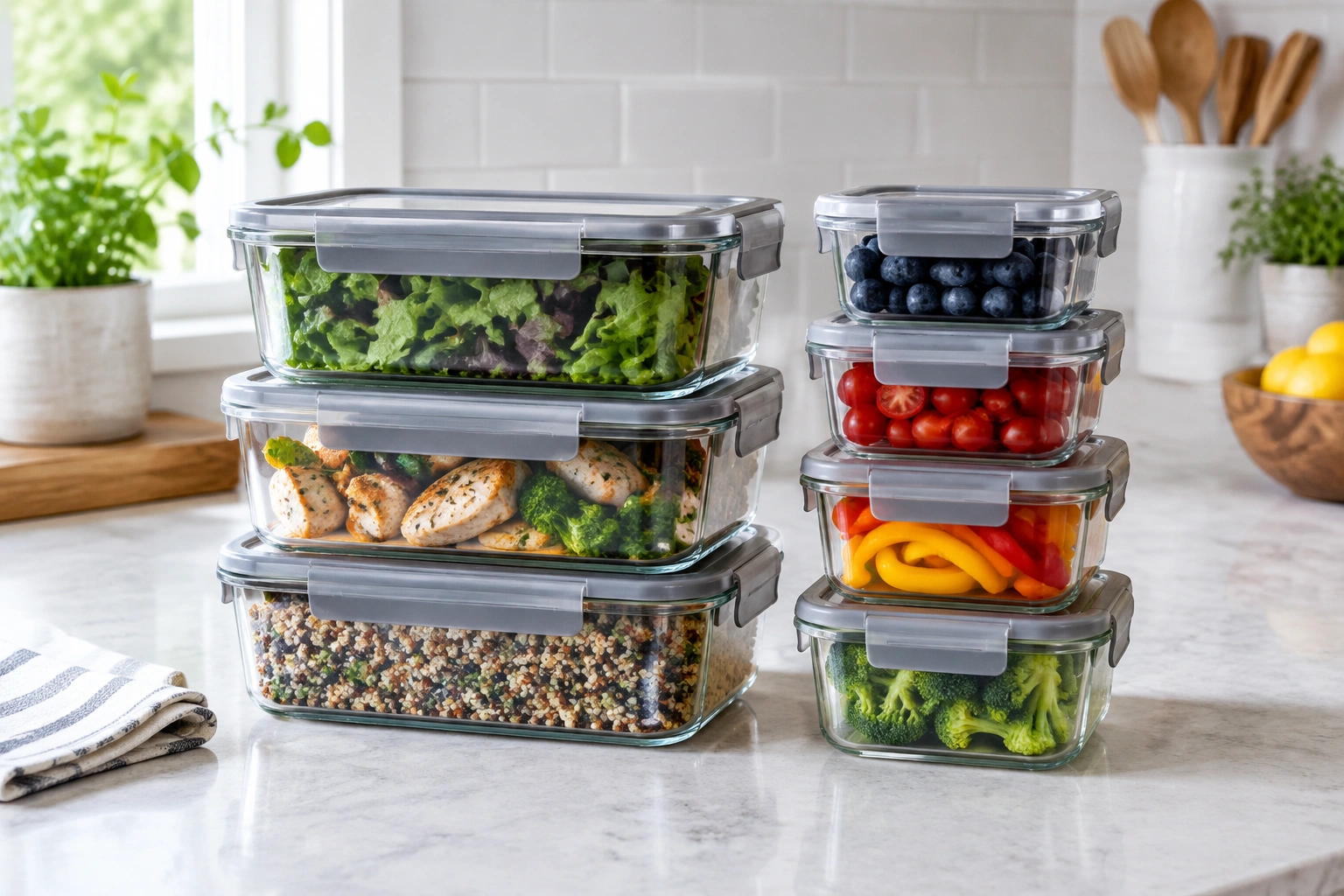
For busy households, the real question is not “does it have a lid?” It is whether the size is practical, the seal is trustworthy, and the glass holds up to repeated use without becoming annoying to clean or awkward to store. This review focuses on those everyday decisions.
[IMAGE_1]
What B0C595YHF5 Is and Who It’s For
The Amazon listing identifies B0C595YHF5 as a VERONES 10-pack of 22 oz glass meal prep containers with a snap closure and an airtight design. The set is described as leak resistant, portable, stackable, and stain resistant, which gives you a good picture of the intended use: prepared meals, leftovers, and transportable food storage.
The best fit is for people who portion food in advance. A 22 oz container is usually a sensible middle ground for one lunch portion, a side dish, or a leftover serving that does not need a giant family-size tub. It is also a practical size for households that want multiple matching containers instead of a drawer full of mismatched lids.
Where this set makes sense:
– weeknight meal prep
– office lunches
– leftover storage
– portion control
– fridge stacking
– freezer storage for single servings
Where it is less ideal:
– very large batch storage
– bulky pantry items like flour or cereal
– users who want ultra-light containers for daily bag carry
– anyone who needs oven-safe performance from the lid itself
Key Specs: Size, Capacity, Material, and Included Components
The key verified facts are straightforward: this is a 10-pack, each container is 22 oz, and the material is glass. The product is also described as rectangular on third-party listings, and the lid color is listed as grey on some marketplace pages.
That combination tells you a lot about how it will behave in a kitchen. Glass is heavier than plastic, but in practice it tends to resist staining and odor retention better than many lightweight alternatives. A rectangular footprint usually stacks more efficiently in the fridge than round containers, especially when you are trying to fit several meals side by side.
Quick spec snapshot
| Feature | What’s verified |
|---|---|
| Product | VERONES glass meal prep container set |
| ASIN | B0C595YHF5 |
| Pack size | 10 containers |
| Capacity | 22 oz each |
| Material | Glass |
| Shape | Rectangular |
| Closure type | Snap closure |
| Seal style | Airtight |
| Noted traits | Leak resistant, portable, stackable, stain resistant |
A few buyer notes: the available listing information provided here does not clearly publish exact dimensions, so it is smart to verify measurements on the live listing before purchase if you need the containers to fit a specific lunch bag, cabinet, or stack space. The listing also does not clearly confirm BPA-free status or lid material in the source material here, so check the product page if those details matter to you.
How It Performs in Daily Use
This is the section that matters most for real households. A container can look good in a listing and still be annoying if it is too heavy, too shallow, or awkward to open with one hand.
For meal prep, the 22 oz size is the main advantage. It is large enough for a single lunch portion without becoming oversized. Think of a typical prep box with rice, vegetables, and protein, or leftovers from a one-person dinner. Ten matching containers also help if you batch-cook once or twice a week and want a consistent system.
For leftovers, glass is a practical choice because it is less likely than many plastics to hold on to tomato sauce smells or oil stains. That does not make it indestructible, but it usually means less frustration after repeated use.
For pantry storage, this set is usable but not specialized. You can store snacks, chopped ingredients, or dry leftovers, but a glass meal-prep box is not the most space-efficient choice for bulk pantry goods. If your main goal is storing baking supplies or dry staples, you may want a different container format.
Best real-world uses
- packed lunches that stay in the fridge overnight
- leftover rice, pasta, roasted vegetables, or casseroles
- freezer portions for soups, chili, or cooked grains
- pre-portioned snacks for grab-and-go use
Trade-off to keep in mind
Glass feels more durable in the long run, but it is less forgiving if you are packing bags for kids, commuting by bike, or stacking containers in a tote that gets tossed around. If portability matters more than odor resistance, lightweight plastic can still be the easier daily choice.
Seal Quality: Airtightness, Leak Resistance, and Lid Fit
The listing calls the set airtight and leak resistant, which is exactly what you want to see in a meal prep container. But those two terms are not identical.
An airtight seal helps slow air exchange, which is useful for keeping food from drying out and for reducing odor transfer in the fridge. Leak resistance is about whether liquid food stays inside when the container is moved. In practice, a container can be good at one and only fair at the other.
For something like this, the snap lid design is a positive sign because it usually gives a more secure closure than a loose-fitting lid. Still, the safe assumption is this: use it for thick sauces, leftovers, and transport in an upright position. Do not assume it is spill-proof enough for soup sloshing around in a crowded bag unless the manufacturer specifically says so.
A simple buying rule
If you want a container for:
– dry foods and leftovers: this type of seal is usually a strong fit
– lunch transport in a backpack or tote: acceptable if kept upright
– soups, broths, or very thin liquids: test carefully before trusting it in transit
That is the practical difference between “sealed well enough for the fridge” and “safe to throw sideways into a bag.”
Microwave, Freezer, and Dishwasher Compatibility
Marketplace listings for this set commonly present it as microwave, freezer, refrigerator, and dishwasher friendly. That makes it convenient for a busy kitchen, but the exact care instructions for this ASIN should still be verified on the live listing or packaging before assuming every part is safe in every setting.
In general, glass containers are a strong choice for reheating because they do not warp the way some plastics can. The lid, however, may not be intended for every heating situation. If you microwave food in the container, confirm whether the lid should be removed or vented. That one detail can determine whether the container stays useful for a long time.
For freezer use, glass can be excellent if you leave enough headspace and avoid sudden temperature changes. That matters because thermal shock is the main risk with glass storage. A container pulled from the freezer should not go straight into a hot oven or onto a hot burner.
For dishwasher use, glass usually handles repeated washing well. The lids are the part to watch, since repeated heat and detergent exposure can eventually affect fit or flexibility in many storage systems.
For general food safety and reheating guidance, the FDA’s consumer food safety resources are a useful reference point: safe food handling and storage basics. The practical takeaway is simple—use the product within its intended temperature range and do not treat “microwave-safe” as a blanket promise for every component.
Durability and Cleaning Over Time
Durability here comes down to three things: the glass body, the lid mechanism, and how well the set handles repeated washing.
Glass containers usually win on stain and odor resistance. That is one reason many home cooks prefer them for tomato-based sauces, curries, and oily leftovers. The Amazon listing also describes this set as stain resistant, which should be treated as a listing claim rather than a separately verified performance test.
The lid is the more likely wear point. Snap closures and sealing edges can loosen over time if they are forced, bent, or washed harshly. That does not mean they fail quickly; it means you should expect the lid to be the part that determines long-term satisfaction.
Cleaning practicalities
- Smooth glass is easier to scrub than textured plastic
- Rounded corners help, but rectangular boxes can still trap food in edges
- Sticky sauces wash out more easily when the container is not scratched
- Lids often need hand inspection after dishwashing to make sure the seal stays aligned
If you wash storage containers every day, the biggest value of glass is that it tends to stay looking clean longer. That matters in a real kitchen because containers that look stained or smell stale often get ignored, which leads to waste.
Strengths and Limitations
Strengths
- 10 matching containers make meal prep simple
- 22 oz size is practical for single servings
- Glass is a good choice for odor and stain resistance
- Rectangular shape usually stacks efficiently
- Snap closure and airtight design are useful for fridge storage
Limitations
- Glass is heavier than plastic
- The lid may be the weak point over time
- Not the best choice for very large portions
- You should verify exact microwave and oven limitations before assuming full compatibility
- Less ideal if you want ultra-light containers for kids’ bags or travel
The main pattern is clear: this is a better “home base” storage set than a rugged travel set.
How B0C595YHF5 Compares With Similar Food Storage Containers
Compared with typical budget plastic containers, this VERONES glass set is the better fit if you care about stain control, odor retention, and a sturdier feel. Plastic usually wins on price and weight, but it is more likely to cloud, warp, or hold onto smells sooner. If you are replacing throwaway-style containers, this glass set is the more durable-feeling upgrade.
Compared with midrange glass meal prep sets, the main tradeoff is usually lid quality and finish. More expensive sets may offer tighter-fitting lids, better long-term closure feel, or clearer published dimensions. This set still makes sense if you want a straightforward 10-pack for meal prep, but buyers comparing in this price tier should check whether the lid material, seal style, and exact size details are published clearly enough for their needs.
Decision framework
Choose this set if you want:
– a matched 10-pack
– glass over plastic
– lunch and leftover storage
– a straightforward, no-frills system
Look elsewhere if you want:
– ultra-lightweight containers
– specialized leakproof transport for soups
– oven-first cookware with storage lids
– higher-end lid construction and finish
In other words, this is a practical middle-ground purchase, not a luxury buy.
Value for Money: Is It Worth Buying?
If the price is competitive with similar 10-pack glass sets, B0C595YHF5 looks like a sensible buy for households that actually use meal prep containers every week. The value is strongest when you need multiple identical containers, not just one or two.
The biggest value driver is replacement cost avoidance. A set like this can reduce the need to keep buying random containers that do not stack, stain easily, or lose lids. That is where a modest upfront purchase can pay off in everyday convenience.
It is especially worth considering if:
– you prep lunches several times a week
– you regularly store leftovers
– you want to move away from flimsy plastic
– you like containers that stack cleanly in the fridge
It is less compelling if:
– you only need one or two containers
– you mainly store dry pantry goods
– you want the lightest possible option
– you are rough on lids and prefer a cheaper replacement cycle
Best Fit: Ideal User and When to Skip It
This set is best for:
– busy home cooks who batch meals
– families managing leftovers efficiently
– budget-conscious buyers who want glass without overpaying for premium branding
– anyone building a consistent fridge-and-freezer storage system
Skip it if your routine centers on:
– carrying food long distances in a bag
– storing very large batches
– using containers as all-purpose bake-and-store dishes without checking heat limits
– prioritizing featherweight portability over durability
That is the simplest way to judge it: if you want dependable portion containers, it fits. If you want a do-everything pan substitute, it probably does not.
Common Complaints and What to Watch For
The most likely complaints with any glass meal prep set are predictable, and this one is no exception:
- lids can loosen or wear before the glass does
- glass is heavier than people expect
- rectangular corners can make cleaning slightly slower than with round containers
- “leak resistant” is not the same as “safe for sideways transport of thin liquids”
- capacity can feel smaller than expected if you are used to bulky plastic tubs
The best way to avoid disappointment is to match the container to the food. Use it for compact meals, leftovers, and pre-portioned servings. Do not buy it expecting one container to handle every storage job in the kitchen.
When to Ask a Food Safety Expert
If you plan to use the containers for frequent reheating, freezing of hot foods, or any situation involving uncertain temperature limits, check the manufacturer’s care instructions first. If those instructions are missing or unclear, ask a food safety professional or extension educator before assuming the lid, glass, or seal can handle every use case.
Final Verdict
B0C595YHF5 is a 10-pack of 22 oz VERONES glass meal prep containers that makes sense for households looking for a practical, stackable, everyday storage set. Its strengths are the familiar ones that matter most: glass construction, a useful portion size, and a design aimed at meal prep and leftovers.
Buy it if you want a clean, repeatable storage system for lunch prep and fridge organization. Pass on it if you need ultra-light portability or a container that will handle every transport scenario without compromise.