
B0CP5VBGNM Review: Is This 10-Pack Glass Meal Prep Container Set Worth It?

If you are trying to decide whether B0CP5VBGNM is worth buying, the short answer is that it looks like a practical, budget-friendly glass meal prep set for households that want portioned storage without moving up to a premium price tier. The listing details point to a 10-pack of 30 oz, 2-compartment glass meal prep containers with lids, and the product is positioned for microwave, oven, freezer, and dishwasher use. That combination makes it appealing for lunch prep, leftovers, and freezer portions.
The main thing to keep in mind is that some of those details are listing-based rather than fully verified by a manufacturer page. So the best way to judge it is by separating what is confirmed from what is inferred, then matching the design to your actual routine: soups versus dry meals, fridge stacking versus transport, and quick reheating versus long-term durability.
What B0CP5VBGNM Is and What’s Included
B0CP5VBGNM is an M MCIRCO 10-pack glass meal prep container set. Based on the product pages and listings tied to the ASIN, the confirmed or listing-stated details are:
- 10 glass containers
- 10 lids
- 30 oz capacity
- 2 compartments per container
- Gray lids
- Snap closure
- Claimed compatibility with microwave, oven, freezer, dishwasher
- Claimed BPA-free construction
One Amazon listing also gives a size of 20 x 14 x 6.3 cm and a capacity of 850 ml for the containers. That lines up closely with the 30 oz description, but it should still be treated as a listing specification rather than an independently verified measurement.
A separate marketplace description points to borosilicate glass, but unless that material is clearly confirmed by the seller or manufacturer documentation, it is best treated as a seller-reported claim rather than a guaranteed spec.
Quick comparison at a glance
| Feature | B0CP5VBGNM |
|---|---|
| Piece count | 10 containers, 10 lids |
| Capacity | 30 oz / 850 ml listed |
| Design | 2-compartment glass meal prep containers |
| Material | Glass containers; borosilicate claim appears listing-based |
| Lid style | Snap closure |
| Claimed safe uses | Microwave, oven, freezer, dishwasher |
| Best for | Meal prep, leftovers, portioned lunches |
| Main trade-off | Glass convenience and reheating versatility versus added weight and breakability |
If you want a set that can move from fridge to microwave to dishwasher without much fuss, this is the kind of format that makes sense. If you need leakproof transport for soups every day, the lid design matters more than the capacity count.
Quick Verdict: Is B0CP5VBGNM Worth Buying?
For most home cooks, this set is worth considering if you want glass meal prep containers with divided sections at a moderate price. The strongest case for buying it is convenience: 10 containers gives you enough rotation for a workweek of lunches, and the 2-compartment layout helps keep foods from mixing in a way that many families find useful.
I would call it a good fit for meal prep and leftovers, but not the best choice if your top priority is carrying very liquid foods. The listing language emphasizes airtight performance, but airtight is not the same as truly leakproof under motion or pressure. For dry foods, thick leftovers, and semi-wet meals, it looks suitable. For soups, chili, curry, or dressing-heavy meals, I would be cautious.
A simple decision rule:
- Buy it now if you want portioned glass containers for lunches, leftovers, and freezer storage.
- Compare alternatives first if you need maximum leak security for liquids.
- Skip it if you want ultra-light containers for daily commuting.
Material and Build Quality
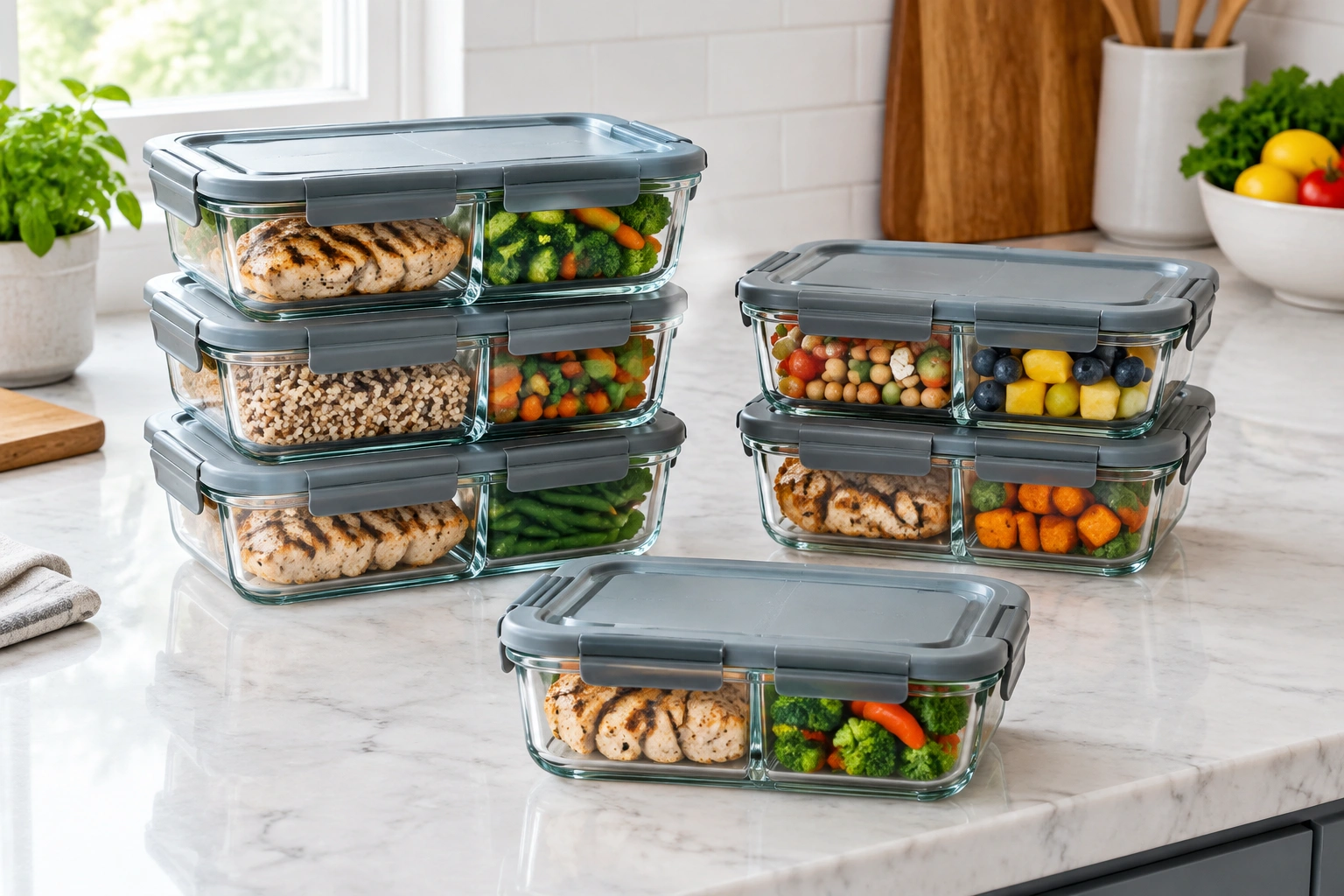
The product is listed as a glass meal prep container set, and one marketplace description points to borosilicate glass. That matters because borosilicate glass generally handles temperature changes better than ordinary glass, which is one reason it is common in kitchen storage. Still, unless the seller or manufacturer documentation clearly confirms the glass type, I would treat that detail as a listing claim rather than a guaranteed specification.
From a practical standpoint, glass is the right choice when you care about:
- better resistance to stains than many plastic containers
- easier cleanup after tomato sauce, curry, or oily foods
- a more rigid feel than thin plastic sets
- reheating food without the same warping concerns you can get with lower-cost plastic
The trade-off is weight and break risk. A glass container set is less forgiving if it gets dropped into a sink or packed carelessly in a bag. For busy households, that usually means glass works best when containers are stored at home, taken to work in a padded lunch bag, or used mainly for fridge and freezer rotation.
Sizes, Capacity, and Best Uses
The most useful number here is not just “10-pack,” but 30 oz / 850 ml per container. That size sits in a practical middle zone for adult lunches and leftovers. It is large enough for a balanced meal, but not so large that it encourages oversized portions.
The 2-compartment layout is the real selling point. It gives you a cleaner way to pack:
- rice in one section and stir-fry in the other
- pasta and vegetables without everything turning soft together
- protein and sides for lunch prep
- a main dish plus fruit or snack items
That said, divided containers are not ideal for everything. If you regularly store brothy foods, the divider becomes less useful because liquids can slosh, and compartment edges are not a substitute for a fully sealed soup container. For that reason, I would treat this set as a meal-prep and leftovers tool first, and a liquid storage solution second.
If your household often packs one-person lunches, 30 oz is usually a comfortable size. If your meals are larger, or if you need containers for family-style leftovers, you may want a larger single-compartment set in addition to this one.
Lid Design, Seal Strength, and Leak Resistance
The listing describes a snap closure and refers to the containers as airtight. That is encouraging, but in food storage, airtight and leakproof are not identical.
An airtight lid helps reduce odor transfer and keeps food from drying out as quickly in the fridge. A truly leakproof lid is what you want when a container gets tipped sideways in transit. A snap lid can do a decent job if the gasket is well made and the closure is even on all sides, but the real test is whether the lid stays secure after repeated use.
For this set, the most defensible conclusion is:
- Good enough for fridge storage, leftovers, and most meal prep
- Likely fine for thick or semi-wet foods
- Not the best choice for reliably carrying liquids
- Not the set I would choose for daily soup or dressing transport unless the seller specifically confirms leakproof performance
So the direct verdict is cautious but clear: it looks suitable for dry and semi-wet foods, but not dependable enough to treat as a true leakproof liquid container set.
If you plan to carry food to work, the safest move is to test one container at home with water before trusting it in a bag. That is the quickest way to see whether the lid seal matches the marketing language.
Microwave, Freezer, and Dishwasher Performance
The listing claims the set is microwave, oven, freezer, and dishwasher safe, and also BPA free. Those are strong convenience features if they hold true in practice.
For daily use, here is what matters:
- Microwave-safe means you can reheat food without transferring it to another dish.
- Freezer-safe means single portions can be stored for later use.
- Dishwasher-safe reduces cleanup time, which is a major benefit for meal prep families.
- Oven-safe adds flexibility, though the lid usually should not go in the oven unless the manufacturer explicitly says so.
Because listing terms can vary, I would still follow the product’s care instructions closely once you receive it. Heat tolerance is not just about the glass; it also depends on the lid and any sealing materials. For authoritative general guidance on food-contact and reheating safety, the FDA’s advice on safe food containers and microwave use is a useful reference point.
A practical use pattern is this: store cooked rice, vegetables, and protein in the freezer, thaw in the fridge, then reheat in the microwave. That is exactly the workflow these containers are trying to support.
Stackability, Storage, and Everyday Convenience
In a busy kitchen, the best container set is the one that disappears neatly into a cabinet and comes back out without a scavenger hunt for lids. A 10-container set with matching lids can help, but only if the containers stack cleanly and the lids are easy to pair.
Glass containers usually stack more predictably in the fridge than odd-shaped plastic tubs. The rigid sides help keep stacks stable, which is useful when you are storing several lunches at once. The downside is that glass tends to be heavier and can take up more perceived space than thin nesting plastic when empty.
For small kitchens, the main question is whether the containers nest efficiently when stored empty. If they do, this set becomes much easier to live with. If they do not, the 10-pack can feel bulky even if the food capacity is useful.
Cleaning, Stain Resistance, and Long-Term Maintenance
Glass is one of the easiest food storage materials to keep looking clean over time. It does not absorb odors the way some plastics do, and it is less likely to hold on to tomato stains or turmeric residue after repeated use.
That matters for budget-conscious families because “cheap” containers often become expensive when they wear out, stain, or smell after a few months. Glass usually avoids that problem better than basic plastic sets.
The lids are the part that usually determines long-term satisfaction. Snap lids can last well, but they are also the piece most likely to loosen, warp, or lose their seal over time if they are handled roughly or washed too aggressively. If you want this set to last, treat the lids as the wear item and the glass as the durable core.
Strengths and Limitations
Main strengths
- 10 containers is enough for real meal prep rotation
- 2 compartments make portioning easier
- Glass is better than basic plastic for stains and odors
- Listed as microwave, freezer, and dishwasher safe
- Good format for leftovers, lunches, and freezer portions
Main limitations
- Glass is heavier and breakable
- Snap lids may be airtight but not always truly leakproof
- Dividers are less useful for soups and saucy foods
- Oven-safe claims should be followed carefully, especially around lids
- The set is more practical for home and office prep than rugged transport
How B0CP5VBGNM Compares With Similar Container Sets
Compared with basic plastic snap-lid sets in the same budget tier, B0CP5VBGNM has a clear advantage if you care about reheating convenience, stain resistance, and a more durable feel. Basic plastic sets are usually lighter and sometimes cheaper up front, but they are more likely to warp, stain, or pick up odors over time. They can also be easier to carry in a bag, so plastic still wins for portability.
Compared with non-divided glass containers, this set is better if you pack balanced lunches and want to keep foods separated. The divider is useful for chicken and rice, pasta and vegetables, or a main dish with a side. A single-compartment glass container is usually the better choice for soups, stews, casseroles, and saucier meals because it gives you more uninterrupted space and fewer leak points around the divider.
Compared with premium glass sets, B0CP5VBGNM appears to sit in the practical middle: enough capacity and features to be useful, without moving into a high-end price bracket. A marketplace listing tied to the ASIN shows a retail price of $39.99, which works out to roughly $4 per container before taxes and shipping. That can be reasonable value if the lids hold up and the glass quality is solid, but it is only a fair comparison if you actually need the divided format.
For context, the product’s Amazon Singapore listing shows a 4.6 out of 5 stars rating based on 1,307 reviews, which suggests broad customer interest. Ratings do not replace hands-on quality checks, but they do indicate that many buyers found the set useful enough to leave positive feedback.
Who This Set Is Best For
This set makes the most sense for:
- meal preppers who want portioned lunches for several days
- families packing leftovers in a fridge-friendly format
- shoppers who prefer glass over plastic
- anyone who wants a dishwasher-friendly storage system with matching lids
It is less suited for:
- people who need ultra-lightweight containers for commuting
- households that regularly transport soups or thin sauces
- buyers who want one-piece, fully leakproof lunch containers above all else
Final Value Assessment
B0CP5VBGNM looks like a solid value if you want a 10-pack of glass meal prep containers with divided sections. The size, piece count, and multi-use claims make sense for the price tier, and the format fits real household needs better than many generic storage sets.
My practical take is this: if your main goal is to simplify weekday lunches, store leftovers neatly, and cut down on disposable containers, this set is probably worth a closer look. If your main concern is leakproof transport for liquids, keep shopping.
FAQ
Is B0CP5VBGNM good for meal prep?
Yes. The 30 oz size and 2-compartment layout are well suited to lunch portions, leftovers, and freezer-ready meals.
Are the containers leakproof?
The listing describes them as airtight, but airtight is not the same as fully leakproof. I would treat them as suitable for dry and semi-wet foods, not as a dependable liquid transport set.
Can you put them in the microwave and dishwasher?
The listing says yes. As with any storage container, follow the care instructions that come with the product, especially for the lids.
Is the set BPA-free?
The product listing says it is BPA free. That claim appears to apply to the set as marketed, but always check the packaging or seller details when the item arrives.
Are they better than plastic containers?
For many households, yes. Glass usually handles stains, odors, and reheating better than cheap plastic, though it is heavier and can break.
Who should skip this set?
Skip it if you need very lightweight containers or if you regularly carry liquids and need maximum leak protection.