
B0DWLHPM8Q Review: Is This HOMBERKING Glass Food Storage Set Worth Buying?

If you’re trying to decode B0DWLHPM8Q, the short answer is that it points to a HOMBERKING glass food storage container set. Based on the listings available at the time of writing, this appears to be an 8-pack of borosilicate glass containers with snap-locking lids, aimed at meal prep, leftovers, lunch packing, and general kitchen storage.
That matters because container shopping is rarely about the container alone. For busy households, the real question is whether the set is the right size, whether the lids hold up, and whether the material makes daily food storage easier or more frustrating. A container can look good online and still fail the practical test if it’s too small for dinner leftovers, awkward to stack in the fridge, or annoying to clean.
In this review, I’ll walk through what B0DWLHPM8Q appears to be, what the verified details tell us, and where the trade-offs sit for busy home cooks and budget-conscious families.
What B0DWLHPM8Q Is and Who It’s For
B0DWLHPM8Q is linked to HOMBERKING Glass Food Storage Containers with Lids. The product listings I found identify a model number of hun18 and describe the set as an 8-pack of borosilicate glass food storage containers with snap-locking lids.
That combination suggests a reusable storage set intended for prepared foods and leftovers rather than pantry organization. In practical terms, the listed features make it a fit for:
- meal preppers portioning cooked grains, proteins, and vegetables
- families storing leftovers in the refrigerator
- office or school lunches that need a sturdier container than thin plastic
- shoppers who want glass because it resists staining and doesn’t absorb odors as easily as many plastics
The main thing to understand is that this is not a pantry bin or dry-goods organizer. It’s a food storage set designed around prepared foods and leftovers, where seal quality and material durability matter more than decorative features.
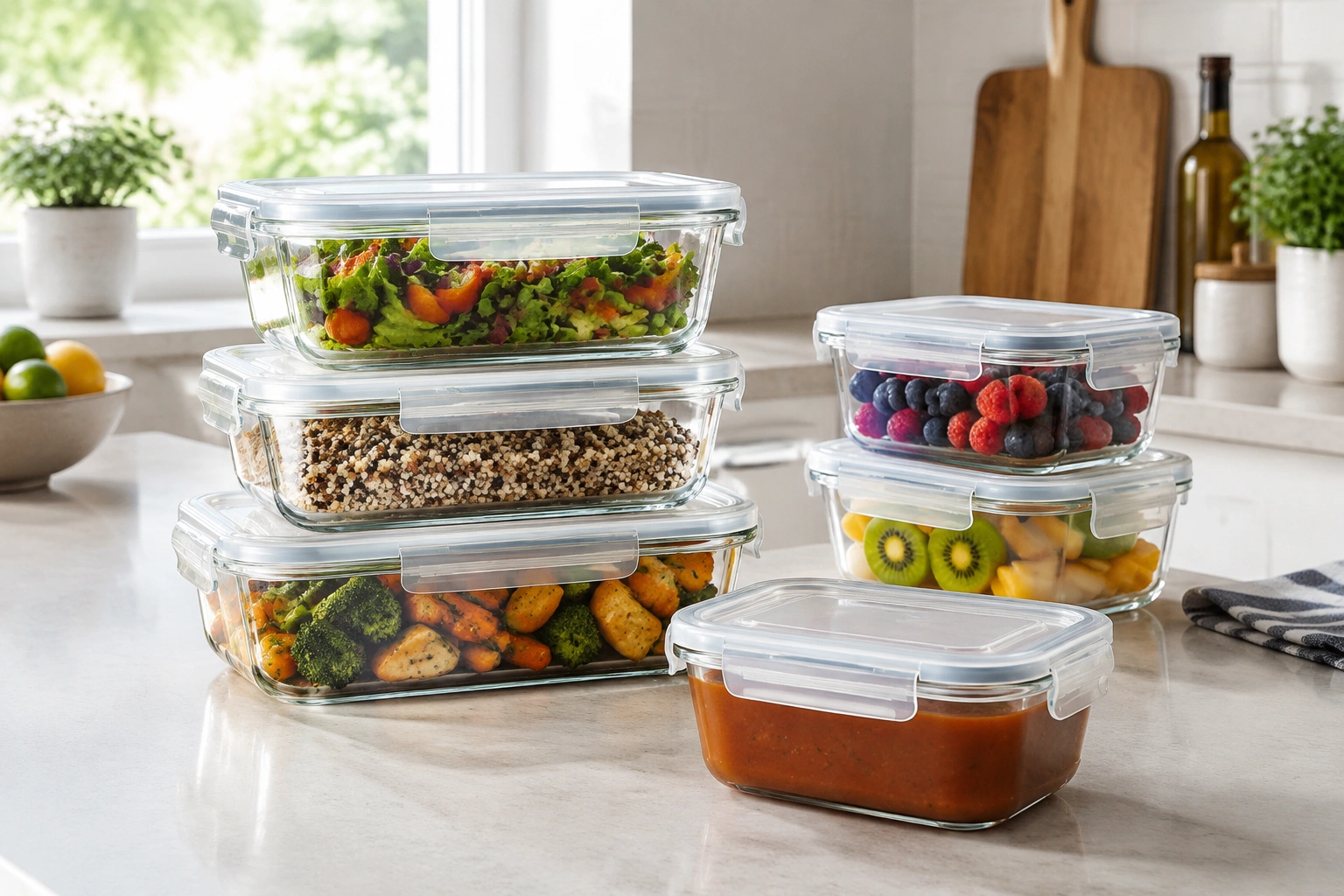
At-a-Glance Verdict
Best for: meal prep, leftovers, and repeated fridge/freezer use
Less ideal for: very large family portions, heavy soup transport, or anyone who wants the lightest possible container
Overall take: worth considering if you want a glass storage set with a practical size and don’t mind the added weight that comes with glass
The strongest case for B0DWLHPM8Q is simple: the listed glass construction and compact size make it a sensible option for everyday kitchen storage, especially if you want something that feels sturdier than disposable or thin plastic containers. The biggest limitation is also obvious: glass is heavier than plastic, so portability and break resistance become part of the decision.
If you want a set that can handle everyday meal prep without feeling disposable, this is the kind of product that makes sense. If you need something ultra-light for kids’ backpacks or commuting, plastic may be the better fit.
Key Specs That Matter Most
Here are the verified details that matter most when deciding whether this set fits your kitchen:
| Feature | Verified detail | Why it matters |
|---|---|---|
| Product type | HOMBERKING glass food storage containers with lids | Tells you this is a reusable storage set, not a single specialty container |
| Pack count | 8-pack | Better for batch cooking and family rotation than a single container |
| Material | Borosilicate glass | Typically chosen for better thermal tolerance than basic glass |
| Lid style | Snap-locking lids | Important for spill control and fridge storage |
| Listed dimensions | 7.6″ L x 5.2″ W x 2.5″ H | Suggests a compact, lunch-friendly footprint |
| Shipping weight | 7.35 lbs | Confirms this is a fairly substantial glass set |
| Shipping dimensions | 14.88 x 13.19 x 3.39 inches | Helpful for estimating storage and shipping handling |
One listing also describes the containers as 30 fluid ounces and says the containers are BPA-free. It further notes that the containers are oven, microwave, freezer, and dishwasher safe for the containers only, not necessarily the lids. That distinction matters, because many buyers accidentally damage lids by treating them like the glass portion.
For a practical buyer, the size is probably the most useful number here. A 7.6 x 5.2 x 2.5-inch container is usually in the range that works well for a lunch portion, a dinner leftover, or a pre-portioned meal. It is not the kind of size you’d choose for a big casserole or family-size soup batch.
Build Quality and Material Safety
Borosilicate glass is a sensible choice for a storage set like this. Compared with ordinary storage plastic, glass is generally less likely to hold onto odors or stains from tomato sauce, curry, or oily foods. That makes it especially useful if you rotate the same containers through different meals all week.
The more important question is not just “Is it glass?” but “Is it the kind of glass that suits repeated kitchen use?” Borosilicate glass is commonly selected because it is designed to tolerate temperature change better than basic glass. That does not mean it is indestructible. It still needs normal care: avoid abrupt thermal shock, don’t drop it, and don’t assume every part of the set shares the same heat tolerance.
On the safety side, the available listing information supports a cautious reading: the containers are described as BPA-free, and the glass portion is the part identified as oven, microwave, freezer, and dishwasher safe. I would treat that as a practical advantage, not a blanket promise about every component in the set.
For daily use, the build quality question comes down to two things:
- How well the lids fit over time
- Whether the glass feels thick enough to survive regular fridge-to-counter use
Because this is a glass set rather than a premium insulated system, the value comes from straightforward function, not fancy engineering.
Seal Performance: Airtightness, Leak Resistance, and Freshness
The snap-locking lid design is the feature that most directly affects whether this set feels dependable in real life. A good snap-lock lid can help reduce spills during transport, limit odor transfer in the fridge, and slow moisture loss from leftovers and prepped meals.
That said, “snap-locking” is not the same thing as a verified leakproof guarantee for all foods in all positions. For dry meals like rice, chicken, roasted vegetables, or cut fruit, a tight lid is usually enough for normal fridge storage and commuting. For soups, sauces, and very liquid-heavy foods, the real test is whether the seal stays secure if the container tips, gets jolted in a bag, or is stacked under heavier items.
A practical rule: if you are packing something you would not want to spill on paperwork, electronics, or a lunch bag liner, test the container at home first with water. Fill it, lock it, tilt it, and shake it gently over a sink. That quick check tells you more than marketing language does.
For freshness, glass containers with tight lids are generally a better fit for fridge storage than flimsy takeout containers. They also make it easier to see what needs to be eaten first, which helps reduce waste.
Microwave, Dishwasher, and Freezer Use
One of the biggest selling points in the listing information is convenience. The containers are described as microwave, freezer, and dishwasher safe, with the important note that this applies to the containers themselves, not necessarily the lids.
That separation matters in real kitchens:
- Microwave use: helpful for reheating lunch portions without dirtying another dish
- Dishwasher use: saves time, especially after a week of batch cooking
- Freezer use: useful for portioning cooked meals ahead of time or saving leftovers for later in the week
The main trade-off is lid care. Even when a container body is dishwasher-safe, lids often last longer if you place them on the top rack or hand-wash them, especially if the seal has flexible parts. Heat and repeated detergent exposure can shorten lid life, even when the glass itself holds up well.
If you freeze meals in these containers, leave a little headspace so food can expand. That is especially important for sauces, soups, and anything with a high water content. Glass storage works well in the freezer, but it is less forgiving than plastic if you overfill it.
Capacity and Best Food Uses
The listed 30-fluid-ounce capacity, if accurate for this model, puts the container in a useful middle ground. It’s large enough for a solid lunch portion, but not so large that it becomes awkward in the fridge.
That size is a good match for:
- a single serving of pasta or grain bowls
- chicken, rice, and vegetables for meal prep
- leftovers from one dinner portion
- chopped produce or snack prep
- freezer portions of cooked beans, sauces, or side dishes
It is less ideal for:
- full family casseroles
- large soup batches
- tall layered salads that need extra height
- dry pantry bulk storage
The shape also matters. A 7.6 x 5.2 x 2.5-inch footprint is convenient because it should stack more efficiently than oddly shaped containers. For a busy fridge, that can be the difference between a container set you use every day and one that gets shoved to the back.
If you meal prep on Sundays, this kind of size is usually more flexible than oversized containers. You can portion food precisely instead of opening one giant tub and hoping it lasts.
Pros and Cons
Pros
- Glass construction is practical for repeated food storage
- 8-pack format supports meal prep and family rotation
- Snap-locking lids are better for transport than loose-fit covers
- Compact dimensions suit lunches and leftovers
- Borosilicate glass is a smart material choice for kitchen storage
- Glass is easier to keep looking clean than many plastic containers
Cons
- Heavier than plastic, so not ideal for everyone
- Glass can break if dropped
- Lid durability is often the weak point in container sets
- Not as useful for very large meals or liquid-heavy transport
- “Safe” claims often apply to the glass only, not the lids
For most buyers, the biggest trade-off is weight versus durability. If you want a container that feels sturdier and stays clearer over time, glass is attractive. If you want the lightest possible lunch container, it is not.
Common User Feedback and Likely Complaints
Because the available information is limited, I would be careful about treating any single review pattern as definitive. Still, with glass food storage sets like this, the concerns that tend to come up are usually tied to day-to-day use rather than the glass alone.
Watch for feedback about:
- whether the lids stay easy to close after repeated use
- whether the size matches what buyers expected
- how comfortable the set feels to carry in a bag
- whether the glass survives normal handling without chips or cracks
- whether the lid care instructions are clear enough to avoid misuse
The most useful buyer signal is usually whether people mention the same issue more than once. If several users say the lids stop sealing well, that matters more than one person praising the glass finish. If several mention the size is perfect for lunches, that is a strong real-world indicator that the dimensions match the intended use.
For a product like this, I would pay extra attention to comments about lid fit, because the lid is what determines whether the set is easy to live with.
How B0DWLHPM8Q Compares With Similar Options
Here’s the practical comparison buyers usually need:
| Option | Best for | Main advantage | Main drawback |
|---|---|---|---|
| B0DWLHPM8Q glass set | Meal prep, leftovers, fridge/freezer storage | Better stain resistance and a sturdier feel | Heavier and breakable |
| Typical glass meal-prep set | Home storage with a more durable feel and easier cleanup | Usually better stain resistance than plastic and often more stable for reheating | Heavier than plastic and can be more expensive per container |
| Typical plastic meal-prep set | Lightweight lunches and casual storage | Easy to carry and usually cheaper | More likely to stain, warp, or hold odors |
| Premium glass storage sets | Frequent use and longer-term durability focus | Often better lid systems and fit | Usually costs more |
| Single container purchase | Trying one size before buying more | Lower upfront cost | Less value per container than a set |
If you are deciding between glass and plastic, the question is not which is universally better. It is whether you value stain resistance, odor control, and a more substantial feel more than low weight. For many families, glass wins for home storage and plastic wins for grab-and-go convenience.
Against a typical glass meal-prep set, B0DWLHPM8Q looks like a practical middle-ground option: it offers the core benefits of glass without signaling a premium lid system. That makes lid reliability an important point to check in reviews, especially if you plan to carry food in a bag.
Against a typical plastic set, the trade-off is more obvious. Plastic usually costs less up front and is easier to tote around, but it is more likely to pick up stains and odors over time. If you want containers to stay looking cleaner after tomato sauce, curry, or oily leftovers, glass has the edge.
Should You Buy It?
Buy B0DWLHPM8Q if you want a glass storage set for meal prep, leftovers, and freezer-friendly portions, and you are comfortable handling a heavier container. The size and material make sense for everyday home use, especially if your goal is to reduce waste and keep food visible in the fridge.
Skip it if you need something ultra-light, if you routinely pack very liquid foods, or if you want a container for large family dishes. In those cases, a different shape or a more specialized set will serve you better.
My practical recommendation: this is a sensible choice for households that want reusable, food-focused storage and are willing to trade some portability for better day-to-day kitchen performance.
When to Ask a Food Safety Expert
If you are planning to use any food storage container for unusual temperature changes, long-term freezing routines, or storage of highly perishable foods, it is smart to check current food safety guidance from a trusted source such as FoodSafety.gov. That is especially helpful if you are deciding how long to keep leftovers, how to cool food before refrigerating, or whether a container is suitable for a specific reheating method.
For everyday fridge and freezer organization, though, the main decision here is simpler: does the set fit your portions, your storage habits, and your tolerance for glass weight?