
B0GVN4CB4B Review: A Practical Look at This 5-Pack Glass Food Storage Set

If you found B0GVN4CB4B in a search bar or product code lookup, the first thing to know is simple: this ASIN points to a 5-pack of 36 oz glass food storage containers with lids. The listing says it is meant for meal prep, leftovers, lunch, and pantry organization, which puts it squarely in the category of everyday kitchen storage rather than specialty prep gear.
That matters because the right buying decision here is not about novelty. It is about whether a set like this fits the way your household actually stores food: batch-cooked dinners, packed lunches, refrigerated leftovers, and the occasional freezer stash. For busy home cooks, that usually comes down to four questions: does it hold a useful amount, does the lid seal well, is it easy to clean, and will it hold up after repeated use?
What Is B0GVN4CB4B?
B0GVN4CB4B is listed on Amazon as a 5-pack of 36 oz glass food storage containers with lids. The Lunvero Kitchen product page describes the same set as grey and gives the same core use cases: meal prep, leftovers, lunch, and pantry organization.
That is enough to identify the product category, but not enough to assume performance details that are not clearly verified. For example, the listing language includes “Food Grade,” but the materials, exact lid construction, and temperature limits should be treated carefully unless the manufacturer states them plainly. When a product page is light on technical detail, the safest approach is to judge it by the confirmed basics and by how well those basics match your routine.
B0GVN4CB4B at a Glance
| Feature | Verified detail |
|---|---|
| Product type | 5-pack glass food storage containers with lids |
| Capacity | 36 oz each |
| Total count | 5 containers |
| Intended uses | Meal prep, leftovers, lunch, pantry organization |
| Color | Grey, per Lunvero Kitchen page |
| Material claim | “Food Grade” appears in the Amazon listing |
| ASIN | B0GVN4CB4B |
For a quick decision, that size is most useful if you regularly portion out full lunches or dinner leftovers rather than tiny snack servings. Five containers also makes sense for a weekday rotation: one for each workday, or a few for prep and a couple kept open for leftovers.
Build Quality and Materials
Because the listing identifies this as a glass container set, the main advantage is familiar: glass generally resists staining and odor retention better than many plastic options. That is especially helpful with tomato sauce, curry, garlic-heavy meals, and oily leftovers that can leave plastic containers looking tired fast.
The trade-off is equally familiar. Glass is heavier and more breakable than plastic, so it is less forgiving if you pack a crowded lunch bag, hand the container to a child, or stack it in a sink full of dishes. If your household tends to be rough on containers, that weight and fragility should factor into the decision.
The lid is just as important as the container itself. A glass base can last a long time, but a weak lid turns the set into an annoyance very quickly. If the lids flex too easily, pop open under pressure, or warp after washing, the whole product feels less durable even if the glass base is fine. Since the verified listing details do not spell out the lid mechanism, the practical buyer should treat lid quality as a key unknown rather than an automatic strength.
Size, Capacity, and Real-World Portion Fit
A 36 oz container is large enough to be useful, but not so large that it becomes awkward for most lunches. In real use, that size often works best for:
- a full lunch portion with protein, grain, and vegetables
- a generous leftover dinner portion
- one-pan meals such as pasta, rice bowls, or roasted vegetables
- side dishes or family-style portions that need fridge space
Where it becomes less efficient is with small portions. If you mostly store sauces, chopped fruit, or single servings of snacks, 36 oz can feel oversized and waste shelf space. Larger containers also invite overfilling, which can make lids harder to seat properly. That is one reason meal preppers often prefer a mix of sizes rather than one uniform container set.
For a household that packs work lunches, though, this size is practical. It gives enough room to keep food from being crushed and makes batch cooking easier because you are not trying to split a dinner for two into tiny compartments.
Seal Performance, Leak Resistance, and Freshness Retention
The listing language suggests this set is meant for storage and transport, but it does not give enough verified detail to claim it is fully leakproof. That distinction matters.
Airtight or spill-resistant lids are usually good enough for dry foods, chopped produce, leftovers, and thicker meals. But soup, broth, thin sauces, and oily liquids are a tougher test. Even a container that performs well in the fridge can still leak if the lid design is not strong enough for a tipped lunch bag or a bumpy car ride.
Here is the practical rule I use when reviewing storage containers: if you plan to transport liquids, assume nothing until you test the seal at home. Fill the container with water, close the lid, tilt it over the sink, then carry it around the kitchen for a minute. If it seeps at all, do not trust it in a bag.
Freshness retention also depends on the lid fit. A tighter seal helps reduce air exchange, which is useful for leftovers you want to keep in the refrigerator for a few days. But a tighter lid can be harder to open and close, especially for older adults or anyone with hand strength issues. That is a real trade-off, not a defect by itself.
Microwave, Dishwasher, and Freezer Compatibility
This is one of the biggest missing detail areas for B0GVN4CB4B. The verified listing information provided here does not confirm whether the containers are microwave-safe, dishwasher-safe, or freezer-safe, so those claims should not be assumed.
That said, the buying decision is straightforward:
- If you want microwave convenience, confirm whether the lid must be removed or vented before heating.
- If you run containers through the dishwasher often, look for explicit dishwasher-safe guidance from the seller or packaging.
- If you freeze meals, confirm freezer compatibility before relying on the set for soups, stews, or batch-cooked casseroles.
Glass containers can be a strong choice for reheating and freezing when they are made for those uses, but not all glass and lid systems are built the same. Sudden temperature changes can also be hard on glass. If you plan to move food from freezer to microwave, or from fridge to a hot oven, you need clear manufacturer instructions rather than guesswork.
For general food safety guidance on cooling, storing, and reheating leftovers, the USDA’s food safety advice is a reliable reference point: USDA food safety guidance. That does not tell you whether this exact container is safe for every temperature swing, but it does help you use any storage container more carefully.
Cleaning, Staining, Odor Retention, and Maintenance
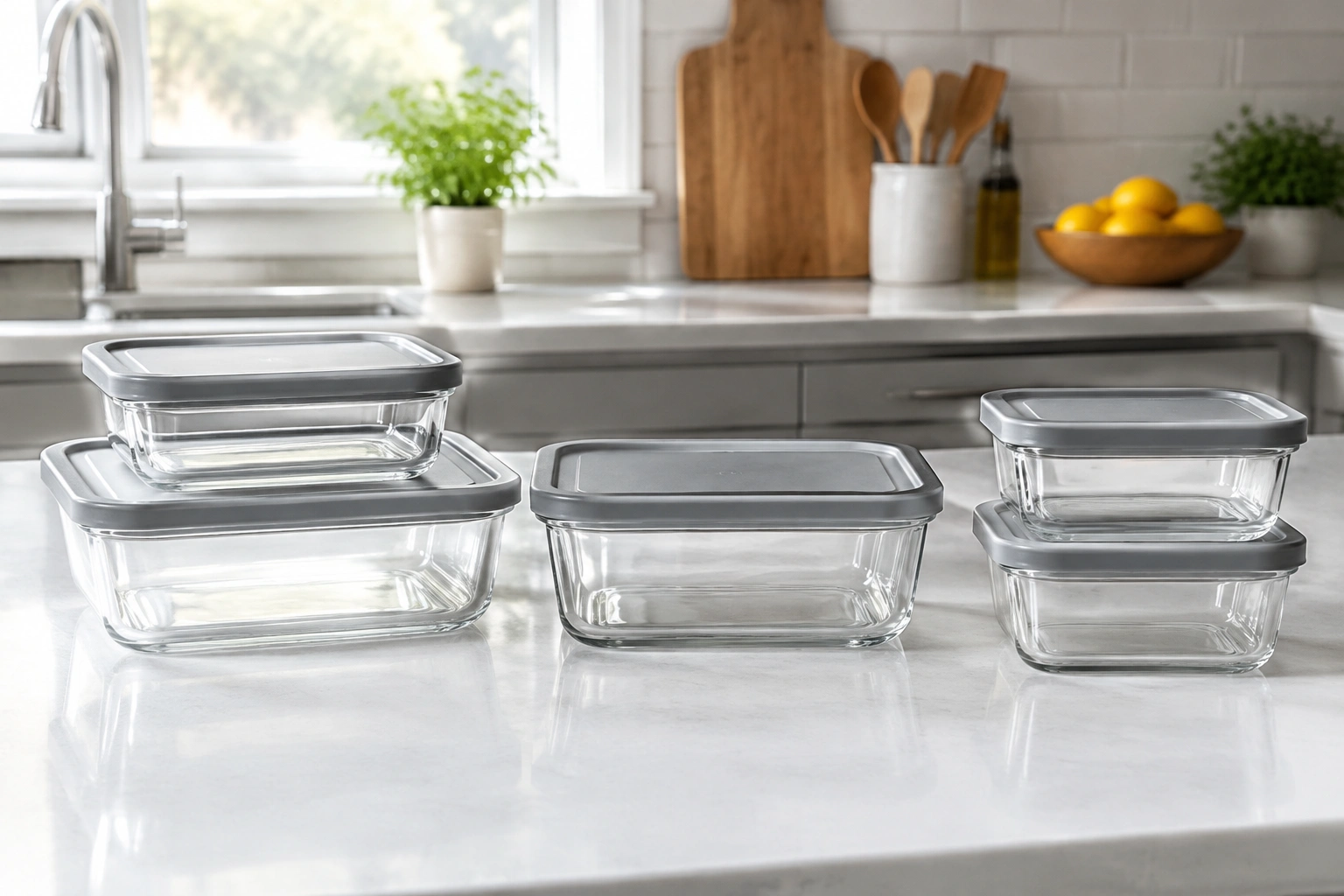
Glass usually wins on cleanup. It does not absorb tomato stains or onion odor the way many plastic containers do, and that is one reason glass sets stay looking newer longer. For families that cycle through chili, curry, pasta sauce, and marinated proteins, that matters more than it might seem at first.
Still, the lid is the part most likely to cause frustration over time. If the lid has crevices, rubbery seals, or small locking points, those areas can collect residue and need more attention than the glass base. If you are the person who unloads the dishwasher and wants everything to dry quickly, lid design can be the difference between “easy to live with” and “I stopped using these.”
A practical maintenance check is simple: after washing, inspect the lid for trapped moisture, lingering smells, or warping around the edges. If the lid no longer sits flat or starts feeling loose, the container’s useful life drops even if the glass is still fine.
Stackability and Space-Saving Storage
The product is marketed for pantry organization as well as food storage, so space efficiency is part of the appeal. In a busy kitchen, stackability matters because fridge shelves fill up fast, especially when you have leftovers, produce, and meal prep tubs all competing for room.
Glass containers tend to stack best when their lids are flat and the bases are uniform. That makes them easier to line up in the fridge or cabinet. The downside is that glass also adds weight, so a tall stack can become unwieldy. If you keep containers in a high cabinet, a lighter plastic set may be easier to handle day to day.
A good space-saving set should do two things: nest neatly when empty and stack securely when full. If the lids are bulky or the bases are irregular, the storage advantage shrinks fast.
Pros and Cons
Pros
– Five 36 oz containers give you a practical meal-prep rotation
– Glass is a strong choice for resisting stains and odors
– Large size works well for lunches and leftover dinners
– More versatile than tiny snack containers for batch cooking
– Useful for households that want one durable set for repeated use
Cons
– Glass is heavier and more breakable than plastic
– Verified listing details do not confirm microwave, dishwasher, or freezer limits
– Leakproof performance is not fully established by the available information
– 36 oz may be too large for small portions or pantry-only use
– Lid durability is a key unknown without more product documentation
How B0GVN4CB4B Compares With Similar Food Storage Options
Compared with Pyrex glass food storage sets, B0GVN4CB4B appears more basic on the information available here. Pyrex sets commonly publish more specific care guidance, and many of their glass containers are sold with clearly described lid styles and size options. By contrast, this listing confirms the 36 oz capacity and glass construction, but not detailed temperature limits or lid design. If you want a more documented glass option, Pyrex is the more verifiable comparison point.
Compared with Rubbermaid Brilliance plastic containers, the differences are easier to see. Rubbermaid’s Brilliance line is lightweight plastic rather than glass, and it is widely sold with clear, latching lids designed for leak-resistant transport. That makes it more commuter-friendly and usually easier to carry, while B0GVN4CB4B should appeal more to buyers who want the stain resistance and sturdier feel of glass. Care instructions also tend to be more explicit on major-brand plastic sets than on lesser-documented listings.
Compared with other glass storage sets, B0GVN4CB4B looks straightforward rather than feature-heavy. That can be a plus if you want a simple 5-pack without paying for extras you will not use. On the other hand, buyers who want clearly documented temperature ratings, airtight performance details, or replacement parts may prefer a brand that publishes more complete specs.
Is B0GVN4CB4B Worth the Price?
Without a verified live price in the source material here, I would judge value by the product’s structure rather than a dollar figure. A 5-pack of 36 oz glass containers is worth considering if you want a reusable set that can handle regular leftovers and meal prep without the staining issues that plague many plastic containers.
The set becomes a better value if:
– you use the same containers repeatedly each week
– you want a medium-large portion size
– you prefer glass for odor and stain resistance
– you do not need specialty features like compartments or oven claims
It becomes a weaker value if:
– you mostly store small portions
– you need guaranteed leakproof transport for liquids
– you want clear, published temperature limits
– you are trying to keep the initial purchase as light and inexpensive as possible
In other words, this is a value buy only if the size and material match your routine. If they do, you are paying for a practical workhorse. If they do not, it will feel bulky and underused.
What Real Buyers Say
I could not verify a reliable set of customer reviews or ratings for B0GVN4CB4B from the source material provided here, so there is no confirmed real-buyer feedback to summarize. If you are checking this set on Amazon, the most useful things to look for in reviews are lid fit, leak performance, and whether the glass holds up after repeated dishwasher use.
Who B0GVN4CB4B Is Best For
This set is best for:
– meal preppers who portion out lunches in advance
– families who store leftovers in the refrigerator
– cooks who want glass instead of plastic for stain resistance
– shoppers who prefer a simple, reusable 5-pack over a large mixed set
It is less ideal for:
– people who need lightweight containers for daily commuting
– anyone who mainly stores soups or thin liquids
– shoppers who want detailed temperature and care specs before buying
– households that need small snack-size containers more than larger meal portions
Final Verdict
B0GVN4CB4B looks like a sensible, no-frills 5-pack of 36 oz glass food storage containers with lids for buyers who want straightforward meal prep and leftover storage. The size is practical, the glass format is a plus for stain and odor resistance, and the five-container count fits a weekly rotation well.
The main caution is documentation. The verified listing details confirm the basic product type and intended uses, but not enough to make strong claims about leakproof performance, temperature limits, or long-term lid durability. That means this is a better buy for someone who wants a simple glass storage set than for someone who needs highly specific performance guarantees.
If your household wants durable-looking containers for lunches and leftovers, this is worth a close look. If you need guaranteed transport for soups, exact microwave rules, or a lighter everyday carry option, keep comparing before you buy.