
What Are the Bad Side Effects of Using an Air Fryer?

Quick Answer
The bad side effects of using an air fryer are usually practical cooking and appliance risks rather than a unique illness caused by air frying. The main concerns include excessive browning of starchy foods, smoke from grease, burns from hot surfaces, worn nonstick coatings, and undercooked meat. The FDA’s information on acrylamide also explains why heavily browned potatoes and grain foods deserve some attention.
Main air fryer downsides
- Excessive browning: High-temperature cooking can increase acrylamide formation in some starchy foods.
- Burn risk: The basket, tray, exhaust area, and nearby surfaces can become extremely hot.
- Smoke and odors: Old grease, crumbs, excess oil, and fatty foods can smoke when heated.
- Coating damage: Metal utensils and harsh cleaning can scratch some nonstick baskets.
- Uneven cooking: An overloaded basket can leave thick foods undercooked in the center.
- Diet quality: Air frying does not automatically make highly processed foods nutritious.
Simple ways to reduce the risks
- Cook starchy foods until golden rather than very dark, clean the appliance regularly, avoid overcrowding, and check raw meat with a food thermometer.
If you’re wondering what the bad side effects of using an air fryer are, most problems come from heat, food preparation, and improper appliance use. An air fryer itself does not appear to create a special category of everyday health problems when used as intended.
I’ve found it more useful to treat mine like a compact, powerful convection oven. That mindset makes the risks easier to understand and easier to control.
In This Guide
What Side Effects Can an Air Fryer Cause?
The main negative effects of air fryer use include excessive food browning, smoke, hot-surface burns, damaged cookware coatings, and improperly cooked food. Most of these risks are preventable with sensible cooking and maintenance.
An air fryer is a countertop appliance that uses a heating element and a fan to circulate hot air rapidly around food. This cooking method is called convection cooking.
Air frying is still high-temperature cooking
The word “air” sometimes makes the process sound unusually gentle. In practice, many foods are cooked around 350°F to 400°F, or about 177°C to 204°C.
That strong heat is what makes potatoes, vegetables, chicken skin, and breaded foods brown quickly. It can also create problems when food stays in the basket too long.
- Food can burn: Thin pieces may darken faster than expected.
- Fat can smoke: Grease may drip toward hot components.
- Food can dry out: Strong airflow removes moisture efficiently.
- Centers may lag behind: Thick food can brown before it cooks through.
I notice this most with fries and baked foods. A batch can move from nicely golden to overly brown during the last few minutes.
Air-fried does not automatically mean healthy
The cooking appliance is only one part of the meal. Frozen fries, breaded snacks, processed meats, vegetables, and salmon remain nutritionally different foods regardless of the appliance used.
An air fryer can help you avoid immersing food in a large quantity of oil. It does not remove sodium, refined carbohydrates, saturated fat, or calories already present in food.
| Potential Problem | Why It Happens | Simple Prevention |
|---|---|---|
| Dark or burnt food | Strong heat and fast airflow | Check food early |
| Smoke | Grease, crumbs, or excess oil | Clean basket and interior regularly |
| Burns | Hot basket, tray, and exhaust | Use handles and heat protection |
| Undercooked food | Overcrowding or thick portions | Leave airflow space and check temperature |
| Coating wear | Scraping and abrasive cleaning | Use coating-safe utensils and cleaning tools |
Section Takeaway: Most air fryer disadvantages come from concentrated heat, poor cleaning, overcrowding, or food choices. Correct use makes these problems much easier to manage.
Does Air Frying Create Harmful Acrylamide?
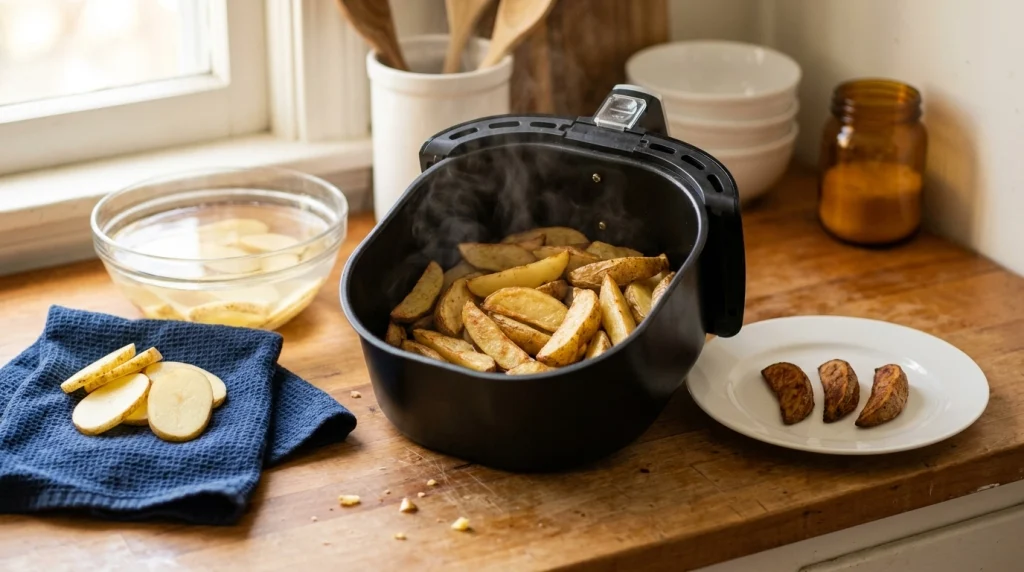
Air frying can produce acrylamide in certain carbohydrate-rich foods because acrylamide forms during high-temperature cooking. This is not unique to air fryers; frying, roasting, and baking can produce it too.
Acrylamide is a chemical that can develop when naturally occurring sugars and the amino acid asparagine react during high-temperature cooking.
Which foods are most relevant?
The concern applies mainly to certain plant-based foods rather than everything you put into an air fryer. Potatoes and grain-based foods are common examples.
- French fries and potato wedges
- Potato-based snacks
- Toast and bread
- Cookies and crackers
- Other strongly browned grain products
The FDA explains that acrylamide occurs during frying, roasting, and baking. Longer cooking and darker browning can generally increase its formation in susceptible foods.
The agency also notes that animal studies used acrylamide exposures much higher than typical food exposures. Questions remain about the precise human health risk at dietary levels.
Should you stop air frying potatoes?
No. The FDA does not tell consumers to stop eating fried, roasted, or baked foods because of acrylamide.
A more practical approach is avoiding unnecessary charring. For potatoes, I aim for golden yellow or light golden brown rather than dark brown edges throughout the basket.
- Don’t overcook: Stop when the desired texture and golden color are reached.
- Check early: Thin fries can darken quickly near the end.
- Remove burnt pieces: Don’t treat very dark food as a sign of better crispness.
- Vary your diet: Don’t make heavily browned potato and grain foods the basis of every meal.
For raw potato pieces, the FDA also notes that soaking slices in water for 15 to 30 minutes before high-temperature cooking can help reduce acrylamide formation. Drain and dry them thoroughly before cooking.
Section Takeaway: Acrylamide is a high-temperature cooking issue, not an air-fryer-only problem. Avoiding excessive browning is one of the simplest precautions.
Can Air Fryer Nonstick Coatings Be a Problem?
A damaged air fryer basket is worth paying attention to. Scratches, peeling surfaces, and visible coating deterioration are signs that the cooking surface is no longer in its original condition.
I try to protect coated baskets in the same way I protect a nonstick frying pan. Sharp metal tools and aggressive scrubbing are unnecessary.
What damages the basket coating?
- Metal utensils: Forks and metal spatulas can scratch some surfaces.
- Abrasive pads: Rough scrubbers may gradually wear the finish.
- Cutting in the basket: Knives can leave deep marks.
- Forceful scraping: Burnt food should be softened before removal.
- Ignoring manufacturer instructions: Coating materials and cleaning requirements vary by model.
For routine cleaning, I let the basket cool and soak stubborn residue instead of scraping it. A soft sponge usually does the job.
What should you do if the coating peels?
Check the manufacturer’s care instructions and replacement guidance. A visibly deteriorated cooking surface should not simply be ignored.
Replacement baskets are available for some models. Others may require contacting the manufacturer to confirm the correct replacement component.
Section Takeaway: Protecting the basket extends its useful life. Avoid metal tools, harsh abrasives, and other cleaning methods that your manufacturer warns against.
Can an Air Fryer Cause Smoke, Burns, or Fire?
Yes. An air fryer is a high-heat electrical cooking appliance, so hot surfaces, grease, airflow blockage, and electrical faults can create burn or fire hazards.
The risk deserves respect without panic. The same basic kitchen-safety habits I use around an oven apply here.
Why does an air fryer start smoking?
Smoke often comes from food residue or fat reaching a hot area. Fatty meat can also release enough grease to create visible smoke in some machines.
- Old grease left beneath the basket
- Crumbs near the heating element
- Too much added cooking oil
- Fat rendered from bacon, sausages, or meat
- Loose lightweight material moving toward the heater
If an appliance produces unusual heavy smoke, burning electrical odors, sparks, or other signs of malfunction, turn it off safely and follow the manufacturer’s instructions.
Where do burns happen?
The removable basket and crisper tray become hot enough to burn skin. Steam and hot air can also escape when you pull the basket open.
I place hot baskets on a heat-safe surface rather than directly on anything that could be damaged. I also keep my hand away from the rear exhaust while the appliance runs.
Air fryer recalls are another reason to know your model
Electrical appliances can occasionally be recalled because of overheating, fire, or burn hazards. The U.S. Consumer Product Safety Commission recall database is a useful place to check an appliance model when you have safety concerns.
- Keep the exhaust area unobstructed.
- Use the appliance on a stable, heat-resistant surface.
- Don’t operate a damaged power cord.
- Clean accumulated grease and crumbs.
- Follow model-specific clearance instructions.
Section Takeaway: Smoke, burns, and fire hazards are appliance-safety issues rather than unique health effects of air-fried food. Cleanliness, ventilation, and correct placement reduce avoidable problems.
Can Air Fryers Leave Food Undercooked?
Yes. Food can look browned and crispy while remaining undercooked inside, especially when pieces are thick or the basket is overcrowded.
This is one of the air fryer risks I take most seriously. Surface color is not a reliable food-safety test for raw poultry or meat.
Why overcrowding matters
An air fryer depends on moving hot air. Packing the basket too tightly prevents that air from circulating evenly around the food.
- Exterior pieces may brown first.
- Pieces in the center may cook more slowly.
- Moisture gets trapped between crowded foods.
- Cooking time becomes less predictable.
I would rather cook two smaller batches than one packed basket when raw meat is involved. The results are usually more even anyway.
What temperatures should you check?
The USDA advises using a food thermometer rather than depending only on cooking time or appearance. Its air fryer food-safety guidance gives these minimum internal-temperature benchmarks.
| Food | Safe Minimum Internal Temperature |
|---|---|
| Poultry, including ground poultry | 165°F / 74°C |
| Ground beef, pork, veal, and lamb | 160°F / 71°C |
| Whole cuts of beef, pork, veal, and lamb | 145°F / 63°C plus a 3-minute rest |
| Fish | 145°F / 63°C |
Pro tip: For raw meat and poultry, use verified USDA minimum internal-temperature guidelines and a food thermometer instead of relying on air-fryer time alone.
The USDA also specifically advises following manufacturer cooking directions for products when they are provided. Air fryers differ in basket shape, size, heating power, and airflow.
Section Takeaway: Crisp does not always mean safely cooked. Give food room to circulate and verify raw meat and poultry with a thermometer.
How Can You Reduce Air Fryer Side Effects?

Most air fryer problems can be reduced through moderate browning, regular cleaning, good airflow, proper temperature checks, and careful treatment of the cooking basket.
These habits don’t make cooking complicated. They simply prevent convenience from turning into carelessness.
My practical air fryer safety routine
- Start with a clean basket. I remove grease and loose crumbs from the previous cook.
- Leave breathing room. I avoid filling the basket so tightly that air cannot move around the food.
- Use only the oil I need. Air fryers normally don’t require food to be submerged in oil.
- Check browning early. I start looking several minutes before the expected finish time.
- Aim for golden, not burnt. This matters particularly with potatoes and bread products.
- Check thick proteins. A thermometer tells me more than exterior color does.
- Protect the coating. I use utensils and cleaning tools suitable for the basket material.
- Keep the vents clear. I give the appliance the clearance specified by its manufacturer.
Air fryer vs. oven vs. deep fryer: which risks differ?
No high-heat cooking method is completely free of tradeoffs. The type and degree of risk change with the appliance.
| Cooking Method | Main Safety Concern | Oil Requirement | Typical Limitation |
|---|---|---|---|
| Air fryer | Hot surfaces, smoke, over-browning, uneven cooking when crowded | Often little or none, depending on food | Small cooking area |
| Conventional oven | Hot surfaces and high-temperature cooking | Depends on recipe | Larger space may take longer to heat |
| Deep fryer | Large quantity of hot oil, splashing, burns | Enough oil to submerge food | Oil handling and cleanup |
As of 2026, my view of an air fryer hasn’t changed much after repeated use. It is convenient, but it still deserves the attention you’d give any appliance producing several hundred degrees of heat.
Section Takeaway: You don’t need to fear an air fryer, but you shouldn’t treat it like a risk-free gadget either. Good cooking habits address most of its realistic downsides.
Frequently Asked Questions
Is using an air fryer every day bad for you?
Using an air fryer every day is not automatically harmful. Your overall diet, how heavily you brown food, appliance condition, food-safety habits, and the foods you choose matter more than simply how often the machine runs.
Does an air fryer release harmful chemicals?
High-temperature cooking can create compounds such as acrylamide in certain plant-based foods, particularly potatoes and grain products. This process also occurs with frying, roasting, and baking, so it is not unique to air fryers.
Are air fryers unhealthy because of nonstick coatings?
Many air fryer baskets use nonstick cooking surfaces, but materials vary by manufacturer. Follow your model’s instructions, avoid scratching coated surfaces, and investigate replacement options if a basket becomes badly damaged or starts peeling.
Can an air fryer cause cancer?
There is no basis for saying that normal air fryer use itself causes cancer. Acrylamide formed in certain browned foods is being studied because high exposures caused cancer in laboratory animals, but the FDA notes those experimental exposure levels were much higher than those found in food.
Is air frying healthier than deep frying?
Air frying can require substantially less added oil because food is not submerged in hot fat. However, the healthfulness of a meal still depends on the food itself, portion size, sodium, fat, and overall eating pattern.
Why does my air fryer smell or smoke?
Common causes include old grease, crumbs, excess oil, or fat dripping from food. A persistent electrical burning smell, sparks, or unusual heavy smoke may indicate a problem that requires stopping use and checking the manufacturer’s guidance.
Can food look done but still be unsafe in an air fryer?
Yes. Fast circulating heat can brown the outside before the center of thick meat or poultry reaches a safe temperature. Use a food thermometer for raw animal foods instead of judging doneness only by crispness, color, or cooking time.
The bottom line: The bad side effects of using an air fryer are mostly manageable risks associated with high heat, browning, food safety, hot surfaces, smoke, and appliance maintenance.
I wouldn’t avoid an air fryer because of these concerns. I would use it thoughtfully: keep it clean, don’t burn food unnecessarily, protect the basket, leave room for airflow, and verify the temperature of raw meat and poultry before serving.