
Can You Make Bread Without Yeast? A Practical Guide to Yeast-Free Baking

Yes, you absolutely can make bread without yeast.
What changes is the bread itself. Without yeast, you lose the slow fermentation that builds classic bread flavor, chew, and a tall, airy crumb. In its place, you use a different leavening path: baking powder, baking soda plus an acid, self-rising flour, or no chemical leavener at all in the case of flatbreads. That means yeast-free bread is real bread, but it behaves differently in the bowl, in the oven, and on the plate.
If you’re a home baker who ran out of yeast, or a culinary student learning how leavening works, this is a useful skill to have. The trick is not trying to force a yeast bread recipe into a yeast-free shape. It’s choosing the right yeast-free method for the texture you want.
What Yeast Does in Bread and Why It Matters
Yeast does three jobs in traditional bread.
First, it produces gas as it feeds on sugars in the dough. That gas gets trapped in the dough’s gluten network and creates rise. Second, it contributes flavor through fermentation. Third, it changes the dough over time, which helps create the stretchy, elastic structure people associate with sandwich bread and artisan loaves.
When you remove yeast, you remove that slow fermentation and the long proofing time that comes with it. The result is usually a bread with less chew, less complex flavor, and a shorter, more tender crumb. It also tends to be less forgiving if the batter or dough is too dry, too thick, or overmixed.
For a deeper look at how dough behaves before baking, it helps to pair this article with a basic dough guide like How to Make Bread Dough From Scratch for Beginners.
Best Yeast-Free Leavening Options: What Actually Replaces Yeast
The main yeast-free options are not interchangeable. Each one changes the bread in a different way.
| Method | What makes it rise | Best for | Texture | Main trade-off |
|---|---|---|---|---|
| Baking powder | Chemical lift from the leavener itself | Quick loaves, muffins-style breads, emergency sandwich bread | Tender, usually softer and less chewy | Less yeast-like flavor |
| Baking soda + acid | Reaction between soda and buttermilk, yogurt, vinegar, or another acid | Soda bread, rustic loaves, fast skillet breads | More rustic, often denser than yeast bread | Needs the right amount of acid |
| Self-rising flour | Pre-mixed flour with leavening and salt | Simple quick breads and biscuits-style breads | Predictable, soft, often lighter than plain flour recipes | Less control over salt and lift |
| Flatbread with no chemical leavener | Steam and heat, sometimes a little oil or resting time | Skillet breads, wraps, naan-style breads | Thin, flexible, or lightly puffed | Little to no height |
If you want the closest thing to a loaf without yeast, baking powder is often the easiest route. In some quick-bread-style recipes, it can sometimes stand in for yeast, but not as a universal 1:1 swap across all bread recipes. Bob’s Red Mill notes that baking powder can be used in some cases as a natural substitute, but that does not mean every bread recipe converts cleanly. Bob’s Red Mill on baking without yeast
If you already have buttermilk or another acidic ingredient, baking soda is useful because the acid is what activates it. If you have self-rising flour, that can simplify the whole process because the leavening and salt are already built in.
Choose the Right Yeast-Free Bread for Your Goal
Here’s the practical decision framework I use when helping beginners choose a yeast-free method.
Choose quick bread if you want the easiest loaf
Quick bread is the simplest path when you want something sliceable and fast. It mixes in one bowl, goes into the oven right away, and does not need proofing. This is the best choice if your goal is “I want bread on the table today.”
It’s also the most beginner-friendly for students learning how leavening works because the process is visible and immediate.
Choose soda bread if you have buttermilk or yogurt
Soda bread is a smart choice when you have an acidic dairy ingredient on hand. It tends to feel more bread-like than a very soft quick loaf, but it still bakes much faster than yeast bread.
The trade-off is flavor and texture: soda bread often has a rustic crumb and a more pronounced baking soda note if the balance is off.
Choose flatbread if you want the fastest result
Flatbread is the right move when you want bread now and do not need a tall loaf. Think skillet breads, wrap-style breads, or simple pan breads.
This is the least fussy option, but it will not give you the same structure as a sandwich loaf. That’s not a flaw; it’s a different category.
Choose self-rising flour if convenience matters most
Self-rising flour is handy when you want to reduce variables. Because it already contains leavening and salt, it removes a few decisions from the recipe.
The downside is control. If your flour is already leavened, you have less room to fine-tune the final rise or salt level.
Tools and Ingredients You’ll Need
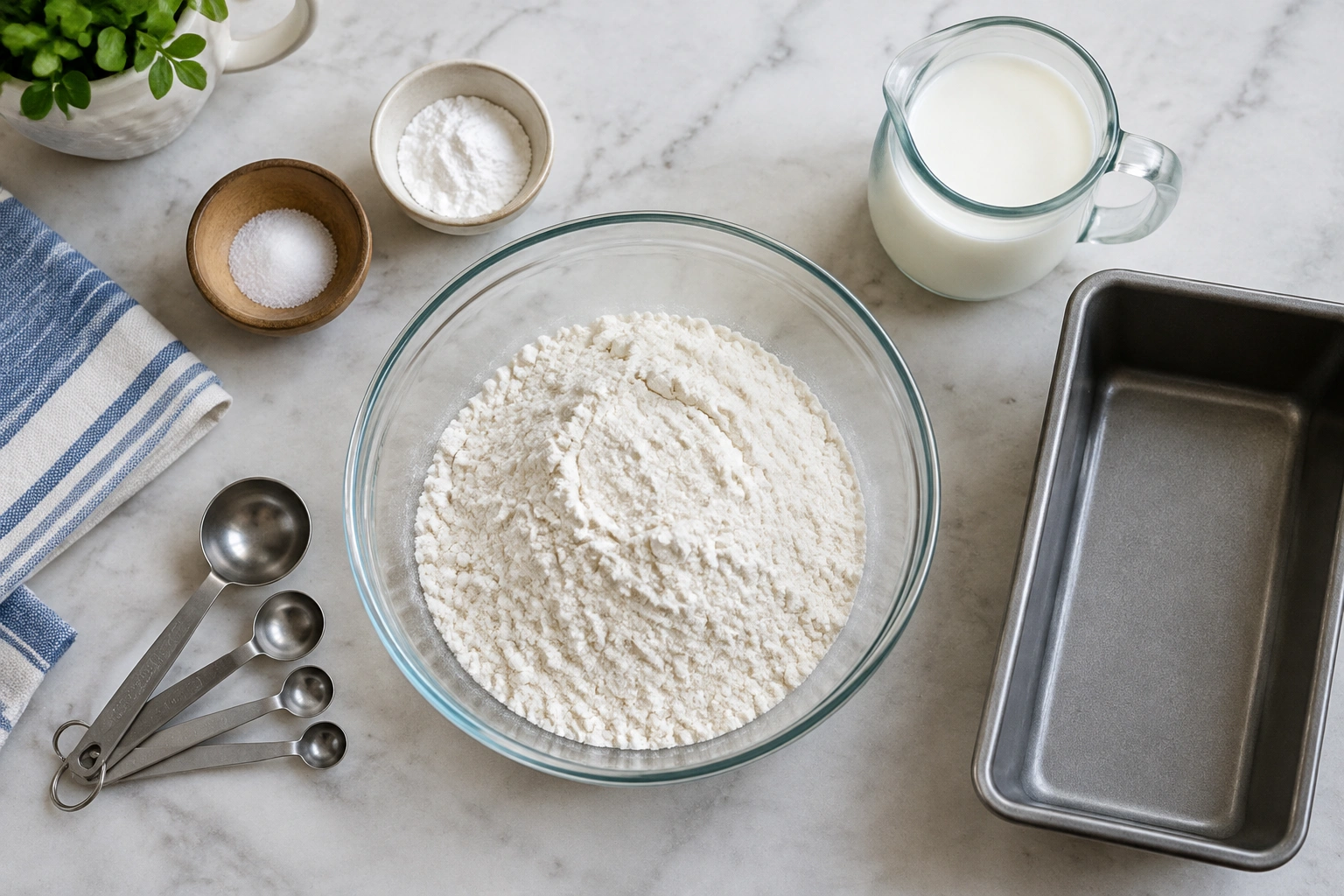
You do not need special bakery equipment to make bread without yeast, but a few basics make the process smoother.
Tools
- mixing bowl
- measuring cups and spoons
- whisk or fork
- spatula or wooden spoon
- loaf pan, sheet pan, or skillet depending on the bread type
- oven thermometer if your oven runs hot or cool
- wire rack for cooling
Common ingredients
- all-purpose flour or self-rising flour
- baking powder and/or baking soda
- salt
- liquid such as milk, buttermilk, yogurt, water, or a mix
- fat such as butter, oil, or shortening in some recipes
- optional sweetener like sugar or honey, depending on the style
Flours that work well for yeast-free bread
All-purpose flour is the most flexible starting point. Self-rising flour is convenient when you want built-in lift. Whole wheat flour can also work, but it usually needs a little extra liquid because it absorbs more moisture and can make the loaf heavier if used as a full substitute without adjustment.
One important decision: if you use self-rising flour, do not blindly add extra baking powder and salt unless the recipe calls for it. That is one of the fastest ways to create an overly salty loaf or a bread that rises unevenly.
How to Make a Simple No-Yeast Bread: Step-by-Step
This basic method works well for a quick loaf made with baking powder.
1) Preheat the oven first
Quick breads depend on immediate lift. If the oven is not ready, the batter can sit too long and lose some of that rise before baking.
2) Prepare the pan
Grease a loaf pan or line it with parchment. If you want a more rustic shape, you can use a baking sheet, but a loaf pan gives a more predictable result for beginners.
3) Mix the dry ingredients
Combine flour, baking powder, salt, and any sugar or dry flavorings in one bowl. Whisking them together helps distribute the leavener evenly so the bread rises consistently.
4) Add the wet ingredients
Stir in milk, buttermilk, water, oil, melted butter, or another liquid based on the recipe. Mix only until the flour disappears. A few streaks are better than overmixing.
That’s one of the biggest differences from yeast bread. With quick bread, you are not building a long gluten structure. You are trying to avoid toughness.
5) Shape or transfer quickly
Spoon the batter or soft dough into the pan. Smooth the top lightly. If you are making a rustic soda bread or skillet bread, shape it gently and get it into the oven.
6) Bake until properly set
Bake until the top is browned, the loaf feels firm in the center, and a tester comes out clean or with only a few moist crumbs. Time varies by pan size and oven, so don’t rely only on the clock.
7) Cool before slicing
Let the bread cool before cutting. Slicing too early can make the center seem gummy even when the loaf is technically baked through.
Practical Example: A Beginner-Friendly Baking-Powder Quick Bread
A simple baking-powder loaf is one of the most reliable yeast-free breads for home bakers.
A very basic starting ratio is:
– 2 cups all-purpose flour
– 1 tablespoon baking powder
– 1/2 teaspoon salt
– 1 to 1 1/4 cups milk or other liquid
– 2 tablespoons melted butter or oil
Mix the dry ingredients in one bowl, stir in the wet ingredients just until combined, then bake in a greased loaf pan. Some versions include a little sugar for a softer flavor and better browning.
A recipe like this is useful when:
– you want a loaf for toast or sandwiches
– you have no yeast
– you want a faster bake than traditional bread
– you prefer a softer, cake-like crumb over chew
If you’ve ever made banana bread or biscuits, the mixing style will feel familiar. Jacksons Job describes quick breads as breads made with self-rising flour, baking powder, baking soda, or a combination, and notes that they are fast and simple to make. Beginner’s guide to quick bread without yeast
How Yeast-Free Bread Should Taste and Feel
The most useful expectation-setting advice I can give is this: judge yeast-free bread on its own terms.
A successful no-yeast loaf usually has:
– a shorter rise
– a softer or more tender crumb
– less chew than yeast bread
– a more direct flour flavor
– less fermented depth
That does not mean it tastes flat or boring. It means the flavor comes from the ingredients and browning, not from fermentation.
A good quick bread should feel moist but not wet, and it should slice cleanly once cooled. A good soda bread should feel rustic and substantial without turning pasty in the middle. A good flatbread should be flexible or lightly crisp, depending on the style.
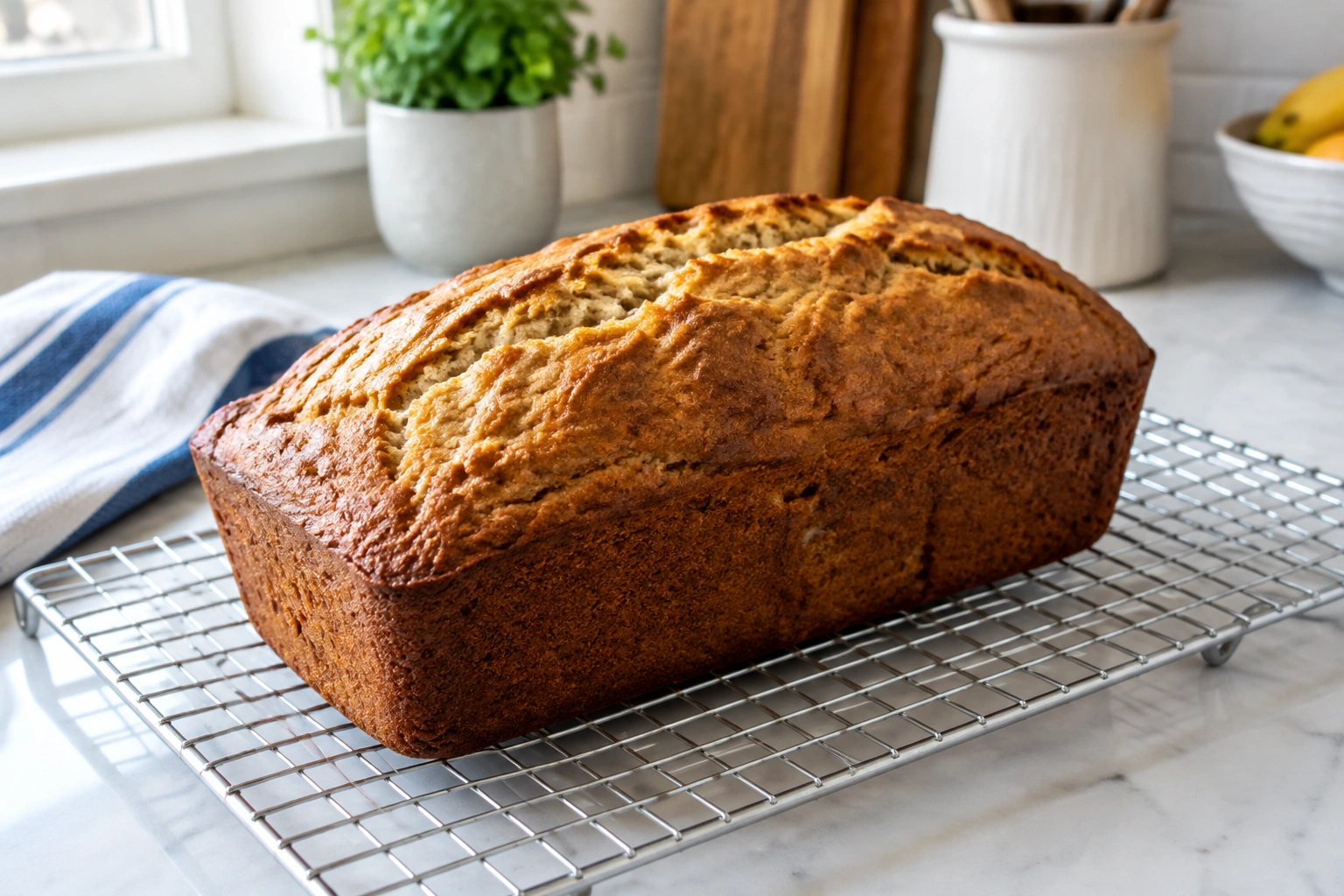
If you expect a yeast loaf and bake a quick bread, you may think it failed when it actually performed exactly as designed.
Common Mistakes When Baking Bread Without Yeast
Most yeast-free bread problems come from a handful of predictable mistakes.
Using baking soda without enough acid
Baking soda needs an acid to react properly. If the recipe does not include buttermilk, yogurt, vinegar, lemon juice, or another acidic ingredient, the bread may not rise well and can taste soapy or bitter.
Overmixing the batter
This is a major quick-bread mistake. Overmixing develops gluten and can make the loaf tough instead of tender. Mix just until the dry flour disappears.
Adding too much flour
Too much flour creates a dry, heavy loaf. This often happens when people measure by scooping aggressively instead of spooning flour into the cup and leveling it.
Skipping salt
Salt matters even in quick bread. Without it, the loaf can taste dull and unfinished.
Underbaking the center
Yeast-free breads can brown quickly on the outside while staying underdone inside. If the top looks finished but the center still feels soft and wet, give it more time.
Trying to convert a yeast recipe too literally
This is the biggest conceptual mistake. Yeast dough and quick bread are different systems. You usually cannot swap yeast for baking powder in a 1:1 way and expect the same result.
Troubleshooting Dense, Gummy, Dry, or Bitter No-Yeast Bread
If your bread did not turn out well, the problem usually points to one of a few causes.
Dense bread
Likely causes:
– too much flour
– old or weak leavening
– batter overmixed
– oven not hot enough
Fix:
– measure flour more carefully
– check that your baking powder is fresh
– mix less
– preheat fully before baking
Gummy center
Likely causes:
– underbaking
– slicing too soon
– too much liquid
Fix:
– bake longer
– cool completely before cutting
– reduce liquid slightly next time if the batter was loose
Dry bread
Likely causes:
– too much flour
– too long in the oven
– not enough fat or liquid
Fix:
– measure flour more accurately
– check earlier for doneness
– use the liquid and fat amounts the recipe specifies
Bitter or soapy flavor
Likely causes:
– too much baking soda
– not enough acid to balance it
Fix:
– reduce baking soda
– increase the acidic ingredient only if the recipe is designed for it
– do not assume more soda means more rise
Can You Turn a Regular Bread Recipe Into a Yeast-Free Version?
Sometimes, but not cleanly.
A few yeast recipes can be adapted if they already behave more like quick breads, such as a simple loaf with a fairly wet batter or a recipe that is closer to a muffin-style or soda-bread style dough. In those cases, a yeast-free formula may work with baking powder or baking soda plus acid.
But most standard yeast bread recipes cannot be converted with a simple swap. If the recipe depends on yeast for structure, flavor, and rise, it usually needs more than replacing one ingredient. The loaf will not behave like a standard sandwich bread, and in many cases it needs a full rewrite rather than a substitution.
A better way to think about it is this:
- If you want a soft, fast loaf, use a quick bread formula.
- If you want a rustic, savory loaf and have an acidic ingredient, use a soda bread formula.
- If you want a thin or pan-cooked bread, make a flatbread.
- If you want classic yeast bread, keep the yeast and the fermentation.
That is why quick breads are such a useful backup plan. They are not substitutes for every bread recipe; they are their own category.
When to Use Yeast-Free Bread vs. Traditional Yeast Bread
Use yeast-free bread when speed, simplicity, or pantry limits matter more than classic bread character.
Choose yeast-free bread if:
– you are out of yeast
– you want bread in under an hour or two
– you prefer a softer or more rustic crumb
– you’re making a skillet bread, soda bread, or quick loaf
– you want a straightforward beginner project
Choose traditional yeast bread if:
– you want a chewy crumb and deeper flavor
– you want a tall sandwich loaf or artisan-style crust
– you have time for proofing and fermentation
– you want to practice dough development and shaping
In other words, yeast-free bread is not a compromise every time. Sometimes it is simply the better tool for the job.
FAQs
Can you make bread without yeast and still get a good rise?
Yes, but the rise comes from baking powder, baking soda plus acid, self-rising flour, or steam in the case of flatbreads. The loaf usually rises differently from yeast bread and often has a softer or more rustic texture.
What is the best substitute for yeast in bread?
There is no single best substitute for every recipe. Baking powder is the easiest all-purpose option for quick breads, while baking soda works well when the recipe includes an acid like buttermilk or yogurt.
Can I replace yeast with baking powder or baking soda?
Sometimes, but not in a direct 1:1 way for every bread recipe. Baking powder can work in some quick breads, while baking soda needs acid. A standard yeast dough usually needs a full recipe rewrite rather than a simple swap.
What breads are naturally made without yeast?
Quick breads, soda bread, flatbreads, and some skillet breads are commonly made without yeast. They use different methods for structure and rise, or very little rise at all.
Why did my no-yeast bread turn out dense?
The most common reasons are too much flour, overmixing, weak leavening, or underbaking. Dense results are often a sign that the batter was handled like yeast dough instead of quick bread batter.
Can I make a sandwich loaf without yeast?
Yes, but it will not behave exactly like a classic yeast sandwich loaf. A baking-powder quick loaf is the closest simple option for slicing, while soda bread is usually more rustic and less soft.
How do I keep yeast-free bread from turning dry?
Measure flour carefully, avoid overbaking, and use the amount of liquid and fat the recipe calls for. Cooling before slicing also helps keep the crumb from seeming dry or gummy.
Is yeast-free bread faster to make?
Usually, yes. Most yeast-free breads skip kneading and proofing, so they move from mixing to baking much faster than traditional yeast bread.
If you remember one thing, make it this: bread without yeast is absolutely possible, but the recipe has to match the method. Choose the right style, respect the leavener, and the loaf will reward you.