
How to Make Crispy Air Fryer Potato Wedges That Turn Out Golden and Tender
Potato wedges are one of the best uses for an air fryer: they cook faster than an oven batch, brown well with just a little oil, and give you a crisp exterior without deep-frying. The method is simple, but a few details matter more than people expect. Potato type, cut size, surface moisture, and basket space all affect whether the wedges come out crisp or soft.
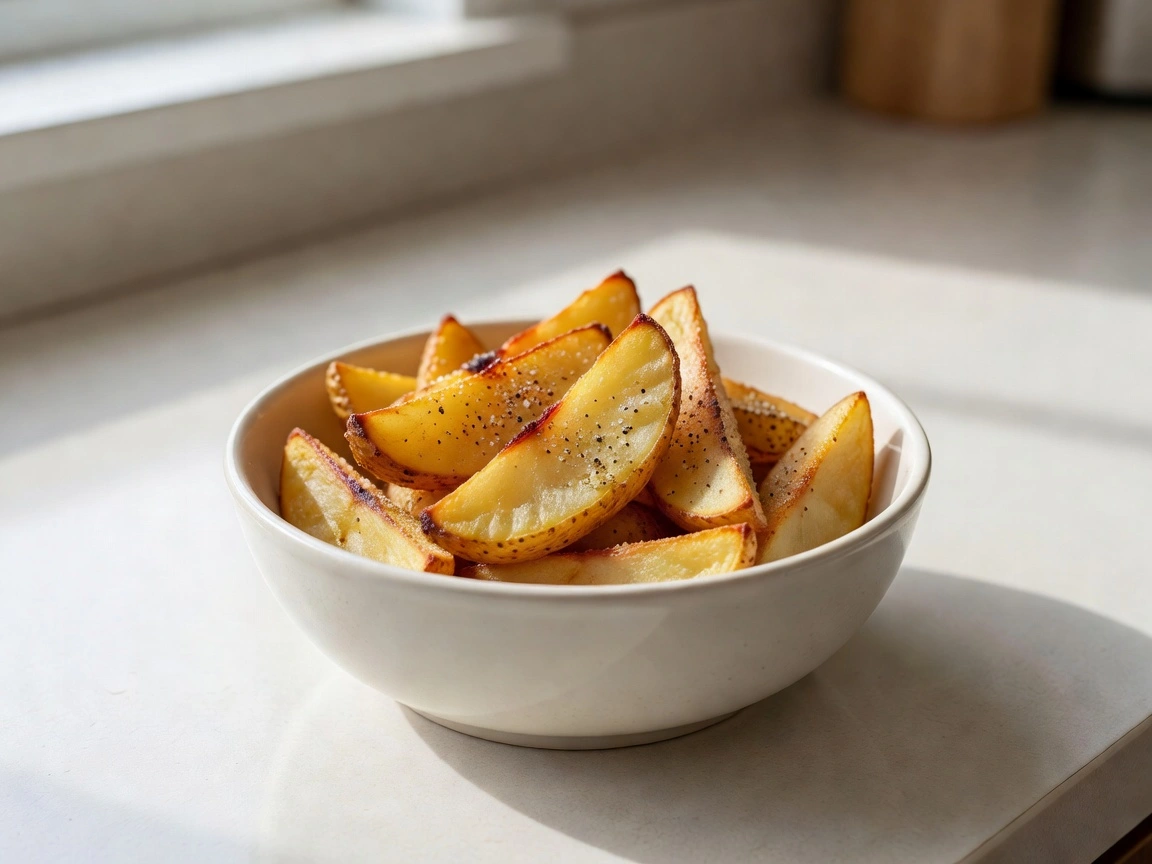
If you want reliable results, focus on four things: use the right potato, cut the wedges evenly, dry them well, and give them enough room to move hot air around. That combination does more for texture than any complicated seasoning blend.
Quick Overview: What Makes Air Fryer Potato Wedges Crispy
Crisp wedges are built from contrast: a dry, seasoned surface and a tender interior. In an air fryer, hot circulating air helps the outside brown while the inside cooks through. That only works well when the wedges are not wet, not overcrowded, and not coated in too much oil.
A few practical rules make the biggest difference:
- Use potatoes with enough starch to brown well.
- Cut the wedges into similar sizes so they finish together.
- Dry them thoroughly after washing or soaking.
- Coat lightly with oil rather than drenching them.
- Cook in a single layer when possible.
Best Potatoes for Crispy Wedges
For maximum crispness, Russet potatoes are usually the easiest choice. They have a starchy texture that tends to brown well and gives you a fluffy interior. That makes them a strong match for air fryer wedges when your goal is a crisp shell and a soft center.
Yukon Gold potatoes are still a good option, especially if you prefer a creamier, slightly richer interior. They usually do not crisp quite as much as Russets, but they hold their shape nicely and taste excellent with simple seasonings.
Russet vs. Yukon Gold
| Potato type | Crispiness | Interior texture | Best use |
|---|---|---|---|
| Russet | Higher | Fluffy and light | Classic crispy wedges |
| Yukon Gold | Moderate | Creamier and denser | Softer, buttery wedges |
If you are making wedges for the first time, Russets are the safer starting point. If you want a more potato-forward, less crunchy result, Yukon Golds are a good second choice.
How to Cut Potato Wedges Evenly
Uneven cutting is one of the fastest ways to get mixed results. Thin pieces burn before thicker ones finish, and the batch ends up with both dry edges and undercooked centers.
A simple way to cut them evenly:
- Wash the potatoes well.
- Leave the skin on if you want easier prep and better texture.
- Cut each potato lengthwise in half.
- Cut each half into 3 or 4 wedges, depending on size.
- Try to keep each wedge close in thickness.
For most home air fryers, a medium wedge works best. If the wedges are very thick, they need more time and may benefit from a brief parboil first. If they are too thin, they can dry out before the center becomes tender.
Skin-on wedges are usually the better choice for air frying. The skin helps with structure and adds texture. Peeled wedges are smoother, but they give up some of that rustic crispness.
Should You Soak the Potatoes?
Soaking can help if you want a slightly crispier exterior. The idea is to remove some surface starch, which can interfere with browning if it stays on the potato. That said, soaking is optional, not mandatory.
Soaked vs. unsoaked wedges
| Method | Crispness | Prep time | Best for |
|---|---|---|---|
| Soaked | Often a bit crispier | Longer | Extra crunch, more careful prep |
| Unsoaked | Still crisp with good technique | Faster | Simple weeknight cooking |
Soaking is most useful when:
– you are using very starchy potatoes,
– you want a cleaner, drier surface,
– and you have time to dry them thoroughly afterward.
If you soak, drain well and dry the wedges carefully with a clean towel. Wet potatoes in the basket can steam instead of crisp. If you are short on time, skip the soak and focus on drying, light oil, and avoiding overcrowding.
Seasoning and Oil: The Right Balance for Crispness
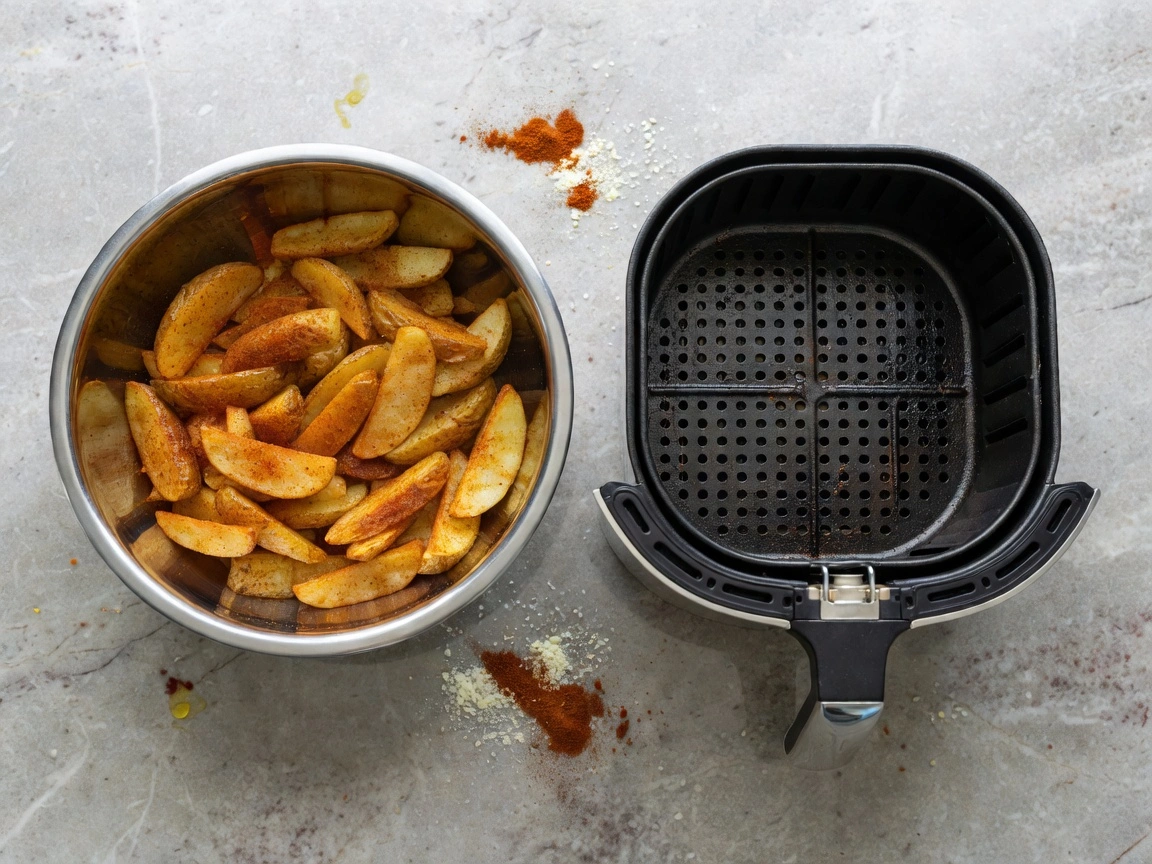
A light coating of oil helps the surface brown and carry seasoning. Too much oil can make the wedges feel heavy or soft. You want enough to film the outside, not enough to pool in the bowl.
A simple seasoning base works well:
- olive oil
- salt
- black pepper
- paprika
- garlic powder
Paprika adds color and mild sweetness. Garlic powder gives savory depth without the moisture that fresh garlic can bring. Salt should be added before cooking so it can season the potato surface evenly.
When cornstarch can help
A small amount of cornstarch may improve surface crispness, especially on Russet wedges. Use it sparingly and only after the wedges are dry. Too much can leave a dusty coating rather than a crisp shell.
A practical approach is to toss the dry wedges with oil first, then add seasoning and a light dusting of cornstarch if you want extra crunch. Keep the coating thin and even.
If you prefer a simpler method, oil plus seasoning is enough. The air fryer does not need a heavy coating to produce good results.
Step-by-Step: How to Make Crispy Air Fryer Potato Wedges
1. Wash and cut the potatoes
Scrub the potatoes clean. Cut them into even wedges so they cook at the same rate.
2. Dry them well
Pat the wedges dry with a towel. If you soaked them, dry them especially carefully. Moisture on the surface is one of the main reasons wedges turn soft.
3. Season in a bowl
Toss the wedges with a light amount of oil, then add salt, pepper, paprika, and garlic powder. If using cornstarch, add it sparingly so it coats the surface without clumping.
4. Preheat the air fryer if your model benefits from it
A preheated basket helps the wedges start browning sooner. Some air fryers heat quickly enough that preheating is not essential, but it usually improves consistency.
5. Arrange in a single layer
Place the wedges in the basket with some space between them. If they are piled up, the airflow gets blocked and the wedges cook unevenly.
6. Cook until browned and tender
Air fry, shaking or flipping partway through, until the edges are golden and the centers are soft enough to pierce easily with a fork.
7. Rest briefly before serving
Let the wedges sit for a minute or two. That short rest helps the exterior firm up a little more before serving.
Air Fryer Temperature, Time, and Batch Size
Because air fryer models vary, the best approach is to treat time as a range rather than a fixed rule. A good starting point is 380°F to 400°F.
Practical timing guidance
- Thin wedges: 380°F for about 16 to 20 minutes
- Standard wedges: 390°F for about 20 to 25 minutes
- Extra-thick wedges: 375°F to 390°F for about 25 to 30 minutes
Basket-style air fryers often brown faster because the basket keeps the wedges close to the heat and airflow. Oven-style air fryers may need 2 to 5 extra minutes for similar wedges, especially if the tray is crowded or the wedges are on a lower rack.
A few other practical notes:
– Smaller wedges cook faster.
– Thicker wedges need more time and usually an extra shake or turn.
– A crowded basket usually needs more time and still may not crisp as well.
– Large batches are better cooked in two rounds than packed into one.
If your wedges brown too quickly on the outside, lower the heat slightly next time and give them a little more time. If they are tender but pale, they likely need more browning time or better air circulation.
For a small basket-style air fryer, two smaller batches usually outperform one overloaded batch. In an oven-style air fryer, you may have more room, but the same rule still applies: space matters.
How to Flip, Shake, and Tell When Wedges Are Done
Shaking or flipping helps expose more of the surface to hot air. That matters because the side touching the basket browns less than the side facing the airflow.
A halfway turn is usually enough for evenly cut wedges. For standard wedges, plan to shake or flip at about the 10- to 12-minute mark. For thicker wedges, give them a second check near the end of cooking and move them around if your air fryer has hot spots.
Visual doneness cues to look for
- golden-brown edges
- crisp-looking skin
- tender centers when pierced with a fork
- a dry, not glossy, surface
Thinner wedges should look evenly golden with crisp edges by the end of the cook time. Standard wedges should be browned on the outside and easy to pierce in the center. Extra-thick wedges may look browned before they are fully tender, so the fork test matters even more.
Do not rely on color alone. A wedge can look browned on the outside and still be firm in the middle if it was cut too thick or crowded in the basket. The fork test is the simplest check: the center should slide in easily without resistance.
Troubleshooting Soft, Dry, or Uneven Wedges
Even careful cooks run into texture problems. The fix usually comes from adjusting moisture, spacing, or cut size.
If the wedges are soft
This usually means the basket was crowded, the potatoes were too wet, or too much oil was used. Next time, dry them more thoroughly and cook in a looser layer.
If the wedges are dry but not crisp
The temperature may have been too low, or the wedges may have stayed in too long without enough browning. A slightly hotter setting or a shorter cook with a better shake can help.
If some wedges burn while others stay pale
The pieces were likely cut unevenly. Keep the wedges similar in thickness so they finish together. If the tips are browning too fast while the centers lag behind, the wedges are probably too thin or the heat is a little high for that batch.
If the wedges taste greasy
Too much oil can weigh down the surface. A thin coating is enough. You should see sheen, not puddles.
If the centers stay undercooked
This usually means the wedges are too thick for the chosen time and temperature. Either cut them a little smaller next time or lower the temperature slightly and cook a few minutes longer. For very thick wedges, parboiling can help.
Should You Parboil the Potatoes?
Parboiling is optional, not required. For standard wedges, it is usually unnecessary if you cut them evenly and cook them in a properly preheated air fryer.
It becomes worth using when:
– the wedges are extra thick,
– you want a very fluffy center with a crisp exterior,
– or you need to shorten the air fryer time without leaving the middle firm.
If you parboil, keep it brief so the wedges do not break apart. Dry them well afterward, because wet surface moisture can cancel out the benefit. For most everyday batches, you can skip this step and still get good results.
Air Fryer vs. Oven-Baked Wedges
Oven-baked wedges can be excellent, but they usually take longer to brown and often need more total time to get the same level of crispness. An air fryer gives you more direct heat on the surface, which is why it is such a good tool for wedges.
That does not mean the air fryer is automatically better in every situation. A large oven sheet pan can handle a bigger batch at once, while the air fryer tends to win on speed and texture for smaller amounts. If you are cooking for one or two people, the air fryer is usually the more efficient choice.
Serving Ideas and Dipping Sauces
Crispy wedges work as a snack, side dish, or appetizer. They pair well with simple dips that do not overpower the potato.
Good options include:
– ketchup
– ranch
– garlic aioli
– sour cream with chives
– spicy mayo
For a fuller plate, serve them with burgers, grilled chicken, sandwiches, or a simple salad. If you want a more snack-style spread, add pickles, celery, or carrot sticks alongside the wedges.
How to Store and Reheat Leftovers
Leftover wedges keep best in the refrigerator in a covered container once they have cooled. They will soften as they sit, so the goal is to restore surface crispness when reheating.
For the best texture, reheat them in the air fryer at 375°F for 3 to 5 minutes. Spread them out in the basket again rather than piling them up, and check them early so they do not dry out. Thicker wedges may need the full time, while thinner ones can be ready sooner.
Microwaving is faster, but it softens the exterior. If crispness matters, the air fryer is usually the better reheating option.
Final Notes for Reliable Results
If you want one dependable formula, choose Russet potatoes, cut them evenly, dry them thoroughly, season lightly, and cook them in a single layer with a shake halfway through. That method gives you the best chance of getting crisp edges and tender centers without complicated steps.
Once you have the basic method down, you can adjust from there: soak for a little extra crunch, use Yukon Golds for a creamier bite, or add cornstarch when you want a firmer crust. The technique stays the same; only the texture changes.
For a related look at crisp texture in the air fryer, you may also find this guide on making vegetables crisp without losing structure useful. And if you enjoy testing other air fryer snacks, these crisp apple chips use many of the same spacing and drying principles.
Frequently Asked Questions
Do I need to peel the potatoes?
No. Skin-on wedges are easier to make and usually crisp better. Peeled wedges are smoother, but they lose some texture.
Can I make wedges without oil?
You can, but the exterior usually browns less evenly. A light oil coating improves texture and seasoning coverage.
Why are my wedges not crispy enough?
The usual causes are too much moisture, too many wedges in the basket, or not enough space for airflow.
Can I make them ahead of time?
They are best fresh, but you can prep and season the potatoes earlier in the day. For the best texture, cook them close to serving time.
What if my air fryer runs hot?
Check early and reduce the heat slightly next time. Some models brown faster than others, so your first batch is a good test run.

