
Do Pears Need to Be Refrigerated? A Practical Storage Guide for Busy Kitchens

Pears do not need to be refrigerated right away if your goal is to let them ripen. In most kitchens, the simplest rule is this: leave firm pears on the counter until they soften, then move ripe pears to the refrigerator if you are not eating them soon.
That one decision saves a lot of waste. Counter storage helps pears finish ripening. Cold storage slows that process down. So the “best” place depends on what stage the pears are in and when you plan to use them.
If you are shopping for the week, pears can sit on the counter for ripening. If you already have pears that are ready to eat, the fridge usually gives you more time. If the pears are cut, they belong in the refrigerator right away.
Quick Answer: Should Pears Be Refrigerated?
Use this simple rule:
- Firm, unripe pears: keep them at room temperature until they soften.
- Ripe pears: refrigerate them if you are not eating them soon.
- Cut pears: refrigerate them promptly in a covered container.
- Bruised or very soft pears: use them first.
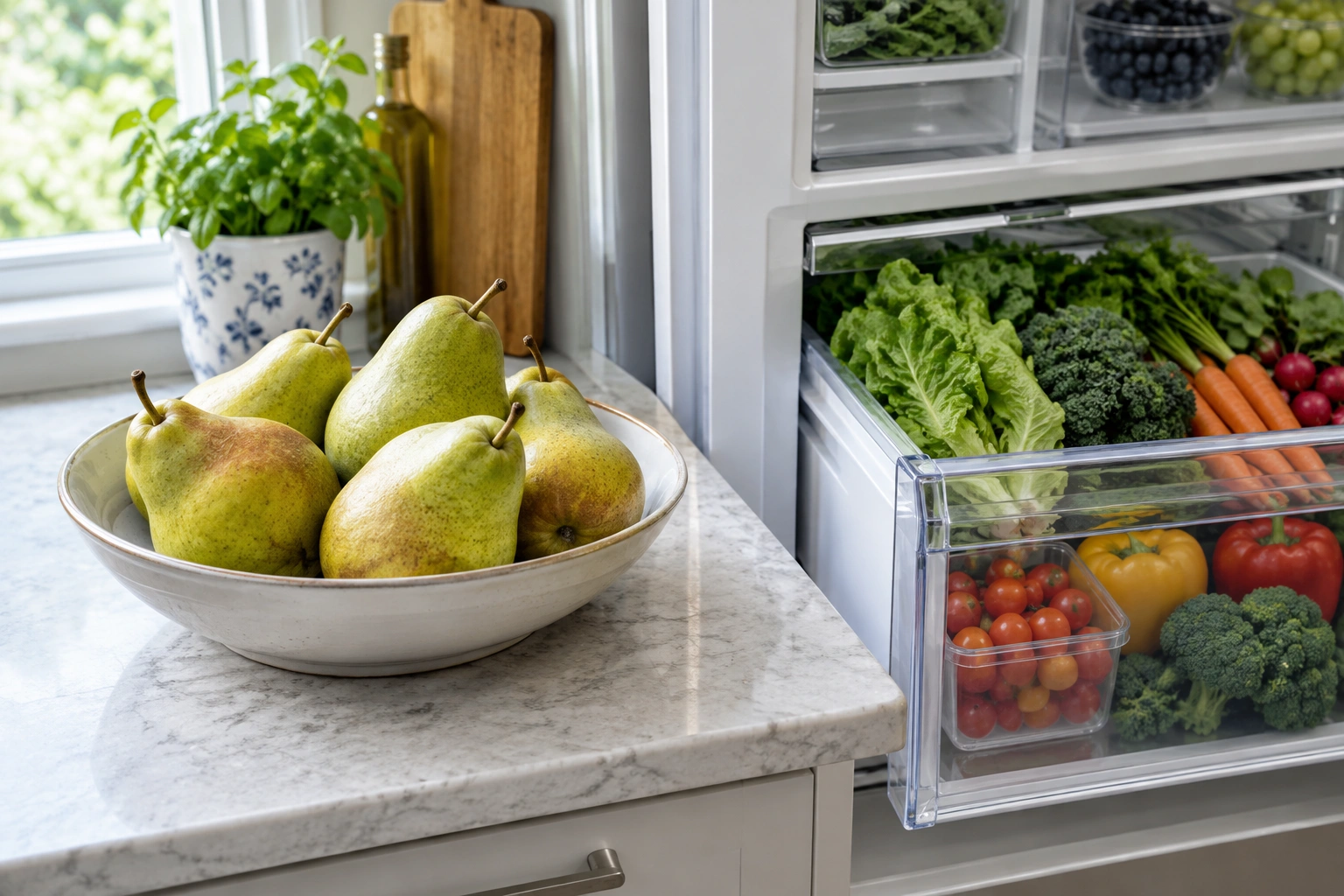
A simple decision rule:
– If a pear is still hard and you want it ready later this week, leave it on the counter.
– If it has reached the texture you want and you need to delay eating it, move it to the fridge.
– If it is cut, refrigerate it right away.
That is the basic storage decision in one glance. The reason is straightforward: pears continue ripening after harvest, and refrigeration slows that process. If you refrigerate a pear too early, it may stay hard longer than you want. If you leave a ripe pear on the counter too long, it can go from ready to overripe quickly.
For busy households, the most practical approach is to buy a mix of firmness levels when possible. A few pears can ripen for later in the week, while one or two ripe pears can go into the fridge for near-term use.
What You Need Before Storing Pears
You do not need special equipment, but a few basics help pears last longer and bruise less:
- a cool counter or tabletop away from direct sun
- a refrigerator
- the produce drawer or another low-crush area in the fridge
- a bowl, tray, or shallow basket for counter ripening
- an airtight container or resealable bag for cut pears
- clean hands and a clean knife for slicing
The main storage goal is to avoid unnecessary damage. Bruising shortens a pear’s useful life, and warm spots speed up ripening. A fruit bowl near the stove is a poor choice; a shaded counter is much better.
How to Tell Whether a Pear Is Ready for the Fridge
A pear is ready to refrigerate when it has reached the ripeness you want. The easiest checks are feel, aroma, and gentle pressure near the stem.
Look for these signs:
- the pear gives slightly when pressed near the neck
- the flesh feels less rock-hard than when first purchased
- the pear smells sweet and fragrant
- the skin may look a little more mature in color, depending on the variety
If the pear is still very firm all over, leave it out to ripen. If it already feels pleasantly soft and you are not planning to eat it right away, move it to the fridge.
A useful decision frame is this:
- Need it softer soon? Keep it on the counter.
- Need to pause ripening? Put it in the refrigerator.
- Not sure? Check it daily and refrigerate as soon as it reaches the texture you like.
That approach works especially well for meal prep. You can let a few pears ripen for lunches later in the week while chilling the ones that are already ready.
How to Ripen Pears at Room Temperature
Room temperature is the right place for pears that are still hard. The goal is to let them soften evenly without bruising them or letting them sit in heat.
1. Place pears in a single layer
Set pears on a counter, tray, or shallow bowl so they are not stacked on top of each other. Stacking increases pressure points and bruising.
2. Keep them away from heat and sun
Do not place pears near a stove, toaster oven, sunny window, or warm appliance. Heat can push them from firm to overripe faster than you expect.
3. Check them daily
Pears can change quickly once they begin ripening. Press gently near the stem each day instead of waiting several days and hoping for the best.
4. Separate pears that ripen faster
If one pear softens sooner than the others, refrigerate it or use it first. Keeping all the pears together after one has ripened can make the whole batch progress faster.
5. Speed up ripening with a paper bag
If you want pears to soften faster, place them in a paper bag at room temperature. You can add a ripe banana or apple to the bag to help the process along. Close the bag loosely and check the pears daily so they do not oversoften.
For most households, this is the most effective way to speed up ripening without much fuss. The trade-off is that pears can move from firm to ready more quickly than expected, so daily checking matters.
6. Slow ripening once pears are close to ready
When pears are almost ripe, move them to the refrigerator if you want to hold them for a few more days. Cold storage slows further softening better than leaving them on the counter.
If you want to keep pears close to ripe but not fully soft yet, a cool spot in the fridge is the simplest option. That gives you a little breathing room without losing the fruit.
How to Refrigerate Whole Pears for Longer Freshness
Once a pear is ripe, refrigeration helps preserve that texture for longer. The fridge does not improve ripeness; it slows further change.
1. Chill pears after they reach the texture you want
Move ripe pears into the refrigerator when they are ready to eat but you are not eating them yet. That is the sweet spot for quality.
2. Use the produce drawer if possible
The produce drawer helps reduce crushing and keeps pears separate from items that may press on them. If the drawer is crowded, make space rather than packing pears tightly.
3. Keep them dry and unwashed
Moisture on the skin can encourage faster deterioration. Wash pears only when you are ready to use them.
4. Store them with enough space
A pear that is wedged under heavier produce will bruise more easily. Give the fruit room to rest without pressure.
5. Check stored pears regularly
Even in the refrigerator, pears do not last forever. Review them every couple of days and use any that are softening quickly.
Approximate storage timelines can help with planning:
- Whole pears on the counter: usually a few days to about a week while ripening, depending on firmness and room temperature
- Whole ripe pears in the refrigerator: often several more days, and sometimes close to a week or longer if they were handled gently
- Cut pears in the refrigerator: best used within a few days for best quality
These are practical ranges, not guarantees. Bruising, warmth, and variety all affect how long pears stay good.
How to Store Cut, Overripe, or Bruised Pears
Once pears are cut, the storage rules change. Cut fruit should go into the refrigerator promptly because it is more exposed to air, drying, and contamination.
Cut pears
Place slices or chunks in a clean, airtight container. This helps limit browning and keeps the fruit from drying out.
If you are packing pears for lunches or meal prep, keep them as dry as practical and seal them well. The main trade-off is convenience versus appearance: sliced pears are easier to grab, but they lose quality faster than whole fruit.
Overripe pears
Very soft pears are best used soon. Refrigeration can slow further decline, but it will not restore firmness. If they are still pleasant to eat, move them to the fridge and plan to use them first.
Bruised pears
Bruised spots speed up spoilage, so set those pears aside for immediate use. Trim away damaged areas when you cut them, and do not expect a bruised pear to hold as long as an unbruised one.
Pears with mold or strong off smells
Discard them. Mold, fermentation odors, or widespread mushiness are signs the fruit is past the point of practical use.
How Long Pears Last: Counter vs. Refrigerator
Exact storage time depends on ripeness, variety, handling, and how bruised the fruit is. Rather than relying on a fixed promise, use this practical comparison:
| Storage situation | Best use | Quality pattern |
|---|---|---|
| Firm whole pears on the counter | Ripening | Softens faster; check often |
| Ripe whole pears in the fridge | Holding for later | Ripening slows; quality lasts longer |
| Cut pears in the fridge | Meal prep, lunches, snacking | Best when used soon |
| Bruised pears | Immediate use | Spoils faster than intact fruit |
A useful planning rule is this: the firmer the pear, the more counter time it needs; the riper the pear, the more it benefits from cold storage. That is the simplest way to stretch freshness without guessing.
If your household eats pears slowly, refrigerate them as soon as they are ripe. If you want pears for a specific day later in the week, keep them on the counter until they are close, then chill them.
Do Different Pear Varieties Need Different Storage?
Yes, some varieties ripen at different speeds, so they may need slightly different timing.
Bartlett pears
Bartletts tend to ripen sooner than some other pears, so check them often. If you want them for a specific day, start on the counter and move them to the refrigerator soon after they soften to the level you like.
Anjou pears
Anjous usually give you a bit more flexibility before they soften. They can stay on the counter while firm, but once they are ready, refrigeration helps hold that texture for a little longer.
Bosc pears
Bosc pears are often a good choice when you want a longer ripening window. They may stay firm longer on the counter, which can help if you need a slower, more predictable ripening schedule.
The practical takeaway: do not assume all pears will behave the same way. If you buy mixed varieties, check each type separately instead of treating the whole basket as one batch. That matters most when some pears are already close to ripe and others still need more time.
Common Mistakes That Make Pears Spoil Faster
A few storage errors cause most of the waste:
- Refrigerating pears too early when you actually want them to soften
- Leaving ripe pears out too long after they have already reached good eating texture
- Storing cut pears uncovered, which leads to browning and drying
- Packing pears under heavier produce, which causes bruising
- Ignoring one soft pear in the bowl, even though it can speed up the rest
- Putting pears near heat or sunlight, which shortens the useful window
The easiest fix is to sort pears by stage. Keep hard pears together, ripe pears together, and cut pears in a separate container. That small habit makes the whole kitchen run more smoothly.
Troubleshooting: What to Do If Pears Ripen Too Fast, Stay Hard, or Turn Bad
If pears ripen too fast
Move them to the refrigerator immediately. If they are already very soft, use them first in the next meal or snack.
If pears stay hard
Leave them at room temperature and give them a little more time. If they are very firm and you need them sooner, place them in a paper bag with a ripe banana or apple and check daily.
If pears are unevenly ripe
Use the softest ones first and refrigerate the firmer ones to slow them down. That keeps one batch from spoiling while another is still catching up.
If pears show spoilage
Discard any fruit with mold, strong sour or fermented odor, or extensive mushiness. When in doubt, do not try to rescue a questionable pear by cutting away a large damaged area.
Practical Examples for Busy Home Cooks and Meal Preppers
A family brings home a bag of firm Bartlett pears on Sunday. They leave three on the counter for the week and refrigerate two once they soften. That spreads out the eating window and reduces the chance that all five pears ripen at once.
A meal prepper slices pears for school lunches on Sunday evening. The slices go into airtight containers in the refrigerator so they are ready to pack during the week. That is faster than cutting fruit every morning and safer than leaving them on the counter.
A budget-conscious shopper finds pears on sale and buys more than the household can eat right away. The firmest pears stay out to ripen, while the ripe ones go directly into the fridge. That simple split protects both quality and value.
A cook notices one pear has a bruise from shopping. That pear gets used first, because damaged fruit does not hold as well as intact fruit.
When to Ask a Food Safety Expert
Ask a food safety expert or local extension office if you are unsure whether fruit with unusual mold, leakage, or strong fermentation odors is still usable. That is especially wise if you are handling large quantities for a group, school setting, or food business.
For general home storage, the safest habit is still the same: keep unripe pears at room temperature, refrigerate ripe pears, and chill cut pears promptly. If you want a broader produce-storage reference, the USDA food safety guidance and Foodsafety.gov produce storage resources are useful starting points.
For a related comparison, our guide to should plums be refrigerated shows how similar ripening fruit can follow the same counter-then-fridge logic.
Bottom Line
Pears do not all belong in the refrigerator immediately. Firm pears usually need counter time to ripen, while ripe pears benefit from the fridge because cold storage slows further softening. Cut pears should be refrigerated promptly, and bruised pears should be used first.
If you remember only one rule, make it this: counter for ripening, fridge for holding. That simple habit keeps pears at their best longer and helps reduce food waste in a busy kitchen.
FAQ
How long do pears last on the counter?
Whole firm pears usually last a few days to about a week on the counter while they ripen, depending on how hard they were when you bought them and how warm your kitchen is.
How long do ripe pears last in the refrigerator?
Ripe whole pears often keep for several more days in the fridge, and sometimes close to a week or longer if they were handled gently and are not bruised.
Should I refrigerate pears as soon as I buy them?
Not if they are still hard and you want them to ripen. Leave them on the counter first, then refrigerate them once they reach the texture you want.
What is the best way to ripen pears faster?
Put them in a paper bag at room temperature. Adding a ripe banana or apple can help speed things up, but check the pears daily so they do not oversoften.
Can I slow down pears once they are almost ripe?
Yes. Move them to the refrigerator once they are close to the texture you want. That slows further ripening and gives you a few more days of flexibility.
Do all pear varieties need the same storage plan?
Not exactly. Bartlett pears often ripen sooner, Anjou pears usually give you a bit more flexibility, and Bosc pears may stay firm longer. Check each variety separately if you have a mixed batch.
How long do cut pears last in the fridge?
Cut pears are best used within a few days for best quality. Store them in a covered container so they stay moist and do not brown as quickly.
Can I leave ripe pears out overnight?
If they are already ripe and you are not eating them right away, the refrigerator is usually the better choice. Leaving ripe pears out too long can push them past the best texture.