
Does Food Taste Better From an Air Fryer?
Quick Answer
Yes, some food can taste better from an air fryer, especially foods that benefit from crisp edges, browning, and a dry exterior. An air fryer rapidly circulates hot air around food, which can create stronger surface browning and crunch than a conventional oven, although it does not reproduce the rich flavor of true deep frying. How air fryers create that crisp texture helps explain the difference.
When Air-Fried Food Often Tastes Better
- Frozen foods: Fries, nuggets, and similar foods can become noticeably crispier than they do in a microwave.
- Roasted vegetables: Strong airflow encourages browning while helping the surface dry.
- Leftovers: Pizza, fries, and breaded foods can regain much of their original crisp texture.
- Chicken wings: Dry heat can produce browned, crisp skin without submerging the wings in oil.
- Some baked goods: Cookies can develop crisp exteriors while remaining softer in the center.
When It May Not Taste Better
- Delicate, very moist, heavily battered, or large foods may cook more successfully with another method.
I like air fryers most when texture matters as much as seasoning. The difference is often less about creating a new flavor and more about making the food crisp, browned, and satisfying to bite into.
As of 2026, that distinction still matters when deciding whether an air fryer will make your favorite food taste better. Here is what changes, which foods benefit most, and when another cooking method wins.
In This Guide
- Does an Air Fryer Actually Make Food Taste Better?
- Why Does Air-Fried Food Taste Different?
- What Foods Taste Better in an Air Fryer?
- What Foods May Taste Worse in an Air Fryer?
- Air Fryer vs. Oven vs. Deep Fryer: Which Tastes Better?
- How Can You Make Air Fryer Food Taste Better?
- Frequently Asked Questions
Does an Air Fryer Actually Make Food Taste Better?
For many crisp or roasted foods, yes. The air fryer can improve the eating experience by producing more browning, crunch, and contrast between the outside and inside.
An air fryer is a compact convection appliance that uses a heating element and fan to move hot air rapidly around food. A perforated basket or crisper tray lets that moving air reach more of the food’s surface.
Simple definition: Air frying is high-speed convection cooking. It does not immerse food in oil like deep frying, even though it can create a similarly crisp exterior on certain foods.
That texture can change how flavorful a food seems. A crisp potato with a fluffy center feels more satisfying than the same potato with a soft, damp surface.
Consumer Reports has also found that air fryers can produce especially good results with frozen convenience foods, roasted vegetables, and reheated foods that are supposed to be crisp.
Still, “better” is subjective. Someone who loves the rich coating and oily crunch of deep-fried chicken may prefer traditional frying.
Section Takeaway: Air fryers most often improve food through texture, browning, and concentrated roasted flavors rather than by adding a completely new flavor.
Why Does Air-Fried Food Taste Different?
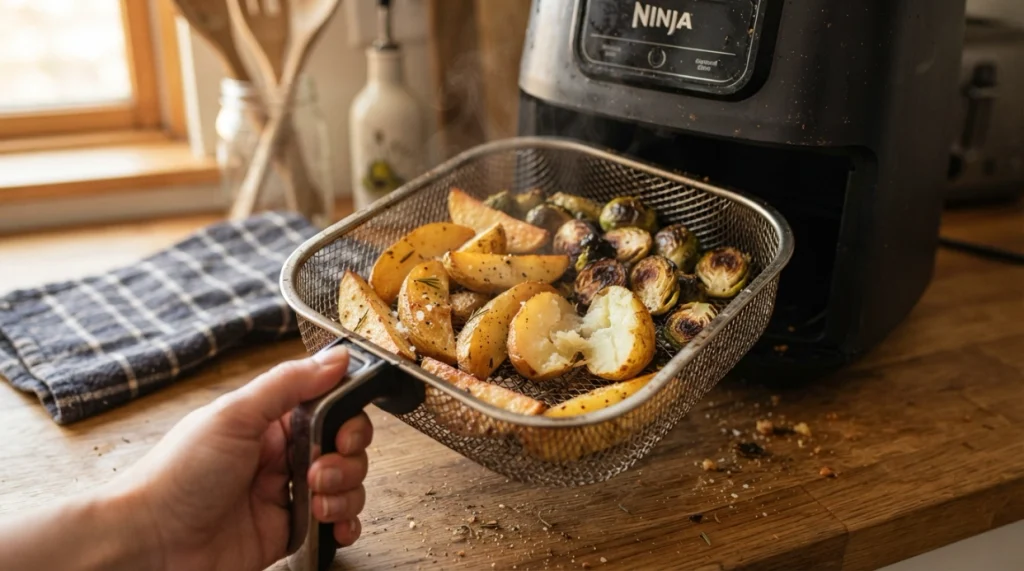
Air-fried food tastes different mainly because the appliance removes surface moisture quickly and encourages browning. Both changes can make savory foods seem richer and crisp foods more enjoyable.
Fast airflow creates a drier surface
Moisture is the enemy of crispness. Rapidly moving hot air helps moisture evaporate from the food’s exterior.
That is why leftover pizza usually fares better in an air fryer than in a microwave. The microwave can soften the crust, while an air fryer can dry and re-crisp it.
- Less surface moisture: Helps breading, skin, and potatoes become crisp.
- More exposed surface area: A perforated basket allows air to move around several sides.
- Concentrated heat: The small cooking chamber puts food close to the heat source and moving air.
- Rapid browning: Dry surfaces brown more readily than wet ones.
Browning creates more complex flavors
Browning reactions create many of the roasted and savory aromas people associate with crisp potatoes, toast, roasted meat, cookies, and vegetables. An air fryer can encourage those reactions quickly on exposed surfaces.
The result can be a strong contrast between a browned exterior and moist interior. For me, that contrast is the air fryer’s biggest advantage.
A little oil can still matter
“Air fried” does not have to mean oil-free. A thin coating of oil can help seasoning stick and improve surface browning.
You usually need far less oil than you would for deep frying. However, foods designed to taste rich from absorbed frying oil will not taste identical.
Section Takeaway: The air fryer changes flavor perception by creating a dry, browned, crisp surface while keeping suitable foods tender inside.
What Foods Taste Better in an Air Fryer?
Foods that already benefit from roasting, browning, or crisping are the strongest candidates. Frozen pre-fried foods are especially well suited to air frying.
Foods I would choose first
- French fries and potato wedges: Moving air dries the exterior while the center stays soft when cooked correctly.
- Chicken wings: The skin can render and brown without sitting in a pan of oil.
- Chicken nuggets and breaded foods: Airflow can restore a crisp coating around frozen or reheated breading.
- Brussels sprouts and cauliflower: Browning develops on exposed edges while the vegetables cook through.
- Roasted potatoes: These can become crisp outside and creamy inside.
- Leftover pizza: The crust can regain crispness while the cheese warms.
- Cookies: Some recipes develop a crisp shell and softer center under strong convection heat.
King Arthur Baking notes that the concentrated convection of an air fryer can brown baked goods quickly. That can be an advantage for cookies when you want crisp edges and a softer middle.
You can read their air fryer baking guidance when adapting conventional baking recipes.
Why reheated food is one of the biggest wins
Reheating is where I find the air fryer’s strengths easiest to understand. Foods that became soft in the refrigerator often need dry heat more than they need extra moisture.
Pizza, fries, breaded chicken, roasted potatoes, and some pastries can regain surface crispness. A microwave is faster, but it rarely recreates that same dry exterior.
What Foods May Taste Worse in an Air Fryer?
Not everything benefits from aggressive airflow. Foods that rely on moisture, loose batter, or slow gentle heating may taste worse when air fried.
- Wet-battered foods: Loose batter may drip before it sets because there is no hot oil surrounding it.
- Delicate leafy foods: Lightweight ingredients can move around in strong airflow.
- Very lean meat: Excessive heat or cooking time can dry it quickly.
- Large roasts: The outside may brown before the center reaches the desired doneness.
- Delicate cakes and custards: Fast surface browning can happen before the center finishes cooking.
- Foods needing deep-fried flavor: Air frying cannot fully reproduce the richness created by immersion in hot oil.
Air fryer pizza is another good example of the tradeoff. It can brown nicely, but a typical air fryer cannot reproduce the intense heat and char of a much hotter pizza oven.
For raw meat and poultry, taste should never be your doneness test. Check the thickest part with a food thermometer instead.
Pro tip: Follow the verified FoodSafety.gov minimum cooking temperature guidance rather than depending on air-fryer time alone.
Air Fryer vs. Oven vs. Deep Fryer: Which Tastes Better?
There is no single winner for every food. Air fryers excel at quick crisping, ovens handle larger and gentler cooking jobs, and deep fryers create the richest traditional fried flavor.
| Cooking Method | Texture & Flavor | Oil Use | Best For | Main Tradeoff |
|---|---|---|---|---|
| Air fryer | Strong browning and crispness with concentrated convection heat | Often a light coating or none, depending on the food | Fries, wings, vegetables, leftovers, small baked items | Small batches and risk of over-browning |
| Conventional oven | More gradual browning with gentler airflow | Varies by recipe | Large batches, cakes, casseroles, breads, roasts | Usually slower to heat and crisp small portions |
| Deep fryer | Distinct fried flavor with an intensely crisp exterior | Enough hot oil to immerse the food | Traditional fries, doughnuts, battered foods | More oil, cleanup, and temperature management |
A useful oven-to-air-fryer starting point
King Arthur Baking recommends starting about 25°F lower than a conventional baking recipe and reducing the baking time by roughly 20% to 25%. Your exact appliance and food still matter.
| Example Recipe | Temperature | Time |
|---|---|---|
| Conventional oven baseline | 350°F / 177°C | 30 minutes |
| Air fryer starting point | 325°F / 163°C | About 23–24 minutes |
This is a conversion starting point, not a universal cooking schedule. Check food earlier because compact air fryers and oven-style models can behave differently.
Section Takeaway: Choose the air fryer for fast crisping, the oven for capacity and gentler baking, and deep frying when authentic fried flavor is the main goal.
How Can You Make Air Fryer Food Taste Better?
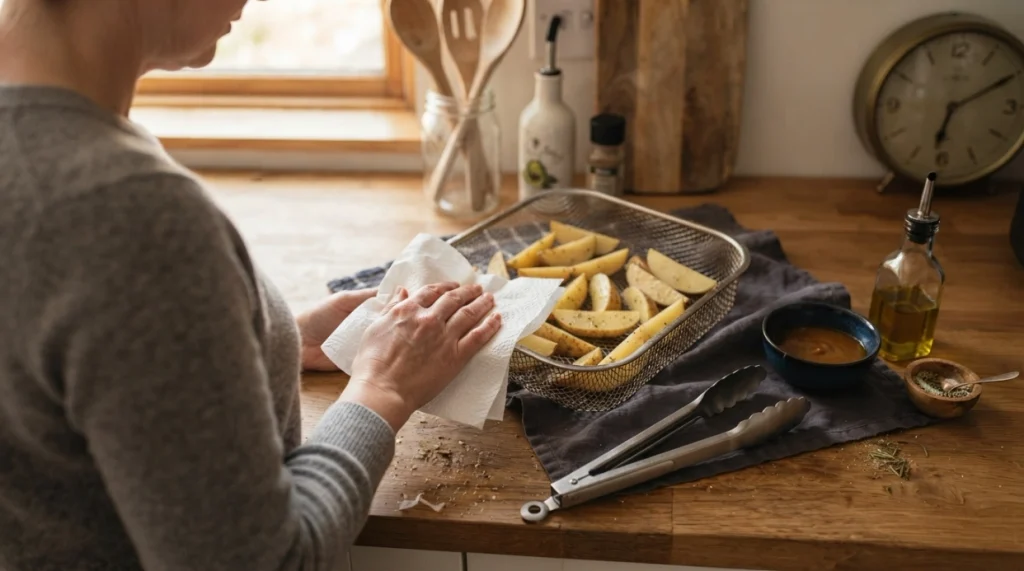
Good air-fried food depends on airflow, surface dryness, seasoning, and timing. Small technique changes often matter more than using a preset button.
- Dry the surface first. Pat meat, potatoes, and vegetables dry when excess moisture would interfere with browning.
- Leave room for airflow. Avoid packing breaded foods or fries into a dense layer when crispness is the goal.
- Use a little oil when helpful. A light coating can promote browning and help dry spices stick.
- Season deliberately. Salt, spices, marinades, and finishing sauces provide flavor that the appliance itself cannot add.
- Shake or turn food when needed. Moving pieces exposes different surfaces to the strongest airflow.
- Check early. Air fryers can brown faster than conventional ovens.
- Add wet sauces near the end. Saucing too early can soften a crisp surface or cause sugary sauces to darken quickly.
Do not overcrowd when crispness matters
The fan needs space to move hot air across the food. A packed basket traps more steam and can leave fries or breaded foods softer.
That does not mean every ingredient must sit in a perfectly separated single layer. It means you should reduce the batch size when maximum browning is your priority.
Preheat when consistency matters
Not every air fryer recipe requires preheating. Still, starting with a hot chamber can make cooking times more repeatable, especially for baked goods and foods that need quick surface setting.
For baking, King Arthur’s air fryer guidance recommends adjusting conventional recipes and watching browning closely.
Section Takeaway: The best-tasting air-fried food comes from controlling moisture, airflow, oil, seasoning, and doneness rather than simply choosing an air-fry preset.
Frequently Asked Questions
Does air-fried food taste like deep-fried food?
Not exactly. Air frying can create a crisp, browned surface, but deep frying surrounds food with hot oil and produces a different richness, crust, and fried aroma. Breaded frozen foods may come surprisingly close because they often already contain some oil.
Why does food seem more flavorful in an air fryer?
Rapid airflow removes surface moisture and promotes browning. That creates more crispness and roasted aromas, which can make food seem more flavorful even when the seasoning has not changed.
Does air-fried food taste better than oven-baked food?
It often does for small portions of fries, wings, roasted vegetables, and crispy leftovers. An oven may taste better for foods requiring gentle, even baking or for recipes that need more space.
Does food taste good in an air fryer without oil?
Many foods do, especially frozen foods that already contain fat. Fresh potatoes, vegetables, and breaded foods may brown and taste better with a small amount of oil, depending on the recipe.
Why is my air fryer food dry?
The temperature may be too high, the food may be cooking too long, or the portion may be too lean. Start checking earlier and use a suitable amount of oil or marinade when the recipe benefits from it.
Is an air fryer good for reheating leftovers?
Yes, particularly when the original food should be crisp. Pizza, fries, breaded chicken, roasted potatoes, and similar leftovers can regain surface texture that is difficult to achieve in a microwave.
Can baked goods taste better from an air fryer?
Some can. Cookies may develop crisp exteriors and soft centers, while certain pastries brown quickly. Delicate cakes can be trickier because the outside may brown before the middle finishes baking.
Final Takeaway: Food does not automatically taste better because it came from an air fryer. The appliance shines when fast-moving dry heat can improve browning, crispness, and texture.
If you love crispy fries, roasted vegetables, wings, reheated pizza, or small-batch baking, an air fryer can make those foods especially satisfying. For deep-fried flavor, delicate baking, or large meals, another cooking method may still be the better fit.

