
Egg Wash for Bread: How to Mix, Choose, and Apply It for a Better Crust

If you’ve ever pulled a loaf from the oven and wished it looked a little more like the bread in a bakery case, egg wash is one of the simplest tools you can learn. Used well, it can help bread bake with a deeper golden color, a smoother surface, and a more polished finish. Used carelessly, it can streak, pool, or darken too fast.
That’s why I like to think of egg wash as a finishing decision, not just a quick brush-on step. The type you choose, the way you thin it, and when you apply it all affect the final look of the loaf.
What Egg Wash Does on Bread
Egg wash is simply beaten egg, sometimes mixed with a little liquid, brushed onto bread before baking. Bakers use it as a finishing touch to influence appearance more than structure. A well-applied wash can encourage a golden-brown crust and a slight sheen, especially on enriched breads, rolls, and shaped loaves.
It also helps toppings stay put. If you want sesame seeds, poppy seeds, coarse salt, or other toppings to cling to the surface, egg wash gives them something tacky to grab.
A useful way to think about it: egg wash is for breads where you want the crust to look intentional and finished. A rustic country loaf can look beautiful without it, but a braided challah or soft dinner roll often looks more polished with it.
For a deeper look at seed adhesion techniques, you may also find our guide on how to get seeds to stick to bread helpful.
What you should expect visually
Egg wash usually changes three things:
- Color: more golden or deeper brown
- Sheen: a light gloss on the crust
- Surface smoothness: a more even, bakery-style look
The exact result depends on the formula. A yolk-rich wash tends to brown more deeply, while a white-only wash gives a lighter finish.
What You Need Before You Start
You do not need special equipment, but the right tools make the job cleaner and more even.
Basic setup
- 1 small bowl
- 1 fork or small whisk
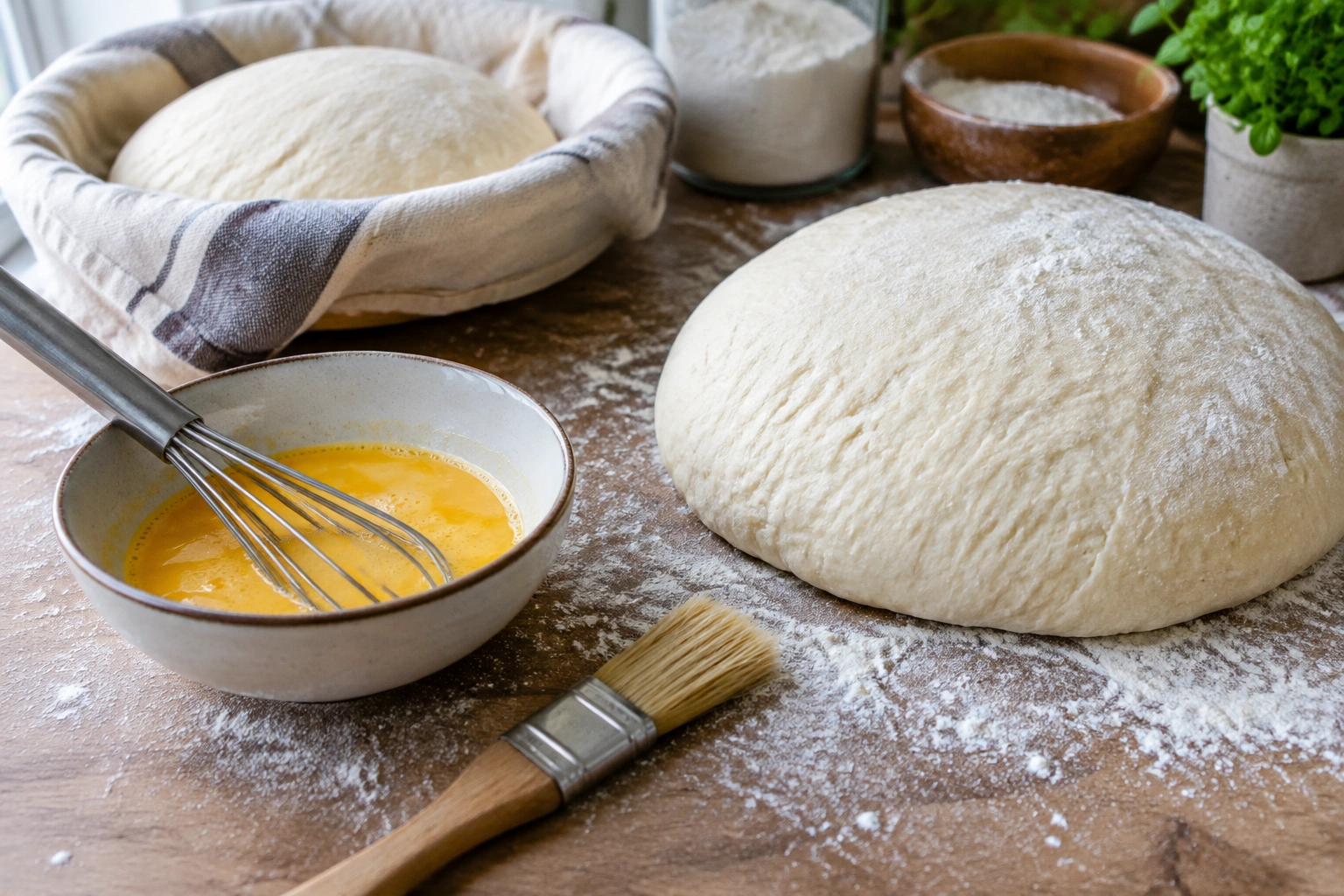
- 1 pastry brush
- 1 egg, or the part of the egg you plan to use
- Water, milk, or cream if you’re thinning the wash
- Shaped bread that has finished proofing and is ready for baking
A pastry brush matters more than people think. A soft brush helps you spread a thin layer without dragging the dough or leaving thick streaks. If your brush is too stiff, it can catch delicate proofed dough and leave marks.
A practical rule before you begin
Have your loaf fully shaped and proofed before you mix the wash. Once the dough is ready, you want to work quickly and gently. That matters because proofed dough is fragile; rough brushing can flatten the surface or tear thin spots.
Choose the Right Egg Wash for Your Bread
Not every loaf needs the same finish. The best choice depends on the look you want and how much browning you’re willing to accept.
Egg wash comparison table
| Wash type | Color | Shine | Browning tendency | Best for |
|---|---|---|---|---|
| Whole egg + water | Balanced golden brown | Moderate | Medium | Sandwich loaves, rolls, braids |
| Egg yolk + water | Deeper golden to rich brown | Higher | More intense | Challah, enriched doughs, showy finishes |
| Egg white + water | Light color | Mild | Lower | A lighter sheen without much darkening |
| Milk wash | Soft golden color | Low | Gentle | Simple loaves, softer finish |
| Cream wash | Slightly richer browning | Low to moderate | More than milk | Tender breads when you want a warmer crust |
Whole egg vs. yolk vs. white
Whole egg is the most balanced choice. It gives you color and shine without pushing the crust too far in either direction.
Egg yolk produces a richer, deeper finish. It’s a strong choice when you want a loaf to look extra glossy and deeply browned, but it can darken faster than a whole-egg wash.
Egg white gives a lighter finish. It can add some sheen, but it won’t usually create the same golden color you get from yolk or whole egg.
Water, milk, or cream?
- Water thins the egg wash so it brushes on more easily.
- Milk can encourage a softer, gentler browning effect.
- Cream can give a slightly richer finish than milk, though it still won’t look quite like true egg wash.
If you want the most classic bakery-style look, whole egg with a little water is the most practical starting point. If you want a deeper color for a special loaf, move toward yolk. If you want a softer, less shiny finish, milk may be enough.
How to Make Egg Wash
Use these as starting ratios, then adjust based on the look you want:
- Whole egg wash: 1 whole egg + 1 tablespoon water
- Yolk-only wash: 1 egg yolk + 1 teaspoon water
- White-only wash: 1 egg white + 1 teaspoon water
These are reliable bread-friendly starting points and keep the wash fluid enough to brush on evenly. If you want a thinner wash, add a little more liquid a few drops at a time. If you want more color and gloss, keep the mixture closer to the richer end of the range.
A good rule is to keep the liquid cool or at room temperature rather than hot, since that helps the mixture combine smoothly and makes brushing easier.
Simple mixing method
- Crack the egg into a small bowl.
- Add the water, milk, or cream if you’re using one.
- Whisk until fully combined and lightly frothy.
- Check the texture. It should be thin enough to brush on without clumps.
If the wash has clumps or streaks of unmixed yolk or white, whisk a little longer. If needed, you can also strain it through a fine-mesh sieve for a smoother application.
How much should you mix?
Mix only what you need. Egg wash is best fresh, and a small batch goes a long way. For one loaf or a tray of rolls, a single egg is usually enough.
When to Apply Egg Wash on Bread
The usual time to apply egg wash is after proofing and just before baking. That timing gives you the best chance of an even finish without disturbing the dough’s rise.
Applying it too early can be risky. If the wash sits on the dough during a long final proof, it may dry unevenly or create a patchy surface. On delicate doughs, brushing too soon can also interfere with the final expansion.
Best timing by bread type
- Braids and enriched loaves: brush after the final proof, right before baking
- Dinner rolls: brush just before they go into the oven
- Sandwich loaves: brush after the loaf has risen in the pan and is ready to bake
- Seeded buns: brush, then add toppings immediately
If a recipe gives a different instruction, follow that recipe. Some breads are designed around a specific finish.
A quick note on high heat and fast-browning breads
Egg wash is not always the best choice for breads that bake at very high heat or already brown quickly. In those cases, a rich yolk-heavy wash can darken too fast before the loaf is fully baked. If your bread is prone to over-browning, use a lighter wash, apply it sparingly, or skip it altogether.
How to Brush Egg Wash on Bread Evenly
This is the step that makes the difference between a polished crust and a blotchy one.
A careful application method
- Load the brush lightly.
- Tap off excess egg wash if the brush is dripping.
- Brush in gentle strokes over the visible surface of the dough.
- Keep the layer thin and even.
- Avoid the base, seams, and deep slashes unless the recipe says otherwise.
- Stop if you see pooling.
The goal is a light coating, not a wet shell. Too much wash can collect in folds or around the bottom edge and create dark spots after baking.
Why gentle brushing matters
Proofed bread is delicate. If you press too hard, you can flatten the surface or leave brush marks. A soft touch helps preserve the shape you worked to build during shaping and proofing.
How Egg Wash Affects Seeds, Salt, and Other Toppings
Egg wash is one of the easiest ways to help toppings stay attached to bread. Brushing it on first gives seeds or coarse salt a tacky surface to stick to.
Best method for toppings
Brush the wash on, then add the topping right away. If you wait too long, the surface starts to dry and the topping won’t adhere as well.

This matters especially for:
- sesame seeds
- poppy seeds
- flax or mixed seeds
- coarse salt
- oats on enriched loaves
For even coverage, sprinkle from a low height rather than dumping the topping in one place. If you want a denser coat, gently press the seeds after sprinkling so they make better contact.
If you want a more detailed comparison of topping methods, our article on getting seeds to stick to bread covers practical options beyond egg wash.
Bread Styles That Benefit Most from Egg Wash
Egg wash shines on breads where appearance is part of the appeal.
Great candidates
Challah and other braided breads
The glossy, golden crust is part of the style. Egg wash helps the braid lines read clearly and gives the loaf a finished look.
Dinner rolls
A light wash can turn a tray of simple rolls into something that looks more bakery-made.
Sandwich loaves
A thin coat on the top of the loaf can smooth out the surface and add an appealing shine.
Enriched doughs
Breads made with butter, milk, eggs, or sugar often pair well with egg wash because the crust finish matches the richer dough.
When the finish matters most
If the bread is meant to be served plain and visually prominent, egg wash can be worth the extra step. If the loaf is more rustic or meant to look handmade and matte, the wash may not improve it.
When to Skip Egg Wash
Not every loaf benefits from a shiny crust.
Better to leave it off when:
- you want a rustic, matte finish
- the bread already has a naturally appealing crust
- the dough is very sugary or enriched and may darken too quickly
- you want a more traditional artisan look
Egg wash vs. milk, cream, and no wash
- Egg wash: most shine and the most classic golden bakery look
- Milk wash: softer color, less gloss
- Cream wash: a little richer than milk, but still gentler than egg
- No wash: the most rustic and natural finish
If you’re undecided, think about the bread’s purpose. A sandwich loaf may benefit from a neat top crust. A country boule often looks better untouched.
Common Mistakes and How to Avoid Them
A few small errors can change the final look more than you’d expect.
Over-brushing
Too much wash can create puddles and dark patches. Keep the layer thin.
Brushing too hard
This can deflate delicate dough or leave visible drag marks. Use light pressure.
Letting wash pool in seams or at the base
Egg wash that collects in low spots can bake darker than the rest of the loaf. Watch the edges carefully.
Using the wrong formula for the goal
If you want a lighter finish, don’t use a yolk-heavy mix. If you want deeper color, a very diluted wash may look too pale.
Adding toppings too late
Seeds and salt stick best when they go on immediately after brushing.
Troubleshooting Egg Wash Problems
If the loaf doesn’t look the way you expected, the fix is often simple.
Uneven browning
This usually comes from streaky application or pooling. Next time, whisk the wash more thoroughly and apply less at once.
Too-dark crust
The bread may have needed a lighter wash, especially if it was enriched or sweet. Use more dilution or switch from yolk-heavy to whole egg.
Patchy shine
A patchy finish usually means the wash was applied unevenly or the dough surface dried before baking. Brush more consistently and work faster after proofing.
Toppings won’t stick
The wash may have dried before the seeds went on, or the layer may have been too thin. Brush, then top immediately.
Egg Wash Safety and Handling Tips
Raw egg deserves normal kitchen caution.
Keep it clean and cool
Use clean tools, a clean bowl, and wash your hands after handling raw egg. If you have leftover egg wash, refrigerate it in an airtight container and discard it if it has been left at room temperature for too long. If you do store it briefly, keep it for only a short window rather than making it ahead for several days.
A practical safety reminder
Because egg wash contains raw egg before baking, avoid leaving it out on the counter for long periods. Once the bread is baked, the egg wash is fully cooked during baking, so the finished loaf is safe to serve as usual. If you’re baking for someone with a higher food-safety concern, be especially careful with handling and storage.
Quick Reference: Which Egg Wash Should You Use?
Here’s the fast decision guide I’d give a student at the bench:
- Want a balanced golden-brown loaf? Use whole egg + a little water.
- Want a deeper, glossier finish? Use egg yolk + a little water.
- Want a lighter sheen? Use egg white + a little water.
- Want a softer, less shiny crust? Try milk.
- Want a slightly richer soft finish? Try cream.
- Want a rustic matte loaf? Skip the wash.
If you remember only one thing, remember this: the best egg wash for bread is the one that matches the loaf’s style and your finish goal. A thin, even application usually matters more than making the mixture fancy.
FAQ
What is egg wash for bread?
It’s a beaten egg mixture brushed on bread before baking to improve color, shine, and surface finish.
Can I use milk instead of egg wash?
Yes. Milk can brown bread and soften the finish, but it usually won’t give the same shine as egg wash.
Should egg wash go on before or after proofing?
Usually after proofing and right before baking, so the dough stays delicate and the finish bakes evenly.
Does egg wash help seeds stick?
Yes. Brush it on first, then add seeds or salt right away for better adhesion.
Which is better: whole egg or yolk?
Whole egg is the most balanced choice. Yolk gives deeper color and more gloss, but it can darken faster.
Is egg wash safe on all breads?
It’s commonly used on many breads, but it may not be the best choice for rustic loaves or breads that darken quickly. Use it thoughtfully and handle raw egg safely.
How long can leftover egg wash be stored?
If you have leftover egg wash, refrigerate it promptly in an airtight container and discard it if it has been left out at room temperature too long.
Why did my bread get too dark?
The wash may have been too rich, too thick, or applied too heavily. Enriched doughs can also brown faster, so a lighter formula may work better next time.