
What Foods Taste Better Air Fried? 15 Foods That Shine in an Air Fryer
Quick Answer
Foods that taste better air fried are usually foods that benefit from fast browning, dry heat, and a crisp exterior. Potatoes, chicken wings, breaded foods, Brussels sprouts, reheated pizza, bacon, salmon, tofu, chickpeas, and even some baked goods are especially good choices because an air fryer uses concentrated convection-style cooking to brown their surfaces quickly.
Foods That Usually Improve Most
- Potatoes: Fries, wedges, roasted potatoes, and tater tots develop crisp surfaces without sitting in much oil.
- Chicken wings: Rendered fat and moving hot air help the skin brown and crisp.
- Roasted vegetables: Brussels sprouts, cauliflower, broccoli, and green beans get browned edges while staying tender inside.
- Breaded foods: Chicken tenders, fish sticks, mozzarella sticks, and similar foods keep a much crisper coating than they usually do in a microwave.
- Leftovers: Pizza, fries, fried chicken, and roasted potatoes often regain their original texture surprisingly well.
- Small baked goods: Cookies, rolls, and pastries can develop browned outsides with soft centers when temperature and timing are controlled.
The Simple Rule
- If you want a food crisp, browned, roasted, or reheated without becoming soggy, it is usually worth trying in the air fryer.
I use an air fryer most when texture matters. It rarely transforms every food, but it can make certain foods noticeably more appealing because the outside browns before the center dries out.
The biggest winners are foods with exposed edges, breading, skin, cheese, starch, or a little surface fat. Below, I’ll explain which foods are worth air frying, which ones I would cook another way, and how to get better results from the foods you already make.
In This Guide
Why Does Some Food Taste Better Air Fried?
Some foods taste better air fried because fast-moving hot air promotes surface drying and browning. That creates the contrast many of us enjoy: crisp or caramelized outside, tender or moist inside.
An air fryer is essentially a compact convection cooker. A heating element creates heat while a strong fan rapidly circulates that hot air around the food.
Why this matters: Removing surface moisture is one of the keys to crispness. The compact cooking chamber and strong airflow can dry and brown exposed surfaces faster than many full-size ovens.
The difference is easiest to notice with potatoes. A piece of potato with moisture sitting on its surface tends to steam before it browns.
Air movement helps remove that moisture. A light coating of oil then encourages more even browning and carries seasonings across the surface.
- Starch helps potatoes, breading, and pastries form appealing crusts.
- Natural fat helps chicken skin and bacon brown without needing much added oil.
- Exposed edges on vegetables develop roasted, concentrated flavors.
- Cheese can melt and brown quickly on pizza, sandwiches, and small casseroles.
- Dry coatings stay crisper than they usually would after microwave cooking.
Consumer Reports also describes air fryers as convection-based appliances that use concentrated circulating heat to create browned, crisp surfaces.
This does not mean air frying duplicates deep frying. Food submerged in hot oil receives heat differently, so a true deep-fried crust remains distinctive.
What Foods Taste Best in an Air Fryer?
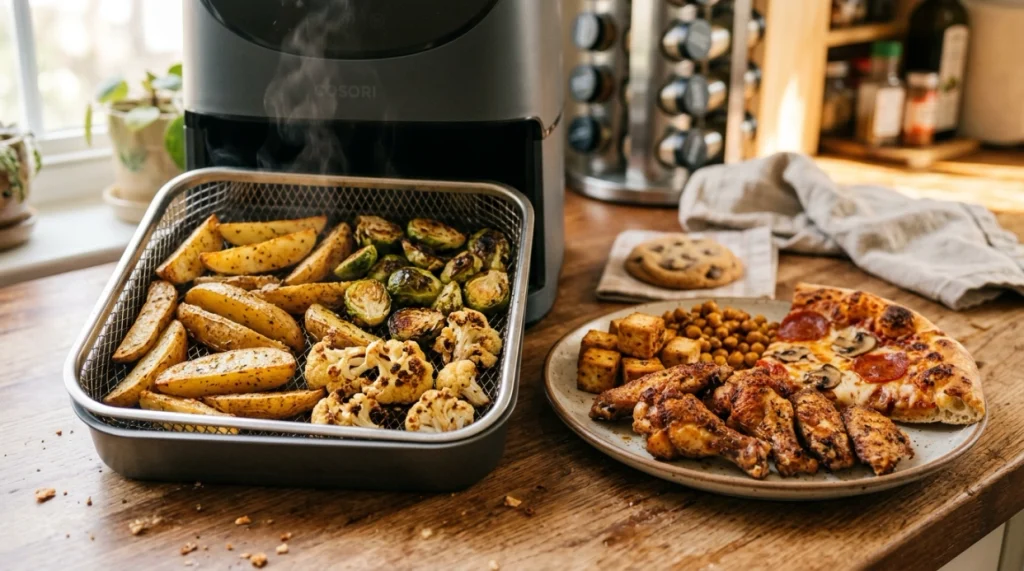
The best air-fryer foods have something to gain from browning or crisping. In my kitchen, I think about texture before anything else.
If I would normally roast, toast, shallow-fry, broil, or re-crisp a food, the air fryer is usually worth considering.
Why do potatoes taste so good air fried?
Potatoes may be the clearest example of a food that suits air frying. Their starchy surface can become crisp while the interior stays fluffy or creamy.
- French fries: Frozen fries are especially convenient because their surface is already prepared for crisping.
- Potato wedges: The exposed cut sides brown well, especially with a thin film of oil.
- Roasted potatoes: Small cubes or halved baby potatoes develop much more surface texture than microwaved potatoes.
- Tater tots: Air circulation crisps the entire exterior without a pan of oil.
I avoid filling the basket to the top with potatoes. A thinner layer usually gives me more browned edges because more hot air reaches the individual pieces.
Which vegetables taste better air fried?
Vegetables that tolerate high heat are excellent candidates. The air fryer can brown their exposed edges while preserving more bite than long, gentle cooking.
- Brussels sprouts: Loose outer leaves become crisp while cut faces caramelize.
- Cauliflower: Small florets pick up browned edges and concentrate savory flavors.
- Broccoli: Floret tips become lightly crisp while thicker stems remain tender.
- Green beans: High heat adds blistered spots without requiring a skillet.
- Asparagus: It cooks quickly and develops roasted flavor before becoming limp.
- Sweet potatoes: Natural sweetness becomes more noticeable as cut surfaces brown.
A small amount of oil helps vegetables brown more evenly. Too much oil can work against you by leaving the surface heavy instead of crisp.
Are chicken wings better in an air fryer?
Chicken wings are one of the strongest air-fryer applications. Their skin contains enough fat to help it brown and crisp as the wings cook.
The basket also allows some rendered fat to drain away instead of collecting around the chicken. That helps keep the surface from sitting in liquid.
Chicken tenders and breaded chicken pieces also work well. Dry breadcrumb or panko-style coatings respond especially well to circulating heat.
Pro tip: For chicken and other poultry, use a food thermometer rather than judging doneness by cooking time or color. Check current safe-temperature guidance at FoodSafety.gov; poultry should reach a safe internal temperature before serving.
Do salmon, tofu, and chickpeas taste better air fried?
Salmon benefits from the air fryer’s ability to brown its exterior quickly. That is particularly useful when you want a seasoned surface without cooking the fish in a skillet.
Tofu is another favorite of mine for texture. Pressing away excess moisture, cutting it into bite-size pieces, and leaving space between them helps create firmer, browned edges.
Chickpeas can become a crunchy snack after excess moisture is removed. They are also useful as a crisp topping for salads, bowls, and soups.
Are leftovers better reheated in an air fryer?
Some leftovers taste dramatically better from an air fryer than from a microwave. The difference comes down to moisture.
- Pizza: The crust re-crisps while the cheese softens.
- French fries: Surface moisture evaporates, restoring some of their original crunch.
- Fried chicken: The coating stays much drier than it does after microwave reheating.
- Roasted potatoes: Previously browned surfaces become crisp again.
- Breaded appetizers: Mozzarella sticks, nuggets, and similar foods regain texture quickly.
I use lower heat for reheating than I often use for cooking from raw. The goal is to warm the center before scorching the already-cooked exterior.
Do cookies and rolls taste better air fried?
Air fryers are surprisingly useful for small-batch baking. They are especially appealing when you want two cookies or a few rolls without heating a full oven.
King Arthur Baking has tested air-fryer baking with cookies, rolls, cakes, pizza, cheesecake, and other baked goods. Their guidance highlights the air fryer’s ability to create browned exteriors while working efficiently with smaller batches.
- Chocolate chip cookies: A browned edge and soft middle suit the cooking style.
- Dinner rolls: Small batches can brown quickly in a suitable pan.
- Personal pizza: The compact chamber helps crisp the crust and brown cheese.
- Cinnamon rolls: Their outside can turn golden while the center remains soft when temperature is controlled.
Cakes need more care. Strong top heat can brown the outside before a deep cake finishes baking through the center.
Section Takeaway: Potatoes, high-heat vegetables, chicken wings, breaded foods, salmon, tofu, leftovers, pizza, and selected baked goods are among the foods most likely to gain noticeable texture and flavor from air frying.
Is Air Frying Better Than Using an Oven or Deep Fryer?
Air frying is not automatically better than every cooking method. It is strongest when you want fast browning and crispness without submerging the food in oil.
The table below gives useful starting points. Exact settings vary with food size, basket design, starting temperature, and individual air fryer performance.
| Food | Typical Air-Fryer Starting Point | Why Air Frying Works | Main Alternative |
|---|---|---|---|
| Frozen fries | About 380–400°F; check and shake during cooking | Fast surface drying creates crisp edges | Oven or deep fryer |
| Brussels sprouts | About 375–400°F; cook until tender and browned | Outer leaves crisp while cut surfaces brown | Roasting |
| Chicken wings | About 380–400°F; cook to a safe internal temperature | Skin browns while rendered fat drains | Deep frying or oven roasting |
| Reheated pizza | About 325–350°F; check after a few minutes | Crust dries and crisps while cheese reheats | Skillet or oven |
| Salmon portions | About 375–400°F; verify doneness by temperature | Rapid heat browns the surface efficiently | Skillet or oven |
| Cookies | Often around 300–350°F depending on recipe | Small batches brown quickly with soft centers | Conventional oven |
Air fryer vs. conventional oven
A full-size oven remains better when I need capacity. A large tray of cookies, family-size roast, or several pans of food can overwhelm a small air-fryer basket.
The air fryer has an advantage with small portions. Its compact chamber generally heats quickly and puts circulating hot air close to the food.
Air fryer vs. deep fryer
Deep frying remains difficult to beat when the goal is an unmistakably fried crust. Batter-coated onion rings or doughnuts, for example, depend heavily on direct contact with hot oil.
Air frying wins on convenience. You avoid a pot full of hot oil, lengthy cleanup, and the need to store or dispose of used frying oil.
Section Takeaway: Choose the air fryer for smaller portions and foods where dry, crisp surfaces matter. Choose an oven for capacity and a deep fryer when the food specifically depends on immersion in oil.
How Do You Make Air-Fried Food Taste Better?
Good air frying depends more on technique than preset buttons. The most common disappointment is pale or soft food caused by too much moisture or too little airflow.
- Dry the surface. Pat vegetables, potatoes, tofu, fish, and meat dry when excess surface moisture is present.
- Use a little oil when appropriate. A thin coating can improve browning and help seasonings stick.
- Leave room around the food. Crowding blocks airflow and encourages steaming.
- Shake or turn food. Fries, vegetables, wings, and small pieces often brown more evenly when rearranged during cooking.
- Use temperature as a starting point. Air fryers vary, so check food earlier when using a new model or recipe.
- Preheat when the recipe benefits from immediate heat. This can matter for some breads, pastries, and baked goods that need a strong initial burst of heat.
My most useful rule: Give the food more breathing room before adding more cooking time. Better airflow often fixes pale, soft results faster than simply leaving an overcrowded basket running longer.
Seasoning timing matters too. Fine spices can scorch at high temperatures, while sugary sauces may darken rapidly.
I often cook the food mostly dry, then add sticky barbecue sauce, honey glaze, or another sugar-heavy coating near the end.
Section Takeaway: Dry surfaces, moderate oil, good airflow, and careful timing matter more than relying blindly on an air-fryer preset.
What Foods Are Not Better in an Air Fryer?
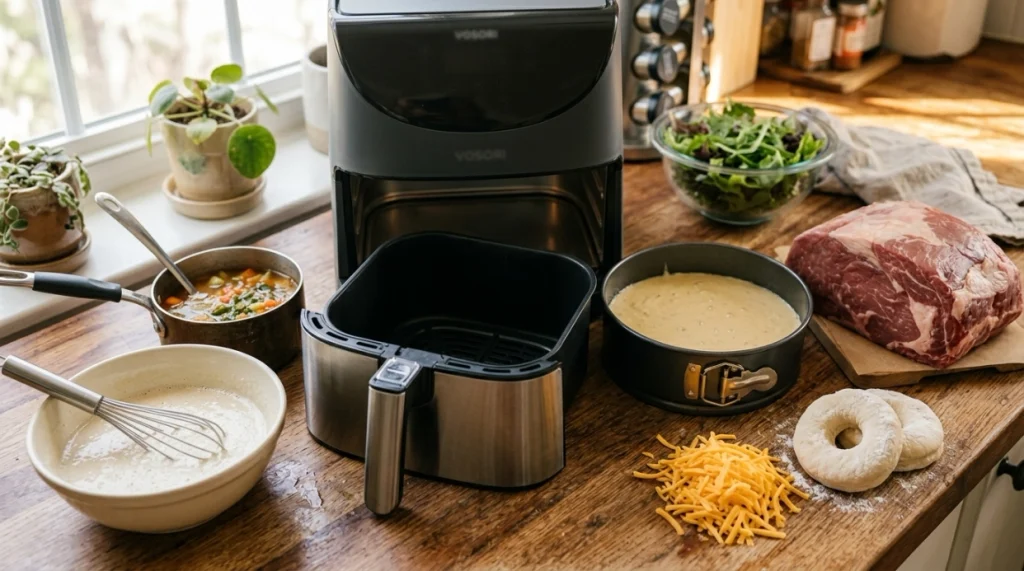
Foods that need lots of liquid, gentle heat, or deep oil immersion are usually weaker air-fryer candidates. The appliance is designed around circulating dry heat.
- Wet-battered foods: Thin batter can drip through the basket before it sets.
- Soups and stews: These need a pot, pressure cooker, slow cooker, or saucepan rather than exposed circulating heat.
- Large cakes: The top may brown before the center finishes baking.
- Huge roasts: Limited basket space can restrict airflow around the food.
- Delicate leafy greens: Lightweight leaves can move around aggressively unless a recipe is specifically designed for air frying.
- Traditional deep-fried doughs: Some doughnuts and similar foods depend on oil immersion for their characteristic crust and texture.
Cheese by itself can also become messy because it may melt through openings before forming a crust. Breaded or enclosed cheese is much more manageable.
The question I ask is simple: Does this food benefit from dry heat and surface browning? If the answer is no, another appliance may produce a better result.
Frequently Asked Questions
What is the best food to cook in an air fryer?
Potatoes are one of the most reliable choices because they benefit strongly from surface drying and browning. French fries, potato wedges, roasted potatoes, and tater tots can all develop crisp outsides while remaining soft inside.
What vegetables taste best in an air fryer?
Brussels sprouts, cauliflower, broccoli, green beans, asparagus, and sweet potatoes are excellent choices. Vegetables with exposed edges or florets work particularly well because the circulating air reaches a large surface area and encourages browning.
Does chicken taste better in an air fryer?
Chicken wings and breaded chicken can taste especially good air fried because the exterior becomes crisp while the interior cooks. Always verify poultry doneness with a food thermometer rather than relying only on appearance or cooking time.
Is pizza better reheated in an air fryer or microwave?
An air fryer is usually better when texture matters. It can re-crisp the pizza crust while warming the cheese, whereas a microwave tends to soften the crust because moisture remains trapped around the food.
Can desserts taste better in an air fryer?
Some can. Chocolate chip cookies, cinnamon rolls, small pastries, and certain cheesecakes suit the air fryer’s strong browning. Larger or delicate cakes are less predictable because the exterior can brown before the center finishes baking.
Do you need oil to make air-fried food taste good?
Not always. Foods such as chicken wings already contain fat, while many frozen foods include oil from manufacturing. Fresh potatoes and vegetables often brown more evenly with a light coating, but adding large amounts of oil usually is not necessary.
Why is my air-fried food not crispy?
Excess surface moisture, overcrowding, insufficient heat, or too much sauce are common causes. Dry the food, leave more space between pieces, shake the basket when appropriate, and add wet or sugary sauces toward the end of cooking.
So, What Foods Really Taste Better Air Fried?
The foods that taste better air fried are the ones that thrive on browned edges and contrasting textures. Fries, roast potatoes, wings, vegetables, breaded foods, tofu, salmon, pizza, leftovers, chickpeas, cookies, and small rolls are strong places to start.
As of 2026, I still see the air fryer less as a replacement for every appliance and more as a specialized compact convection cooker. When crispness is the goal and the batch fits comfortably in the basket, that specialization is exactly what makes it useful.
Start with a food you already enjoy roasted or crispy. Dry the surface, give it room, watch the final few minutes closely, and adjust your next batch based on how your particular air fryer behaves.

