
French Rolling Pin vs Traditional Rolling Pin: Which One Fits Your Kitchen Best?

If you bake at home often enough to care about dough feel, cleanup, and storage space, the choice between a French rolling pin and a traditional rolling pin is worth making carefully. These two tools look similar at a glance, but they handle differently in the hand and behave differently on the counter.
The short version: a French-style pin gives you more direct control, while a handled traditional pin feels more familiar and can be easier for some bakers to grip. Neither is universally better. The better tool is the one that matches the dough you make most often, the comfort you need, and the space you have to store it.
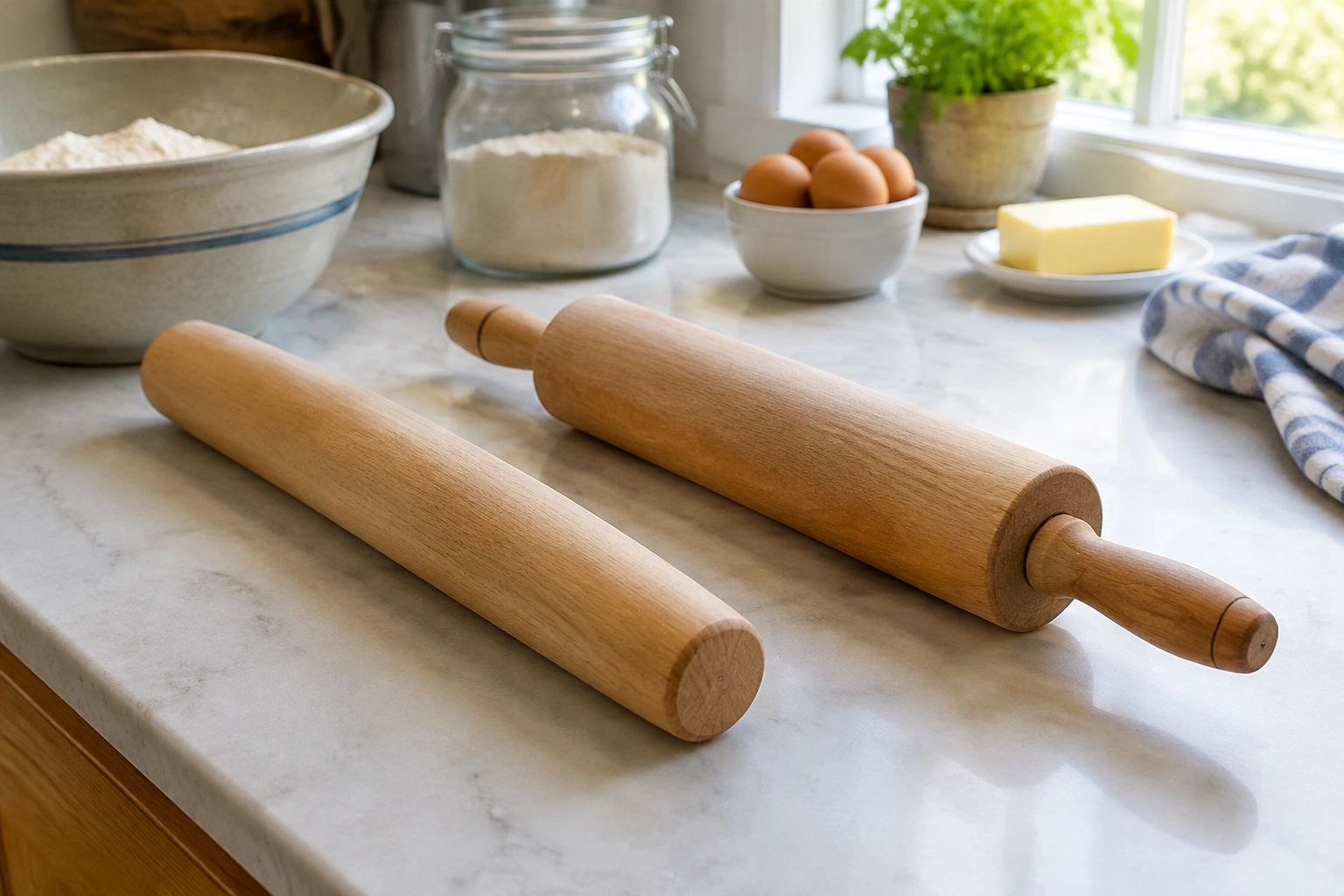
French Rolling Pin vs Traditional Rolling Pin: Quick Comparison
| Feature | French rolling pin | Traditional handled rolling pin |
|---|---|---|
| Shape | Handleless, usually tapered at the ends | Center barrel with handles |
| Control | Very direct, easy to swivel and steer | Familiar leverage, but less direct contact with dough |
| Pressure | Pressure changes naturally across the taper | More even-feeling pressure from the center barrel |
| Best for | Pie dough, pastry, shaping, smaller adjustments | General baking, cookies, larger batches, beginners who like handles |
| Storage | Usually compact and simple to tuck away | Takes more space because of the handles |
| Cleaning | Easier to wipe clean with fewer parts | Still easy, but handles add a little more surface to clean |
| Comfort | Good for bakers who like tactile feedback | Better for bakers who prefer a grip and leverage |
| Value | Often a strong all-purpose choice | Also versatile, especially if you want a classic feel |
A practical takeaway: if you want precise control and a compact tool, the French pin is appealing. If you want a familiar grip and a more traditional feel, the handled pin may suit you better.
What Each Rolling Pin Is and How It Works
A French rolling pin is a single handleless rod, usually made of wood, with a gentle taper toward the ends. King Arthur Baking notes that French-style pins are slightly tapered at each end and narrower than a straight pin, which helps make them highly maneuverable and easy to swivel as you roll. King Arthur Baking’s rolling pin guide
A traditional rolling pin, often called a handled rolling pin or American-style pin, has a center barrel with handles on both sides. That design gives you a very familiar grip and can feel intuitive if you learned to bake with one. The handles also create a more guided rolling motion, which some home bakers prefer for general use.
The difference is not just appearance. It changes how your hands interact with the dough. With a French pin, your palms and fingers are closer to the dough, so you feel resistance sooner and can adjust more quickly. With a handled pin, your hands stay slightly farther away, which can feel steadier but less precise.
How Shape Affects Control, Pressure, and Dough Handling
The taper on a French pin is the main reason it behaves differently. Because the ends narrow, you can naturally shift pressure from one side to the other. That makes it easier to nudge dough into a circle or oval instead of forcing it into shape.
That extra control matters when the dough is delicate. If pie dough starts sticking or stretching unevenly, small course corrections help more than brute force. A French pin also encourages a lighter touch, which is useful when you want to avoid overworking pastry.
A handled pin gives you a different kind of control. The center barrel and handles can feel more stable, especially if you like a straightforward back-and-forth rolling motion. For some bakers, that predictability matters more than finesse. If you are rolling a large batch of cookie dough or flattening a pizza round, the familiar grip may feel easier to manage.
There is also a comfort trade-off. A handleless pin asks your hands to do more of the steering work. That can be a benefit if you like direct feedback. It can also feel less comfortable if you have limited hand strength or wrist discomfort, because you are relying more on hand position and pressure rather than handles to do the work.
Best Uses for Pie Dough, Cookies, Pastry, and Pizza Dough
Pie dough
Pie dough is where the French pin often shines. The taper and direct contact make it easier to steer the dough into a round shape without chasing it around the counter. If you regularly make single-crust or double-crust pies, the French style is especially practical.
Cookies
For cookie dough, both styles work well. If you are rolling dough to an even thickness before cutting shapes, a handled pin may feel more familiar. If you want a little more precision around the edges, the French pin can still be a strong choice.
Pastry dough
Delicate pastry benefits from control. A French rolling pin is often the better match when you want to keep pressure light and even. That said, if your pastry routine is mostly simple and you value comfort over finesse, a handled pin is still workable.
Pizza dough
Pizza dough is less about perfect circles and more about flattening without tearing. A handled pin can be convenient for this, especially if you are rolling a larger round and want a steady grip. A French pin can also work well, particularly if you like to shape as you go rather than flatten aggressively.
Croissants and laminated doughs
For laminated doughs, gentle handling matters more than pin style alone. A French pin can help you apply controlled pressure without feeling clunky. But if you are new to this kind of baking, the handled pin may feel less intimidating. The real goal is to roll without pressing so hard that you squeeze out layers.
If you only bake one or two dough types regularly, match the pin to those jobs rather than buying based on looks.
Comfort, Grip, and Ease of Use for Beginners and Frequent Bakers
Beginners often do well with the tool that feels the most natural in their hands. That is usually the handled rolling pin, because the grip is obvious and the motion is familiar. If you want the least learning curve, handles can reduce hesitation.
Frequent bakers may appreciate the French pin more because it becomes an extension of the hands. Once you get used to it, the feedback can feel more responsive, especially for shaping dough. That responsiveness is useful when you bake often enough to notice small differences in thickness and edge shape.
For bakers with wrist or hand comfort concerns, weight and grip matter more than style alone. A heavy pin can help flatten dense dough, but it can also become tiring during repeated rolling. If your hands fatigue easily, choose a pin that feels balanced rather than bulky. A lighter wooden pin is often easier to manage than a dense marble one.
A simple decision rule helps here:
– If you want a familiar grip and less technique adjustment, choose a handled pin.
– If you want more tactile control and easier shaping, choose a French pin.
– If comfort is the priority, test the weight in your hands before buying.
Cleaning, Storage, and Durability Considerations
For busy households, the day-to-day realities matter. A rolling pin that is awkward to clean or hard to store can become annoying fast.
French rolling pins usually have the edge in storage. Their simple, handleless shape tucks into a drawer, utensil crock, or narrow cabinet more easily than a handled pin. That is useful if your kitchen is short on space.
Cleaning is also straightforward. Fewer parts mean fewer places for flour and dough to collect. A handled pin is still easy to clean, but the handles add a bit more surface area and can catch dough if you are working with sticky mixtures.
Durability depends more on material and construction than on style alone. A one-piece wooden pin is often sturdy and long-lasting when cared for properly. A handled pin may have more parts or joints, which can matter over time. If you want a tool that feels simple and solid, a one-piece design is worth considering.
For cleanup after sticky dough, wipe the pin promptly and dry it well. That habit matters more than the style you choose.
Material Differences: Wood, Marble, and Silicone
Shape and material are separate choices, but shoppers often mix them together.
Wood
Wood is the classic choice for both French and traditional pins. It is usually the best all-around option for home bakers because it feels comfortable, is easy to handle, and stores well. A slightly textured wood surface can also help flour cling better, which is one reason many bakers prefer it. For budget-conscious home bakers who bake often, a wooden pin is usually the safest choice because it balances price, comfort, and everyday usefulness.
Marble
Marble pins are heavy and cool to the touch. Some bakers like that for certain doughs, especially when they want a substantial feel. The trade-off is weight. If you have wrist issues or bake often, marble can feel tiring. It also tends to be bulkier to store.
Silicone
Silicone pins are easy to clean and can feel useful for very sticky doughs. The trade-off is that they may feel less traditional and less responsive than wood. If you want maximum tactile feedback, silicone may not be your first pick. It can make sense for occasional use or for bakers who prioritize easy cleanup over a more classic feel.
If you are choosing one tool for general home baking, wood is usually the best value choice. Marble is better if you want a heavier feel and do not mind the weight, while silicone is the most cleanup-friendly but less satisfying for frequent rolling.
Which Rolling Pin Should You Buy?
Use this simple framework:
Choose a French rolling pin if:
- You bake pie dough, pastry, or shaped dough often.
- You want more steering control.
- You have limited storage space.
- You prefer a simple, one-piece tool.
Choose a traditional handled rolling pin if:
- You like a familiar grip.
- You are new to baking and want a more obvious hand position.
- You mostly roll cookies, pizza dough, or general-purpose dough.
- You prefer the feel of handles for leverage.
Choose wood if:
- You want a dependable all-purpose material.
- You care about balance, comfort, and easy storage.
- You do not want extra weight from marble.
A practical buying mistake is choosing the style that looks more “professional” instead of the one that fits your hands. A tool that feels awkward will not get used often, no matter how good it looks in the drawer.
Do You Need Both Rolling Pin Styles?
Most home bakers do not need both. One good rolling pin can cover most baking tasks if it matches your habits.
If you bake occasionally, buy one versatile wooden pin and learn it well. That is usually the most budget-friendly choice.
If you bake often and make different doughs, owning both can make sense. A handled pin can serve as the familiar generalist, while a French pin becomes the precision tool for pie crusts and pastry. That setup is useful, but it is not necessary for most kitchens.
The real question is not which style is “better.” It is which one removes friction from your routine. The right pin should make rolling easier, not add another decision every time you bake.
Final Verdict
If your baking leans toward pie dough, pastry, and precise shaping, the French rolling pin is usually the more nimble tool. If you want a familiar grip and a classic feel for everyday baking, the traditional handled pin remains a solid choice.
For most busy home kitchens, a wooden French pin offers the best mix of control, storage convenience, and versatility. But if handles help you feel steadier, that comfort is worth more than any trend.