
Garlic Press vs Mincing Garlic with a Knife: Which Method Fits Your Kitchen Best?

If you cook with garlic often, the real question is not whether one method is “right” and the other is “wrong.” It is which one saves you time, gives you the texture you want, and leaves you with less cleanup at the end of a busy night.
For most home cooks, a knife is still the most flexible all-around choice. It gives you control over the size of the pieces, costs nothing extra, and works in nearly any recipe. A garlic press can still earn its place if you want fast, repeatable garlic prep with minimal knife work, especially for weeknight meals and batch cooking. The catch is that the press usually creates a more paste-like result and adds another tool to wash.
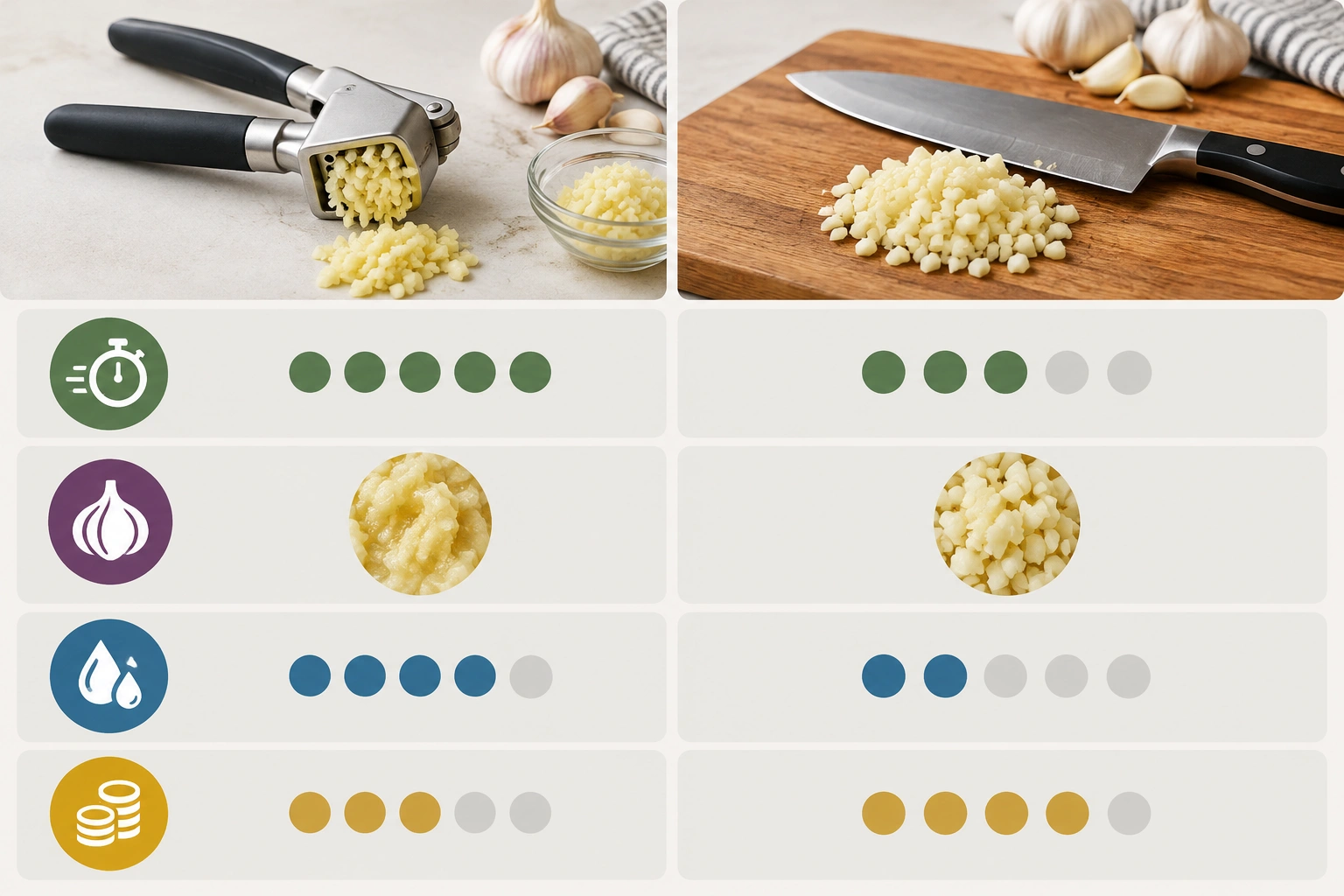
Quick Answer: Which Is Better for Most Cooks?
Here is the practical verdict:
- Choose a knife if you want control, versatility, and the least amount of kitchen gear.
- Choose a garlic press if speed matters more than perfect texture and you make garlic-heavy dishes often.
- Choose a microplane if you want very fine garlic quickly, though that is a separate tool and not always the best fit for every recipe.
That matters because “fastest” and “most convenient” are not always the same thing. A press can be quick for some cooks, but if you also dislike cleanup, the advantage shrinks fast.
Simple decision rule
Use this rule when you are standing at the counter:
- Need neat pieces for sautéing, sauces, or garnish? Use a knife.
- Need garlic in a hurry and do not care if it turns soft and pulpy? Use a press.
- Making a dressing, marinade, or paste-like sauce? A press can be useful because the garlic breaks down more completely.
How a Garlic Press Works vs. How Knife Mincing Works
A garlic press forces peeled garlic through small holes, usually with a lever. The result is crushed garlic that often comes out soft, fine, and slightly wet. The press does the hard part for you, but it also limits how much control you have over the final texture. Most presses work best with peeled cloves, though some models handle unpeeled cloves better than others.
Knife mincing works differently. You first smash or split the clove, then cut it into smaller pieces until you reach the texture you want. That gives you more control over whether the garlic is coarse, fine, or nearly paste-like. It also lets you stop at the exact point your recipe needs.
What that means in the bowl or pan
The method you choose changes more than convenience:
- Pressed garlic tends to be more uniform but softer.
- Knife-minced garlic usually has cleaner edges and more visible pieces.
- Very finely minced garlic from a knife can behave a lot like pressed garlic in a dish, but it takes more knife work.
That difference affects how the garlic spreads through a dish and how it cooks.
Speed and Convenience: Which Saves More Time?
This is where the answer gets more interesting than “press = faster.”
A garlic press can save time if you are only comparing the act of turning a clove into usable garlic. You do not have to carefully chop each clove, and the motion is simple once the clove is loaded.
But speed in a real kitchen includes more than squeezing. You also have to:
- peel the clove, if your press requires it
- load the press
- squeeze out the garlic
- clear out the leftover bits
- wash the tool
That last step is where a press often loses ground. A knife needs only the blade and cutting board, and those are already in use for many other prep tasks.
Meal prep reality check
If you are prepping garlic for several recipes at once, a press may feel efficient because the motion is repetitive and easy. But if you are already chopping onions, herbs, or vegetables, switching to a knife for garlic may actually be simpler because you stay in the same workflow.
A good test is this: if you can mince garlic confidently in under a minute, a press may not save enough time to matter. If knife work slows you down or makes you avoid using fresh garlic altogether, the press can be worth it.
Flavor and Texture Differences You’ll Notice
Garlic flavor is not just about how much you use. The preparation method changes how the garlic behaves in the dish.
Pressed garlic is usually finer and more broken down, so it spreads quickly through a sauce, marinade, or dressing. That can make the garlic flavor seem more immediate and a little more pungent, especially in raw or lightly cooked recipes. Knife-minced garlic stays more distinct, which can give you cleaner, less integrated bursts of flavor instead of an even garlic background.
Why texture matters in cooking
Texture matters because it affects both mouthfeel and cooking speed. Garlic that is more finely broken down has more exposed surface area, so it can cook faster. That can be useful when you want the garlic flavor to blend in quickly.
The trade-off is that faster-cooking garlic can also be easier to overcook. Once garlic browns too far, it can turn bitter. So if you press garlic and toss it into a hot pan, keep the heat moderate and watch it closely. The more finely processed the garlic, the less forgiveness you get.
When texture changes the result
Use a knife when you want:
- visible garlic pieces in a sauté
- a little texture in pasta sauce
- garlic that is less likely to disappear into the dish
Use a press when you want:
- garlic to dissolve more fully into a dressing or marinade
- a smoother, less chunky texture
- a quick way to add garlic without stopping to chop finely
Cleanup, Maintenance, and Everyday Friction
Cleanup is often the deciding factor, especially for busy families.
A knife and cutting board are straightforward to clean. A garlic press can be more annoying because tiny pieces get trapped in the holes and hinge area. That residue is not just inconvenient; it also means you may need a brush or careful rinsing to get the tool fully clean.
What to think about before buying one
Ask yourself:
- Will I use this often enough to justify another item to wash?
- Do I mind scrubbing small holes after dinner?
- Is my sink routine already crowded with pans, spatulas, and prep bowls?
For some cooks, the press feels worth it because the actual squeezing is easy and the cleanup is acceptable. For others, the cleanup becomes the reason the tool sits in a drawer.
Practical maintenance tip
If you buy a garlic press, rinse it soon after use instead of letting garlic dry inside it. Dried residue is harder to remove and more likely to make the tool annoying enough that you stop using it.
Cost and Value: Is a Garlic Press Worth Buying?
For budget-conscious households, this is the most important question.
A knife is already in the kitchen, so its cost is effectively zero if you own one that is sharp enough for basic prep. A garlic press is an added purchase, and the value depends on how often you will use it.
When the purchase makes sense
A garlic press is more likely to be worth it if:
- you cook with garlic several times a week
- you dislike mincing by hand
- you want a simple tool for quick weeknight meals
- you make sauces, dips, or marinades where soft garlic works well
When it is probably not worth it
Skip the press if:
- you use garlic only occasionally
- you already mince garlic comfortably
- you prefer fewer tools in the kitchen
- you want more control over size and texture
The most budget-friendly answer is often to use the knife you already own and improve your technique. If garlic prep is the one part of cooking you consistently avoid, that is when a press may earn its place.
When to Use Each Method in Real Cooking Situations
Weeknight dinners
For fast pasta, stir-fries, or skillet meals, use whatever method gets garlic into the pan without slowing you down. If you are comfortable with a knife, mince it. If you are rushing and want a simpler motion, use the press.
Sauces and dressings
Pressed garlic works well in many dressings, marinades, and blended sauces because the texture disappears more easily. That is helpful when you want garlic flavor without noticeable chunks.
Recipes where texture matters
Choose a knife for dishes where garlic should remain distinct, such as sautéed vegetables, roasted dishes, or recipes where garlic is added early and cooked gently.
Batch cooking and meal prep
If you are making several recipes in one session, consistency matters. A press gives you a repeatable result quickly, but a knife gives you more control if one recipe needs coarse garlic and another needs fine.
Raw applications
For raw uses like dips or spreads, the garlic can taste sharper and more direct. A press or very fine mince may work better than a coarse chop because the garlic integrates more evenly.
How to Get the Best Results from Either Method
If you use a garlic press
- Use fresh cloves that are not dried out.
- Keep the heat moderate when cooking pressed garlic.
- Clean the press soon after use so residue does not harden.
- Use it when you want garlic to blend smoothly into the dish.
If you mince with a knife
- Crush the clove first to make peeling easier.
- Keep your cuts even so the garlic cooks more uniformly.
- If you want a finer result, keep chopping until the pieces are small and consistent.
- Watch garlic closely in the pan, especially if it is finely minced.
A useful kitchen habit
Match the garlic prep to the dish instead of using the same method every time. That one habit prevents a lot of frustration. A quick pasta sauce may benefit from pressed garlic, while a sautéed side dish often tastes better with a controlled knife mince.
Bottom Line
If you want the most practical all-purpose method, use a knife. It is cheaper, more versatile, and gives you the most control over texture. If you want convenience and often cook dishes where garlic should melt into the background, a garlic press can be a useful tool.
For many busy home cooks, the best setup is simple: keep using a knife for most recipes, and add a press only if you know you will use it often enough to justify the cleanup and storage.
When to Ask a Food Safety Expert
If you have questions about cleaning tools after contact with raw ingredients, or if you are unsure about safe handling practices in a busy kitchen, ask a food safety expert or check a trusted government food safety resource. Good tool habits make cooking easier and help keep your kitchen routine steady.
FAQ
Is a garlic press the same as mincing garlic?
Not exactly. A press crushes garlic into a softer, more paste-like form, while mincing with a knife gives you more control over the size and texture of the pieces.
Does pressed garlic taste stronger?
It can seem more direct because it is more broken down and spreads through the dish quickly. But “stronger” depends on the recipe, the amount used, and how long it cooks.
Which is faster: a garlic press or a knife?
A press can be faster for some cooks, but not always once cleanup is included. For very fine garlic, a microplane may be faster than either method.
Do I need to peel garlic before using a press?
Many presses work best with peeled cloves. Check the tool’s design and instructions, because some presses handle unpeeled cloves better than others.
Is a garlic press worth buying?
It is worth it if you cook with garlic often and want a simple, repeatable tool. If you only use garlic occasionally or already mince well with a knife, your money is better spent elsewhere.