
What Is the Healthiest Cooking Method?
Quick Answer
There is no single healthiest cooking method for every food. Steaming and microwaving with little water are excellent for vegetables, while air frying is one of the healthier ways to create browned, crisp food with less added oil than deep frying. Healthy cooking guidance from Consumer Reports also emphasizes that the cooking method can affect both nutrient retention and added fat.
Healthiest methods by goal
- For vegetables: Steam or microwave with minimal water and avoid overcooking.
- For crisp foods: Air fry or roast with a light coating of oil rather than deep frying.
- For fish: Steam, poach, bake, or air fry while avoiding heavy breading.
- For lean meats: Bake, roast, grill, or air fry and cook to a verified safe internal temperature.
- For everyday meals: Focus on whole foods, modest oil, sensible temperatures, and short cooking times.
When people ask, “What is the healthiest cooking method?” they often expect one winner. In my kitchen, the answer depends on whether I’m trying to preserve nutrients, limit added fat, keep food safe, or create a texture my family will enjoy.
As of 2026, I consider steaming, microwaving, air frying, baking, and gentle sautéing all useful healthy cooking techniques. The best choice changes with the food.
In This Guide
- What is the healthiest cooking method overall?
- Why is steaming so healthy for vegetables?
- Is air frying a healthy cooking method?
- Which cooking methods are healthiest compared side by side?
- Which healthy cooking method should you use for each food?
- Frequently asked questions
- What should you take away from this guide?
What Is the Healthiest Cooking Method Overall?
Steaming is one of the healthiest all-around methods, especially for vegetables, but no cooking method wins in every situation. A healthy technique should limit unnecessary fat while preserving nutrients and cooking food safely.
Healthy cooking method: A cooking technique that prepares food safely while minimizing unnecessary added fat, excess sodium, nutrient loss, and excessive charring or burning.
The healthiest method also depends on what you start with. Steaming broccoli and deep-frying broccoli are two quite different meals, even though the main ingredient is identical.
At the same time, steaming a heavily processed food does not magically turn it into a nutrient-dense meal. Ingredients still matter.
What should you look for in a healthy cooking technique?
I use four simple tests when deciding how to cook a meal. They work better than declaring one appliance or technique universally healthy.
- Minimal added fat: The method should not require food to sit in or absorb large amounts of oil.
- Reasonable cooking time: Long cooking in lots of water can cause some water-soluble nutrients to move into the cooking liquid.
- Controlled heat: Browning can improve flavor, but badly burnt or charred food is not the goal.
- Food safety: Meat, poultry, seafood, eggs, and leftovers must reach appropriate safe temperatures.
I also consider whether the method makes nutritious food enjoyable. A cooking technique isn’t especially useful if nobody wants to eat the result.
That is one reason I use an air fryer so often for vegetables. A lightly oiled tray of Brussels sprouts or cauliflower usually gets eaten faster than the same vegetables boiled until soft.
Why Is Steaming So Healthy for Vegetables?
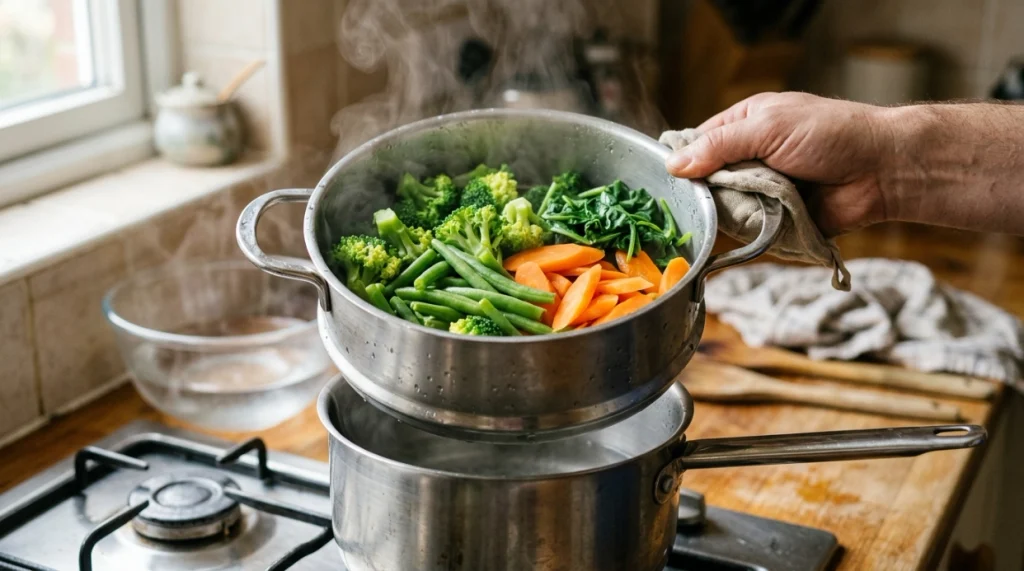
Steaming cooks vegetables without submerging them in water or requiring added cooking fat. That combination makes it an excellent everyday choice for many vegetables.
Water-soluble nutrients can move from vegetables into cooking water. The longer food sits in a large pot of water, the more opportunity there is for that transfer.
Steaming vs. boiling
With steaming, hot vapor surrounds the food while the vegetables remain above the water. You can cook them until crisp-tender without washing flavor into a pot of liquid.
Boiling isn’t automatically unhealthy. It simply works better when you have a reason to use the cooking liquid, such as in soup or stew.
- Broccoli: Steam until bright green and tender enough to pierce with a fork.
- Carrots: Steam until tender but still slightly firm rather than cooking until mushy.
- Green beans: A short steaming time keeps them crisp and colorful.
- Leafy greens: Use short cooking times because delicate greens soften quickly.
Is microwaving vegetables healthy?
Yes. Microwaving vegetables with a small amount of water can also be an excellent method because cooking times are usually short.
I often put broccoli florets in a covered microwave-safe bowl with a splash of water. A few minutes of cooking produces tender vegetables without a large pot of boiling water.
The common idea that microwaving automatically “destroys” nutrients misses an important point. Heat, water, and cooking duration all influence nutrient changes, regardless of the appliance.
Section Takeaway: Steaming and short microwave cooking are two of my first choices when nutrient retention and minimal added fat are the priorities.
Is Air Frying a Healthy Cooking Method?
Air frying can be a healthy cooking method, particularly when it replaces deep frying. It circulates hot air around food and can create crisp surfaces with little or no added oil.
An air fryer is essentially a compact convection cooker. Its fan moves hot air rapidly around food held in an air fryer basket, rack, or crisper tray.
Consumer Reports describes air frying as a way to prepare foods with little to no oil and notes its usefulness as an alternative to deep frying. You can read its healthy air fryer meal guidance for more detail.
Why can air frying be healthier than deep frying?
The main advantage is simple: the food does not need to be submerged in hot oil. That can greatly reduce how much cooking fat the finished dish absorbs.
- Less cooking oil: Many vegetables need only a light coating for browning.
- Crisp texture: Rapid convection can dry and brown the surface without an oil bath.
- Useful portion size: Basket capacity naturally suits smaller batches.
- Versatility: You can cook vegetables, fish, lean proteins, potatoes, and small baked foods.
However, the appliance does not decide whether a meal is nutritious. Air-frying frozen breaded snacks every night is different from air-frying salmon, peppers, zucchini, or chickpeas.
How I use an air fryer for healthier meals
For vegetables, I usually start with enough oil to coat the surface lightly rather than pouring oil into the basket. Leaving space between pieces often improves browning more than adding extra oil.
For lean proteins, I focus on doneness rather than an arbitrary timer. Air fryer performance, thickness, starting temperature, and batch size can all change cooking time.
Pro tip: Use a food thermometer for raw meat and poultry. FoodSafety.gov lists poultry at 165°F (74°C), whole cuts of beef and pork at 145°F (63°C) with the specified rest time, and fish at 145°F (63°C).
If you’re baking in an air fryer, convection changes the equation. King Arthur Baking recommends starting about 25°F lower than a conventional recipe and shortening baking time by roughly 20% to 25% in many cases.
You can see its detailed air fryer baking guidance before converting cakes, cookies, rolls, or other bakes.
Section Takeaway: Air frying is most useful nutritionally when it replaces deep frying or helps you cook vegetables and lean proteins with modest amounts of oil.
Which Cooking Methods Are Healthiest Compared Side by Side?
Steaming, microwaving, air frying, baking, and light sautéing can all fit a healthy diet. Their strengths differ in oil use, nutrient retention, texture, and the foods they suit best.
| Method | Added Fat Needed | Main Health Advantage | Best For | Main Watch-Out |
|---|---|---|---|---|
| Steaming | None | Avoids oil and limits contact with cooking water | Vegetables, fish, dumplings | Overcooking can soften texture |
| Microwaving | None or minimal | Short cooking time and little water | Vegetables, reheating, potatoes | Can heat unevenly |
| Air frying | Low | Crisp results with much less oil than deep frying | Vegetables, potatoes, proteins | Packaged foods may still be high in sodium or refined starch |
| Baking or roasting | Low to moderate | Easy to cook whole foods without frying | Vegetables, fish, meat, whole meals | Excess oil can raise calorie density |
| Sautéing | Low to moderate | Fast cooking with good flavor | Vegetables, shrimp, sliced proteins | Oil is easy to overpour |
| Boiling | None | Simple and fat-free | Legumes, pasta, soups | Some water-soluble nutrients can enter discarded water |
| Deep frying | High | Excellent browning and crispness | Occasional fried foods | Food absorbs more cooking fat |
The table explains why I don’t use a single method for everything. A steamed potato and an air-fried potato solve different problems.
Healthy cooking is about matching the method to the ingredient. It is not about forcing every food into the same appliance.
Which Healthy Cooking Method Should You Use for Each Food?
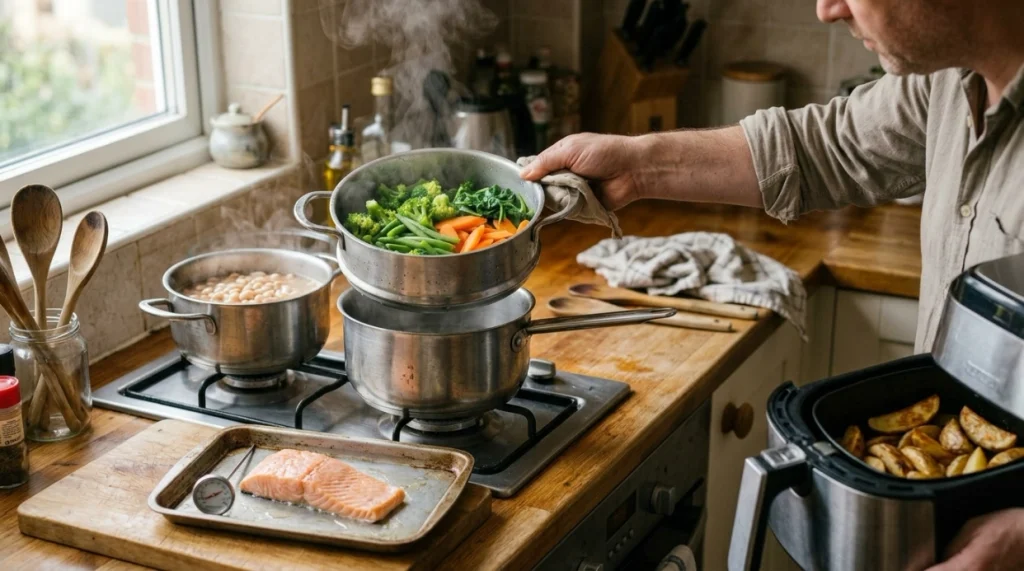
Choose your cooking method according to the food’s structure and the result you want. Vegetables usually benefit from short cooking, while proteins need careful temperature control.
Vegetables
Steam or microwave vegetables when nutrient retention and low added fat are the priorities. Air fry or roast them when browning will help you eat more vegetables consistently.
- Leafy greens: Steam or sauté briefly.
- Broccoli and cauliflower: Steam, microwave, roast, or air fry.
- Carrots and squash: Steam or roast until tender.
- Potatoes: Bake or air fry with a measured amount of oil.
Fish and seafood
Steaming, poaching, baking, and air frying all work well for fish. I use gentler methods when I want moist flesh and air frying when I want a browned surface.
Fish should reach the appropriate safe doneness. FoodSafety.gov lists 145°F (63°C) for fish, or cooking until the flesh is no longer translucent and separates easily with a fork.
Chicken and other meats
Baking, roasting, grilling, and air frying can all prepare lean meat without deep frying. Trim excess visible fat when appropriate and avoid relying only on color to judge safety.
Use the FoodSafety.gov safe minimum internal temperature chart whenever you’re uncertain about meat or poultry doneness.
Eggs, beans, and grains
Eggs can be poached, boiled, baked, or gently cooked in a pan. Beans and grains generally need water-based cooking, so boiling or simmering makes practical sense.
In those cases, the water is often absorbed or remains part of the meal. That makes nutrient loss into discarded cooking water less relevant.
Baked foods and pastries
Baking is not automatically healthy or unhealthy. Flour, sugar, butter, portion size, and fillings usually affect nutrition more than whether a pastry was baked in a full oven or air fryer.
I use the air fryer mainly for smaller batches. Its compact cooking chamber is convenient when I want a few rolls or cookies without heating a full-size oven.
Section Takeaway: Match the cooking method to the food instead of searching for one universal technique. Whole ingredients, modest added fat, and safe cooking matter more than the appliance name.
Frequently Asked Questions
Is steaming the healthiest way to cook food?
Steaming is one of the healthiest methods for many vegetables because it requires no added oil and keeps food out of the cooking water. However, air frying, baking, microwaving, poaching, and light sautéing can also be healthy when matched to the right foods.
Is air frying healthier than baking?
Neither method is automatically healthier. Air frying often cooks faster and can create crisp food with little oil, while baking works well for larger portions. The ingredients, amount of added fat, portion size, and degree of browning usually matter more.
Is air frying healthier than deep frying?
Air frying is generally the healthier choice when it directly replaces deep frying because food does not need to be submerged in oil. That usually means substantially less cooking fat, though breading, sodium, and the food itself still affect the final meal.
Does boiling vegetables destroy their nutrients?
Boiling does not destroy all nutrients, but some water-soluble nutrients can move into the cooking water. Steaming or microwaving with little water can reduce that loss. In soups and stews, you also consume much of the cooking liquid.
What is the healthiest way to cook chicken?
Baking, roasting, poaching, grilling, and air frying can all be healthy approaches. Choose skinless or lean cuts when appropriate, keep added fat moderate, and verify that poultry reaches 165°F (74°C) with a food thermometer.
What cooking method uses the least fat?
Steaming, poaching, boiling, and microwaving can require no added fat at all. Air frying usually requires little or no oil, while roasting and sautéing may use small measured amounts depending on the recipe.
Does cooking food always reduce nutrients?
No. Cooking can reduce some heat-sensitive nutrients, but it can also soften plant structures and make certain compounds easier to access. The effect depends on the food, temperature, cooking time, amount of water, and whether the cooking liquid is discarded.
What Should You Take Away From This Guide?
The healthiest cooking method is the one that suits the food while keeping added fat, excess sodium, and unnecessary overcooking under control. For vegetables, I reach for steaming or short microwave cooking when nutrient retention is my main goal.
When I want crisp texture, the air fryer is one of my favorite alternatives to deep frying. It can brown vegetables, potatoes, fish, and lean proteins without submerging them in oil.
Most importantly, don’t judge a meal by the appliance alone. A plate built around vegetables, whole grains, beans, fish, or lean protein matters far more than whether the label on the machine says air fryer, microwave, or oven.
Start with the food you already enjoy, then choose the gentlest method that gives you the texture and flavor you want. That is a much more practical approach to healthy cooking.

