
How Long Vegetables Last in the Fridge: A Practical Storage Guide for Busy Kitchens

If you’ve ever opened the crisper drawer and found a limp bunch of greens, a soft pepper, or carrots that look harmless but feel tired, you’re not alone. Vegetable shelf life in the fridge is not one simple number. It changes based on the type of vegetable, whether it’s whole or cut, how much moisture it holds, and how it was stored.
The fastest way to think about it is this: leafy vegetables usually need to be used sooner, root vegetables tend to keep longer, and cut or cooked vegetables have a shorter window than whole raw ones. For safe handling, keep your refrigerator at 40°F (4°C) or below, and treat any vegetable that smells off, feels slimy, or has visible spoilage as a discard item rather than a “maybe” item. FoodSafety.gov’s cold food storage guidance is a good reference point for the broader safety rules.
Quick Answer: How Long Vegetables Last in the Fridge
There is no single shelf life that fits every vegetable, but these practical categories help most home cooks make a fast decision:
- Leafy greens such as spinach, lettuce, and kale usually need the quickest attention. They often go from crisp to limp before sturdier vegetables do.
- Soft vegetables such as bell peppers, cucumbers, and zucchini generally keep for a moderate amount of time, but they are more sensitive to moisture and bruising.
- Root vegetables such as carrots and celery usually last longer because they are denser and less fragile.
- Cut vegetables almost always have a shorter fridge life than whole ones because cutting exposes more surface area to air and bacteria.
- Cooked vegetables should be treated like leftovers, not fresh produce. They need prompt refrigeration and should be used sooner than raw vegetables.
A practical rule for busy kitchens: if a vegetable is already cut, peeled, or cooked, plan to use it first. If it is still whole and dry, it usually has more staying power.
What Affects Vegetable Shelf Life in the Fridge
Vegetable storage is mostly a moisture and exposure problem. Once you understand that, the “why” behind all the storage advice makes sense.
Whole vs. cut
Whole vegetables last longer because their skin or outer layers protect the inside from drying out and from contamination. Once you slice into them, the clock speeds up. A half bell pepper, for example, will not keep as long as a whole one because the cut surface loses moisture and picks up odors from the fridge more easily.
Raw vs. cooked
Cooking changes texture and moisture, which shortens storage time. Cooked vegetables also belong in the leftover category, so they need to cool and refrigerate promptly. They are convenient for meal prep, but they are not a “set it and forget it” item.
Moisture level
Too little moisture causes wilting and shriveling. Too much moisture encourages slime and mold. That is why a paper towel can help in some containers: it catches excess condensation without soaking the vegetables.
Humidity and airflow
The crisper drawer exists for a reason. Many refrigerators let you adjust humidity, and that matters. Leafy vegetables often do better in higher humidity, while vegetables that rot more easily in damp conditions usually do better with less trapped moisture. Overpacking the drawer blocks airflow and creates wet pockets.
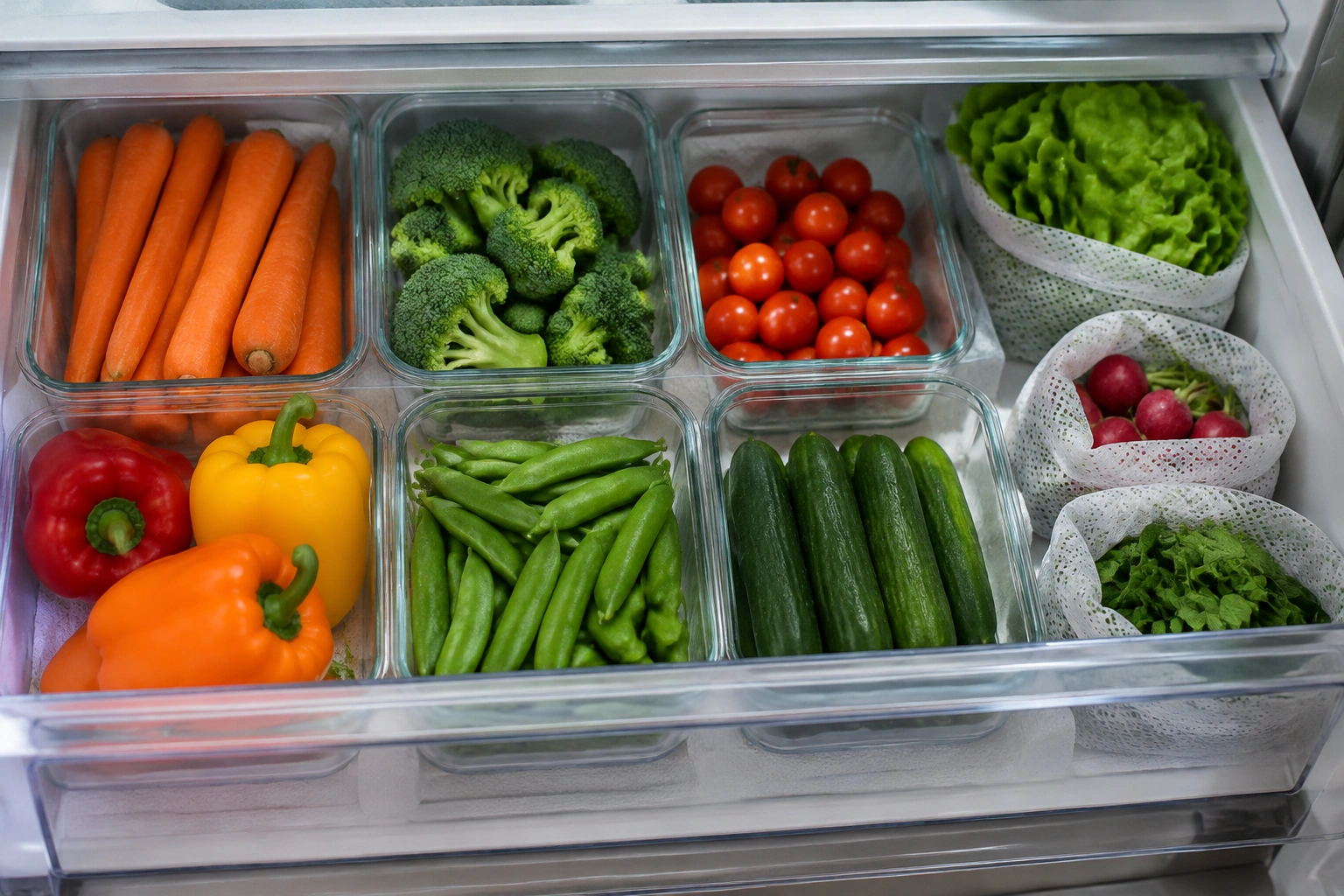
Ethylene exposure
Some produce gives off ethylene gas as it ripens. Nearby sensitive vegetables can age faster when stored together. This matters more in a crowded fridge than most people realize. If you keep a mix of produce, separate the items that ripen quickly from the ones that are easily affected.
Fridge Shelf Life by Vegetable Type
The table below gives a practical comparison for common vegetables. Use it as a “use soon” guide, not a promise. Exact timing varies with freshness at purchase, fridge temperature, and storage method.
| Vegetable type | Whole raw | Cut or peeled | Cooked |
|---|---|---|---|
| Leafy greens: spinach, lettuce, kale | about 3–7 days | about 1–3 days | about 3–4 days |
| Herbs: parsley, cilantro, dill | about 5–10 days | about 1–3 days | Not common |
| Cruciferous vegetables: broccoli, cauliflower, Brussels sprouts | about 3–7 days | about 2–4 days | about 3–4 days |
| Root vegetables: carrots, celery, radishes | about 1–3 weeks | about 3–7 days | about 3–4 days |
| Alliums: onions, scallions, leeks | about 1–3 weeks, depending on type | about 3–7 days | about 3–4 days |
| Soft vegetables: bell peppers, cucumbers, zucchini, eggplant | about 4–10 days | about 2–4 days | about 3–4 days |
| Tomatoes | about 2–5 days if ripe and refrigerated, but best at room temp when uncut | about 1–2 days | about 3–4 days |
| Mushrooms | about 3–7 days | about 1–3 days | about 3–4 days |
Here is how to use that chart in real life:
- If it wilts fast, plan fast. Leafy greens and herbs are the first to slide downhill.
- If it is sturdy and dry, you have more flexibility. Carrots and celery usually give you more time.
- If it was cut yesterday, do not store it like a whole vegetable. Use a covered container and move it up in your meal plan.
- If it is cooked, treat it as a leftover. That means prompt refrigeration and earlier use.
For official food safety guidance on refrigeration and leftovers, the USDA Food Safety and Inspection Service is a reliable starting point.
Whole vs. Cut vs. Cooked Vegetables
This is the decision framework I recommend when you are trying to reduce waste without guessing.
Whole vegetables
Whole vegetables are the easiest to keep fresh because they are protected. If you bought a whole head of broccoli, a bundle of carrots, or a full bell pepper, keep it whole until you need it. That one choice often buys you extra days of quality.
Cut vegetables
Cut vegetables are more convenient for meal prep, but convenience costs freshness. Once chopped, they dry out faster and are easier for bacteria to reach. If you pre-chop vegetables, store them in a clean airtight container and use them sooner than whole produce.
Cooked vegetables
Cooked vegetables are the shortest-lived of the three categories. They belong in the fridge quickly after cooking, and they should be used as leftovers rather than treated like raw produce. If you know you will not use them soon, freezing is often the smarter backup.
A simple rule:
Whole = best for maximum freshness. Cut = best for convenience. Cooked = best for immediate use.
Which Vegetables Should Stay at Room Temperature
Not every vegetable benefits from refrigeration right away.
Keep these out of the fridge until they are cut or fully ripe
Some vegetables are better stored at room temperature first, especially when they are whole and uncut:
- Tomatoes: best on the counter while whole and ripe for better flavor and texture
- Winter squash: such as butternut or acorn squash, while whole and uncut
- Onions: whole, dry onions usually keep better in a cool, dry pantry than in the fridge
- Garlic: whole bulbs are usually best stored dry at room temperature
- Potatoes: whole potatoes are typically kept out of the fridge in a cool, dark place
Exceptions to keep in mind
- Once tomatoes are cut, refrigerate them.
- Once onions, garlic, or potatoes are peeled or cut, refrigerate them in a covered container and use them sooner.
- If a winter squash is cut, refrigerate the pieces.
- If room temperature in your kitchen is very warm, any of these may deteriorate faster, so use judgment based on freshness and local conditions.
Better in the fridge
Once a vegetable is cut, most of the room-temperature exceptions disappear. A cut tomato half, for example, should be refrigerated. The same goes for any vegetable that has been peeled, sliced, or cooked.
A practical decision rule
If the vegetable is whole, dry, and not already fully ripe, room temperature may be the better short-term choice for quality. If it is cut, cooked, or highly perishable, the fridge is usually the safer place.
Best Way to Store Vegetables in the Fridge
A few small habits do most of the work.
Use the crisper drawer with purpose
The crisper drawer is not just extra space. It is the part of the fridge designed to manage humidity. Use it for produce that benefits from a more controlled environment, and do not cram it so full that air cannot move.
Match the container to the vegetable
- Airtight containers help cut vegetables and cooked vegetables stay from drying out.
- Perforated or loosely closed bags can work well for vegetables that need some airflow.
- Paper towel lining helps absorb extra moisture in containers or bags, especially for leafy greens.
High-humidity vs. low-humidity crisper use
If your fridge has separate humidity settings, use them with the vegetable type in mind:
- Higher humidity is usually a better fit for leafy greens like spinach, lettuce, kale, and herbs such as parsley or cilantro.
- Lower humidity is often better for vegetables that are more likely to rot in damp conditions, such as peppers, cucumbers, zucchini, mushrooms, and broccoli.
- Root vegetables like carrots and celery can often do well in the crisper as long as they are not sitting in excess moisture.
Keep wet produce from sitting wet
If you wash vegetables before storing them, dry them thoroughly first. Water clinging to leaves or cut edges can speed spoilage. If washing is not needed right away, store vegetables unwashed until use. That usually helps them last longer, especially for sturdy produce and anything with a natural protective skin.
Separate sensitive produce
Do not crowd ethylene-sensitive vegetables beside produce that ripens quickly. In a busy fridge, a little separation can make a real difference in how long items stay usable.
Step-by-Step: How to Store Vegetables So They Last Longer
Here is a routine you can use after grocery shopping or meal prep.
- Choose the storage method first. Decide whether each vegetable belongs at room temperature, in the crisper, in an airtight container, or in the freezer.
- Sort the vegetables by type. Put leafy greens, root vegetables, soft vegetables, and cooked leftovers into separate groups.
- Check for damage. Remove anything bruised, slimy, or already softening. One bad piece can speed up spoilage in the rest.
- Wash only if needed, then dry completely. If you rinse vegetables, pat them dry or spin off as much water as possible. If they do not need washing yet, store them unwashed until use.
- Pack by moisture needs. Use paper towels for damp-prone items and airtight containers for cut vegetables.
- Label cut and cooked items. A simple date label helps you use the oldest food first.
- Place the oldest items in front. That makes meal planning easier and reduces “forgotten produce” at the back of the drawer.
- Check the drawer once or twice a week. A quick review is usually enough to catch vegetables before they cross from salvageable to waste.
How to Tell When Vegetables Have Gone Bad
Mold is the obvious sign, but it is not the only one.
Look for these spoilage signs
- Sliminess
- Strong off odors
- Mushy or collapsing texture
- Severe discoloration
- Visible mold
If a vegetable is only a little limp, it may still be usable in soup, stir-fry, or roasting. If it is slimy, smells wrong, or has mold, throw it out. Do not try to rescue food that has clearly turned.
Common Mistakes That Make Vegetables Spoil Faster
These are the storage mistakes that create the most waste in ordinary kitchens:
- Washing and storing vegetables while still wet
- Leaving cut vegetables uncovered in the fridge
- Overstuffing the crisper drawer
- Storing every vegetable the same way
- Keeping ethylene-producing produce next to sensitive items
- Waiting too long to use vegetables that are already softening
The biggest pattern here is inconsistency. Vegetables do not all need the same environment, and that is why one drawer full of mixed produce often fails faster than a few well-managed containers.
When to Freeze Vegetables Instead of Keeping Them in the Fridge
Freezing is the right move when the vegetable is still safe but you know you will not use it soon enough.
Good candidates for freezing
- Leafy greens that are starting to wilt
- Chopped vegetables you prepped for meal planning
- Cooked vegetables from a large batch
- Extra broccoli, peppers, or carrots that you cannot finish in time
What to expect
Freezing protects against waste, but texture usually changes after thawing. That is why frozen vegetables are often best for soups, casseroles, sautés, and blended dishes rather than crisp salads.
A note on blanching
Many vegetables freeze better after blanching, which helps preserve quality before freezing. That step matters more for texture than for safety, but it can make a big difference in how usable the vegetables are later.
Practical Examples From Real Kitchens
A bag of spinach that is still crisp but starting to wilt should move to the front of the fridge and get used soon in eggs, soup, or a sauté. If you cannot use it quickly, freezing is the better backup.
Cut carrots in an airtight container with a paper towel can stay convenient for lunch boxes and dinner prep, but they should not sit forgotten for long. They are a prep food, not an indefinite storage item.
A half-used bell pepper usually keeps better than leafy greens, but it still loses quality faster than a whole one. If it will not be used within a few days, slice it and cook it, or freeze it for later use.
Tomatoes are a good reminder that refrigeration is not always the best first choice. Whole ripe tomatoes usually keep better on the counter for flavor, but once they are cut, they belong in the fridge.
Cooked broccoli leftovers should be treated like any other refrigerated leftover: cool promptly, store covered, and use them sooner rather than later. If you know the leftovers will not be eaten in time, freeze them before quality drops too far.
When to Ask a Food Safety Expert
If vegetables were left out for an extended period, if your refrigerator is not holding a safe temperature, or if you are unsure whether a cut or cooked vegetable is still safe after temperature abuse, it is better to discard it than guess. When in doubt, use a food safety authority or local extension service for guidance.
Final Takeaway
The shortest answer to how long vegetables last in the fridge is this: it depends on the vegetable, but whole and dry usually last longer than cut and wet, and cooked vegetables have the shortest window of all. Store leafy greens carefully, keep root vegetables drier, use the crisper drawer with intention, and move anything questionable to the freezer or the compost before it turns into waste.
