
How to Add Seeds to Bread for Better Flavor, Texture, and Crust

Seeds can transform a plain loaf into something with more character: nuttier flavor, a more interesting crumb, and a crust that looks bakery-worthy. But if you’ve ever had seeds fall off, burn, or make the dough feel tight and hard to shape, you already know this isn’t just a “sprinkle and hope” job.
The good news: once you understand where seeds belong in the process, they become one of the easiest ways to customize bread. As Ethan Baker, I like to think of seed work as a small technical choice with a big sensory payoff. The trick is matching the seed, the timing, and the bread style to the result you want.
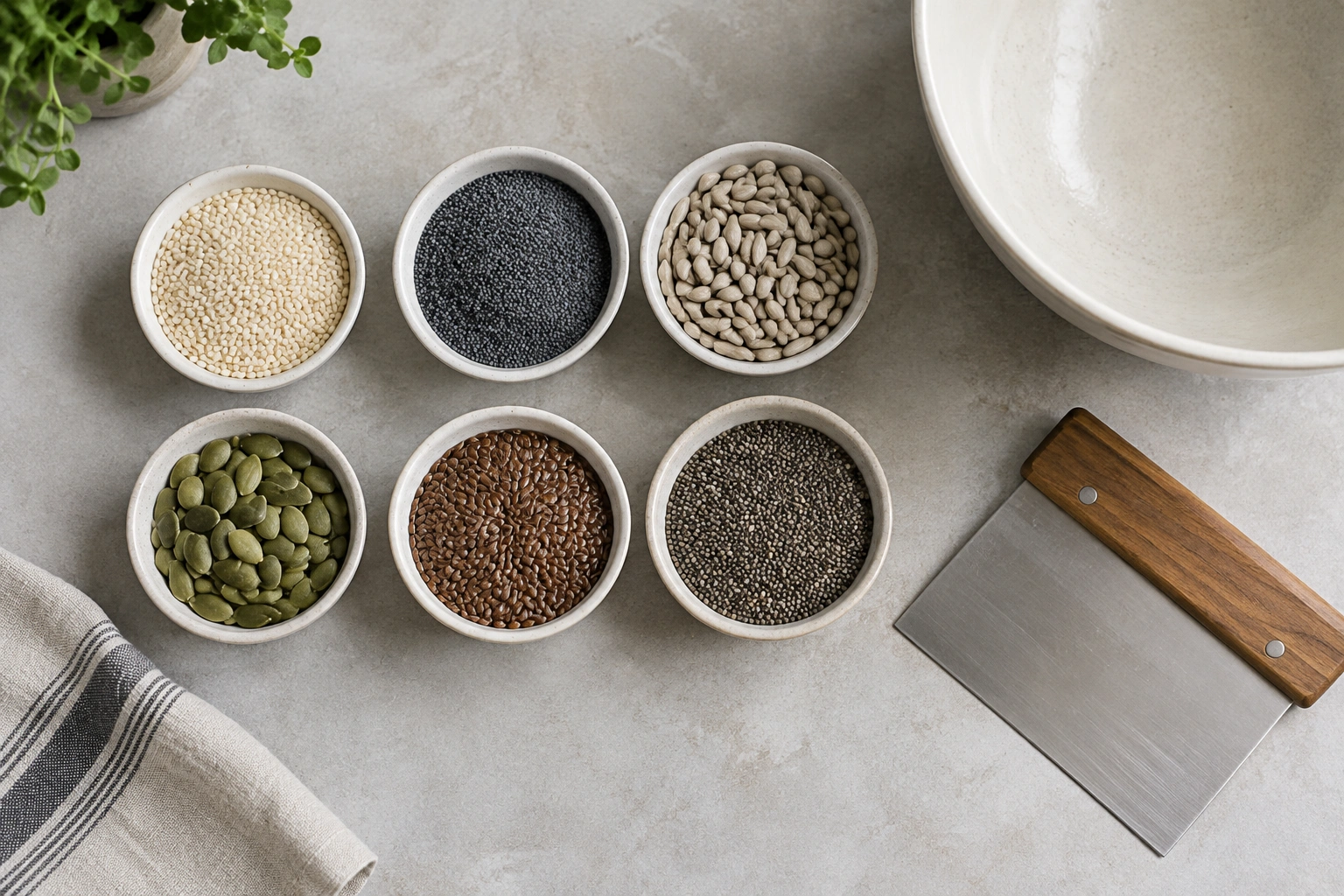
Quick decision guide:
– Mix seeds into the dough when you want flavor throughout the crumb and a loaf that slices cleanly.
– Fold them in during early mixing or the first folds when the dough needs a little more structure before the seeds are added evenly.
– Use seeds only as a topping when you want a dramatic crust, strong visual appeal, or a lighter dough interior.
For most home loaves, a small amount inside plus a lighter topping is the easiest compromise.
[IMAGE_1]
What You Need Before Adding Seeds to Bread
Before you reach for the seed jar, check three things: the bread style, the seed type, and whether you want the seeds inside the dough or on the outside.
For a simple seeded loaf, have these ready:
- Bread dough mixed to at least the first stage of gluten development
- Seeds of your choice
- Water, egg wash, milk, or a little oil, depending on how you plan to apply the seeds
- A bowl or tray for topping
- A bench scraper or lightly oiled hands for shaping
- A baking sheet, loaf pan, or Dutch oven, depending on the bread
If you’re adding seeds into the dough, think about hydration first. Dry seeds absorb water at different rates, and that matters. If you’re topping the loaf, think about adhesion and bake color instead.
A useful rule: if you want the seeds to be part of the crumb, mix them in. If you want a dramatic crust, put them on the outside. Trying to do both heavily in one loaf can make the bread harder to manage.
Choose the Right Seeds for Your Bread
Not every seed behaves the same way in bread. Some bring delicate flavor, others add crunch, and a few can change the dough more than you might expect.
| Seed | Best use | Flavor and texture | Notes |
|---|---|---|---|
| Sesame | Topping or mixed in | Nutty, aromatic, small crunch | Very versatile; works well on sandwich loaves and rolls |
| Poppy | Topping | Mild, delicate crunch | Best as a surface seed; visually striking |
| Sunflower | Mixed in or topping | Rich, nutty, substantial bite | Good in everyday sandwich bread and multigrain loaves |
| Pumpkin | Mixed in or topping | Large, crunchy, bold flavor | Works well on rustic boules and hearty loaves |
| Flax | Mixed in | Mild, earthy, slightly chewy | Can absorb a lot of moisture, especially if ground or soaked |
| Chia | Mixed in, usually in smaller amounts | Neutral flavor, gel-like texture when hydrated | Use carefully; it can change dough feel quickly |
For a clean, classic look, sesame or poppy is hard to beat. For more texture and a heartier bite, sunflower and pumpkin are excellent choices. Flax and chia are better thought of as functional inclusions: they can work beautifully, but they affect hydration and dough handling more than sesame does.
A practical comparison: whole seeds usually give the best crunch and the most visible texture, while chopped or ground seeds blend more smoothly into the dough. Use whole seeds when you want distinct bites and a bakery-style look; use chopped or ground seeds when you want the flavor without as much surface roughness or when a dough is already delicate. For a soft sandwich loaf, smaller whole seeds or lightly chopped seeds are usually easier to manage than a heavy mix of large pumpkin seeds. For a rustic boule, a mixed seed topping can look fantastic and suit the loaf’s more open, crusty style.
Decide Whether to Mix Seeds Into the Dough or Add Them on Top
This is the most important decision in the process, because it changes both the flavor and the structure of the bread.
Mix seeds into the dough when you want:
- Even flavor in every slice
- Seeds throughout the crumb
- A loaf that can be sliced for sandwiches without losing its topping
- A more integrated, less decorative result
Add seeds on top when you want:
- A clearly seeded crust
- Strong visual appeal
- More crunch on the outside
- A simpler dough structure inside
There’s also a middle path: mix a smaller amount into the dough and finish with a lighter topping. That works especially well for sandwich loaves and dinner rolls.
If you’re baking for presentation, topping usually gives the biggest visual return. If you’re baking for eating quality in every bite, internal seeds are often the better choice.
How Much Seed to Add Without Weakening the Dough
Seed quantity matters more than many home bakers expect. A moderate amount adds flavor and texture without making the dough feel overloaded. Too much can interfere with gluten development, tighten the dough, and make shaping harder.
A practical home-baking range is to keep total seeds around 5% to 15% of flour weight. Start near the low end for lean white doughs, very soft sandwich loaves, or when using large, heavy seeds. Move toward the high end for whole wheat, multigrain, or heartier rustic breads that can handle more texture. If you’re using a mix of whole seeds and chopped or ground seeds, stay conservative at first, since finer seeds can spread more evenly but still affect hydration and dough strength.
Here’s how to think about the trade-off:
- Lower seed load: easier dough handling, better rise, more open crumb
- Higher seed load: more flavor and crunch, but a denser loaf and a tighter dough
For a lean white dough, start lower. For whole wheat or multigrain dough, you can usually go a bit higher because the bread is already built for more texture.
A good decision rule: if the dough begins to feel stiff, ragged, or hard to stretch after the seeds go in, you’ve likely crossed from “enriched texture” into “structure challenge.”
How to Prepare Seeds: Raw, Toasted, Soaked, or Rehydrated
Seed prep changes flavor, moisture balance, and how the bread bakes.
Raw seeds
Raw seeds are the simplest option. They’re reliable, easy, and often the best starting point if you’re learning. Use them when you want predictable results and don’t want another prep step.
Toasted seeds
Toasting deepens flavor, especially with sesame, sunflower, and pumpkin seeds. It can make the aroma much more pronounced. The trade-off is that toasted seeds can brown quickly on the crust, so they’re more likely to overcolor if used heavily on the outside.
Soaked or rehydrated seeds
Seeds can be soaked overnight, strained, and then added to dough during mixing or during an early stretch-and-fold stage, which is a common technique for keeping them from pulling moisture out of the dough. This approach is especially helpful for flax, chia, and mixed seed blends that would otherwise absorb a lot of water from the dough.
A practical way to choose:
– Raw seeds: best for simple topping or when you want the least prep
– Toasted seeds: best for stronger flavor and aroma
– Soaked or rehydrated seeds: best for dough inclusions when you want less moisture loss and a softer crumb
The main trade-off:
– Dry seeds = easier to measure and handle, but they can tighten dough
– Soaked seeds = better moisture balance, but you need to plan ahead
If you’re unsure, use raw seeds for topping and soaked seeds for dough inclusions.
Step-by-Step: Add Seeds to Bread Dough
If your goal is an evenly seeded crumb, this is the method to follow.
-
Mix the dough first.
Build some gluten before adding seeds. You want the dough to have enough strength to support the inclusions. -
Add the seeds during mixing or early folding.
Seeds can be added during mixing, or during an early round of stretching and folding. That timing helps distribute them without tearing the dough. -
Keep the additions even.
Sprinkle seeds over the dough in stages instead of dumping them all in at once. This reduces clumping. -
Mix gently.
Use enough folding or kneading to distribute the seeds, but don’t overwork the dough. Overmixing can damage gluten, especially if the seeds are sharp or abundant. -
Check the dough feel.
If the dough seems tighter after the seeds go in, let it rest. A short rest often makes the dough easier to shape. -
Continue fermentation as usual.
Watch the dough, not the clock. Seeded dough may feel different, but it should still rise well if the inclusion rate is reasonable.
For a home-baker example, a soft sandwich dough with sunflower and sesame seeds mixed in is a smart starting point. It gives flavor without overwhelming the crumb structure.
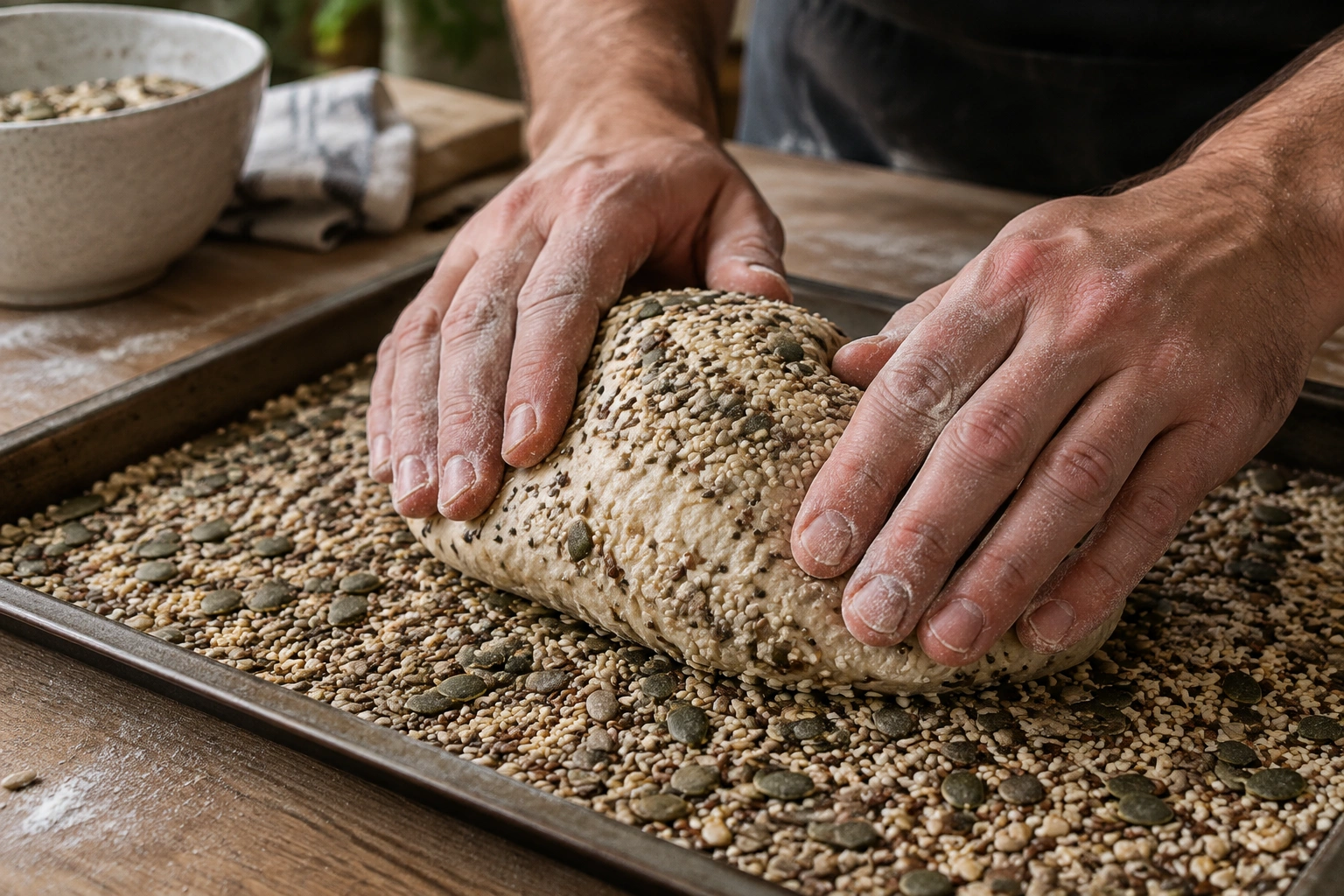
Step-by-Step: Put Seeds on the Outside of Bread So They Stick
A beautiful seeded crust depends on two things: a slightly tacky surface and good contact between the dough and the seeds.
-
Shape the loaf first.
Finish the shaping before applying seeds. If you’re making a boule or a standard loaf, shape first, then let the dough proof with the coating in place. For rolls, shape the pieces first, then seed them before the final proof. If you wait until after proofing to score, you’ll usually disturb the seed coating more than necessary. -
Choose your adhesive.
Egg wash gives the strongest adhesion and the richest browning. Water is lighter and simpler. Milk can help with browning and a softer look. Oil can work, but it usually gives less secure adhesion than egg wash. -
Apply a thin, even coat.
You want the surface damp, not dripping. Too much liquid can cause the seeds to clump. -
Use a seed tray or bowl.
Roll or press the loaf gently into the seeds. A moist surface helps the toppings cling. -
Press lightly.
Don’t just dust the surface. A gentle press helps the seeds stay put during proofing and oven spring. -
Score at the right time for the shape.
- Boules: usually score after proofing and just before baking, then add seeds carefully around the cut pattern if you want a clean design. If you seed the whole surface first, score gently so the blade doesn’t drag the coating too much.
- Loaves: if you want a fully seeded top, it’s usually easiest to apply seeds before the final proof and then score right before baking so the cuts stay clean.
- Rolls: seed the tops before the final proof or immediately after shaping, then bake without additional scoring.
If you want the most secure crust, egg wash is the strongest choice. If you want a lighter finish or are avoiding egg, water can work, but expect a little more seed loss.
How to Handle Different Bread Types
Different loaves call for different seed strategies.
Sandwich loaves
For sandwich bread, keep the seed load moderate and favor smaller seeds like sesame or flax. This gives a pleasant texture without making slicing awkward. Internal seeds are often the better choice here because they don’t shed all over the cutting board. If you want a seeded top, add it before the final proof and score right before baking.
Rolls
Rolls are ideal for surface toppings. Because they’re small, the seed coating is visually strong and easy to portion. Shape the rolls first, then apply the wash and seeds before the final proof so the topping sets with the dough. A mixed seed crust can make plain rolls look bakery-finished with very little extra effort.
Artisan boules
Rustic boules can handle bolder seed toppings and larger seeds like pumpkin. The round shape gives you more surface area for decoration, and the crust can stand up to a more pronounced topping. Shape the boule, apply the seed coating before proofing, and score just before baking so the cuts stay clean. Just watch the bake color, especially with toasted seeds.
A useful shortcut: the more delicate the loaf, the lighter the topping should be. The heartier the loaf, the more seed texture it can support.
Common Mistakes When Adding Seeds to Bread
A few predictable errors cause most seed problems.
-
Using too many seeds.
This can make the dough dense and difficult to shape. -
Ignoring hydration changes.
Dry seeds absorb water; soaked seeds add moisture. Either way, the dough feel changes. -
Applying seeds to a dry surface.
Seeds won’t cling well to a dry loaf. -
Adding toppings too early.
If the loaf proofs too long after seeding, some toppings can loosen or distort. -
Using stale seeds.
Old seeds can taste flat or rancid, which shows up quickly in bread. -
Assuming all seeds act the same.
Chia and flax behave very differently from sesame or poppy.
Troubleshooting Seed Problems
Seeds are falling off
The surface was probably too dry, or the coating wasn’t tacky enough. Use a stronger binder next time, and press the seeds in more firmly.
Seeds are burning
The oven may be too hot for the topping, or the seeds may be toasted already. If the crust is browning too quickly, tent the loaf lightly near the end of baking.
Seeds are sinking into the dough
This usually happens when the dough is too soft or the seeds were added too late. Add them earlier in mixing or during the first folds.
The loaf feels too dry or dense
That’s a hydration issue or an overuse issue. Soak some of the seeds next time, or reduce the total amount.
The topping looks patchy
Try a more even wash and a more deliberate press into the seed tray. Patchiness usually comes from uneven moisture or rushed application.
Practical Seeded Bread Examples
Here are a few realistic ways to use seeds well:
- Everyday sandwich loaf: mix in sunflower and sesame seeds at a moderate level for flavor without sacrificing slicing quality.
- Rustic boule: brush with egg wash and coat with sesame and poppy for a classic seeded crust.
- Dinner rolls: dip the tops into a mixed seed tray after proofing for a decorative finish.
- Hearty multigrain loaf: soak part of the seed blend first so the dough doesn’t dry out.
- Pumpkin seed boule: press the seeds lightly into the surface so they stay in place and toast beautifully in the oven.
For a further technique comparison, this guide on how to get seeds to stick to bread goes deeper into adhesion methods and loaf-specific handling.
How to Store Seeds for Better Bread Results
Seeds bake best when they’re fresh. Stale seeds lose aroma quickly, and rancid seeds can ruin an otherwise good loaf.
Store seeds in a cool, dry place in a sealed container. For longer storage, especially with higher-fat seeds like sunflower and pumpkin, a cool pantry or refrigerator can help preserve flavor. If a seed smells bitter, paint-like, or simply “off,” don’t use it.
If you soak or rehydrate seeds, use them promptly or refrigerate them as needed. Rehydrated seeds can be held in the fridge for a short period if needed, but clean storage and sensible timing still matter.
When to Consult a Master Baker
If you’re working on a large seed percentage, a very soft dough, or a professional-style loaf where appearance matters, it can help to think like a baker who is balancing structure, hydration, and presentation at the same time. A master baker will often adjust the formula, not just the topping, because the seed choice changes the whole dough system.
That’s the real lesson here: seeds are not just decoration. They’re an ingredient with weight, moisture behavior, and flavor impact. Once you treat them that way, your bread gets better fast.
FAQ
Should I add seeds when mixing, shaping, or right before baking?
It depends on the result you want. Mix seeds into the dough if you want them throughout the crumb. Add them during shaping or just before the final proof if you want a seeded crust. For rolls and boules, topping before proofing is usually the easiest method.
What’s the best way to make seeds stick to bread?
A thin egg wash usually gives the strongest adhesion, while water or milk can work for a lighter finish. The dough surface should be slightly tacky, not wet. Press the loaf gently into the seeds so they make full contact.
How many seeds can I add without ruining the dough?
A practical starting range is about 5% to 15% of flour weight. Stay near the low end for soft or lean doughs, and use the higher end for heartier whole grain or multigrain breads.
Should I use whole, chopped, or ground seeds?
Whole seeds are best for crunch and visual texture. Chopped or ground seeds blend more smoothly into the dough and are often easier to handle in softer loaves. If you want even flavor with less surface roughness, choose chopped or ground seeds.
Do seeds need to be toasted or soaked?
Not always. Toasted seeds give stronger flavor, raw seeds are simplest, and soaked seeds are helpful when you want to reduce moisture loss in the dough. Choose based on the result you want, not because one method is always better.
Can I add seeds both inside and outside the loaf?
Yes, but keep the total amount moderate. A small amount in the dough plus a lighter topping is usually easier to manage than a heavily seeded interior and exterior at the same time.