
How to Bake Without an Oven Using an Air Fryer: A Practical Guide for Small Batches
If you do not have a conventional oven, an air fryer can handle a surprising amount of baking. It is not a one-to-one replacement, though. Air fryers behave more like compact convection ovens, which means they move hot air aggressively around food. That helps baked goods set and brown faster, but it also means tops can darken before the center finishes.
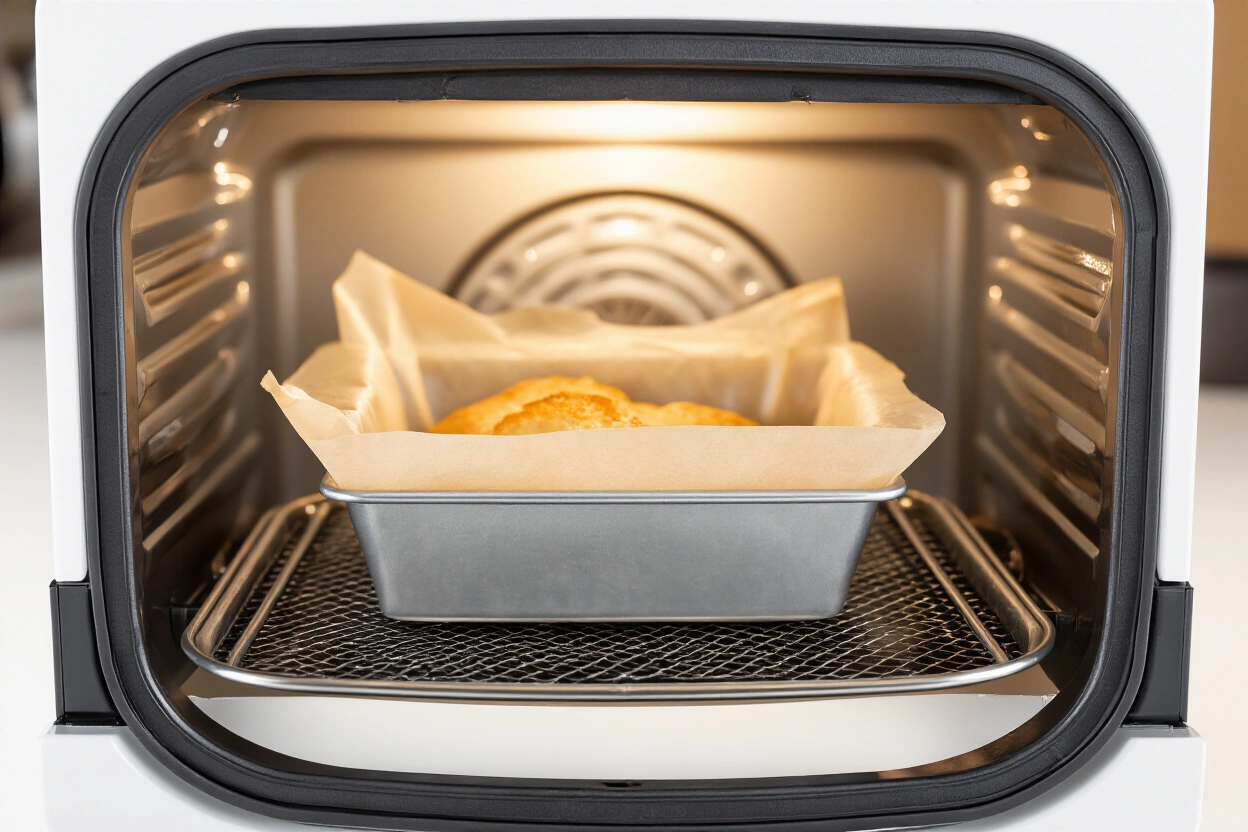
For beginner bakers, that trade-off is the whole game: smaller batches, faster preheating, and more attention to pan size and doneness. Once you understand those limits, an air fryer becomes a very useful tool for cakes, muffins, cookies, brownies, and small quick breads.
How Air Fryer Baking Works
An air fryer cooks with a fan and concentrated heat. In practice, that means the outside of your batter or dough sets quickly. A conventional oven spreads heat more gently and gives a little more forgiveness for larger pans or deeper batters.
That difference affects three things right away:
- Browning happens faster
- Baking times are usually shorter
- Batch size matters more
A basket-style air fryer has the least usable space, so it rewards shallow pans and smaller portions. An oven-style air fryer gives you more height and surface area, which makes it easier to bake a small loaf or a wider cake pan. Either way, the key is to leave room for air to move around the pan.
If you want a simple rule to remember: in an air fryer, treat the recipe like a smaller, faster version of the oven bake, not the same bake in a different box.
What Bakes Well in an Air Fryer and What Does Not
Some baked goods are naturally suited to air fryer heat. Others fight it.
Best candidates
These usually do well because they set fairly quickly and do not need a long, gentle bake:
- Muffins
- Cupcakes
- Small cakes
- Brownies
- Blondies
- Cookies
- Scones
- Small quick breads
- Mini loaf cakes
These are especially good when you want a few servings instead of a full tray.
Possible with adjustment
These can work, but they need more care:
- Banana bread
- Coffee cake in a small pan
- Biscuit-style dough
- Yeasted rolls
- Small hand pies or turnovers
The issue here is often thickness. A thick batter or dough can brown on top before the center is ready. Some doughs also benefit from a short chill before baking so they hold their shape better in the stronger air circulation.
Poor candidates
These are usually awkward in an air fryer unless you are making a very small version:
- Large layer cakes
- Tall loaves
- Deep-dish pies
- Large batches of cookies
- Delicate pastries that need even, gentle heat
- Anything that depends on a long bake for structure
A full-size sandwich loaf, for example, is usually too tall and dense for a basket-style unit. A mini loaf may work; a standard loaf often will not.
How to Convert an Oven Recipe for Air Fryer Baking
The easiest way to adapt an oven recipe is to reduce both temperature and batch size, then check early.
A practical conversion method
Use this as a starting point:
-
Reduce the oven temperature by about 25°F to 50°F.
Air fryers brown faster, so a lower temperature is usually safer than using the exact oven setting. -
Expect a shorter bake time.
Check earlier than the recipe suggests. For many common baked goods, start checking about 5 to 10 minutes before the end of the oven time, and even earlier for cookies or smaller muffins. -
Use a smaller pan or make a smaller batch.
If the batter would fill a standard 8- or 9-inch pan, it may be too much for an air fryer basket. -
Watch the top closely.
If the surface is browning too quickly, lower the temperature again or cover loosely with foil if your model and recipe allow it.
Simple decision guide
| Oven recipe situation | Air fryer approach | Why it matters |
|---|---|---|
| Thin cookies | Usually works well with close checking | Fast surface browning is manageable |
| 6-inch cake | Strong candidate | Fits better and bakes more evenly |
| Standard loaf cake | May need a smaller pan or split batch | Tall centers often lag behind |
| Large sheet cake | Usually not a good fit | Airflow and space are limited |
| Very wet batter | Use caution | Center may stay underbaked while top colors |
If you already bake with fan ovens, the conversion is often easier because both use moving air.
Batch size matters
Air fryer baking is best when you think small. Instead of forcing a full recipe into the basket, divide it into two smaller pans or bake in stages. That may feel slower at first, but it usually gives you better texture and more even cooking.
Choosing the Right Air Fryer, Pan, and Accessories
The appliance itself affects what you can bake.
Basket-style vs oven-style air fryers
Basket-style air fryers
These are better for very small cakes, muffins, cookies, and mini loaves. Their main limitation is height and width. A round 6-inch cake pan, a small square pan, or a couple of silicone muffin cups are often more realistic than a large loaf pan. As a rough guide, many basket-style models work best with pans around 5 to 7 inches across, depending on the basket shape and usable height.
Oven-style air fryers
These usually give you more room for a cake pan, loaf pan, or multiple small pans. A 7- or 8-inch round pan, a small 8-by-8-inch pan, or a standard mini loaf pan may fit more comfortably in these units, though exact space varies by model.
If you are buying bakeware for an existing air fryer, measure the usable interior space first. Leave room for airflow around the pan, not just enough space to squeeze it in. A pan that fits on paper may still bake poorly if it blocks circulation.
Metal vs silicone bakeware
Metal bakeware tends to conduct heat better. That usually means faster setting and better browning on the edges. For cakes, brownies, and muffins, metal is often the better choice when you want a firmer structure.
Silicone bakeware releases easily and is convenient for cleanup, but it insulates more. That can mean softer edges and slightly slower browning. It is useful when sticking is a concern, but it is not always the best choice if you want crisp sides or a well-set crumb.
Parchment paper vs foil
Parchment paper is usually the easier choice for lining pans or making cleanup simpler. Use it carefully so it does not block too much airflow or lift into the heating area.
Foil can help with cleanup or with shielding the top of a bake that browns too quickly. Use it cautiously and only in a way that does not interfere with the fan or touch the heating element.
As a general safety rule, use only accessories and liners that your air fryer manufacturer allows.
Step-by-Step: How to Bake in an Air Fryer
Here is a reliable process for most beginner-friendly bakes.
1. Preheat if your model and recipe benefit from it
Some air fryers heat quickly enough that preheating feels unnecessary, but for cakes, muffins, and cookies, a brief preheat often helps the batter start setting properly. If your model manual recommends preheating for baking, follow that guidance.
2. Prepare a pan that fits comfortably
Grease the pan, line it if needed, and make sure it sits flat in the basket or on the rack. Do not use a pan that crowds the cavity. If airflow is blocked, the edges may overcook while the center stays soft.
3. Fill the pan only partway
This matters more than many beginners expect. A cake pan or muffin cup that is too full can overflow or bake unevenly. Leave room for rise, especially with cakes and quick breads.
4. Bake at the adjusted temperature
Use the lower temperature you chose for the conversion. Resist the urge to crank the heat to “finish faster.” That usually burns the top first.
5. Check early

Begin checking before the recipe’s full oven time is up. For cookies, look for set edges and a center that still seems slightly soft. For cakes and quick breads, use a toothpick test or, when appropriate, an internal temperature check for doneness.
6. Let it rest before removing
Many air fryer bakes continue to firm up after the basket is opened. A few minutes of resting can make a difference, especially for tender cakes and muffins.
How to Keep the Top from Burning Before the Center Is Done
This is the most common air fryer baking problem, and it usually has a few causes: too much heat, too much batter depth, or a pan that blocks airflow.
What to try first
- Lower the temperature a little
- Use a shallower pan
- Switch from silicone to metal
- Check earlier
- Move the pan to a position with better airflow, if your model allows it
- Rotate or turn the pan halfway through baking if your air fryer has noticeable hot spots
If the top is already dark but the center is still loose, a loose foil shield can help for the rest of the bake. Keep it tented lightly, not pressed against the batter.
A useful example
A mini banana bread that looks finished on top after a short bake may still have a wet center if the loaf pan is too deep. A smaller loaf pan, a lower temperature, and a longer bake with early foil protection often works better than forcing the original pan size.
Best Practices for Cakes, Muffins, Cookies, and Small Breads
Different bakes respond differently to air fryer heat.
Cakes
Small cakes are one of the best uses for an air fryer. Choose a pan that leaves room around the sides. Round 6-inch cakes are often easier to manage than larger cakes because they fit more comfortably and bake more evenly.
Use a metal pan if you want a better set on the sides. Check early, because the surface can color quickly.
Muffins
Muffins are a strong air fryer candidate because they are portioned individually. You can bake a small batch in muffin cups or a compact muffin tin, depending on the size of your machine.
For best results, fill cups only partway and avoid overcrowding. Muffins that touch too closely may brown unevenly.
Cookies
Cookies work well when you keep the batch small and the dough portions even. Parchment can help with cleanup, but do not cover the basket so completely that air cannot circulate.
Watch the edges closely. Cookies often look pale at first, then go from underdone to overbrowned quickly.
Small breads and quick breads
Mini loaves and small quick breads can be successful, but they need the most attention to center doneness. Dense batters take longer to set, so they are the most likely to brown too fast on top.
If you are baking a mini loaf, a metal pan is usually the safer first choice. If the top colors too quickly, cover it loosely and continue baking until the center tests done.
Common Mistakes and How to Fix Them
The outside is browned, but the center is raw
This usually means the temperature was too high or the pan was too deep. Lower the heat next time and use a shallower pan or smaller batch.
The baked good is dry
Dryness often comes from overbaking. In an air fryer, that can happen quickly because the hot air is so direct. Check earlier than you would in an oven and remove the item as soon as it is done.
The bake is uneven
Uneven baking usually comes from overcrowding, a pan that is too large, or poor airflow around the sides. Choose a smaller pan and leave space around it. If your air fryer has a hot side, rotate the pan or swap its position partway through.
The parchment paper shifts
If parchment is loose, it can move around in the airflow. Trim it to fit the pan rather than letting it float freely in the basket.
The bottom is pale
A pale bottom can happen with silicone bakeware or with pans that insulate too much. Metal usually helps here.
Cleanup and Safety Tips After Air Fryer Baking
Let the appliance cool before removing liners, pans, or crumbs. Use oven mitts, because the pan and basket stay hot longer than many beginners expect.
Clean out crumbs and any drips once the unit is cool. This matters more after baking than after some other air fryer uses, because sugar and butter residue can build up quickly.
Check your manufacturer’s instructions before using foil, parchment, or specialty pans again. If an accessory seems to block airflow or touch the heating element, do not use it.
Frequently Asked Questions About Air Fryer Baking
Can I bake cakes, muffins, cookies, or bread in an air fryer?
Yes, especially small cakes, muffins, cookies, brownies, and mini quick breads. Larger loaves and deep batters are harder to manage.
Do I need to preheat the air fryer?
Often, yes for baking. A brief preheat can help the batter set more evenly, but follow your model’s manual if it gives specific guidance.
What pans can I use?
Use pans that fit comfortably and are approved for your air fryer and temperature range. Metal pans usually give the most reliable browning; silicone is easier to release but often bakes a little more slowly.
How do I choose a pan size?
For basket-style air fryers, smaller round pans, mini loaf pans, and muffin cups are usually the safest starting point. For oven-style air fryers, a 7- or 8-inch round pan or a small square pan may fit better, depending on the model. Always leave space around the pan for air to circulate.
Can I use parchment paper or foil?
Yes, if used carefully and allowed by the manufacturer. Do not block airflow or let liners interfere with the fan or heating element.
How do I know when it is done?
Use visual cues plus a doneness test. For cakes and quick breads, a toothpick should come out clean or with a few moist crumbs, not wet batter. For richer batters or filled bakes, an internal temperature check may be useful if the recipe or food-safety guidance calls for it.
Why does the top brown so fast?
Air fryers move hot air aggressively, so the surface colors quickly. Lower temperature, smaller pans, and early checking usually help.
Can I bake a full-size recipe?
Sometimes, but not usually in one batch. Small batches are the most reliable option, especially in basket-style models.
Final Takeaway
If you are learning how to bake without an oven using an air fryer, the most useful mindset is simple: bake smaller, check earlier, and respect airflow. Once you adjust for the air fryer’s faster browning and tighter space, it becomes a practical way to make everyday baked goods with less waiting and less equipment.

