
How to Clean a Cheese Grater Safely Without Cuts, Rust, or Leftover Bits

If you want the fastest safe answer, this is it: rinse the grater as soon as you finish using it, wash it with warm soapy water and a brush or sponge that stays mostly on the outside of the blades, then dry it completely before putting it away. Fresh cheese comes off much easier than dried cheese, and the less time residue sits in the holes, the less scrubbing you’ll need later.
For most home kitchens, hand washing is the safest default. It gives you more control around sharp edges, and it lets you clean the tiny holes without forcing your fingers into them. If your grater is clearly labeled dishwasher-safe, the dishwasher can be a lower-effort option, but it is not the best choice for every grater style or material.
What You Need Before You Start
You do not need special tools. A simple setup usually works best:
- Warm water
- Dish soap
- A dish brush or bottle brush
- A sponge or dish wand
- A towel or drying rack
- Optional: a rubber glove for the hand holding the grater
A brush is often the most useful tool because it can reach into the grater holes without your fingers getting close to the cutting edges. A sponge can work too, but it may catch on the blades, especially on a box grater with sharper, more exposed sides.
If the grater is large or awkward, clear a stable spot in the sink or on the counter first. A slipping grater is how people end up with small cuts.
How to Clean a Cheese Grater Step by Step
1) Rinse it right away
Hold the grater under warm running water and rinse off loose cheese before it dries. This is the easiest point in the process because the residue is still soft. If you wait until after dinner, the cheese can firm up in the holes and cling more tightly.
If the grater has a lot of buildup, let the water run through the grating surface from the back side first. That can help push loose shreds back out instead of packing them deeper into the holes.
2) Add dish soap and clean with a brush
Put a little dish soap on the grater or on your brush. Scrub the grating surface with short, controlled strokes. Keep your fingers on the handle or on the flat, non-sharp parts of the tool.
A dish brush works especially well for a box grater because the bristles can move across the surface without your hand sliding into the blades. If you use a sponge, press it gently and avoid dragging it hard across the sharp side. A torn sponge is annoying; a cut finger is worse.
3) Work from the safer side when you can
For many graters, it helps to clean from the back side of the holes as well as the front. That gives you a better angle for loosening residue without pushing directly into the sharp teeth.
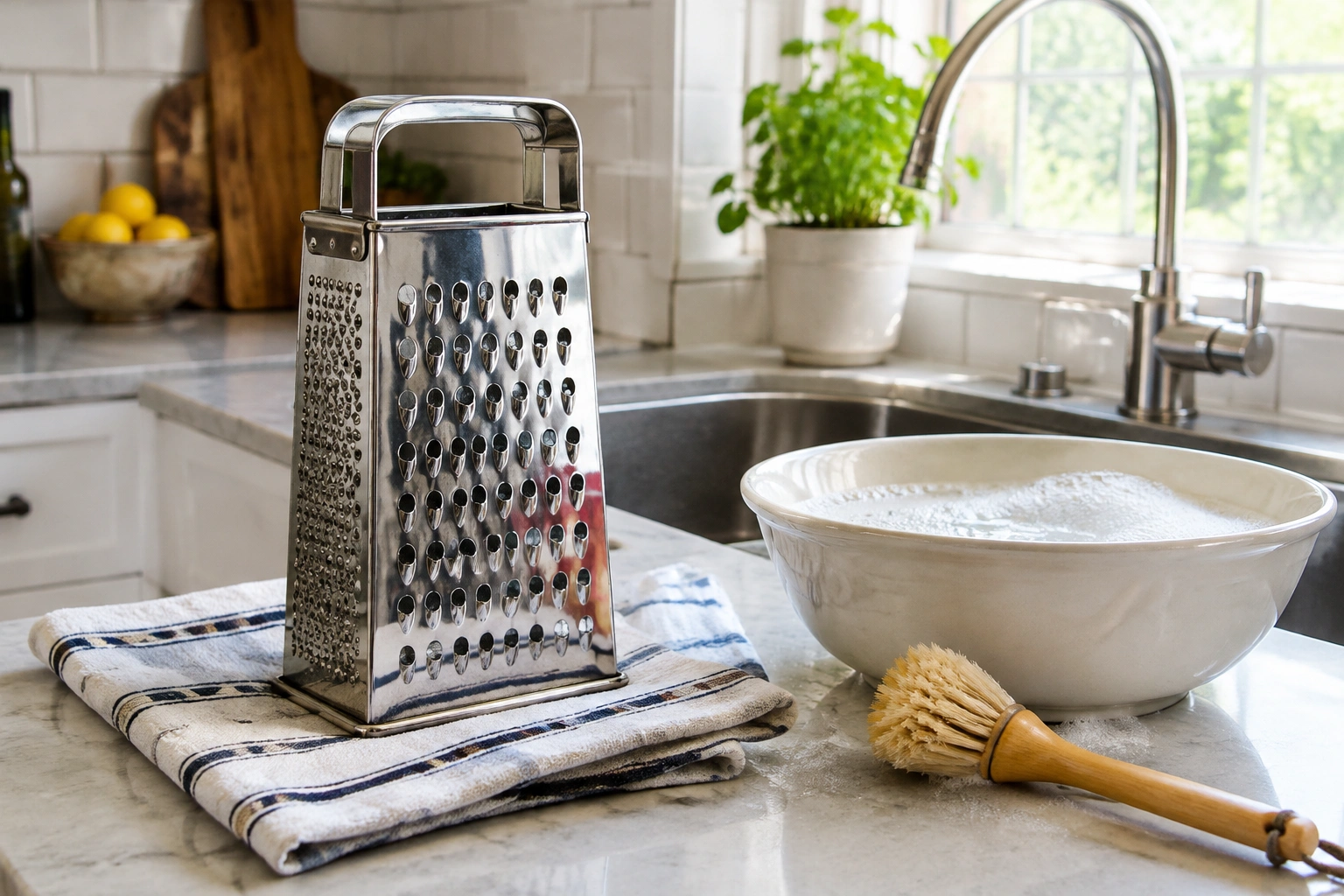
If cheese is stuck in a few stubborn holes, use the brush at a shallow angle rather than stabbing straight down. The goal is to lift the residue out, not force it through.
Set the grater on a towel, cutting board, or the sink edge so it does not slide while you scrub.
4) Rinse again and check the holes
Rinse away the soap and look closely at the grater under the light. If you still see cheese in the holes, repeat the brush step. A quick second pass is usually easier than trying to scrub everything at once.
Do not assume a grater is clean just because the surface looks mostly clear. Tiny bits can hide in the openings, especially on microplanes and fine-hole graters.
How to Remove Dried-On Cheese From the Holes
Once cheese dries, the cleaning job gets slower. Soaking is usually the most practical next step. Fill a sink, bowl, or dishpan with warm soapy water and let the grater sit for a short time so the residue softens.
A brief soak is often enough for dried cheese. You are not trying to soak it for hours; you just want to loosen the residue so a brush can finish the job. Long soaking is not automatically better, and with some metals it can increase the chance of rust or dull-looking spots if the grater is not dried well afterward.
After soaking, scrub again with a brush. If bits remain in the holes, work from both sides. Avoid using a knife tip, skewer, or anything hard that could bend the metal or slip into your hand.
A few cleanup hacks people use
Some home cooks like to rub a lemon wedge over the grater before rinsing. That is a commonly shared tip and may help loosen residue for some people, especially on box graters, but it is still best treated as an anecdotal helper step rather than something backed by direct evidence in this article. You may still need warm soapy water and a brush afterward.
Another tip you may see is grating a raw potato after the cheese to help dislodge soft, fatty bits. That idea has been shared as a cleaning trick, but I would treat it as an occasional kitchen hack rather than a standard method. It adds an extra food item and extra cleanup, so it is not always the most practical choice for busy households.
A few videos and posts also show cleaning sprays being used on graters. That is another anecdotal tip people sometimes try, but if you go that route, check that the product is meant for food-contact kitchen tools and rinse thoroughly afterward. For everyday home use, soap and water are still the most straightforward option.
How to Clean Different Types of Graters
Box grater
A box grater has the most surfaces and the most exposed edges, so it usually takes the most care. The safest approach is to hold it by the top handle or set it on a stable surface and clean one side at a time. A brush is usually better than a sponge here because it is less likely to snag.
If one side is especially clogged, rotate the grater and clean from the opposite side too. That often loosens trapped bits without force.
Microplane
A microplane has very fine, very sharp teeth. It can be easier to rinse than a box grater because there is less bulk, but the small openings can hold onto tiny particles. Soaking for a short time, then brushing gently, is usually the least frustrating method.
Be careful not to run your fingers across the teeth while checking for residue. A microplane can cut even when it does not look dangerous.
Rotary grater
A rotary grater has moving parts, so the cleaning job is partly about disassembly. Take it apart according to the manufacturer’s instructions, then wash each piece separately. Residue can hide around the drum and inside the mechanism, so a brush is especially useful.
Do not force the handle or drum if something feels stuck. If the parts do not come apart easily, check the manual rather than prying at them.
Can You Put a Cheese Grater in the Dishwasher?
Sometimes, yes — but only if the manufacturer says it is dishwasher-safe. That matters because “metal” does not automatically mean “dishwasher-safe,” and mixed-material designs can have handles, coatings, or joints that do not hold up as well.
If the grater is stainless steel and clearly marked dishwasher-safe, the dishwasher may be a convenient option. If the grater has plastic parts, a coated surface, or a delicate mechanism, hand washing is the safer bet.
Here is the practical trade-off:
| Cleaning method | Best for | Main advantage | Main downside |
|---|---|---|---|
| Hand washing | Most graters, especially box and microplane styles | More control around sharp edges | Takes a few extra minutes |
| Dishwasher | Clearly labeled dishwasher-safe graters | Lower effort | Not suitable for every design or material |
If you are unsure, wash by hand. That avoids the risk of rust, warping, or damage from heat and detergent exposure.
How to Dry and Store a Cheese Grater Safely
Dry the grater fully before putting it away. A towel works well for the flat surfaces, and then you can set it upright on a rack so air reaches the holes and edges. Do not toss it into a drawer while it is still damp.
Drying matters because it helps reduce rust risk and keeps the grater from developing a stale smell. Stainless steel generally handles washing better than lower-quality metals, but even stainless tools last longer when they are dried properly.
For storage, keep the grater where the blades will not rub against other utensils. A crowded drawer can dull the edges over time and makes it easier to grab the wrong side by accident.
How to Keep Cheese From Sticking Next Time
The easiest prevention step is simple: clean the grater as soon as you finish using it. Fresh residue is much easier to remove than dried residue, and that one habit saves the most work.
Two other low-effort habits can help, especially on busy nights: rinse the grater immediately after grating, even if you plan to wash it later, and brush any residue out before it dries completely. Those small steps can keep the holes from clogging up in the first place.
A light coating of oil or a quick spray is sometimes suggested before grating to reduce sticking. That may help in some cases, but it is not something I would treat as a universal rule. It can leave extra residue on the tool, and not every kitchen cook wants that trade-off. If you try it, use a very small amount and wash the grater promptly afterward.
Another practical trick is to tap the grater gently as you work so shreds do not pack tightly into the holes. Less buildup during use means less scrubbing later.
Common Mistakes to Avoid
The biggest mistake is waiting too long. Once cheese dries inside the holes, the cleanup gets harder fast.
A few others are worth avoiding:
- Scrubbing with bare fingers
- Pressing hard enough to bend the grater
- Using abrasive tools that can damage the surface
- Leaving the grater wet in the sink or drawer
- Assuming a quick rinse removed everything
If a sponge tears on the blades, switch to a brush. If the residue will not budge, soak it briefly and try again. Force is usually the wrong fix.
A Simple Decision Rule for Busy Kitchens
If the cheese is fresh, rinse and wash by hand right away. If the residue is dried on, soak briefly first. If the grater has a manufacturer dishwasher-safe label and no delicate parts, the dishwasher may be fine. If you are unsure, hand washing gives you the most control and the least risk.
That is the balance I recommend in a busy home: use the gentlest method that still gets the tool clean, then dry it fully so it is ready for the next meal.
FAQ
What is the safest way to clean a cheese grater without cutting yourself?
Use warm soapy water, a brush, and a steady grip on the handle or frame. Keep your fingers away from the cutting surface and clean from the safer side whenever possible.
How do I get dried cheese out of the holes?
Soak the grater in warm soapy water for a short time, then brush the holes from both sides. Avoid poking at the residue with sharp tools.
Can I clean a cheese grater in the dishwasher?
Only if the manufacturer says it is dishwasher-safe. Hand washing is the safer default for many graters, especially those with mixed materials or moving parts.
Is a sponge safe to use on a box grater?
It can be, but a sponge may snag or tear on the blades. A dish brush is usually safer and easier to control.
Should I clean the grater right after using it?
Yes, if possible. Fresh cheese is much easier to remove than dried-on residue.
How do I stop my grater from rusting?
Dry it completely after washing and store it in a dry place. Leaving it damp is the fastest way to invite rust or odors.
What about lemon juice or cooking spray?
Lemon is a commonly shared cleaning trick, and some cooks find it helpful. Cooking spray or oil may reduce sticking for some people, but both are optional and should be used sparingly. Soap, water, and a brush are still the most dependable basics.