How to Clean Dishwasher with Vinegar and Baking Soda Fast
Clean the empty dishwasher with a vinegar cycle first, then run baking soda afterward for odor control. This works well for light buildup, but clogged filters, hard-water scale, and drainage problems may need deeper cleaning.
If your dishwasher smells stale, leaves a light film, or looks cloudy around the door, vinegar and baking soda can help with a fast refresh. This method is simple, budget-friendly, and useful for routine cleaning when the machine is not heavily scaled or clogged.
- Separate the steps: Use vinegar first and baking soda second for better results.
- Focus on hidden parts: The filter, gasket, drain, and spray arms matter as much as the tub.
- Check the manual: Some dishwashers have material or cleaning limits.
- Use it as maintenance: This method is best for odor control and light residue, not major buildup.
Why Vinegar and Baking Soda Work for Dishwasher Cleaning
Vinegar and baking soda are popular because they target different kinds of buildup. Vinegar is acidic, so it helps loosen some mineral deposits and break down greasy residue, while baking soda helps absorb odors and gives the tub a fresher smell.
What each ingredient does to grease, mineral buildup, and odors
In a dishwasher, grease and food residue can cling to the door, filter, and corners after repeated cycles. Vinegar can help dissolve some of that film, especially when it is light and recent. Baking soda does not “scrub” in a dramatic way, but it can help neutralize odors and leave the interior smelling cleaner.
For many home kitchens, this is enough for routine maintenance between deeper cleanings. If you also keep up with regular filter rinsing, the dishwasher usually stays in better shape and runs with fewer smells.
Dishwasher odors often come from trapped food particles, standing moisture, or a dirty filter rather than from the detergent itself.
When this method is effective and when it is not enough
This method works best for light grease, mild odor, and routine upkeep. It is less effective if you have heavy limescale, a clogged drain, visible mold growth, or a filter packed with debris.
If your water is hard, mineral buildup can become stubborn over time. In that case, vinegar may help a little, but you may need a stronger descaling approach or a manufacturer-approved cleaner.
- Simple and inexpensive
- Good for odor control and light residue
- Uses common pantry ingredients
- Not a fix for major buildup
- Can miss hidden clogs if the filter is dirty
- Not ideal for every appliance material or finish
What You Need Before You Start
Before cleaning, gather only a few basic items and check your dishwasher’s care guide. Manufacturer instructions matter because some finishes, seals, and parts need special handling.
Vinegar type, baking soda amount, and optional tools
White distilled vinegar is usually the best choice because it is clear and widely used for cleaning. A common home amount is about 1 to 2 cups for the vinegar cycle and about 1 cup of baking soda for the freshening step, but your machine size and manufacturer guidance may change that.
Do not assume more product means better results. Too much vinegar or baking soda can leave residue, create extra mess, or distract from the real problem, such as a dirty filter.
Safety checks for racks, seals, filters, and spray arms
- Remove dishes, utensils, and loose food scraps.
- Check the bottom filter for trapped debris.
- Inspect door seals for cracks, mold, or sticky residue.
- Make sure spray arms spin freely.
- Confirm the racks are seated correctly.
Look closely at the filter and spray arms before you run the cleaning cycle. If the filter is packed with food, the vinegar cycle alone will not solve the problem. For safety, avoid mixing cleaners, and never combine vinegar with bleach-based products.
Always check your dishwasher manual before using vinegar regularly. Some manufacturers warn against repeated acid use on certain rubber seals, stainless finishes, or internal parts.
How to Clean Dishwasher with Vinegar and Baking Soda Step by Step
The fastest safe method is a two-part routine: first run vinegar to help loosen residue, then use baking soda for odor control. Keep them separate so each ingredient can do its job instead of reacting in the wash water too early.
Preparing the dishwasher: emptying, scraping, and filter inspection
Remove all dishes, racks only if your manual allows it, and any loose items from the bottom. Wipe away large food scraps so they do not recirculate during cleaning.
Take out the filter if your model uses a removable one. Rinse it under warm water and gently brush away soft debris before putting it back.
Look for seeds, rice, labels, or other small items that can block water flow. A blocked drain area can make the dishwasher smell worse even after cleaning.
This preparation step matters because cleaning products work best on surfaces they can actually reach. If the filter is clogged, water circulation drops and the machine may keep smelling even after a fresh cycle.
Running the vinegar cycle correctly
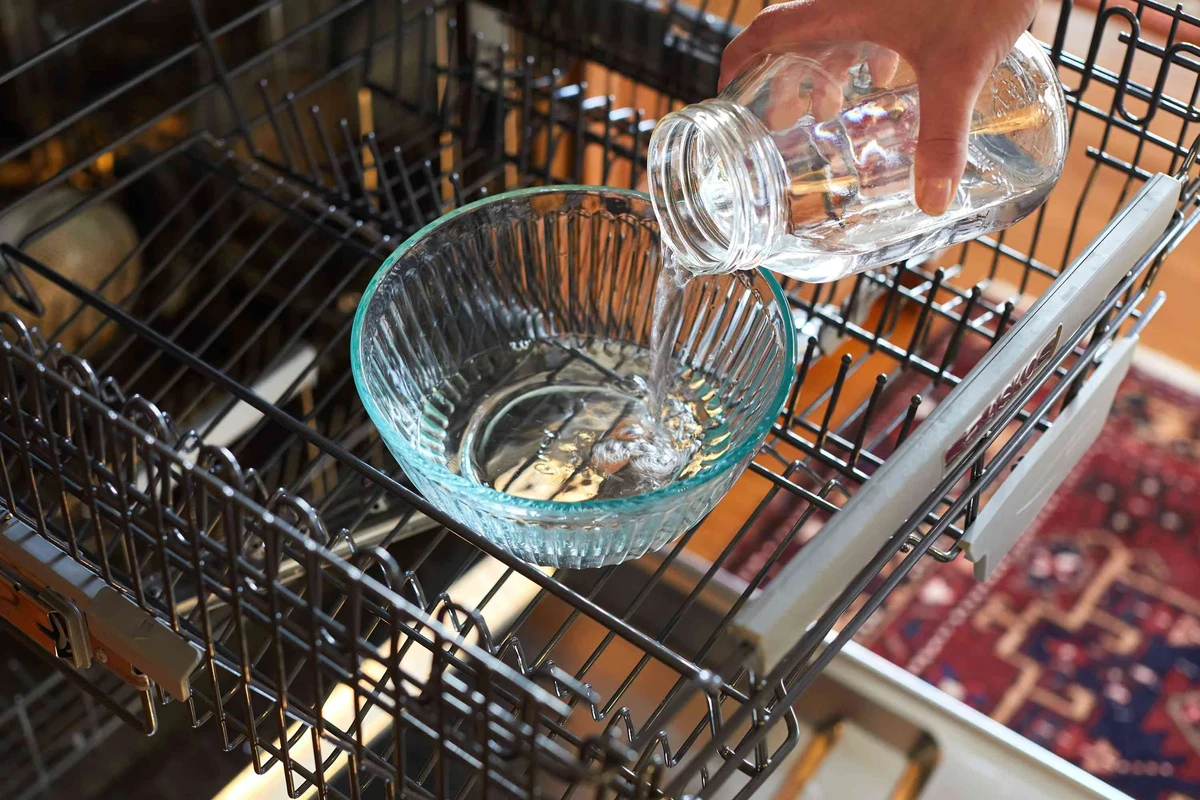
Pour white distilled vinegar into a dishwasher-safe cup or bowl and set it upright on the top rack, or in the location recommended by your manual.
Choose a hot water cycle if your machine has one. Heat helps loosen grease and lets the vinegar reach more of the interior surfaces.
Do not interrupt the wash halfway through. A complete cycle gives the vinegar time to work on light film and odor-causing residue.
If your dishwasher has a sanitize or high-heat option, use it only if the manufacturer says it is safe for cleaning with vinegar. When in doubt, follow the owner’s manual rather than guessing.
Adding baking soda for odor control and freshening
After the vinegar cycle ends, sprinkle a thin layer of baking soda across the bottom of the empty dishwasher. A light, even layer is enough; you do not need to mound it up.
Then run a short hot water cycle or a rinse cycle. This helps carry away any lingering smell and leaves the tub fresher. The result is usually a cleaner scent and a less sticky interior, especially if the machine was only mildly dirty.
The dishwasher still smells after the vinegar and baking soda routine.
Check the filter, drain, and door gasket for trapped food or slime. Odors often return when residue is hidden in a part the cleaning cycle cannot fully reach.
Best Places to Focus During the Cleaning Process
The tub itself is only part of the job. For the best result, clean the parts where food, moisture, and soap residue collect most often.
Door gasket, detergent dispenser, filter, and drain area
Wipe the door gasket with a damp cloth and a little vinegar if the manufacturer allows it. The gasket can trap grease and grime in the folds, which is one reason the dishwasher may smell sour even after a wash.
Open the detergent dispenser and check for dried detergent paste or buildup around the edges. Also inspect the drain area near the bottom of the tub, since that is where small scraps often settle.
Use care around sharp bits of glass, broken dishes, and metal fragments in the filter or drain area. Wear gloves if you need extra protection while cleaning by hand.
Spray arms, corners, and hidden residue buildup points
Spray arms can collect tiny bits of food in their holes, which reduces water pressure and leaves dishes less clean. If the holes are blocked, use a soft brush or toothpick carefully, following the appliance guide.
Also check the corners of the tub, under the lower rack, and around hinges or tracks. These hidden spots often hold the gray film that makes a dishwasher look older than it is.
- Wipe seals and corners by hand
- Rinse the filter regularly
- Use a hot cycle for better residue removal
- Pouring vinegar and baking soda together in the same step
- Scrubbing seals with abrasive pads
- Ignoring blocked spray holes or drain buildup
Common Mistakes That Reduce Cleaning Results
Most poor results come from timing, too much product, or skipping the parts that actually collect debris. A careful routine usually works better than a stronger one.
Mixing vinegar and baking soda too early
Vinegar and baking soda fizz when they meet, but that reaction happens fast and does not keep cleaning for long. If you mix them together before or during the same small wash step, you lose much of the useful acid and base action.
That is why it is better to use vinegar first, then baking soda afterward. Separate steps give you better odor control and a more useful cleaning cycle.
Using too much product or cleaning the wrong parts
More vinegar does not always mean a cleaner dishwasher. Too much can leave an odor of its own, and too much baking soda can leave a powdery residue if the rinse is too short.
It also helps to clean the filter, gasket, and drain instead of focusing only on the tub walls. Those hidden areas are often where the real problem starts.
Ignoring hard-water scale, mold, or clogged filters
Hard-water scale looks chalky or white and may cling to metal or plastic surfaces. Vinegar can help with light scale, but heavy buildup often needs a stronger descaler or a product made for dishwashers.
If you see mold or black residue around the gasket, clean it promptly and let the area dry. Persistent mold, drainage trouble, or foul water pooling may point to a mechanical issue rather than a simple cleaning need.
If your dishwasher has standing water, repeated drainage failure, or visible electrical damage, stop and contact a qualified appliance technician. Cleaning products will not fix a pump or drain problem.
How Often to Clean a Dishwasher with Vinegar and Baking Soda
For many households, a monthly freshening routine is enough. If the dishwasher runs daily, handles greasy pans, or sits in hard water, you may need to clean it more often.
Cleaning frequency based on usage, water hardness, and odor issues
Light-use kitchens may only need this routine every four to six weeks. Heavier-use kitchens, or homes with hard water, may benefit from a shorter interval because residue and mineral deposits build faster.
If you notice odor before the month is up, do not wait. A quick filter rinse and gasket wipe can help prevent the smell from settling in.
Signs your dishwasher needs a deeper clean sooner
Watch for cloudy dishes, gritty residue, slow drainage, or a sour smell when you open the door. These are common signs that the machine needs more than a simple freshening cycle.
If water sits at the bottom after a wash, the filter or drain may need attention right away. In that case, vinegar and baking soda are only part of the solution.
When to Use Other Cleaning Methods Instead
Vinegar and baking soda are useful, but they are not the answer for every dishwasher problem. Some situations call for a different product or a repair check.
Situations involving heavy limescale, grease, or persistent drainage problems
If the machine has thick limescale, heavy greasy film, or a drain that keeps backing up, look for a dishwasher cleaner made for descaling or follow the appliance maker’s guidance. A single pantry-based cleaning may not be strong enough.
Persistent drainage issues can also mean a hose, pump, or filter assembly needs service. Cleaning helps maintenance, but it cannot repair worn parts.
When manufacturer instructions or appliance materials change the approach
Some dishwasher interiors, seals, or finishes do not respond well to repeated acid cleaning. That is why the manual matters more than general internet advice when the two conflict.
If your appliance guide recommends a specific cleaner, use that product or a method the brand approves. This is especially important for newer machines, specialty finishes, or models with sensitive components.
If you are unsure whether vinegar is safe for your model, check the brand’s support page or use a cleaner listed in the owner’s manual. Manufacturer guidance is the best source for appliance care.
Final Recap: The Fastest Safe Way to Keep Your Dishwasher Fresh
The fastest safe routine is simple: empty the dishwasher, clean the filter, run a vinegar cycle, then use baking soda for odor control. That sequence works well for light buildup because it tackles grease, residue, and smell without overcomplicating the process.
For long-term care, keep an eye on the gasket, spray arms, drain, and filter. If odor, scale, or drainage problems keep coming back, move beyond pantry cleaning and follow the manufacturer’s instructions or call for service. For a related appliance-care read, see our guide on air fryer baskets and dishwasher safety, since not every kitchen item should be cleaned the same way.
Think of dishwasher cleaning like maintaining a baking pan: the visible surface matters, but the corners, seams, and hidden buildup points often decide the final result.
Frequently Asked Questions
A common home amount is about 1 to 2 cups of white distilled vinegar in a dishwasher-safe cup or bowl. Always check your appliance manual first, because some models have specific cleaning limits.
It is better not to mix them together too early. They react quickly, which reduces the cleaning benefit, so use vinegar first and baking soda in a separate step.
Many households can do this about once a month. If you run the dishwasher often, have hard water, or notice odors sooner, clean it more frequently.
The smell may be coming from the filter, drain area, gasket, or spray arms. If those parts are dirty or clogged, the odor can return even after a cleaning cycle.
Not always. Some manufacturers caution against repeated vinegar use on certain seals or finishes, so it is important to verify the owner’s manual before cleaning.
For heavy limescale, grease, or drainage problems, use a dishwasher cleaner made for descaling or follow the manufacturer’s guidance. If the machine still has trouble, it may need service.