How to Fold Egg Whites Into Cake Batter Without Losing the Air
If you’ve ever made a sponge cake, chiffon cake, or angel food-style cake and ended up with a dense crumb, the problem may not have been the recipe. It may have been the folding.
Folding whipped egg whites into cake batter is one of those techniques that looks simple until you try it. The goal is not to mix aggressively until everything is perfectly smooth. The goal is to combine two mixtures while keeping as much trapped air as possible. That air is what helps the cake rise and stay light.
The good news: once you understand the motion and the timing, this becomes a repeatable skill.
What Folding Egg Whites Actually Means
Folding is a gentle mixing method used when one mixture is delicate and already full of air. In this case, that delicate mixture is whipped egg whites.
Instead of stirring in circles or beating with force, you use a broad, lifting motion to bring the batter over the whites and combine them gradually. Think of it as turning the mixture over on itself rather than whisking it together.
That difference matters.
- Stirring tends to knock out air quickly.
- Beating or whisking is even more aggressive and can collapse the foam you worked to create.
- Folding aims to preserve volume while still blending the mixtures enough for baking.
A few faint streaks at the end are usually less of a problem than overmixing until the batter turns flat.
Why Folding Matters for Light, Airy Cakes
Whipped egg whites act like a built-in leavening system. The beaten whites hold air bubbles, and those bubbles expand in the oven. That expansion helps create lift and a tender crumb.
This is especially important in cakes that rely on foam structure, such as:
- sponge cake
- chiffon cake
- angel food cake
- other foam-based cakes that use whipped whites for rise
If you mix too hard, the bubbles break before they ever reach the oven. The cake may still bake through, but it will often be lower, tighter, and less delicate.
A properly folded batter should look airy, not heavy. It should still feel light on the spatula instead of thick and paste-like.
When to Fold Egg Whites Into the Batter
Fold the egg whites in after the base batter is fully prepared, but before it has been overworked.
That usually means:
- Make the yolk-based batter or flour mixture first.
- Whip the egg whites separately to the right peak stage.
- Fold the whites in at the end, just until combined.
If the batter sits around too long after the whites are whipped, the foam can lose volume. If you fold too early, before the base batter is ready, you may end up handling the mixture more than necessary.
A useful rule: once both mixtures are ready, bring them together promptly and work efficiently.
Get the Egg Whites to the Right Peak Stage First
The stage of the whipped whites affects how easy they are to fold.
Soft peaks vs. stiff peaks
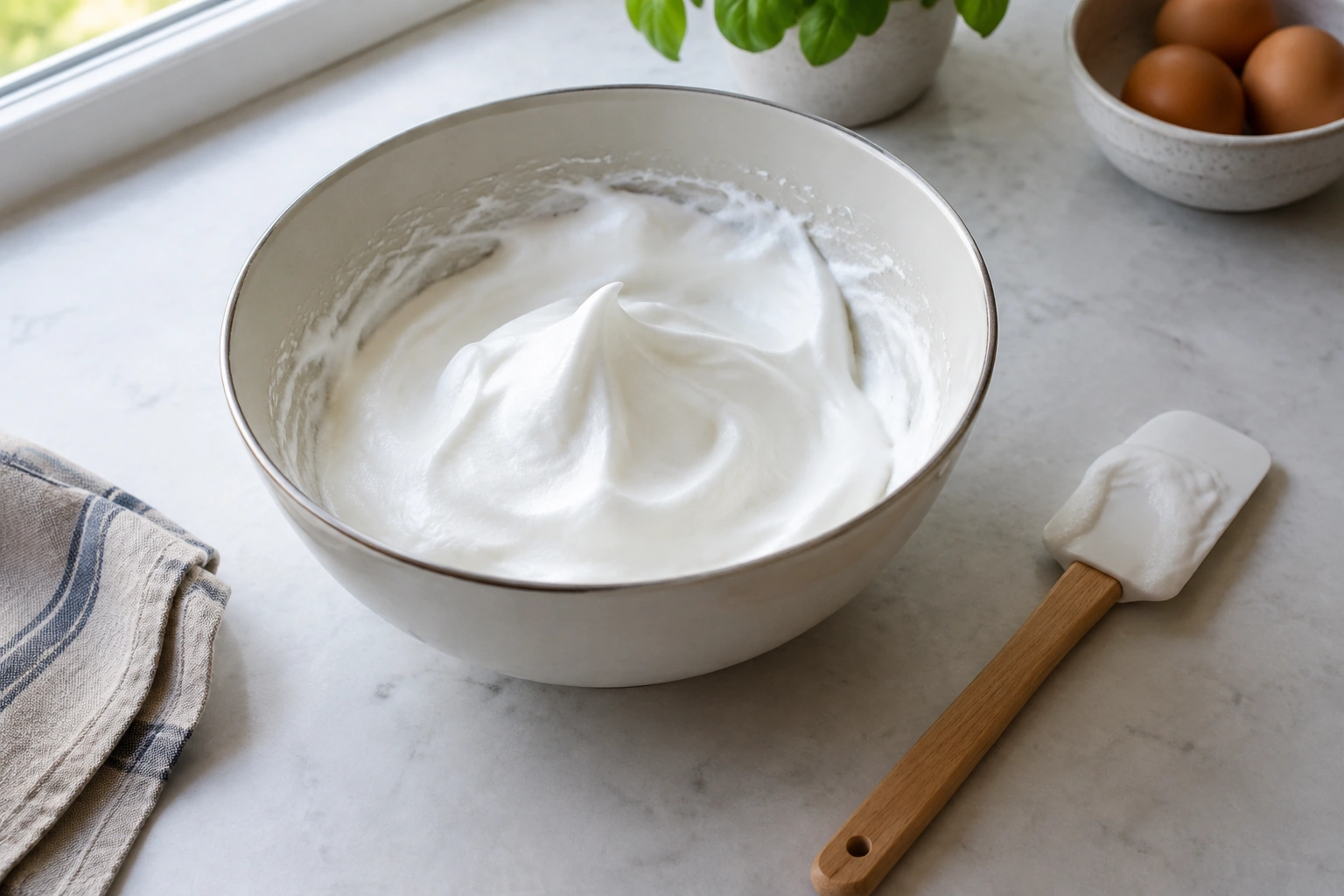
| Peak stage | What it looks like | Folding ease | Best use |
|---|---|---|---|
| Soft peaks | Peaks bend over gently when the whisk is lifted | Easier to fold | Great when you want the lightest, most forgiving incorporation |
| Stiff peaks | Peaks stand upright or nearly upright | Harder to fold | Useful when the recipe needs more structure, but they can be trickier to blend |
Soft peaks are usually easier for beginners because they blend more smoothly into batter. Very stiff, dry whites can be harder to incorporate and may leave clumps that tempt you to overmix.
That said, some recipes call for firmer whites because they need extra structure. If your recipe specifically asks for stiff peaks, follow the recipe. Just be aware that the folding step needs to stay gentle and deliberate.
Choose the Right Bowl and Tool
A large bowl gives you room to move the batter without smashing the foam against the sides. A cramped bowl forces more stirring than folding.
For most home bakers, the best tool is a rubber spatula. It gives you control, reaches the bottom of the bowl, and lets you lift the batter over itself without sharp agitation.
A medium or large whisk can also work in some cases. King Arthur Baking notes that a whisk can be used with a cutting motion down the center of the bowl, then scooping from the bottom and bringing the batter up and over. They also recommend rotating the bowl as you work and continuing until the mixture is homogeneous. King Arthur Baking
For most beginners, though, a spatula is still the safer default. A spatula is slower, but that extra control makes it easier to lift and turn the batter without breaking the foam. A whisk can move the mixture faster, which is useful if you’re comfortable with the motion, but it also makes it easier to overdo the folds and deflate the whites.
A practical tool rule
- Use a spatula if you want maximum control.
- Use a whisk only if you are comfortable keeping the motion very gentle.
- Avoid an electric mixer once the whites are whipped. It is too aggressive for this stage.
Lighten the Batter Before Adding All the Whites
This is one of the most useful steps in the whole process.
Instead of dumping all the whipped egg whites into a thick batter at once, first fold in a small portion to lighten the base. Simon & Schuster’s technique guidance recommends adding about a third of the egg whites first so the batter is easier to work with before the remaining whites go in. Simon & Schuster
That first portion does two things:
- It loosens a heavy batter so the rest of the whites can blend more easily.
- It reduces the chance that the final additions will collapse from rough handling.
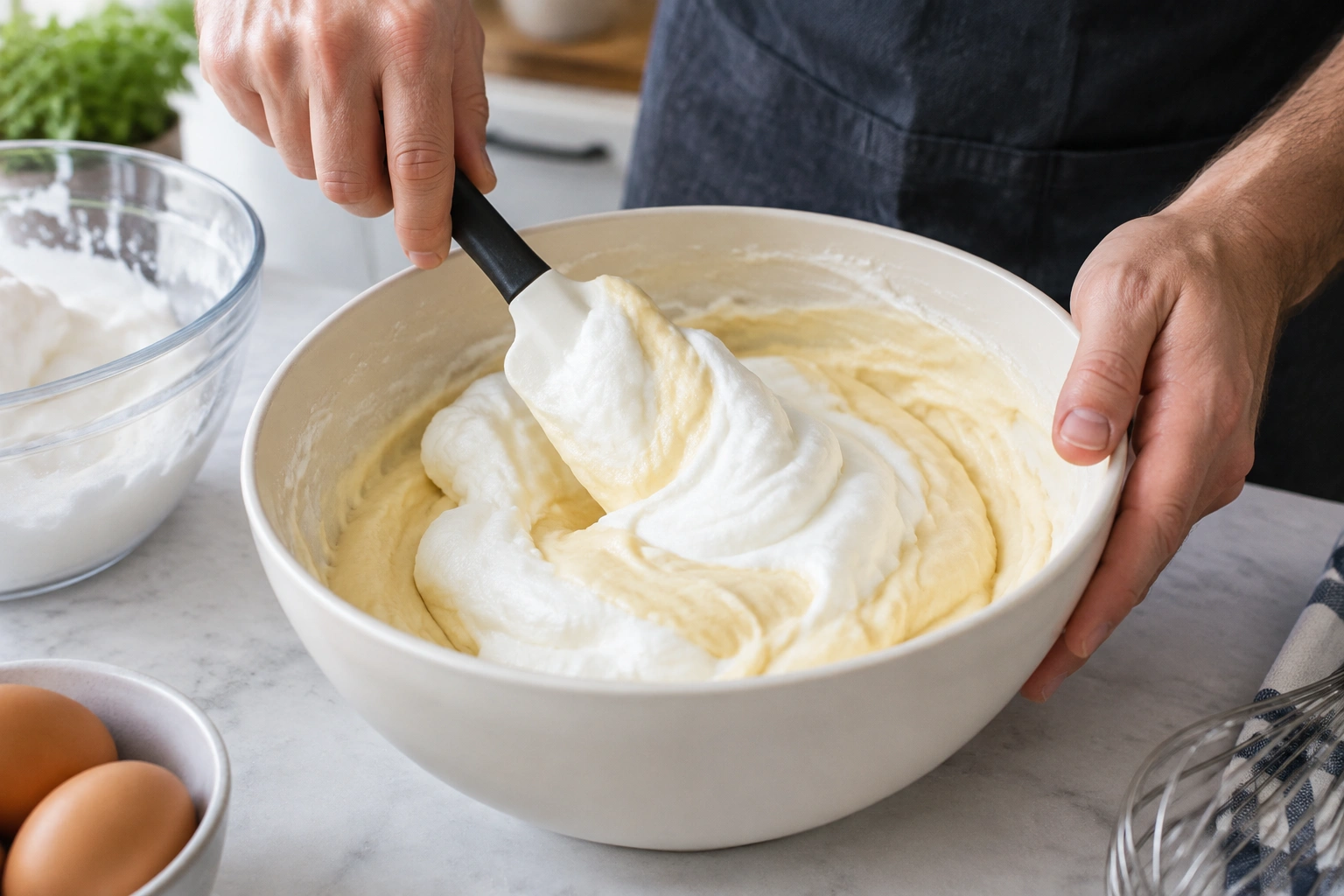
Visual checkpoint: after this first lightening addition, the batter should look looser and paler, with some white streaks still visible. It may not be smooth yet, and that’s fine. The main goal is to make the base batter less dense, not to finish mixing.
This step is especially helpful with thick chiffon or sponge batters that would otherwise fight back during folding.
How to Fold Egg Whites Into Cake Batter, Step by Step
This is the core technique.
1) Add a portion of the whites first
Scoop in about a third of the whipped whites and fold them into the batter. Don’t worry if the mixture looks a little uneven at this stage. This is the “lightening” step.
2) Use a broad cutting motion
Slide the spatula down through the center of the bowl. Then sweep along the bottom and bring the batter up and over the top.
The idea is to lift, not stir.
3) Rotate the bowl as you work
Turn the bowl a little after each fold so you’re working from all sides. That helps the whites incorporate evenly instead of getting crushed in one spot.
4) Add the remaining whites in batches
Once the batter is lighter, add the rest of the whites in one or two more additions. Fold just until the mixture starts to look uniform.
5) Stop before the batter goes flat
The batter should look airy and cohesive, not whipped or soupy. If you keep folding after it’s already combined, you’ll lose the very volume you were trying to preserve.
Visual checkpoint: after the final fold, the batter should be mostly uniform, light, and fluffy, with only a few faint streaks remaining if any. It should hold some body when lifted with a spatula, not look thin or collapsed.
How Many Additions Should You Use?
For most cakes, two or three additions work well.
That gives you a balance between ease and protection:
- One addition is faster, but it is harder to combine evenly without deflating the whites.
- Multiple additions take a little longer, but they make the batter easier to manage and reduce the need for aggressive folding.
A thick base batter almost always benefits from being lightened first. If your batter is already fairly loose, you may not need as many additions.
As a decision rule: if the batter resists the whites and looks heavy after the first fold, use smaller additions rather than trying to force everything together at once.
How to Tell When the Batter Is Ready
You’re looking for a batter that is mostly uniform and still airy.
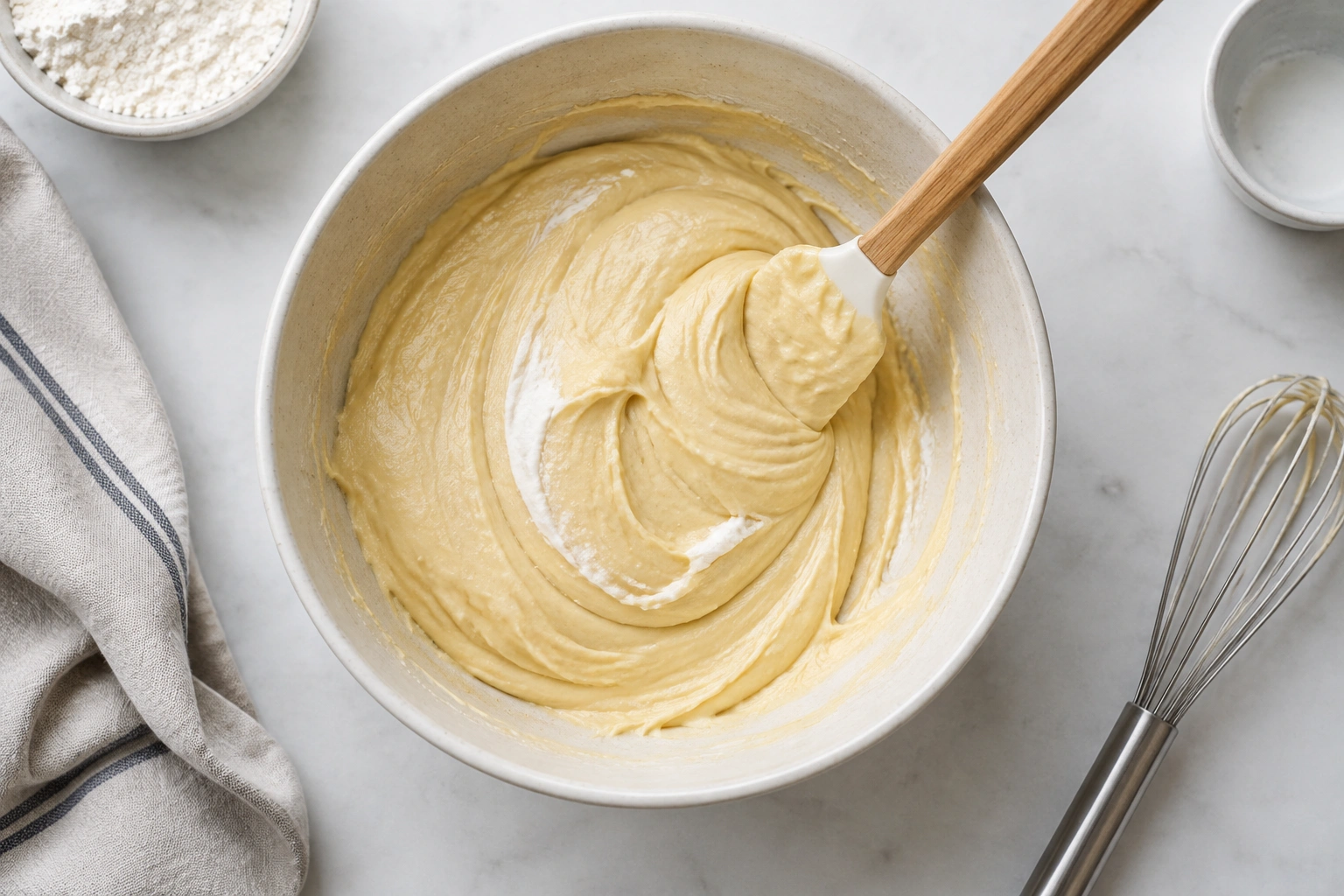
Good signs:
- no large white streaks
- no obvious clumps of egg white
- the batter looks light and somewhat fluffy
- the texture seems cohesive when lifted with a spatula
What about a few faint streaks? Those are often acceptable, especially if continuing would mean overmixing. In foam cakes, a tiny bit of visible streaking is usually less risky than collapsing the batter.
What you want to avoid is a batter that looks completely flat, runny, or glossy in a heavy way. That can be a sign you’ve folded too long or too vigorously.
Common Mistakes That Deflate Egg Whites
Most folding problems come from a handful of predictable mistakes.
Overmixing
This is the most common one. Every extra turn of the spatula breaks more air cells.
Using the wrong tool
A spoon, whisk, or mixer can work against you if they encourage fast, repetitive motion. A rubber spatula gives better control.
Adding all the whites at once
A big pile of foam is harder to distribute evenly. The base batter has to work too hard to absorb it.
Folding too aggressively
If you press down hard or scrape in a tight circle, you’ll knock out the air instead of preserving it.
Starting with whites that are too stiff
Very dry whites can be difficult to blend. They may stay in chunks, which tempts you to overwork the batter.
Troubleshooting Dense or Flat Cake Batter
If your finished cake turned out heavy, the issue may have happened before the batter even went into the pan.
Here are a few likely causes:
- The egg whites were too stiff and didn’t fold smoothly.
- The base batter was too thick and should have been lightened first.
- You stopped too early, leaving large pockets of white that baked unevenly.
- You folded too long, collapsing the foam before baking.
If the batter looked perfect going into the oven but the cake still baked up dense, revisit the whipping stage first. Whites that are underwhipped won’t give enough lift. Whites that are overwhipped can become dry and unstable.
A useful habit is to pause and inspect the batter after each addition. That gives you a better sense of whether you need one more gentle fold or whether you should stop immediately.
Which Cakes Rely Most on This Technique?
This method matters most in cakes where whipped egg whites are a major source of lift.
Sponge cake
Sponge cakes often depend on air incorporated into eggs for structure. Folding has to stay gentle so the crumb stays fine and tender.
Chiffon cake
Chiffon cakes usually combine a richer batter with whipped whites. That makes the lightening step especially helpful because the base batter can be thick.
Angel food cake
Angel food-style batters are built around whipped whites, so preserving volume is essential. Even small handling mistakes can affect the rise.
If you bake these styles often, learning to fold properly is one of the most valuable technique upgrades you can make.
A Simple Way to Practice the Motion
If folding still feels awkward, practice with a bowl of whipped cream or a test batter before you tackle a special cake. The motion is the same: cut through the center, sweep around the bottom, and turn the bowl as you go.
That practice helps you learn the pressure to use. You want enough movement to combine the ingredients, but not so much that the mixture loses its lift.
The Bottom Line
Folding egg whites into cake batter is really about control. Use a large bowl, a gentle tool, and a light hand. Add a portion of the whites first to loosen the batter, then fold in the rest in batches until the mixture is just combined.
If you remember one thing, make it this: stop as soon as the batter looks unified enough to bake. In foam cakes, preserving air is part of the recipe.
For related egg prep that can improve your results before you even start whipping, see how to bring eggs to room temperature quickly. If you’re planning ahead for a celebration cake, freezing cake layers before frosting can also help with timing and structure.
FAQ
Can I use a whisk instead of a spatula?
Yes, but a spatula is usually easier to control. A whisk can work if you use a gentle cut-and-lift motion and avoid fast stirring.
Should I fold the whites in all at once?
Usually no. A small first addition helps lighten the batter, and the rest fold in more easily afterward.
Do the egg whites need to be at stiff peaks?
Not always. Soft peaks are often easier to fold, but some recipes call for stiffer whites. Follow the recipe, then fold carefully.
How do I know when to stop folding?
Stop when the batter is mostly uniform and only tiny streaks remain, if any. If the batter starts to lose volume, you’ve gone too far.
Why did my cake turn out dense?
Common causes include overmixing, underwhipped whites, overly stiff whites, or folding a thick batter without lightening it first.
Can I fold egg whites into any cake batter?
No. This technique matters most in cakes that depend on whipped egg whites for lift, such as sponge, chiffon, and angel food-style cakes.
Is a few streaks of white okay?
Yes, in many cases. A few faint streaks are better than deflating the batter by overmixing.
When should I fold the whites into the batter?
Fold them in after the base batter is prepared and the whites are whipped, but before the mixture sits too long or gets overworked.