How to Freeze Baked Pie Slices Without Losing Texture
Leftover pie does not need to become an afterthought. If you freeze baked pie slices the right way, you can save a single serving for later and keep decent texture for a future dessert. The key is simple: cool the slice fully, block out air, and thaw it in a way that protects the crust.
Not every pie behaves the same in the freezer. Fruit pies usually hold up better than cream or custard pies, and that difference matters when you decide whether a slice is worth saving. Once you understand the filling, the rest becomes a repeatable storage method.
Can You Freeze Baked Pie Slices?
Yes, many baked pie slices can be frozen after baking, as long as they are cooled completely first and packaged well. The quality you get later depends mostly on the filling and the crust.
Fruit pies generally freeze more reliably than cream or custard pies because they are less likely to separate or turn grainy. Custard and dairy-rich pies can still be frozen in some cases, but they often lose more of their original texture after thawing. That does not mean they are unsafe by default; it means the finished slice may not look or feel as fresh.
If your goal is to preserve a slice for a future dessert, lunch, or late-night snack, freezing is often worth it. If the pie is especially delicate, though, you may prefer to refrigerate it briefly and eat it sooner rather than expect freezer-perfect results.
Which Pie Slices Freeze Best?
The filling tells you most of what you need to know.
Fruit pies usually freeze the best
Fruit fillings tend to handle freezing better because they are less likely to separate. A slice of apple pie or blueberry pie, for example, can often be wrapped, frozen, thawed, and reheated with acceptable texture if the crust was protected from moisture.
Even here, there is a trade-off. Fruit pies can soften a little during thawing, especially if they were packed loosely or thawed too quickly. A well-wrapped slice gives you the best chance at a crisp edge and a filling that still tastes like pie, not freezer storage.
Cream and custard pies are more fragile
Cream pies and custard pies are more sensitive because freezing can change their texture. Dairy- and egg-based fillings may become watery, grainy, or slightly separated after thawing. They are not impossible to freeze, but they are less forgiving than fruit pies.
If you are freezing a slice of pumpkin pie, for instance, expect some texture change, especially if the filling is very soft. A slice may still be pleasant after thawing, but it is usually best served with realistic expectations.
Meringue-topped pies are a special case
Meringue does not usually freeze well. It can weep, collapse, or become rubbery after thawing. If a pie slice has a meringue topping, the freezer is usually not the best place for it unless you are comfortable with a noticeable change in appearance and texture.
Compare Common Pie Types Before Freezing
| Pie type | Freezer suitability | Best wrapping approach | Thawing preference | Reheating preference |
|---|---|---|---|---|
| Fruit pie | Usually best | Double-wrap, then place in a freezer bag or airtight container | Refrigerator thawing | Oven reheating for better crust |
| Custard pie | Moderate to lower | Very tight wrap with extra protection | Refrigerator thawing | Usually minimal reheating, if any |
| Cream pie | Lower | Tight wrap plus rigid container to protect texture | Refrigerator thawing | Often served chilled rather than reheated |
| Meringue pie | Usually poor | Not ideal for long freezing | Not recommended if texture matters | Not recommended |
This table is not a rulebook. It is a practical guide for choosing whether a slice is worth freezing at all, and how much quality loss to expect.
Cool the Pie Completely Before Freezing
A pie slice should be fully cool before it goes into the freezer. If you wrap it while it is still warm, trapped steam turns into condensation. That moisture is what leads to soggy crust, ice crystals, and faster quality loss.
For best results, let the slice cool on the counter until it is no longer warm to the touch. If the pie was just baked, give it time to release heat from the center as well as the crust. A slice that feels cool on the outside but still warm inside can still create moisture inside the wrap.
This step is easy to rush, especially when you only have one leftover slice. Resist that urge. Cooling first protects the texture you are trying to save.
How to Wrap Individual Pie Slices for the Freezer
The best method is to wrap each slice tightly so air cannot reach the surface.
A simple step-by-step method

- Let the slice cool completely.
- Place it on a small piece of plastic wrap or freezer-safe wrap.
- Wrap it snugly so the filling and crust are fully covered.
- Add a second layer of protection with aluminum foil.
- Place the wrapped slice in a freezer bag or airtight container.
- Press out as much air as possible before sealing.
That double-layer approach matters. Plastic wrap alone can let in freezer air over time, and foil alone can tear or loosen. Together, they do a better job of reducing freezer burn and keeping odors from other foods out of the pie.
If the slice has a soft filling, handle it gently while wrapping so the top does not smear onto the wrap. A firmer fruit slice is easier to package than a soft custard slice, which is another reason filling type matters.
When a container helps
A rigid airtight container gives extra protection if the slice is fragile or likely to get crushed. It is especially useful if you are freezing a slice with a tall topping or a soft filling that could be damaged by other items in the freezer.
The drawback is space. Containers take up more room than a flat wrapped slice, so they make sense when protection matters more than freezer efficiency.
Should You Freeze Pie Slices on a Plate, Tray, or in a Container?
If you are deciding between freezing slices individually or keeping them together, the short answer is this: freeze them individually if you want the most flexibility and the least quality loss from repeated handling. Freeze them together only when you plan to use the whole group at once or need to save space.
Freeze individually when you want easier portioning
Freezing slices one by one is usually the better choice for leftovers. It lets you thaw only what you need, and each slice gets its own wrap, which helps reduce air exposure.
Pros:
– Easier to grab one serving at a time
– Better protection from freezer burn if each slice is wrapped tightly
– Less risk of one slice crushing another
Cons:
– Takes more time and packaging
– Uses more freezer space if each slice gets its own container
Freeze together when the slices will be used together
Keeping slices together can make sense if you are storing several pieces for a family dessert, or if the slices are sturdy enough to stack with parchment or wax paper between them.
Pros:
– Faster to package
– More efficient use of freezer space
– Convenient if you plan to thaw the whole batch at once
Cons:
– Harder to remove just one slice
– More chance of sticking or crushing if the pieces are soft
– Slightly more risk of uneven thawing
Tray, plate, or container?
A tray or plate is best as a temporary support, not as the final storage solution. It can help a soft slice firm up before wrapping so it keeps its shape.
A rigid airtight container is the most protective option for delicate slices, especially if you are stacking pieces. If you do stack them, place parchment or wax paper between layers to reduce sticking and help prevent the crust from getting crushed.
For a single leftover slice, direct wrapping plus a freezer bag is often the simplest and most space-efficient method. For multiple slices, a container may be worth the extra bulk if you want better protection.
Label and Date the Slices
Labeling sounds minor until you find a mystery slice months later.
Write the pie type and the date on the bag or container. If the pie has a special filling, note that too. “Apple pie, 10/10” is enough to tell you what you are dealing with later. That small habit helps you choose the right thawing and reheating method and keeps you from holding onto slices longer than you intended.
It also helps when you freeze more than one flavor. A berry slice and a pumpkin slice may look similar once wrapped, especially after a few weeks in the freezer.
How Long Baked Pie Slices Keep in the Freezer
Frozen pie slices do not improve with age. They may stay frozen for a long time, but quality slowly declines as the crust dries out and the filling changes.
For best quality, most baked pie slices are best used within about 1 to 2 months. Fruit pie slices often hold up reasonably well for up to about 3 months if they are tightly wrapped, though the crust may still lose some crispness over time. Cream, custard, and meringue-topped slices usually have a shorter quality window and are best used sooner.
For safety, frozen pie slices can remain safe longer if the freezer stays at 0°F or below and the slice stays frozen solid, but safety is not the same as eating quality. A slice that has been frozen for many months may still be safe, yet taste dry, stale, or freezer-burned.
The practical rule is simple: the better the packaging, the better the slice will taste later. If you notice heavy freezer burn, off odors, or a dried-out crust when you unwrap it, the slice has likely passed its best stage.
How to Thaw Frozen Pie Slices Safely
Refrigerator thawing is the most reliable method for preserving texture.
Place the wrapped slice in the refrigerator and let it thaw slowly. This reduces condensation on the crust and gives the filling time to soften evenly. It is especially useful for fruit pies, which benefit from a slower thaw.
Countertop thawing is faster, but it is less ideal for texture. The outside of the slice can warm before the center fully thaws, which encourages moisture on the crust. For dairy- or egg-based fillings, refrigerator thawing is the safer habit because it keeps the slice cold while it thaws.
If you need the slice for later the same day, move it from freezer to refrigerator in the morning rather than leaving it out on the counter for a long stretch.
How to Reheat a Frozen or Thawed Pie Slice
Whether you reheat a slice depends on the filling and the texture you want.
Oven reheating gives the best crust
If you want a crisper crust, the oven is usually the better choice. It reheats more evenly and helps dry the surface slightly, which is useful for fruit and pecan-style pies. A thawed slice can go on a baking sheet and warm gently until the filling loosens and the crust regains some structure.
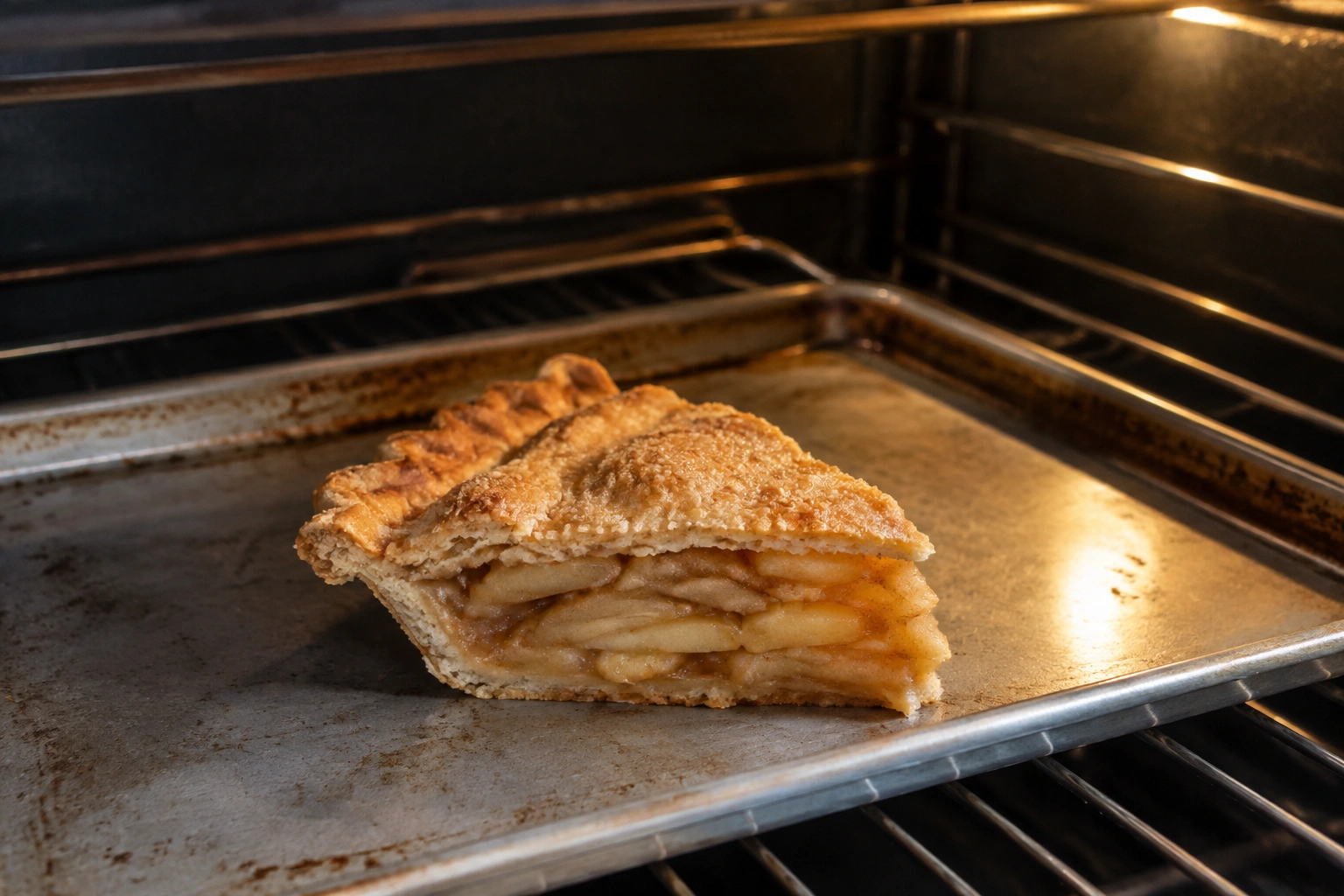
This method takes longer than the microwave, but the result is usually better.
Microwave reheating is faster, but softer
The microwave is useful when speed matters more than texture. It warms quickly, which can be fine for a slice you plan to eat right away. The crust, however, will usually soften.
That trade-off is important. If the pie is already tender, such as a cream or custard slice, the microwave may be the more practical choice because the crust is not the main attraction. If the crust matters most, use the oven instead.
Serve some pies chilled
Not every frozen pie slice needs to be reheated. Cream pies and some custard slices are often better served chilled after thawing, especially if the filling texture improved in the refrigerator. In those cases, warming them can make the filling less stable.
How to Prevent Soggy Crust, Freezer Burn, and Filling Separation
Most freezer problems come from moisture or air exposure.
To prevent soggy crust
Cool the pie completely before wrapping it. Then thaw it slowly in the refrigerator. Those two steps do most of the work. Rapid thawing or wrapping a warm slice are the fastest ways to trap moisture against the crust.
To prevent freezer burn
Use tight wrapping and a second barrier. Freezer burn happens when air reaches the food surface and dries it out. Plastic wrap plus foil, followed by a freezer bag or airtight container, is a strong defense.
To reduce filling separation
Choose the freezing method based on the filling. Fruit fillings are more forgiving. Custard and cream fillings are more likely to change texture, so handle those slices gently and keep expectations realistic.
If a slice looks severely dried out, smells off, or has obvious ice damage throughout the filling, it is better to discard it than try to rescue it with reheating.
Best Ways to Serve a Frozen Pie Slice
Serving temperature should match the pie style.
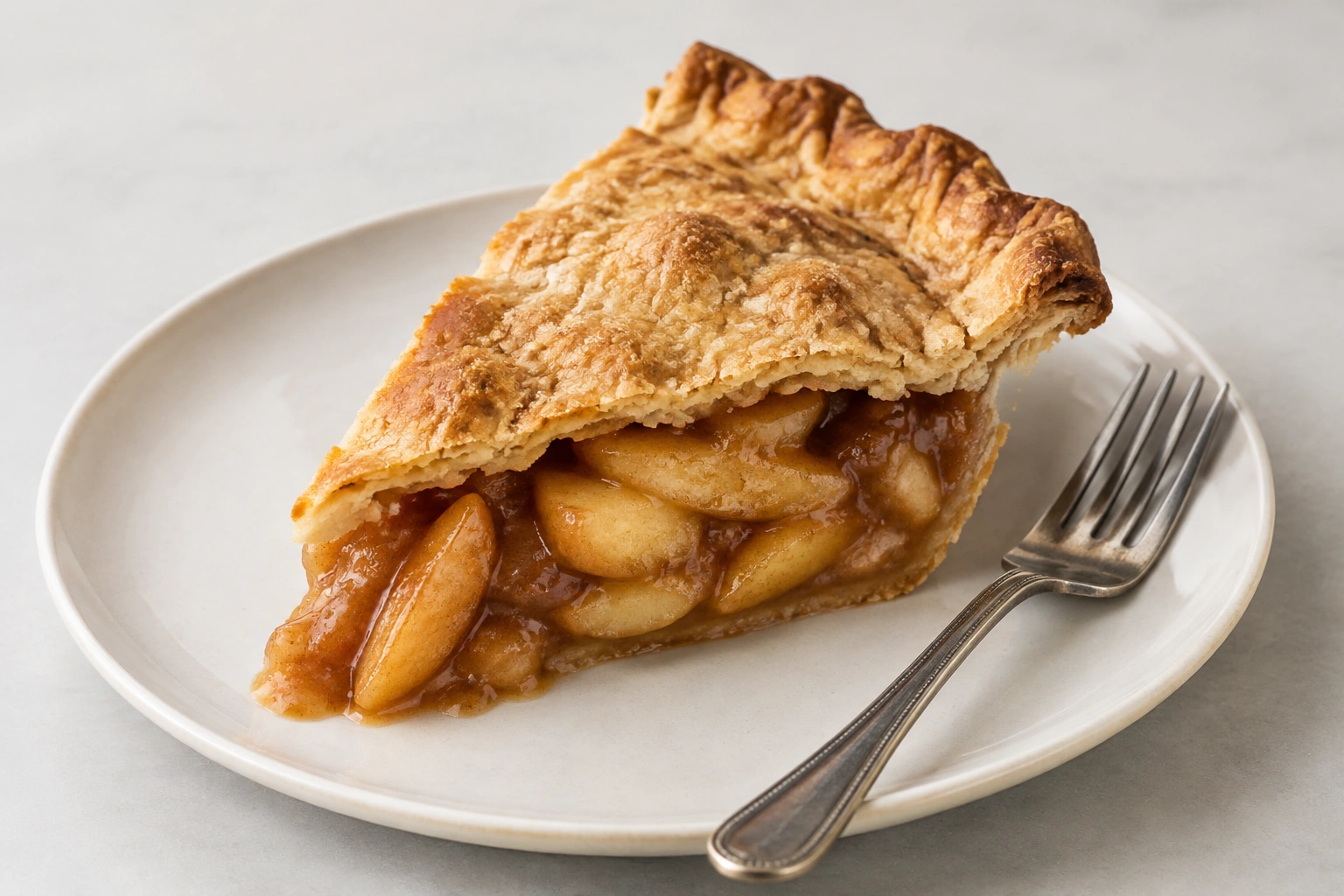
Fruit pie slices often taste best warm or at room temperature after a gentle thaw and reheat. The filling becomes more aromatic, and the crust can regain some firmness.
Cream pies and many custard pies are usually better served chilled after thawing. Warming them can make the texture less stable and the slice less appealing.
If you are planning ahead for dessert, think about the final serving style before you freeze the slice. That decision helps you choose whether to thaw only, thaw and warm, or serve straight from the refrigerator.
Common Mistakes to Avoid
A few errors cause most of the damage:
- Freezing the slice while it is still warm
- Using only one loose layer of wrap
- Leaving too much air in the bag or container
- Treating cream or custard slices like fruit slices
- Thawing too quickly at room temperature
- Microwaving too long and softening the crust
- Forgetting to label the slice
- Storing the slice loosely where it can pick up odors or get crushed
These are small mistakes, but they add up quickly. A slice that was good on day one can become disappointing after a careless freeze-thaw cycle.
When to Consult a Pastry Chef
If you are working with a specialty pie, a very delicate filling, or a slice you want to serve for an important occasion, a pastry chef can help you decide whether freezing is worth it. That matters most for pies with layered textures, meringue toppings, or fillings that separate easily.
For everyday leftovers, though, the method above is usually enough: cool completely, wrap tightly, label clearly, and thaw slowly.
FAQ
Can you freeze baked pie slices after they have cooled?
Yes. In fact, they should be fully cooled before freezing so steam does not get trapped in the wrap.
What is the best way to wrap individual pie slices?
Use tight plastic wrap or freezer-safe wrap first, then add foil or place the slice in a freezer bag or airtight container for extra protection.
Should pie slices be frozen with the plate or pan?
Usually no. A slice is easier to store and protect when it is transferred to freezer packaging. A small tray can help briefly if the slice is delicate.
Can you freeze cream pie slices?
You can, but they are less reliable than fruit pies. Expect more texture change after thawing.
How long do frozen baked pie slices keep?
For best quality, most slices are best used within about 1 to 2 months. Fruit pie slices may hold up a bit longer, while cream and custard slices are usually better used sooner.
How do you thaw a frozen pie slice without making the crust soggy?
Thaw it in the refrigerator while still wrapped. Slow thawing limits condensation on the crust.
Is it better to reheat pie in the oven or microwave?
The oven is better for a crisper crust. The microwave is faster but usually softens the crust.
Can you serve a frozen pie slice cold?
Yes, especially cream or custard slices that are meant to be chilled. Fruit pies are often better warmed or served at room temperature.
What causes freezer burn on pie slices?
Air exposure. Tight wrapping and a sealed outer bag or container help prevent it.
How do you know when to discard a frozen pie slice?
If it smells off, looks badly dried out, or has severe freezer damage, it is better to throw it away.