How to Halve a Recipe With One Egg Without Guesswork
If you want to make a smaller batch and the recipe calls for exactly one egg, the simplest answer is this: beat the egg first, then use about half of it, and scale the rest of the recipe in half as well.
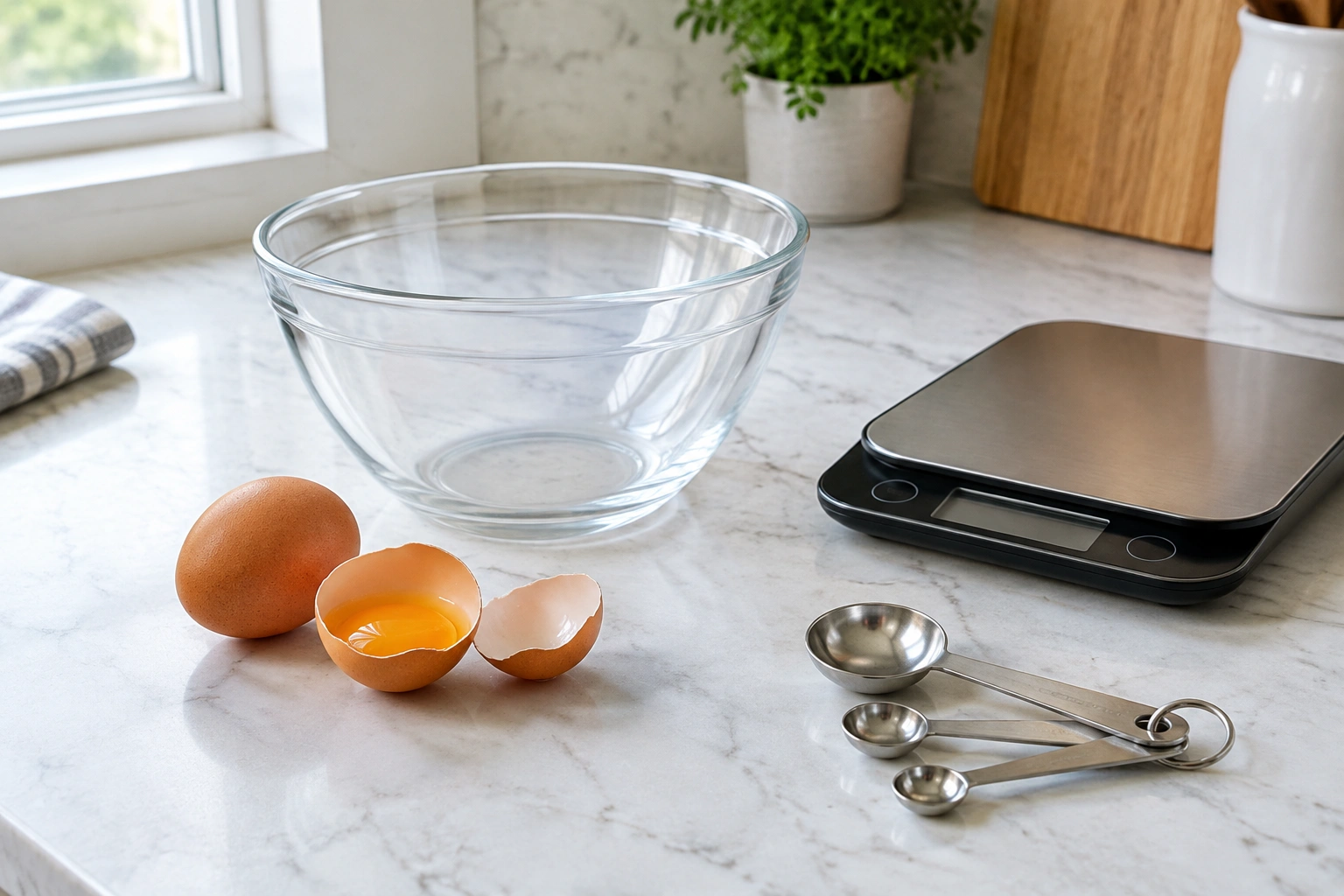
That approach works because an egg is hard to divide evenly by eye when it is still whole. Once it is beaten, the yolk and white are mixed together, so you can measure a more balanced portion. If you have a kitchen scale, that is the most accurate method. If you do not, a tablespoon measure is a practical backup for many home bakers.
The key thing to remember is that the egg is only one part of the formula. If you halve the egg but forget to halve the flour, sugar, butter, milk, and leavening, the recipe will no longer be balanced. A half batch should be scaled consistently from top to bottom.
Quick Answer: The Practical Way to Halve a One-Egg Recipe
Here is the fastest reliable method:
- Crack the egg into a small bowl.
- Beat it until the white and yolk look uniform.
- Measure out half of the beaten egg by weight if possible.
- Halve the rest of the ingredients.
- Use a smaller pan if the batter or dough needs it.
If you do not have a scale, many bakers use a rough visual split of the beaten egg or measure it by tablespoons. That is less exact, but it is usually good enough for simple cookies, muffins, quick breads, and similar recipes.
The more delicate the recipe, the more you should favor weighing. Recipes that depend on egg for structure, such as some cakes and custards, are less forgiving than sturdy cookie doughs or muffins.
The Best Way to Measure Half an Egg
There are three common ways to measure half an egg for baking: by weight, by volume, or by visual estimate. They do not give the same precision.
1) Weigh the egg for the most accurate result
A kitchen scale is the cleanest method. Put a bowl on the scale, tare it to zero, crack in the egg, beat it, and then measure out half of the total weight. This is the best choice when you want the closest match to the original recipe.
Weight is especially helpful because eggs vary in size. Even two eggs labeled the same size can differ a little, so weighing avoids that problem.
2) Use tablespoons when you do not have a scale
If you do not own a scale, a tablespoon measure is the easiest backup. Beat the egg first, then spoon out part of it into a measuring spoon. This is not as exact as weight, but it is practical for everyday baking.
A beaten large egg is often close to 3 tablespoons total, so half is roughly 1 1/2 tablespoons, or about 22 to 25 grams. That is only an approximation, and the exact amount depends on egg size and how thoroughly it is beaten, so it is best used as a convenience method rather than a precision method.
3) Split it visually only for forgiving recipes
If the recipe is simple and forgiving, you can beat the egg and eyeball about half. This is the quickest option, but it is also the least precise. It works better in recipes where a small shift in texture will not matter much.
Comparison: Which method should you choose?
| Method | Accuracy | Best for | Trade-off |
|---|---|---|---|
| Weight | Highest | Cakes, quick breads, recipes where balance matters | Requires a scale |
| Tablespoons | Moderate | Cookies, muffins, casual home baking | Less exact |
| Visual split | Lowest | Very forgiving recipes | Small texture changes are more likely |
If you bake often, a small digital scale is worth having. It removes the guesswork from eggs, butter, flour, and other ingredients that are easier to mis-measure by volume.
Should You Beat the Egg Before Dividing It?
Yes, in most cases you should beat the egg before dividing it.
A whole egg is not evenly distributed. The yolk is dense and the white is loose, so cutting an unbroken egg in half does not give you a fair split. Beating the egg first blends the parts together, which makes the portion more even.
That extra step is worth it whenever the egg matters to the texture of the finished bake. It also makes measuring easier because you are dealing with a uniform liquid instead of two separate parts.
If the recipe is very forgiving, you may not notice a major difference either way. But for the cleanest result, beat first, measure second.
How to Halve the Rest of the Ingredients
Once you have handled the egg, scale the rest of the recipe in the same direction. That means halving flour, sugar, butter, milk, and most other ingredients.
Flour and sugar
These are usually straightforward to halve. If the recipe calls for 2 cups of flour, use 1 cup. If it calls for 1/2 cup of sugar, use 1/4 cup.
For dry ingredients, a scale is more reliable than cups, especially if the original recipe is already written in weight. Flour can pack differently depending on how it is measured, so weight keeps the half batch closer to the original formula.
Butter
Butter is easy to halve if the recipe lists it by tablespoons, sticks, or weight. If a recipe calls for 8 tablespoons, use 4. If it lists grams, divide the weight in half.
Butter matters because it affects tenderness, spread, and richness. A sloppy estimate can change the final texture more than you might expect.
Milk and other liquids
Liquids are simple to halve, but do not assume you will need exactly the same amount of milk or water in every case. Some doughs and batters need a small adjustment at the end because flour absorbs liquid differently from batch to batch.
If the batter looks too thick after halving, add a small splash rather than dumping in extra liquid all at once.
Leavening and salt
Baking powder, baking soda, and salt should usually be halved too. These ingredients are easy to overlook, but they are part of the balance of the recipe.
Leavening is one of the places where rough guessing can cause problems. Too much can make a small batch rise too quickly and then fall. Too little can leave the bake dense.
A simple rule for scaling
If the recipe is being cut in half, nearly every ingredient should be cut in half. The main exceptions are tiny amounts that are already measured in pinches or very small fractions, where a slight adjustment is usually harmless.
When Using the Whole Egg Instead of Half Is Okay
Sometimes the easiest answer is to use the whole egg in the halved recipe. That can work, but it changes the balance.
Using a full egg in a half batch usually makes the mixture richer, more structured, or slightly more eggy than intended. In a forgiving recipe, that may be acceptable. In a delicate one, it can be enough to change the crumb or texture.
When rounding up is usually fine
Using the whole egg is often acceptable in:
– drop cookies
– muffins
– quick breads
– rustic bars
– simple snack cakes
These recipes can usually tolerate a little extra egg without failing.
When rounding up is less ideal
Using the whole egg is less suitable in recipes where the egg is a major part of the structure, such as:
– custards
– some sponge cakes
– delicate batters
– recipes with very tight ratios
In those cases, the extra egg can make the mixture too wet or too firm, depending on the recipe.
If you do use a whole egg instead of half, reduce the other liquid ingredients a little to compensate. There is no perfect one-size-fits-all amount, but cutting back by a tablespoon or two is a practical starting point for a small, forgiving recipe. For delicate recipes, it is better to measure the half egg instead of trying to balance around a full one.
A useful decision rule: if the recipe is forgiving and you are baking for convenience, using the whole egg is often fine. If the recipe is precise or delicate, measure the half egg.
When Halving a Recipe Does Not Work Well
Not every recipe scales down neatly.
Recipes with a lot of structure from eggs, emulsification, or chemical leavening can become unreliable when reduced. A custard, for example, may depend on the exact balance between egg and dairy. A cake with a very specific crumb may not behave the same way in a smaller batch.
The same caution applies when a recipe uses very small amounts of salt, baking soda, or spice. Halving those ingredients by eye can throw off the flavor or rise.
If a recipe is already known to be fussy, it is better to halve it by weight and keep the method as close to the original as possible. If that still feels awkward, making the full batch and freezing part of it may be the safer option.
How to Adjust Pan Size and Bake Time for a Half Batch
A half batch usually needs a smaller pan or a different baking shape.
When the batter is spread thinner in the pan, it bakes faster. When it is piled deeper in a smaller pan, it can take longer. That is why pan choice matters as much as ingredient scaling.
Choose a pan that keeps the batter depth similar
If the original recipe fills an 8-inch square pan, a half batch may work better in a smaller square pan or a loaf pan, depending on the recipe. The goal is to keep the depth roughly similar so the bake behaves in a familiar way.
Check for doneness earlier than the original recipe says
Do not assume the original bake time still applies. A smaller batch often finishes sooner, though the exact difference depends on the pan and the recipe.
Look for the same visual cues the recipe gives you: color, set edges, springiness, or a clean tester. Begin checking early enough that you do not overbake the smaller portion.
One practical example
If you halve a cookie recipe, you may not need a different pan at all, but you should still watch the first tray closely because the smaller batch may brown faster. If you halve a cake recipe, a smaller pan usually helps keep the batter depth consistent.
What to Do With the Leftover Egg
If you measure out half an egg, you will have some leftover beaten egg.
Refrigerate the leftover beaten egg in a covered container and use it within 1 to 2 days. Raw egg should not sit out at room temperature for long.
You can often use the leftover portion in another small recipe, or cook it separately in something simple like scrambled eggs or an omelet. If you are baking again soon, it can also be useful for brushing pastry or sealing dough, as long as the recipe calls for egg in that way.
For food safety, keep the leftover egg cold and use it quickly rather than letting it linger on the counter.
Common Mistakes to Avoid When Halving a Recipe
A half batch goes wrong most often because of small scaling mistakes, not because the recipe itself is difficult.
Guessing at the egg amount
This is the biggest one. An unbeaten egg is hard to split evenly, so guessing by eye can leave you with too much or too little egg.
Halving the egg but not the rest
If the flour, sugar, butter, and leavening stay at full strength, the recipe will not behave like a true half batch.
Forgetting the pan size
A half batch in the original pan may bake too thin or too thick. The shape of the batter matters.
Using the original bake time without checking early
Smaller batches often need earlier monitoring. Even if the recipe does not bake dramatically faster, the finish can arrive sooner than expected.
Assuming every recipe halves cleanly
Some recipes are forgiving. Others are not. The more precise the recipe, the more careful you need to be with scaling.
A Simple Decision Guide for Home Bakers
If you want the easiest path, use this rule set:
- Use a scale if accuracy matters.
- Beat the egg first before dividing it.
- Halve every ingredient, not just the egg.
- Use a smaller pan if the batter depth changes.
- Check doneness early because smaller batches can finish sooner.
- Round up to one whole egg only if the recipe is forgiving and you accept a small texture change.
That approach keeps the process practical without making it more complicated than it needs to be.
FAQs
Can I use half of an egg in baking?
Yes. The most practical method is to beat the egg first and then measure out half by weight or by volume.
Should I beat the egg before dividing it?
Yes, usually. Beating the egg makes the yolk and white uniform, so the portion you use is more even.
What is the best way to measure half an egg?
A kitchen scale is the most accurate. If you do not have one, tablespoons are a workable backup for many recipes.
Can I just use the whole egg instead?
Sometimes. It is usually fine in forgiving recipes like muffins or cookies, but it can change texture in more delicate bakes.
What do I do with the leftover egg?
Refrigerate it promptly and use it within 1 to 2 days in another small recipe or in a cooked dish.
Do I need to halve baking powder and baking soda too?
Usually, yes. If you are halving the recipe, the leavening should generally be halved as well.
Will a half batch bake faster?
Often it will, but not always by the same amount. A smaller pan or a thinner layer usually means you should check earlier than the original bake time.
Is halving by weight better than halving by cups?
Yes, if you want better consistency. Weight is more precise, especially for flour, butter, and eggs.