
How to Keep Food Fresh at Home: Practical Storage Tips That Actually Work

The fastest way to keep food fresh is to match the food to the right storage zone, keep your fridge cold enough, and use containers that limit air, moisture loss, and cross-contamination. For busy households, that usually means three simple habits: refrigerate perishables promptly, freeze what you will not use soon, and store dry goods in a cool, dry pantry.
A good home setup does not need special equipment. It needs consistency. If your refrigerator is too warm, or if leftovers sit uncovered in the back of the fridge, food will spoil faster no matter how carefully you shopped. The goal is not perfection; it is giving every food the best chance to stay safe and usable long enough to get eaten.
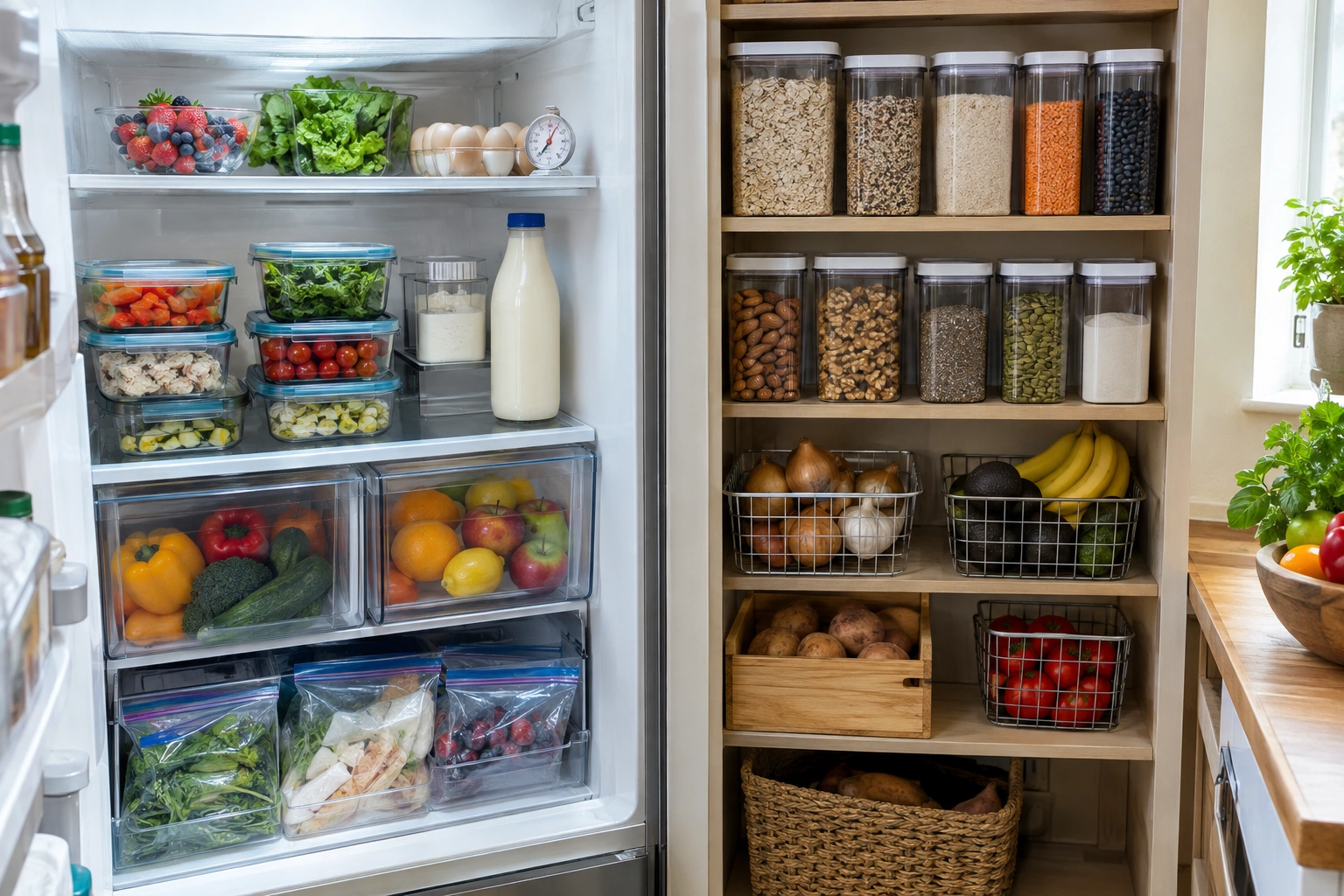
What you need before you start
You can keep food fresher with a small set of tools:
- An appliance thermometer for the fridge and freezer
- Food-safe storage containers with tight-fitting lids
- Zip-top bags for portions and freezer storage
- Plastic wrap or aluminum foil
- Labels and a marker
- Paper towels or clean kitchen towels for moisture control
- Optional: a vacuum sealer for foods you freeze often
The thermometer matters more than most people think. Virginia Tech recommends keeping refrigerated foods below 40°F, and suggests about 35°F for optimal quality and safety. The freezer should be at 0°F or below. Those numbers give you a real target instead of guessing by the dial on the door.
Quick answer: the easiest ways to keep food fresh longer
If you only change a few habits, make them these:
- Put perishables in the fridge within 2 hours of purchase or cooking, or within 1 hour if the room is very warm.
- Keep raw meat, poultry, and seafood sealed and stored below ready-to-eat foods.
- Use whole produce before cutting it, because cut produce usually spoils faster.
- Store leftovers in shallow containers so they cool quickly and evenly.
- Freeze extra food in meal-sized portions if you know you will not use it soon.
- Label everything with the date so older food gets used first.
These are the habits that cut waste without adding much work. They also make meal prep easier, because you are not constantly rescuing food that has gone soft, dry, or forgotten.
How to choose the right storage method: fridge, freezer, or pantry
Think about three questions: Is it perishable? Will you use it soon? Does texture matter after storage?
Use the fridge for foods that spoil quickly
The refrigerator slows down spoilage and helps prevent foodborne germs from growing. That makes it the right choice for milk, eggs, cooked grains, leftovers, cut fruit, cut vegetables, opened sauces, and most fresh meats. For borderline foods, use common sense: opened condiments, nut butters, and many shelf-stable items can often stay in the pantry until opened, but once opened they may need refrigeration if the label says so or if the food is especially perishable. Eggs are another gray area in some households and regions; in the U.S., they are typically refrigerated, while some other countries handle them differently.
Use the freezer for food you will not use soon
Freezing is best when you want to pause spoilage for longer storage. It works well for bread, cooked soups, extra portions of meat, shredded cheese, broth, and many meal-prep ingredients. The trade-off is texture. Freezing protects safety and quality longer, but some foods soften after thawing.
Use the pantry for dry, shelf-stable foods
A pantry works for foods that stay stable at room temperature: rice, pasta, flour, unopened canned goods, dried beans, crackers, cereal, onions, potatoes, and garlic. The pantry should be cool, dry, and away from sunlight and heat. Humidity and warmth shorten shelf life even for foods that seem sturdy. Opened shelf-stable items like crackers, cereal, flour, or dried pasta usually keep best in airtight containers after opening, especially if your kitchen is warm or humid.
Step-by-step: how to keep common foods fresh longer
1) Put perishables away fast
Do not leave cooked food or refrigerated groceries on the counter while you do other tasks. The USDA Food Safety and Inspection Service says perishable food should be refrigerated within 2 hours, or within 1 hour when the temperature is above 90°F. That rule matters most for leftovers, cooked meat, dairy, and cut produce.
2) Cool hot food before sealing it up
Large containers of hot food trap heat and slow cooling. Divide big batches into smaller, shallow containers so they chill faster. This is especially useful for soup, rice, chili, and casseroles. Faster cooling helps keep food safe and also prevents soggy texture.
3) Store raw foods separately
Keep raw meat, poultry, and seafood sealed and below ready-to-eat foods in the fridge. That reduces the chance of drips contaminating leftovers, fruit, or salad greens. Covered containers are better than loose packaging because they contain leaks and odors.
4) Rotate food by date
Use the “first in, first out” rule. Put older items in front and newer items behind them. This works in the fridge, freezer, and pantry. If you can see the food, you are more likely to use it.
5) Freeze when freshness is slipping
If produce is getting soft, bread is nearing stale, or you cooked too much dinner, freeze the extra before it turns into waste. Freezing does not fix food that is already spoiled, but it can save food at its peak or just before it declines.
How to store fruits and vegetables by type
Whole produce usually lasts longer than cut produce, so keep fruits and vegetables intact until you are ready to use them.
Counter storage works best for some produce
Tomatoes, bananas, avocados, and some winter squashes do better on the counter at first. Once ripe, you can move some items to the fridge if you need to slow further ripening. That is useful when you bought too much fruit for the week and need a few extra days.
Refrigerate produce that loses quality quickly
Leafy greens, berries, mushrooms, broccoli, and cut melons usually keep better in the fridge. A breathable container or a bag with a little airflow can help produce last longer than a tightly sealed bag that traps excess moisture.
Wash produce at the right time
Do not wash fruits and vegetables until you are ready to eat or cook them unless the item needs cleaning before storage for practical reasons. Extra moisture can speed spoilage, especially for berries and greens. If you do wash greens for meal prep, dry them thoroughly before storing them.
Use the crisper drawer with a purpose
The crisper drawer is usually the best spot for produce that benefits from humidity control. Keep it for fruits and vegetables rather than leftovers or condiments. That helps reduce wilting and keeps the fridge organized by food type.
Best containers and wraps for freshness
Different foods need different levels of protection. The best choice depends on whether you want to block air, prevent leaks, save space, or preserve texture.
| Storage option | Best for | Trade-off |
|---|---|---|
| Airtight containers | Leftovers, cut produce, cooked grains, cheese | Takes more space than bags |
| Glass containers | Leftovers, sauces, meal prep | Heavier and breakable |
| Plastic containers | Everyday meal prep, lunch portions | Can stain or absorb odors |
| Plastic wrap | Short-term coverage, cheese, cut produce | Less protective than rigid containers |
| Aluminum foil | Bread, baked goods, some fridge items | Not fully airtight |
| Zip-top bags | Freezer portions, chopped produce, bread slices | Can crush delicate foods |
| Vacuum sealer | Frequent freezer storage | Extra cost and equipment |
For leftovers, rigid containers usually work better than loose wrap because they seal more reliably and stack well. For freezing, zip-top bags are useful because you can press out extra air and flatten the food for faster freezing and easier storage. Vacuum sealing can help with freezer storage, but it is not necessary for everyday home use.
If you want a simple rule: use rigid containers for the fridge, and freezer-safe bags for the freezer.
How to store leftovers and meal prep safely
Leftovers are one of the easiest places to lose money. A half-pan of rice or chicken can become waste in a day if it is stored badly.
Portion before refrigerating
Divide cooked food into meal-sized portions instead of storing one large container. That way, you only open what you need. It also helps food cool faster, which is safer.
Label every container
Write the food name and the date on the lid or tape. Date labels are not just for neatness; they help you decide what needs to be eaten first.
Keep leftovers covered
Uncovered leftovers dry out, pick up odors, and are more likely to get forgotten. Use lids that fit well. If a container does not seal tightly, move the food to one that does.
Reheat only what you need
Repeated reheating lowers quality. If you know you will eat soup for three lunches, portion it before storing so you do not keep warming the whole batch.
How long common leftovers last in the fridge
As a practical guide, most cooked leftovers are best used within 3 to 4 days in the refrigerator. That includes foods like cooked chicken, beef, pork, casseroles, grains, pasta, and most cooked vegetables. Soup and stew often fall into the same general range if they were cooled and stored properly. If you are unsure whether something is still safe, use a shorter timeline and discard food that smells off, looks questionable, or has been stored too long.
Freezing food the right way to prevent freezer burn
Freezer burn happens when air reaches food in the freezer and dries out the surface. The food may still be safe, but the texture and flavor suffer.
To reduce that risk:
- Use freezer-safe packaging.
- Remove as much air as possible.
- Wrap food tightly before freezing.
- Freeze in portions you will actually use.
- Label the package before it gets buried.
Flat, thin packages freeze faster than deep, bulky ones. That is useful for soup, cooked beans, chopped vegetables, and bread. If you freeze food in a big lump, it takes longer to freeze and longer to thaw.
Safest ways to thaw frozen food
The safest ways to thaw frozen food are in the refrigerator, in cold water, or in the microwave if you plan to cook it right away. Thawing in the fridge is the most hands-off option and keeps food at a safer temperature. Cold-water thawing works faster, but the food should be in a leakproof package and the water should be changed regularly. Microwave thawing is best when you are moving straight into cooking.
Do not thaw food on the counter, because the outside can warm into the temperature danger zone while the center is still frozen.
When not to refreeze thawed food
If food was thawed in the refrigerator and still feels cold, refreezing may be possible for many foods, though quality can suffer. But if food was thawed on the counter, in warm water, or in the microwave and not cooked right away, do not refreeze it. If you are unsure whether a thawed food is still safe, it is better to cook it promptly or discard it than to guess.
Common mistakes that make food spoil faster
A few small errors cause a lot of waste:
- Setting the fridge too warm
- Overpacking shelves so air cannot circulate
- Storing raw meat above ready-to-eat foods
- Leaving leftovers uncovered
- Washing produce too early
- Cutting fruit and vegetables too far ahead
- Using non-freezer-safe containers for frozen food
- Forgetting dates and losing track of what needs to be used
The biggest pattern is this: food spoils faster when air, heat, moisture, and contamination are left unchecked. Storage is mostly about controlling those four things.
Troubleshooting: how to tell if food is still fresh
Not every food shows spoilage the same way, but these are useful warning signs:
- Mold where it should not be
- Slime on meat, fish, or produce
- Sour, rotten, or off odors
- Unusual discoloration
- A swollen package or lid
- Soft, mushy texture where firmness is expected
Do not rely on taste to test questionable food. If something smells wrong, looks wrong, or has been stored too long for its type, discard it.
If produce is soggy
Move it to a dry paper towel-lined container and use it soon. If it is already slimy or moldy, throw it out.
If leftovers are dried out
Add a little moisture during reheating when appropriate, or repurpose the food into soup, fried rice, or a casserole. If the food smells off or sat too long, do not try to rescue it.
Practical storage scenarios you can copy this week
Berries
Keep berries dry and refrigerated in a container lined with a paper towel. Do not wash them until just before eating.
Salad greens
Store greens in the fridge with a dry paper towel or breathable liner to absorb excess moisture. If they are wet from washing, dry them well first.
Cooked rice
Cool it quickly in shallow containers, then refrigerate in portions. This makes it safer and easier to reheat one serving at a time.
Soup
Freeze extra soup in single-meal containers or freezer bags laid flat. That saves space and makes thawing faster.
Cheese
Wrap cheese tightly first, then place it in an airtight container or bag. That helps prevent drying and odor transfer.
Tomatoes
Keep unripe tomatoes on the counter. If they ripen faster than you can use them, refrigerate to slow further softening.
Onions
Store onions in a cool, dry pantry area, not in a damp spot. If you want the best setup for onions and potatoes, see our guide on whether you can store potatoes and onions together.
Bread
If you will use bread within a short time, keep it sealed to limit drying. If not, freeze slices or the whole loaf for later use. Frozen bread is often more useful than stale bread sitting on the counter.
For more produce-specific guidance, our guide on how to keep fruit fresh longer can help you handle berries, grapes, apples, citrus, melons, and cut fruit with less waste.
When to ask a food safety expert
Ask for help if you are dealing with large quantities of food after a power outage, a refrigerator that may not be holding temperature, or food that may have been stored in unsafe conditions for too long. When in doubt about safety, it is better to discard questionable food than to guess.
For additional official storage guidance, the USDA’s food safety basics and Nutrition.gov’s safe food storage resources are reliable places to check.
FAQ
How long do leftovers last in the fridge?
Most cooked leftovers are best used within 3 to 4 days if they were cooled and refrigerated properly.
Should eggs be stored in the fridge or pantry?
In the U.S., eggs are typically stored in the refrigerator. In some other places, eggs are handled differently before sale, so local guidance may vary.
Can you refreeze thawed food?
Sometimes, but not always. Food thawed in the refrigerator may be refrozen in many cases, though quality can drop. Food thawed on the counter, in warm water, or in the microwave should not be refrozen unless it is cooked first.
Where should raw meat go in the fridge?
Store raw meat, poultry, and seafood sealed on the lowest shelf so drips cannot contaminate ready-to-eat foods.
What is the best place for dairy in the fridge?
Dairy is usually best kept on a middle shelf, where the temperature is more consistent than in the door.
Do condiments need to be refrigerated?
Some do, some do not. Check the label. Once opened, many condiments and shelf-stable items keep best in the fridge if the package says to refrigerate after opening.
How can I reduce food waste without overcomplicating storage?
Use clear containers, keep a simple date label system, and put older food in front so it gets used first.