
How to Make Air Fryer French Toast Sticks That Turn Out Crisp and Golden
Air fryer French toast sticks are one of those breakfast recipes that look simple—and are simple—once you understand the technique. The goal is not just to coat bread in egg mixture and cook it. The goal is to get a set custard inside, a lightly crisp exterior, and enough structure that the sticks can be dipped without falling apart.
For busy mornings, that balance matters. If you already use your air fryer for quick breads and toast, this recipe fits right into that rhythm. If you want another easy crisp-air-fryer idea, you may also like this practical guide to air fryer toast.
What You Need to Make Air Fryer French Toast Sticks
You only need a few basic ingredients and a standard air fryer basket or tray.
Ingredients
- Bread
- Eggs
- Milk
- Cinnamon
- Vanilla
- Butter or cooking spray
- Optional: a little sugar, powdered sugar, maple syrup, fruit for serving
Equipment
- Air fryer
- Mixing bowl
- Whisk or fork
- Knife and cutting board
- Tongs or a spatula
A shallow bowl works better than a deep one for the egg mixture because it lets you dip the bread quickly instead of soaking it for too long.
Best Bread for Air Fryer French Toast Sticks
Bread choice changes the final texture more than almost any other detail. Some breads hold up better to dipping, while others give a softer, richer result.
Here’s a practical comparison:
| Bread type | Texture after cooking | Sturdiness for dipping | Best use |
|---|---|---|---|
| Texas toast | Thick, sturdy, evenly crisped | Very good | Best for beginners and easy batch cooking |
| Brioche | Soft, rich, tender | Moderate | Best when you want a softer, more luxurious bite |
| Challah | Slightly eggy, plush, balanced | Good | Great middle ground between sturdy and tender |
| Standard sandwich bread | Light and familiar | Lower unless day-old | Works if the slices are thick enough and handled gently |
| Day-old bread | Better structure, less fragile | Very good | Helpful when you want less sogginess |
Fresh bread vs. day-old bread
Day-old bread usually handles the custard better because it has lost some moisture. That means it absorbs the egg mixture without collapsing as quickly. Fresh bread can still work, but it needs a lighter hand during dipping.
If you are making these for kids and want a soft center, brioche or challah is a nice choice. If you want the easiest path to neat, even sticks, Texas toast is usually the most forgiving.
How to Cut the Bread Into Even Sticks
Cut the bread after you choose the loaf, before any soaking. That gives you clean edges and more control over size.
For most bread, a good starting point is to cut each slice into 3 or 4 sticks, depending on how large the slice is. The important part is consistency. When the pieces are close in size, they cook at the same rate and brown more evenly.
A simple rule:
– Thick slices: cut into 3 wider sticks
– Standard slices: cut into 4 narrower sticks
Avoid cutting them too thin. Thin sticks tend to overcook before the center sets, especially in smaller air fryer baskets where the heat is intense.
Make the Egg Custard Batter
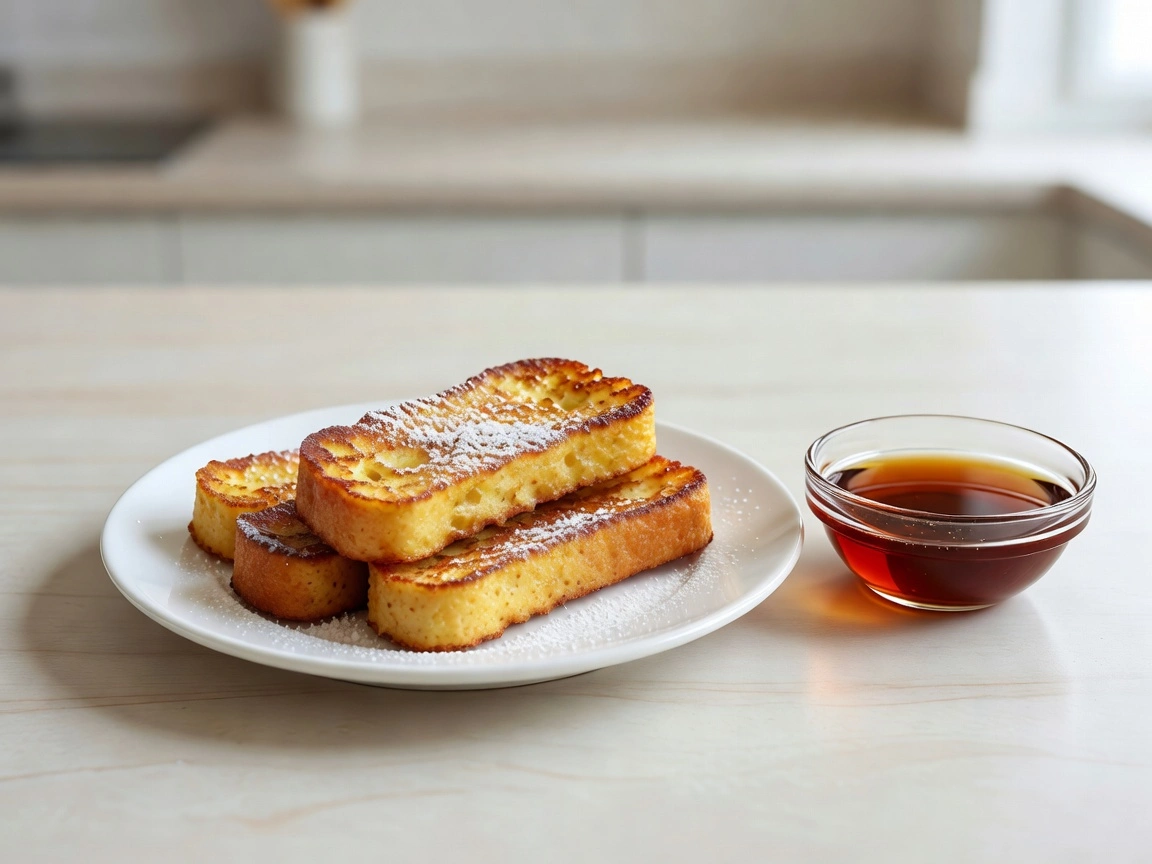
The batter should taste like a lightly sweetened custard, not a scrambled egg mixture.
A simple base is:
– Eggs
– Milk
– Cinnamon
– Vanilla
– Optional small amount of sugar
The egg gives structure, while the milk loosens the mixture so it coats the bread instead of clumping. Cinnamon and vanilla add the classic French toast flavor without needing much else.
If you prefer breakfast over dessert, keep the sugar light or leave it out entirely. The finished sticks can always be dusted with powdered sugar or served with syrup later. That gives you more control over sweetness at the table.
Whisk until the mixture looks smooth and even. You want the egg fully blended into the milk so every dip coats the bread the same way.
How to Coat the Bread Without Making It Soggy
This is the step that decides whether your French toast sticks come out crisp or soft in the wrong way.
Use a shallow bowl and work with a small amount of custard at a time so the bread gets coated quickly instead of sitting in the mixture. For standard sandwich bread, dip each side for about 2 to 3 seconds. For thicker breads like Texas toast, brioche, or challah, give each side about 3 to 4 seconds. If the bread is especially soft or fresh, keep the dip closer to the shorter end.
Lift the stick and let the excess drip back into the bowl before placing it in the air fryer basket. That small pause matters. Too much liquid on the surface can pool in the basket and make the bottom soft instead of lightly crisp.
A useful visual cue: the bread should look moistened, not drenched.
A practical soaking rule
- Sturdy bread: 3 to 4 seconds per side
- Standard sandwich bread: 2 to 3 seconds per side
- Very dry day-old bread: slightly longer, but still brief
If the bread starts to bend or tear, it has soaked too long.
Air Fryer Temperature and Cook Time
For crisp, golden French toast sticks, set the air fryer to 375°F and cook the sticks for about 6 to 8 minutes total. Thick slices usually need the longer end of that range, while standard slices often finish a little sooner.
A simple timing guide:
– Standard bread slices: 6 to 7 minutes
– Thick bread slices or Texas toast: 7 to 8 minutes
If your air fryer browns strongly, start checking early. If the sticks look pale after the first few minutes, add time in small increments until the outside is golden and the center is set.
Preheating
Preheating is helpful when you want the coating to start cooking right away, especially for the first batch. If your air fryer heats unevenly or tends to brown slowly, preheat it for a few minutes before adding the bread. If your model heats very quickly, preheating is less critical, but it can still improve the first batch.
Air fryer vs. oven
An oven can make French toast sticks, but the air fryer is usually preferable here because the smaller cooking space moves hot air more directly around the bread. That helps the exterior brown and crisp faster without drying out the center as much. An oven is still workable for larger batches, but the texture is usually lighter and less crisp than what you get from the air fryer.
Batch size
Cook in a single layer whenever possible. Crowding traps steam, and steam softens the coating. If you need to make a larger batch, cook in rounds and keep finished sticks warm briefly on a rack rather than stacking them.
Do You Need to Flip the Sticks?
Usually yes for basket-style air fryers, especially if the basket has a strong top heating element and the sticks are sitting on a flat layer. Flipping halfway through helps both sides brown evenly.
Use the browning pattern as your guide:
– Even browning on both sides: flipping is optional
– Pale bottoms or uneven browning: flip halfway through
– Crowded basket or thicker bread: flipping is recommended
For tray-style air fryers or models with very even circulation, you may get away without flipping if the sticks are in a single layer and not touching. Handle them carefully. The sticks are most fragile before the exterior sets.
How to Keep French Toast Sticks Crispy Outside and Soft Inside
Crispness comes from managing moisture.
A few practical habits make a big difference:
- Use bread with enough structure. Soft, flimsy bread tends to collapse.
- Do not oversoak. The bread should be coated, not saturated.
- Leave space between pieces. Air circulation is what gives the exterior its texture.
- Use only a light spray if needed. Too much oil can make the coating feel greasy instead of crisp.
- Cool briefly on a rack. Letting them sit for a minute or two helps steam escape from the surface.

That last point is easy to miss. If you pile hot French toast sticks onto a plate, the trapped steam softens the crust quickly. A wire rack keeps the bottom from steaming itself soft.
To help prevent sticking without over-oiling, use a light spray on the basket or tray only if your air fryer tends to grab delicate foods. A parchment liner made for air fryers can also help, as long as it does not block airflow.
Serving Ideas and Best Dips
French toast sticks are flexible enough for breakfast, brunch, or a quick snack.
Simple ways to serve them
- Maple syrup
- Powdered sugar
- Fresh berries
- Sliced bananas
- Yogurt for dipping
- Fruit compote
- Peanut butter or almond butter on the side
For kids, a small plate with syrup, strawberries, and a few sticks is usually enough. For adults, a lighter dusting of powdered sugar with fruit keeps the plate from feeling too sweet.
If you want a more filling breakfast, pair the sticks with scrambled eggs or a bowl of yogurt. That keeps the meal balanced without making the recipe more complicated.
Make-Ahead Storage and Reheating
French toast sticks store well if you cool them properly first.
Let them cool on a rack before storing so steam does not collect in the container. Once cool, place them in an airtight container and refrigerate them for short-term storage.
Reheating
For refrigerated French toast sticks, reheat in the air fryer at 350°F for 3 to 4 minutes, in a single layer, until warmed through and crisp again.
For frozen French toast sticks, reheat in the air fryer at 350°F for 6 to 8 minutes, flipping halfway through if needed. If they are very thick or your air fryer runs cool, they may need a little longer.
The key is to warm them just until heated through. If you are reheating a large batch, work in smaller rounds rather than piling them in.
Can You Freeze Air Fryer French Toast Sticks?
Yes, and this is one of the most useful parts of the recipe for busy households.
To freeze them:
1. Cool the sticks completely.
2. Arrange them in a single layer on a tray.
3. Freeze until firm.
4. Transfer to a freezer-safe bag or container.
That first single-layer freeze helps keep them from sticking together, so you can remove only what you need.
Reheating from frozen
You can reheat them directly from frozen in the air fryer. They may need a little extra time than refrigerated leftovers, and the batch should still be arranged in a single layer for even heating.
If you are planning ahead for school mornings, freezing a batch is often easier than making them from scratch every day. It turns a weekend recipe into a weekday shortcut.
Common Mistakes to Avoid
A few small missteps cause most of the problems with French toast sticks.
1. Using bread that is too soft
Very soft bread can fall apart after dipping. If that is all you have, handle it gently and keep the soak brief.
2. Over-soaking
This is the fastest way to end up with soggy centers. Dip briefly and let the excess drip off.
3. Overcrowding the basket
If the sticks touch too much, they steam instead of crisp. Make smaller batches if needed.
4. Using too much spray or oil
A light coating is enough. Too much can make the surface heavy.
5. Storing them while still hot
That traps steam and ruins the texture you worked to build.
6. Ignoring your air fryer’s browning pattern
Some models brown more aggressively than others. The first batch tells you what the rest of the recipe needs.
A Simple Way to Think About the Method
If you want a dependable result, remember three things: use sturdy bread, dip briefly, and give the sticks room to cook. Those three choices do most of the work.
That is the real appeal of air fryer French toast sticks. They are quick, but they still reward good technique. Once you understand how the bread, batter, and airflow work together, the recipe becomes easy to repeat on a school morning or a slow weekend.
FAQ
What temperature do you cook French toast sticks in the air fryer?
A good starting point is 375°F.
How long do air fryer French toast sticks take?
Most take about 6 to 8 minutes total, depending on bread thickness and the air fryer model.
Do you have to flip French toast sticks in the air fryer?
For most basket-style air fryers, yes, flipping halfway through helps them brown more evenly. If your model cooks very evenly, flipping can be optional.
Can you reheat French toast sticks in the air fryer?
Yes. Reheat refrigerated sticks at 350°F for 3 to 4 minutes, and frozen sticks at 350°F for 6 to 8 minutes.
How do you keep French toast sticks from getting soggy?
Dip the bread briefly, let excess custard drip off, and cook in a single layer so steam can escape.
Is the air fryer better than the oven for French toast sticks?
For smaller batches, usually yes. The air fryer typically gives a crisper exterior more quickly than the oven.

