
How to Make Fruit Last Longer: A Practical Home Storage Guide

Fresh fruit does not usually spoil because you bought the wrong kind. It spoils because of a few predictable problems: moisture, temperature, and ripening gases. Once you understand those three, you can make much better storage choices and waste less.
The fastest wins are simple. Keep fruit dry before storing it. Refrigerate fruit that benefits from cold after it ripens. Separate fruit that gives off a lot of ethylene gas from fruit that ripens quickly around it. And use the right container for the job: breathable for whole fruit that still needs air, airtight for cut fruit that needs protection.
If you only change one habit this week, make it this one: check your fruit before it goes into the fridge. One soft strawberry, bruised peach, or moldy grape can shorten the life of the rest of the container.
Quick Answer: The Fastest Ways to Make Fruit Last Longer
The most practical way to stretch fruit at home is to match the storage method to the fruit’s stage of ripeness.
- Dry fruit thoroughly before storing it. Moisture encourages mold, especially on berries and grapes.
- Use the fridge for fruit that is ripe and ready. Cold slows further ripening.
- Keep ethylene-producing fruit apart when possible. Bananas are a common example.
- Store cut fruit in a sealed container. Once fruit is sliced, it needs protection from air and contamination.
- Freeze fruit that you will not eat in time. That is often the best rescue plan for overripe fruit.
A practical example: if you buy peaches on Saturday and they are still firm, leave them on the counter until they soften. Once ripe, move them to the fridge if you are not eating them right away. That can help give you a little more usable time without sending the fruit to the compost bin too soon.
Why Fruit Spoils So Quickly at Home
Fruit breaks down faster at home for three main reasons.
Moisture feeds mold
Wet fruit is trouble. Water sitting on the skin or in a container creates the kind of damp environment mold likes. That is why washed berries left in a closed clamshell often decline quickly.
Temperature speeds or slows ripening
Room temperature helps many fruits ripen. Cold slows that process down. That is useful once fruit is ready, but not always before then. Put fruit in the fridge too early and it may stay firm but never fully develop good flavor.
Ethylene gas changes ripening
Some fruits release ethylene gas as they ripen. That gas can speed up ripening in nearby produce. In the right setup, that is useful. In the wrong setup, it can make everything in the drawer age together.
If you want fruit to last longer, your job is to control those three factors, not fight them blindly.
Fridge vs. Counter: Where Common Fruits Belong
A lot of spoilage happens because fruit is stored in the wrong place at the wrong time. This table gives you a quick decision guide.
| Fruit | Best short-term storage | When to move it | Notes |
|---|---|---|---|
| Bananas | Counter | Once yellow and ripe | Refrigerating ripe bananas is fine; the skin may blacken, but the fruit is still usable |
| Apples | Fridge for longer storage | As soon as you want to slow softening | Keep away from fruit you want to ripen slowly |
| Grapes | Fridge | Usually right away | Keep them dry and unwashed until use if possible |
| Berries | Fridge | Right away after checking for damage | Remove soft or moldy berries first |
| Citrus | Counter for short-term use, fridge for longer storage | Once you want to extend freshness | Cooler storage helps them hold longer |
| Stone fruit like peaches, plums, nectarines | Counter until ripe, then fridge | After ripening | Paper bag on the counter can help them ripen |
| Melons | Fridge for cantaloupe and honeydew; watermelon can stay out whole in a dark, dry place | Cut melon goes in the fridge immediately | Keep cut melon cold |
| Pineapple | Counter for a day or two | When ripe or if not using soon | Upside down storage is often recommended for a short counter hold |
| Pears | Counter until ripe, then fridge | After they soften | Helpful if you want them to finish ripening before chilling |
| Apricots | Counter until ripe, then fridge | After ripening | Handle gently because they bruise easily |
| Avocados | Counter until ripe, then fridge | After they yield slightly | Refrigeration slows further softening |
| Cherries | Fridge | Usually right away | Keep them dry and remove any damaged fruit promptly |
A few fruit-specific rules matter here. The American Heart Association recommends storing cantaloupe and honeydew loose in the refrigerator, even before cutting. It also notes that whole watermelon can stay in a dark, dry place away from other produce, while cut melon should be refrigerated. For stone fruit such as peaches, nectarines, and plums, the same source recommends a paper bag on the counter until ripe, then the fridge for a few more days.
How Ethylene Gas Affects Fruit Storage
Ethylene is one of the reasons fruit can seem to “go bad all at once.” Some fruits produce more of it than others, and nearby produce can respond by ripening faster.
Bananas are a clear example. Queensland’s Department of Environment, Tourism, Science and Innovation notes that bananas release ethylene gas and should be separated from the rest of your produce because it ripens nearby fruit. It also says bananas are best kept at room temperature until ripe, then refrigerated once yellow; the skin may blacken, but the fruit is not harmed. Queensland government guidance on fruit storage
The practical rule is straightforward:
- Keep ethylene-producing fruit away from fruit you want to hold back.
- Use a separate bowl, drawer, or fridge section if you can.
- If you want to ripen fruit faster, place it near a ripe banana in a paper bag and check it daily.
That last step can be useful, but it is a trade-off. A paper bag speeds ripening, which is helpful for peaches or pears you plan to eat soon. It is not a good choice if you want maximum shelf life.
Should You Wash Fruit Before Storing It?
Usually, no. The best default is to leave most fruit unwashed until you are ready to eat it. Washing adds moisture, and moisture can shorten storage life if the fruit is not dried completely.
The practical rule is:
- Whole berries, grapes, apples, pears, stone fruit, citrus, and avocados: do not wash before storing unless you plan to dry them thoroughly first.
- Prepped berries or meal-prep fruit: it is fine to wash first if you dry them completely before refrigerating.
- Fruit you will eat right away: wash just before serving.
A few fruit-specific notes make this easier:
- Berries: if you wash them ahead of time, spread them out and dry them fully before chilling.
- Grapes: keep them dry and unwashed until use if possible.
- Apples and stone fruit: wipe off visible dirt if needed, but avoid washing and storing them wet.
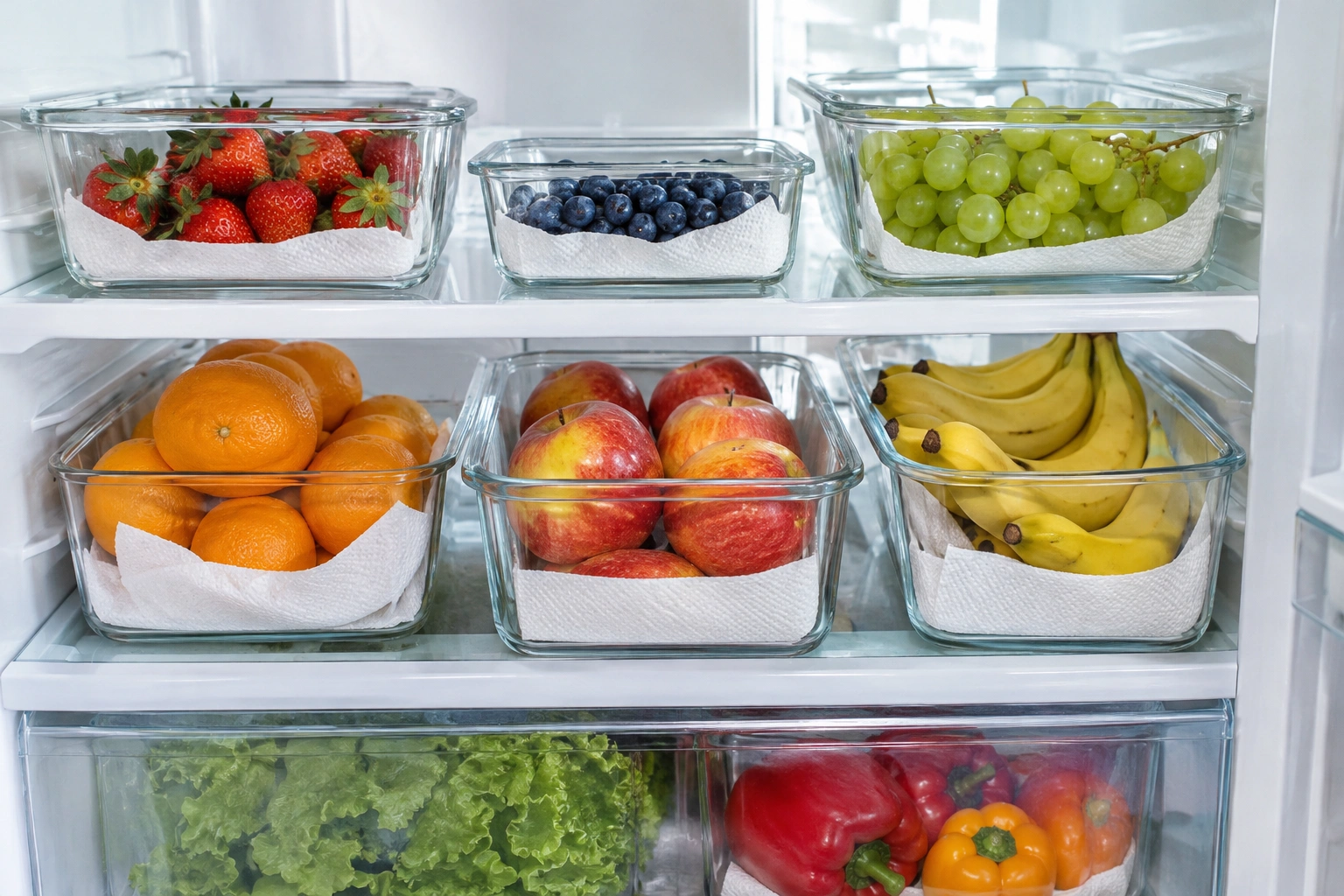
- Meal prep fruit: if you need washed fruit ready to grab, use a container lined with paper towels and check for extra moisture.
Some storage methods for berries do involve washing first, then drying them completely before refrigeration. Home and Kind describes a vinegar-and-water wash followed by thorough drying and fridge storage in an airtight container. Another berry-storage tip from Lovely Lucky Life is to wash berries and let them dry entirely before storing them in glass jars in the fridge. Those methods can work best when you are disciplined about drying.
The key decision is this:
- If you will not dry fruit fully, do not wash it yet.
- If you do wash it, spread it out and dry it completely before it goes into storage.
That rule matters most for berries, which bruise easily and mold fast.
Best Ways to Store Common Fruits at Home
Different fruit types need different handling. A one-size-fits-all method usually wastes food.
Berries
Berries are the most moisture-sensitive fruit in many kitchens. Check them as soon as you get home and remove any damaged ones. If you wash them before storing, dry them thoroughly first. A paper towel in the container can help absorb excess moisture.
For storage, a vented container or the original clamshell with airflow is often better than a tightly sealed box for whole berries, because it helps reduce trapped dampness. If you use a sealed container, make sure the berries are very dry first and check them often. For berries you plan to eat within a day or two, a paper towel-lined container in the fridge is a practical choice.
Grapes
Grapes do best cold and dry. Keep them in the fridge and avoid washing them until you are ready to eat them. If you want a grab-and-go snack, portion them into a clean container after they are completely dry.
For longer storage, a perforated produce bag or a vented container can work well because it allows some airflow while still keeping grapes contained. If you wash them ahead of time for meal prep, dry them fully and then store them in a lined container in the fridge.
Apples
Apples are a good candidate for the fridge when you want them to last longer. Cold storage slows softening. If you are storing apples near other fruit, remember that apples can influence ripening around them, so do not park them beside fruit you are trying to keep steady.
A fridge drawer or loosely closed bag works well for whole apples. If you have cut apples, store them in an airtight container or cover them tightly so the cut surfaces do not dry out. If you are keeping apples with other produce, separate them from fruit that is still ripening.
Bananas
Leave bananas out at room temperature until they ripen. Once they are yellow and you are not ready to eat them, move them to the fridge. The peel may blacken, but that does not mean the fruit inside is ruined.
If you keep bananas in a bunch, separate them from more delicate fruit. That matters in a mixed fruit bowl on the counter and in a crowded produce drawer. If you want to slow ripening a little, keep them away from apples, pears, and other fruit you are trying to hold back.
Citrus
Citrus is flexible. If you will use it quickly, the counter is fine. If you want to stretch it longer, refrigeration is the better move. That is especially useful in a busy household where fruit can sit untouched for several days.
A loose produce bag or the fridge crisper works well for whole oranges, lemons, and limes. Avoid airtight containers for whole citrus unless you are storing cut pieces, since whole citrus usually does better with some airflow. For cut citrus, use a sealed container in the fridge.
Stone fruit
Peaches, nectarines, plums, and similar fruit should usually finish ripening on the counter. A paper bag can speed that process. Once ripe, move them to the refrigerator if you are not eating them right away.
For this group, a paper bag on the counter is useful when the fruit is still firm and needs to ripen. After that, a fridge drawer or shallow container is better than leaving them out. Handle them gently, because bruising can shorten their life quickly. Apricots follow the same general pattern: leave them out until they soften, then refrigerate.
Pears
Pears are similar to stone fruit in storage behavior. Leave them out until they soften, then refrigerate them if you are not eating them right away. If they are still hard when you buy them, the counter is usually the right place for ripening.
A paper bag can help pears ripen more evenly. Once they are ready, move them to the fridge to slow further softening. If you cut them, store the pieces in a sealed container.
Avocados
Avocados are best left on the counter until they yield slightly to gentle pressure. Once ripe, refrigeration can help slow further softening for a short time.
If you need to hold an avocado for later use, keep the whole fruit in the fridge. For cut avocado, use an airtight container or wrap it tightly to limit browning and drying. If you are storing a cut half, it is especially helpful to keep the pit in place until you use it.
Cherries
Cherries should usually go straight into the fridge. Keep them dry and sort out any damaged fruit as soon as possible.
A vented container or a loosely covered bowl lined with paper towels works well because cherries are delicate and can collect moisture. Do not wash them until you are ready to eat them unless you will dry them completely first.
How to Keep Berries from Molding So Fast
Berries need special attention because they are fragile and often sold in containers that trap moisture.
Here is the most practical routine:
- Sort the berries as soon as you bring them home.
- Remove any that are crushed, leaking, or moldy.
- Dry them completely if you wash them.
- Line the storage container with a paper towel.
- Keep them in the fridge.
- Check the container daily and remove any berries that start to soften.
The paper towel is a useful moisture-control aid. It can help absorb excess moisture before it spreads. That is useful because one damp berry can create a small bad spot that spreads through the whole container.
If you buy berries for meal prep, plan to use the most delicate ones early in the week and freeze the rest if you can see you will not finish them.
How to Store Cut Fruit for Meal Prep and Grab-and-Go Use
Cut fruit spoils faster because you have opened up the flesh to air, moisture loss, and contamination. That means your storage goal changes: now you are protecting the cut surface.
Use airtight containers for sliced fruit that is already prepped. Keep them in the fridge and use them promptly. This is where airtight storage makes sense. For whole fruit, airtight containers are not always the best answer, but for cut fruit they are often the right one.
A few practical examples:
- Melon cubes pack well into a sealed container for lunch boxes.
- Sliced apples should be stored cold and covered; if you need them to stay attractive, use them soon.
- Pre-cut grapes or berries should be kept dry and refrigerated, then eaten quickly.
The trade-off is easy to see. Airtight containers protect cut fruit from drying out, but they can also trap any leftover moisture. So the fruit must be dry before sealing.
Best Containers, Bags, and Liners for Longer-Lasting Fruit
Not every container does the same job.
Breathable storage
Breathable storage helps fruit that is still whole and needs some air circulation. It can reduce moisture buildup, which matters for berries, grapes, cherries, and some stone fruit. The downside is that fruit may dry out sooner if it sits too long.
Airtight containers
Airtight containers are best for cut fruit or for fruit that has been washed and thoroughly dried. They help reduce air exposure and keep prepped fruit more organized for meal prep. The downside is trapped moisture if the fruit is not dry enough.
Produce bags
Produce bags can be useful for fruit that is still ripening or for keeping larger items together. Perforated produce bags are often a better choice than sealed plastic when you want a little airflow, such as for grapes, apples, or citrus in the fridge. They are not automatically better than a container; they just serve a different purpose.
Paper towels
Paper towels are one of the simplest tools you can use. They help absorb moisture in berry containers and can be changed if they get damp. They are also useful under cherries or grapes when you want to reduce surface moisture in a fridge container.
Think of the container as part of the storage system, not the whole solution. If the fruit is wet, bruised, or overpacked, even the best container will not save it.
When to Freeze Fruit Instead of Letting It Spoil
Freezing is the smartest backup plan when fruit is ripe but you cannot use it in time.
Parlee Farms notes that if you want fresh fruit flavors to last longer, preserving the fruit by freezing it, canning it, or making jam is the way to go. For a busy home kitchen, freezing is usually the fastest option because it requires the least extra work.
Freeze fruit when:
- it is ripe but you will not eat it soon,
- it is softening faster than your meal plan can handle,
- or you want to save it for smoothies, sauces, or baking later.
Freezing changes texture, so it is usually better for blended or cooked uses than for fresh snacking. That trade-off is worth accepting if the alternative is throwing the fruit away.
A practical rescue plan: freeze overripe berries or sliced peaches in a single layer first, then transfer them to a freezer container or bag. That makes it easier to grab just what you need later.
Common Mistakes That Make Fruit Spoil Faster
A few habits cause most of the waste.
- Storing fruit while it is still wet. This is one of the fastest ways to encourage mold.
- Washing everything too early. If you are not drying it completely, wait.
- Mixing ethylene-producing fruit with delicate fruit. One ripe banana can speed up the whole bowl.
- Leaving spoiled fruit in the container. One bad piece can ruin the rest.
- Using the wrong storage method for the fruit type. Counter storage is not always wrong, but it is wrong for fruit that would hold better cold.
These mistakes are easy to fix once you notice them. That is why a quick fruit check when you unpack groceries is so useful.
How to Tell When Fruit Is Past Its Best
Not all bruised fruit needs to be thrown out, but some signs mean it is time to stop trying to save it.
Use this simple filter:
- Use soon if the fruit is softening but still smells normal.
- Trim or cut around minor damage if the rest of the fruit looks and smells fine.
- Freeze it if it is ripe but you cannot eat it in time.
- Discard it if you see widespread mold, slimy texture, or an off smell.
When in doubt, trust your senses. As a food-safety guideline, fruit that smells fermented, feels slimy, or has mold spreading beyond a small spot should not stay in the fridge “just in case.”
A Simple Weekly Fruit Plan for Busy Households
If you want a low-effort system, use this routine:
- Put ripe fruit in the fridge as soon as you get home.
- Leave only the fruit that still needs to ripen on the counter.
- Keep bananas separate from everything else.
- Check berries and grapes every day or two.
- Freeze anything you know you will not finish in time.
That rhythm keeps fruit from becoming a guessing game. It also makes meal prep easier because you know what is ready to eat, what needs attention, and what should be frozen before it goes bad.
When to Ask a Food Safety Expert
If fruit has an unusual odor, visible mold that seems widespread, or you are unsure whether it is safe after improper storage, ask a food safety expert or use guidance from a trusted food safety source before serving it. When food safety is unclear, it is better to lose one piece of fruit than risk serving something questionable.
For general produce handling rules, FoodSafety.gov’s produce safety guidance is a solid place to check.