
How to Make Poolish for Bread and Pizza Dough That Actually Works

If you’ve ever wanted bread with a little more depth of flavor, a more open crumb, or pizza dough that stretches with less fight, poolish is one of the most useful preferments to learn. It looks modest on paper: flour, water, and a tiny amount of yeast. But when handled well, it can change the way dough behaves in a very real way.
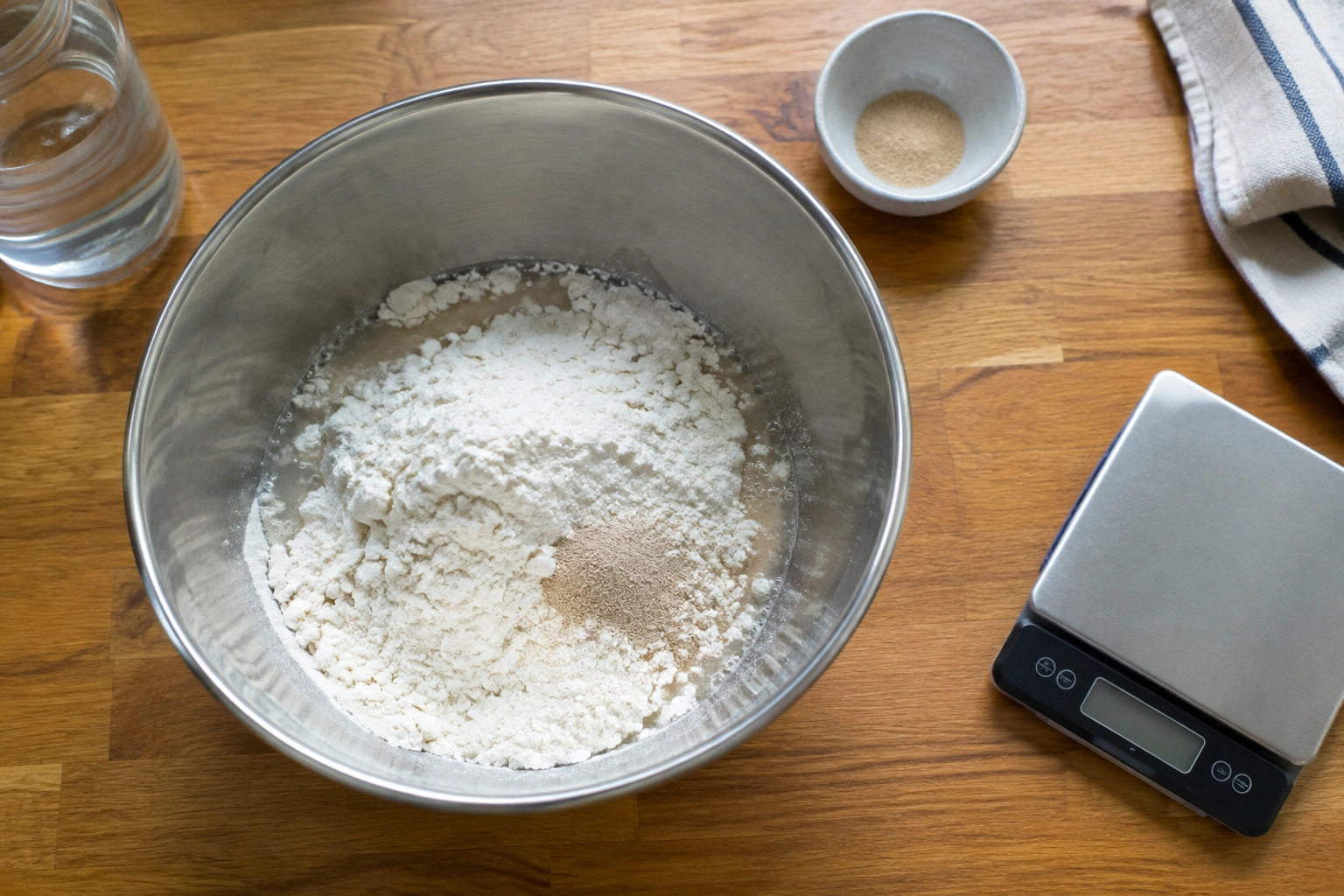
I like poolish because it teaches a baker to read fermentation rather than rush it. You’re not just mixing ingredients; you’re building timing, flavor, and dough strength before the final mix even begins.
What Poolish Is and Why Bakers Use It
Poolish is a wet preferment made from equal weights of flour and water plus a small amount of yeast. In baker’s terms, that means 100% hydration. The mixture ferments before it goes into the final dough, which gives the yeast and enzymes time to work on the flour ahead of the main mix.
That matters for two reasons.
First, flavor. A fermented preferment usually brings a fuller, slightly nutty or mildly sweet depth that direct dough often lacks.
Second, dough behavior. Poolish can make dough feel more extensible, meaning it stretches more easily. That is useful in pizza dough and in breads where you want good oven spring and a less tight crumb.
If you want a broader foundation in mixing and dough development, this guide pairs well with our beginner bread dough walkthrough.
What You Need to Make Poolish
You only need a few basics:
- Flour
- Water
- Yeast
- A mixing bowl or container
- A cover, such as a lid, plastic wrap, or a clean towel
A scale is the most reliable tool here. Poolish is simple, but it is much easier to control by weight than by volume. The reason is straightforward: flour can pack differently from scoop to scoop, and preferments are sensitive to small changes.
For the container, choose something with room for expansion. Poolish should be able to rise and bubble without spilling over. A container that is at least three times the volume of the mixed ingredients is a practical choice for home use.
Poolish Ratio and Baker’s Percentage
The classic poolish formula is simple:
- Equal parts flour and water by weight
- A tiny amount of yeast
For a standard beginner poolish, a practical starting point is:
- Flour: 100%
- Water: 100%
- Instant yeast: 0.1% to 0.2% of flour
- Active dry yeast: 0.15% to 0.25% of flour
That usually works out to a very small gram range in home baking. For example, with 500 g flour in the poolish, a reasonable starting range is:
- Instant yeast: about 0.5 to 1 g
- Active dry yeast: about 0.75 to 1.25 g
The exact amount can vary with temperature and timing, but the key idea is restraint. Poolish is meant to ferment slowly enough to develop flavor without collapsing too early.
Here’s a quick decision framework:
- If you want a same-day or shorter preferment, use the higher end of the yeast range and watch it closely.
- If you want a longer fermentation, use the lower end of the range and keep the kitchen cooler if possible.
- If your kitchen is warm, reduce the yeast further or shorten the room-temperature stage.
Quick Reference Table
| Goal | Flour : Water | Yeast Approach | Timing | What to Watch For |
|---|---|---|---|---|
| Shorter preferment | 1:1 by weight | Slightly more yeast | Faster rise | Bubbling sooner than expected |
| Standard poolish | 1:1 by weight | Tiny amount of yeast | Moderate fermentation | Domed top, bubbly surface |
| Warm kitchen | 1:1 by weight | Less yeast | Faster than usual | Peak arrives early |
| Cool kitchen | 1:1 by weight | Standard or slightly more yeast | Slower fermentation | Needs extra time to show bubbles |
Because yeast activity changes with temperature, time alone is never enough. The same formula can behave very differently in a cool apartment versus a warm kitchen.
Choosing Flour and Yeast for Your Kitchen Conditions
Flour: Bread Flour or All-Purpose?
Bread flour is the safer choice if you want stronger dough and more structure in the final loaf. Its higher protein content usually gives the dough more strength to hold gas during fermentation and baking.
All-purpose flour can still work well, especially for home bakers making sandwich bread or pizza dough. The trade-off is that it may produce a slightly less elastic dough and a softer structure.
A simple rule:
- Choose bread flour when you want more strength and chew.
- Choose all-purpose flour when you want a softer dough or that is what your recipe uses already.
Yeast: Instant or Active Dry?
Both can work in poolish.
Instant yeast is convenient because it disperses easily and is designed to be mixed directly into the flour and water. Active dry yeast can also be used, but it may need a little more patience to dissolve evenly.
If you are deciding between them, think practicality:
- Instant yeast is simpler and more predictable for most home bakers.
- Active dry yeast is fine if that is what you keep on hand, but mix carefully so it is distributed evenly.
The most important point is not the brand or format. It is using a very small amount so the preferment ferments gradually instead of racing to collapse.
How to Make Poolish Step by Step
Here is a clean, beginner-friendly method.
-
Weigh your ingredients.
Use equal weights of flour and water. Add only a tiny amount of yeast. -
Combine the flour, water, and yeast.
Mix until the flour is fully incorporated and the mixture looks smooth. You are not kneading here; you are just making a uniform preferment. -
Transfer to a clean container.
Leave enough headroom for expansion. A bowl that is too small can overflow as the poolish rises. -
Cover the container.
Use a lid, plastic wrap, or another cover that keeps the surface from drying out while still allowing you to monitor the mixture. -
Let it ferment.
Leave it at room temperature until it becomes bubbly and shows signs of life. -
Bring it back to room temperature if chilled.
If the poolish has been refrigerated, let it warm up before mixing it into the final dough. -
Mix it into the main dough.
Add it with the rest of the ingredients and mix until combined. Then let the dough rest if your recipe calls for it.
That rest is useful because it gives the flour time to hydrate and makes the dough easier to develop afterward.
How Long Poolish Should Ferment
There is no single clock setting that works in every kitchen. Temperature changes everything.
A practical home-baking range is:
- Cool kitchen (about 65°F to 68°F / 18°C to 20°C): often 12 to 16 hours
- Average kitchen (about 69°F to 72°F / 21°C to 22°C): often 8 to 12 hours
- Warm kitchen (about 73°F to 78°F / 23°C to 26°C): often 4 to 8 hours
These are working windows, not hard rules. A warmer room speeds things up; a cooler room slows them down.
Simple Rule for Refrigerating Poolish
If your kitchen is warm and the poolish is moving too fast, refrigerate it after it has started to show clear fermentation activity, or use less yeast from the start. If you need to delay baking, refrigeration is a good way to slow things down once the poolish is underway.
A practical approach is:
- Cool kitchen: usually leave it at room temperature
- Average kitchen: room temperature is often enough, but refrigerate if your schedule needs a delay
- Warm kitchen: shorten the room-temperature stage and refrigerate sooner if it is getting close to peak
The trade-off is convenience versus immediacy. Cold fermentation buys flexibility, but you still need to watch the preferment before and after chilling.
How to Tell When Poolish Is Ready
This is the part that matters most. Time is a guide; appearance is the real test.
A ready poolish usually shows these signs:
- The surface is covered with bubbles
- The top is domed or just starting to flatten at the very center
- The mixture looks aerated and alive, not dense
- The aroma is pleasantly yeasty, mildly sweet, or lightly fruity
- The surface may look slightly glossy and full of gas
The best peak is usually when the poolish is at or just before its highest rise: bubbly across the top, domed in the center, and still holding structure.
Signs of Slightly Overripe Poolish
A slightly overripe poolish may still be usable. It often looks like this:
- The dome has started to flatten
- A few bubbles may be popping at the surface
- The aroma is stronger and more alcoholic
- The mixture still has some structure, but it looks less springy
Signs of Fully Collapsed Poolish
A fully collapsed poolish has gone past peak:
- The center has sunk noticeably
- The surface looks deflated or wrinkled
- The mixture may look loose, thin, and exhausted
- The smell can turn sharply alcoholic or overly sour
At that point, it may still work in some doughs, but it will usually contribute less strength and can make the final dough harder to manage.
That is why visual judgment matters so much. A baker who waits only for the clock can miss peak readiness entirely.
Common Mistakes to Avoid
A few mistakes show up again and again.
Using Too Much Yeast
This is the fastest way to lose control of the fermentation. Too much yeast can make the poolish peak early and then collapse before you are ready to mix.
Choosing a Container That Is Too Small
Poolish expands. If the bowl is cramped, it can spill over and make a mess before you even notice.
Ignoring Temperature
A warm kitchen can cut your usable window dramatically. If your room is hot, reduce the yeast or shorten the fermentation time.
Relying on the Clock Alone
The same formula may be ready at very different times depending on the room, the flour, and the yeast. Bubbles, aroma, and surface shape tell you more than a timer does.

Forgetting the Water Already in the Poolish
When you add poolish to the final dough, count its flour and water as part of the recipe. If you ignore that, your dough hydration can creep higher than intended.
Troubleshooting Underfermented, Overfermented, or Collapsed Poolish
If It Looks Underfermented
Underfermented poolish is usually still dense, with few bubbles and little aroma. If you have time, give it more fermentation. If your schedule is fixed, you can still use it, but expect less flavor development.
If It Looks Overfermented
If the poolish has peaked and started to fall, decide how far gone it is.
- Slightly overripe: often still usable, especially in pizza dough
- Clearly collapsed and very loose: use with caution
- Mold, odd discoloration, or a rotten smell: discard it
If It Is Too Loose or Weak
That usually points to too much fermentation, too much yeast, or a very warm environment. Next time, reduce the yeast and check earlier.
A practical baker’s rule: when in doubt, trust the smell and structure. Clean, bready, lightly sweet aromas are encouraging. Sour, rotten, or unpleasant smells are not.
How to Use Poolish in Bread and Pizza Dough
Poolish goes into the final dough as part of the liquid and flour base, not as a topping or add-on. The main thing to remember is that the poolish already contains flour and water, so you need to subtract those amounts from the final dough formula.
How to Adjust the Final Dough
Use this simple formula:
- Total flour in final dough = total flour desired – flour already in poolish
- Total water in final dough = total water desired – water already in poolish
- Yeast in final dough = adjust downward if the poolish used enough yeast to do most of the work
For many home formulas, the poolish supplies the pre-fermented flour and water, while the final mix supplies the remaining flour, water, salt, and any extra yeast needed for the schedule.
Worked Example: 500 g Flour Batch
Let’s say you want a dough based on 500 g total flour and you want to use a poolish made with half of that flour.
Poolish
– Flour: 250 g
– Water: 250 g
– Instant yeast: 0.5 to 1 g
or active dry yeast: 0.75 to 1.25 g
Final dough
– Remaining flour: 250 g
– Remaining water: whatever amount your total formula calls for after subtracting the 250 g already in the poolish
– Salt: according to your recipe
– Additional yeast: often none, or only a very small amount if your schedule needs it
For example, if your final dough target is 500 g flour at 70% hydration, your total water would be 350 g. Since the poolish already contains 250 g water, you would add 100 g water in the final mix, plus the remaining 250 g flour and your salt.
That is the key adjustment: the poolish is not extra dough. It is part of the dough formula.
What Poolish Changes in the Final Dough
The effects are usually most noticeable in two areas:
- Handling: the dough may stretch more easily
- Finished bread: the crumb may be more open, and the crust can brown well
For pizza dough, that extra extensibility is especially useful. It helps the dough stretch without snapping back so aggressively. For bread, it can support a lighter texture and more complex flavor.
A useful comparison: direct dough is faster and simpler, but poolish gives you another layer of fermentation control and flavor development. You trade speed for depth and better dough behavior.
Practical Examples and Scaling Guides
Small Home Batch
If you are making one loaf or a small pizza batch, keep the poolish modest. That makes it easier to judge fermentation and reduces waste if you are still learning.
Overnight Schedule
A practical home schedule is to mix the poolish in the evening, let it ferment at room temperature until it shows clear activity, and refrigerate it if your recipe or timing calls for a longer delay. That gives you a better chance of baking the next day without rushing.
Scaling by Baker’s Percentage
If you want to scale poolish for a larger batch, keep the flour and water equal by weight and scale the yeast carefully. The flour and water determine the size of the preferment; the yeast determines the pace.
A simple scaling rule:
- Double the flour and water to double the poolish
- Keep yeast very small relative to flour
- Adjust for room temperature rather than blindly copying the same yeast amount every time
That last point is where many bakers improve quickly. A formula is only half the job; fermentation management is the other half.
Poolish vs Biga, Sourdough Starter, and Direct Dough
Poolish vs Biga
Poolish is wet and equal parts flour and water. Biga is usually stiffer. The wetter nature of poolish makes it easier to mix and often gives a more extensible dough, while biga tends to behave more firmly.
Poolish vs Sourdough Starter
Sourdough starter relies on wild yeast and bacteria. Poolish uses commercial yeast. That means poolish is usually simpler and more predictable for a beginner, while sourdough brings more complexity and maintenance.
Poolish vs Direct Dough
Direct dough is mixed and fermented all at once. Poolish adds a separate fermentation stage. The extra step takes planning, but it gives you more flavor development and often better dough handling.
If you want to read more about fermentation styles and bread handling, our bread dough basics guide is a helpful companion.
Frequently Asked Questions
Can I make poolish the night before?
Yes. That is one of the most common ways to use it. Just keep an eye on room temperature so it does not peak too early.
Do I need to cover poolish airtight?
A cover is important so the surface does not dry out. Some bakers use an airtight container, while others use a loose cover. The key is preventing a skin from forming while still allowing you to monitor fermentation.
Should poolish be mixed until completely smooth?
Mix it until the flour is fully incorporated and the mixture looks uniform. You are not kneading it, but you do want no dry flour left behind.
Can I use poolish for both bread and pizza?
Yes. Poolish is common in both. In pizza dough, it often helps with stretch and browning. In bread, it can support flavor and a more open crumb.
What if my kitchen is very warm?
Use less yeast, shorten the room-temperature stage, and check the poolish earlier. Warm kitchens can move fermentation along much faster than you expect.
When should I refrigerate poolish?
Refrigerate it if your kitchen is warm, if the poolish is moving too quickly, or if you need to delay baking. A short room-temperature start followed by refrigeration is a practical way to slow fermentation.
What should ready poolish smell like?
It should smell pleasantly yeasty, mildly sweet, or lightly fruity. If it smells rotten or looks discolored, discard it.
Poolish is one of those techniques that rewards careful observation. Once you learn to read the bubbles, the aroma, and the surface, you stop guessing and start baking with more control. That is where the real improvement happens.