
How to Preheat an Air Fryer for Baking: A Practical Guide for Better Results
If you bake in an air fryer, preheating is usually worth doing. It helps the appliance reach the right temperature before the batter, dough, or pastry goes in, which gives you more consistent rise, better browning, and fewer surprises in the middle of the bake.
The short version: preheat your air fryer for baking when the recipe says to, when you want the most reliable results, or when you’re baking something that benefits from an immediate burst of heat. That includes many muffins, cookies, hand pies, small cakes, and pastries.
For a broader foundation on oven setup, you may also find this guide useful: how to preheat an oven properly for baking.
Quick Answer: Do You Need to Preheat an Air Fryer for Baking?
Most of the time, yes.
Air fryers heat quickly, but “quickly” is not the same as “ready.” If you place batter or dough into a cold basket or tray, the first few minutes of baking happen under changing conditions. That can affect lift, texture, and how evenly the outside sets.
Preheating matters most when:
- the recipe specifically says to preheat
- you’re baking something delicate or small, such as cookies or muffins
- you want a more even start on the bake
- you’re using a recipe developed for a preheated appliance
You can sometimes skip preheating for very forgiving bakes, but the trade-off is less consistency. For most baking, preheating is the safer habit, though some recipes and forgiving bakes can work without it if you’re willing to accept a less consistent result.
How Air Fryer Preheating Differs from Oven Preheating
An air fryer is not just a small oven. It behaves differently enough that old oven habits can mislead you.
A conventional oven usually takes longer to reach temperature and often needs a longer stabilization period. An air fryer generally comes up to heat faster, so the preheat window is shorter. That sounds convenient, but it also means you can overshoot the mark if you leave it running too long before adding the food.
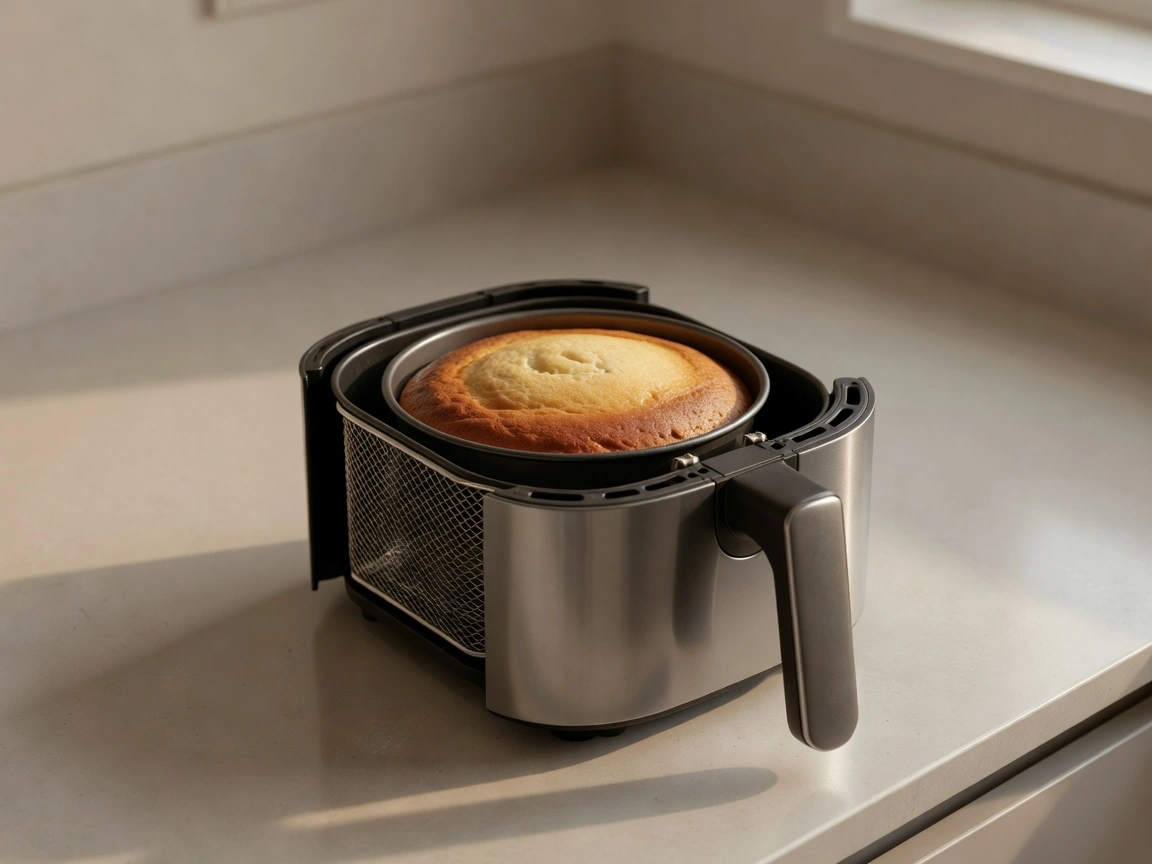
There’s another difference: air fryers circulate heat aggressively. That can brown the top or edges of baked goods faster than a standard oven, especially in smaller batches. So if you preheat an air fryer and then use a recipe written for a conventional oven without adjustment, the bake may finish sooner than expected.
For baking, the practical takeaway is simple: use the recipe’s air fryer guidance first, and don’t assume oven timing transfers exactly.
When to Preheat and When You Can Skip It
Use preheating when you want predictability. Skip it only when the recipe or the bake itself makes that trade-off acceptable.
Preheat when:
- the recipe instructs you to
- you’re baking muffins, cupcakes, cookies, or small cakes
- the batter needs a quick set for lift and shape
- you want more even browning from the first minute
Consider skipping preheat when:
- you’re doing a test batch and want to compare results
- the recipe is very flexible and doesn’t rely on immediate heat
- you’re baking something that tolerates a slower start
A good example is a small batch of cookies. If you preheat, the edges begin setting sooner, which can help them hold shape. If you skip it, the dough may spread differently because the first minutes are spent warming the appliance rather than baking the cookies.
That doesn’t make one method “wrong.” It just changes the result.
How to Preheat an Air Fryer for Baking Step by Step
The exact buttons vary by model, but the process is usually straightforward.
1) Check the recipe first
If the recipe gives a temperature and preheat instruction, follow that before anything else. Many air fryer baking recipes assume the appliance is already hot.
2) Set the temperature
Use the temperature called for in the recipe, unless the recipe specifically tells you to preheat differently. In most cases, the air fryer should be preheated to the same temperature you plan to bake at.
3) Choose the right accessory setup
Decide whether your bake uses the basket, tray, or rack. If the recipe calls for a pan, loaf tin, or silicone cup, set that up the way you’ll bake it so the preheat reflects real conditions.
4) Preheat only as long as needed
Stop when the appliance signals readiness, or when the preheat time recommended by the manufacturer is complete. If there’s no model-specific signal or guidance, a practical default is usually about 3 to 5 minutes for basket-style air fryers and 5 to 8 minutes for oven-style air fryers. Don’t let it run far beyond that unless the recipe specifically needs a longer heat soak.
5) Add the batter or dough promptly
Once the air fryer is ready, load your baked goods quickly. The goal is to preserve that stable starting temperature.
6) Begin checking early
Air fryer baking often finishes sooner than expected. Start checking for doneness before the recipe’s final time if you’re using a new model.
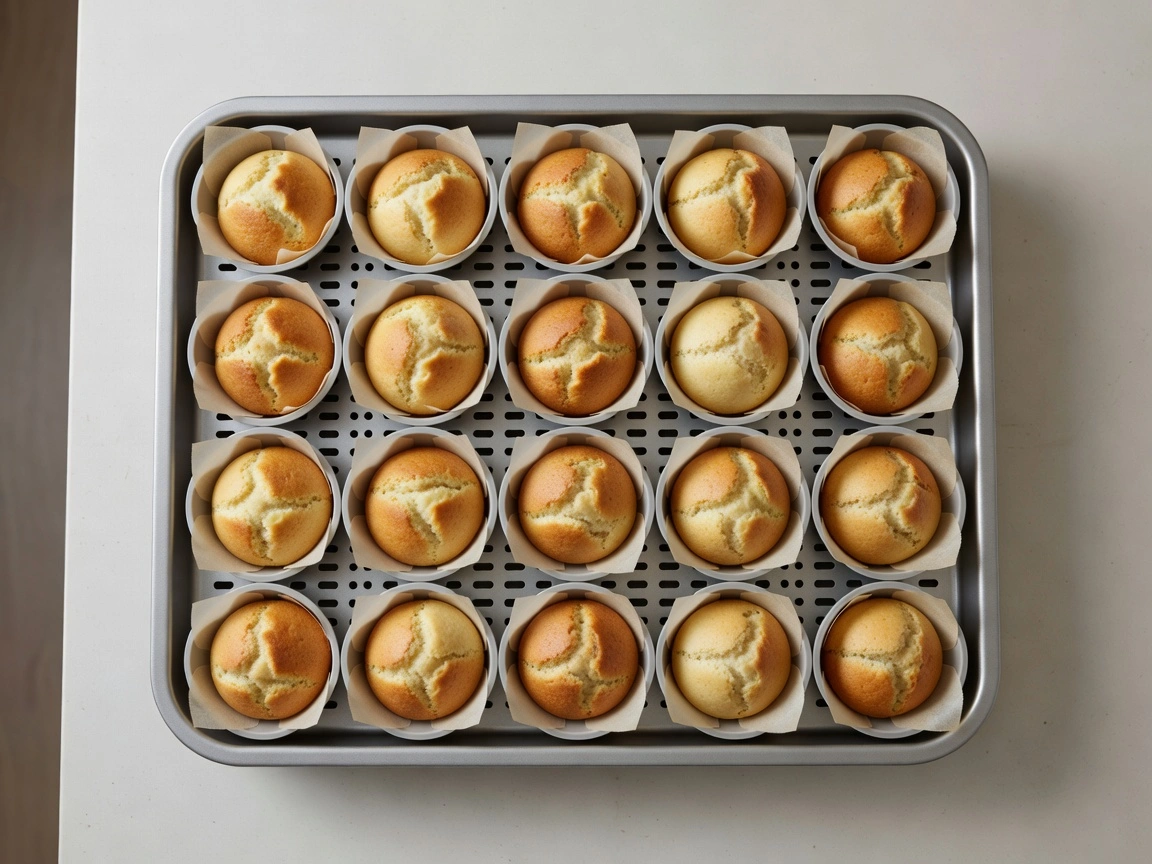
A practical example: if you’re baking muffins in silicone cups, preheat the air fryer with the rack or basket setup you’ll actually use. Then place the filled cups in as soon as the preheat cycle ends. That gives the batter the best chance to rise evenly.
What Temperature to Preheat an Air Fryer to for Baking
In most cases, preheat to the same temperature the recipe uses for baking. That is the cleanest rule to follow when the recipe is already written for an air fryer.
If you’re adapting a conventional oven recipe, use this simple rule of thumb: start by lowering the oven temperature by about 25°F when converting to an air fryer. For example, a 350°F oven recipe would usually start around 325°F in an air fryer. That’s a starting point, not a guarantee, so check early and adjust based on your model and the recipe.
Practical temperature guidance
- Cookies and muffins: usually preheat to the recipe’s air fryer baking temperature
- Small cakes and loaf-style bakes: preheat to the recipe’s stated temperature, then check early
- Pastries: follow the recipe closely, since browning can happen fast
If the recipe is written for a conventional oven and gives no air fryer instructions, treat it as a starting point rather than a direct translation. A modest temperature reduction is often more useful than trying to force a standard oven setting to behave the same way in an air fryer.
How Long It Takes to Preheat Different Air Fryer Types
Preheat time depends on the model, size, and whether you’re using a basket-style or oven-style unit. Manufacturers differ, so the best answer is always the manual. Still, the practical difference between the two main styles is worth understanding.
| Air fryer type | Preheat behavior | Practical note for baking |
|---|---|---|
| Basket-style air fryer | Usually heats quickly and reaches baking temperature fast | Good for small batches; watch for faster browning |
| Oven-style air fryer | Often takes a bit longer to feel fully ready | Better for multiple trays or more room to arrange pans |
Basket-style units usually feel “ready” sooner, but that does not mean they are identical from model to model. Oven-style air fryers may take a little longer to stabilize, especially if you’re preheating with racks or pans inside. As a simple default, expect roughly 3 to 5 minutes for basket-style units and 5 to 8 minutes for oven-style units unless your manual says otherwise.
If your appliance has a preheat function, use it as the manufacturer intended. If it doesn’t, set the temperature and let it run until it signals readiness or reaches the recommended preheat window in the manual.
Should You Preheat with the Basket, Tray, or Rack Inside?
Usually, yes — if those accessories are part of the baking setup.
Preheating with the basket, tray, or rack inside helps the whole baking environment come up to temperature together. That can improve consistency, especially for small cakes or pastries that benefit from a hot surface under the pan.
There are trade-offs:
- Preheating with accessories inside can take slightly longer
- Preheating empty may be faster, but the food may not meet the same hot surface condition when it goes in
For baking, I usually favor preheating with the setup you’ll actually use, unless the manufacturer warns otherwise. That includes a cake pan, rack, or basket insert if those are part of the recipe.
One caution: if you use parchment paper, make sure it does not block airflow or touch the heating element. Parchment is helpful, but it should support the bake rather than interfere with circulation.
How to Tell When the Air Fryer Is Fully Preheated
Different models signal readiness in different ways. Some beep, some display “preheat,” some show a light, and some simply count down until the set temperature is reached.
Look for one or more of these signs:
- the indicator light changes
- the unit beeps
- the display shows a ready message
- the preheat timer ends
- the basket or rack feels hot to the touch at a safe distance
If your model doesn’t have a clear signal, follow the manufacturer’s instructions rather than guessing. That matters more than trying to judge by feel alone.
A useful habit is to keep the food ready before the preheat cycle ends. Once the air fryer is hot, you want to move quickly so the temperature doesn’t drop too much before the bake begins.
How Preheating Affects Bake Time, Browning, and Doneness
Preheating usually improves consistency, but it can also shorten the effective baking window. That’s the part beginners often miss.
When the air fryer starts hot, the food begins baking immediately. That means:
– the exterior sets sooner
– browning can happen faster
– the center may finish sooner than a cold-start bake
For that reason, don’t treat the recipe’s bake time as a fixed finish line. Instead, use it as a guide and start checking early, especially with cookies, muffins, and smaller cakes.
If you skip preheating, you may need a little extra time. But that extra time is not always an advantage. Sometimes it simply means uneven texture or weaker rise. So the choice is less about “saving time” and more about controlling the bake.
Common Mistakes When Preheating an Air Fryer for Baking
A few small errors cause most of the trouble.
1) Using oven timing without adjustment
An air fryer often bakes faster than a conventional oven. If you preheat and then follow oven timing exactly, the outside may finish before the center does.
2) Preheating too long
Leaving the appliance running far past readiness can make delicate bakes overbrown once they go in. This is especially relevant for cookies and pastries.
3) Ignoring the recipe’s setup
If the recipe assumes a pan, rack, or liner, changing that setup can alter airflow and heat exposure.
4) Overcrowding the basket or tray
Air needs room to move. If the surface is packed, the bake may look done on top while staying underdone underneath.
5) Using parchment carelessly
Parchment is useful, but it should not block circulation or contact the heating element. For baking, keep it trimmed to the food or pan size.
Troubleshooting: What to Do If Baked Goods Turn Out Uneven or Underdone
If the result is uneven, don’t assume the recipe failed. Preheating and setup are often the first things to check.
If the top browns too quickly
Lower the temperature slightly next time and check earlier. The air fryer may be running hotter than the recipe expected.
If the center is underdone
Try a longer preheat, a slightly smaller pan, or a lower rack position if your model allows it. Also check whether the basket or tray was overcrowded.
If the edges are done but the middle lags
That usually points to too much heat on the outside or a pan that is too deep for the batch size. A more even preheat and a different pan can help.
If results vary from batch to batch
Make sure each batch starts with the same preheat routine. In air fryer baking, consistency matters more than people expect. A cold start one time and a fully preheated start the next can produce noticeably different textures.
Simple Preheating Rules to Remember
If you want a reliable shortcut, use these rules:
- Preheat when the recipe says to preheat.
- For most baking, preheating is the safer choice, but some forgiving recipes can work without it if you accept less consistency.
- For baking, use the recipe’s temperature unless it gives a different air fryer setting.
- If you’re adapting a conventional oven recipe, start by lowering the temperature by about 25°F.
- Match the preheat setup to the bake: basket, tray, rack, or pan.
- Start checking early, because air fryer baking often finishes faster than conventional oven baking.
- Don’t overcrowd the cooking space.
- If the result is uneven, review preheat timing before changing the recipe.
For home bakers, the goal is not to make the air fryer behave exactly like an oven. It’s to understand how this appliance starts, holds, and moves heat so your cakes, cookies, muffins, and pastries bake with less guesswork.
FAQ
Do all air fryers need to be preheated for baking?
No. Some models and some recipes can work without preheating, especially if the bake is forgiving. But for most baking, preheating is recommended because it usually gives more consistent results.
How long should I preheat an air fryer for baking?
If your manual doesn’t give a model-specific time, a simple default is about 3 to 5 minutes for basket-style air fryers and 5 to 8 minutes for oven-style air fryers.
What temperature should I use when converting an oven recipe to an air fryer?
A practical starting point is to reduce the oven temperature by about 25°F, then check early and adjust as needed for your model and recipe.
Can I skip preheating for cookies or muffins?
You can, but the results may be less consistent. Preheating is usually better for cookies, muffins, cupcakes, and other baked goods that benefit from an immediate burst of heat.
Should I preheat with the pan or rack inside?
Usually yes, if that accessory is part of the baking setup. Preheating with the actual bake setup helps the whole system heat more evenly.

