
How to Keep Dough from Sticking to a Rolling Pin Without Ruining the Texture

If dough is sticking to your rolling pin, the problem usually isn’t one single thing. It’s often a mix of dough temperature, moisture level, and how you’re rolling. The fix is usually simple, but the best fix depends on the dough.
For busy home cooks, the goal is not just “make it stop sticking.” It’s to roll the dough cleanly without adding so much flour that the final bake turns dry, tough, or crumbly. That means choosing the lightest method that solves the problem.
Why Dough Sticks to a Rolling Pin
Dough sticks when its surface is soft enough to grab onto the pin. That happens for a few common reasons:
- The dough is too warm. Fat softens as dough warms, which makes the surface tackier and easier to smear.
- The dough has higher moisture. Wetter doughs naturally cling more.
- The dough is under-chilled. If the dough hasn’t rested enough, it may be soft and sticky instead of firm and manageable.
- The dough type is delicate. Pie dough and some cookie doughs are more prone to sticking than sturdier pizza dough.
- The surface is rough or dusty in the wrong way. A sticky pin or work surface can grab dough as you roll.
A useful way to think about it: if the dough is sticking immediately, the issue is usually temperature or hydration. If it starts sticking after a few passes, the dough is often warming up as you work.
Best Ways to Prevent Sticking Before You Start Rolling
The easiest way to avoid a sticky rolling pin is to prepare the dough before you touch the pin.
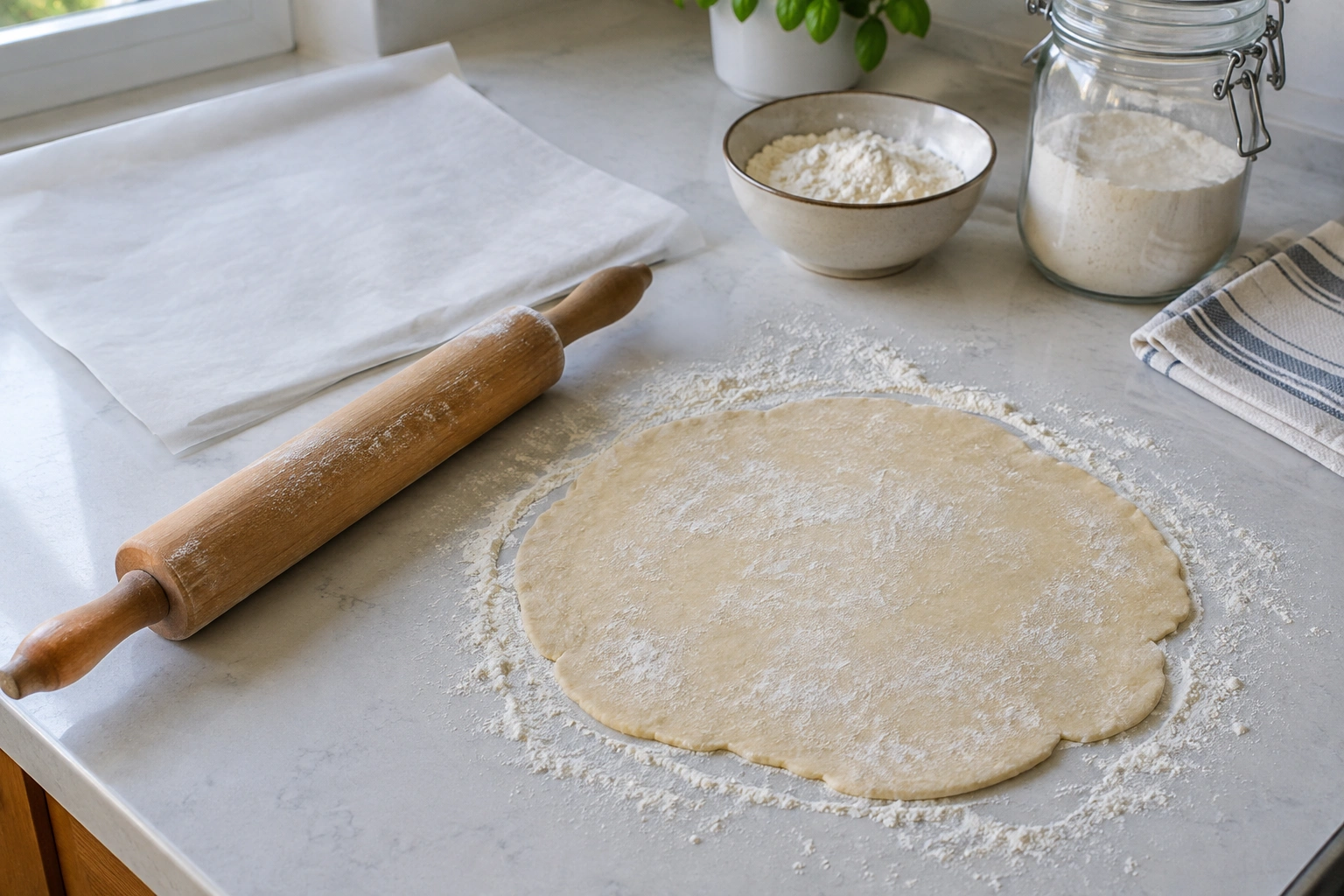
Use chilled dough when the recipe allows it
Cold dough is firmer and easier to handle. That matters because a firm dough resists smearing and tearing. If your dough feels soft or begins to slump as soon as it leaves the bowl, chill it before rolling.
Keep the work surface smooth and dry
A clean, dry counter gives the dough less opportunity to drag and tear. If the surface is damp or floury in patches, the dough can catch unevenly. That creates sticking in one spot and over-rolling in another.
Lightly dust before you begin
A small amount of flour on the counter and dough surface can help, especially for pie crust, pizza dough, and other doughs that tolerate a little extra flour. The key word is lightly. You want just enough to reduce friction, not enough to change the dough’s texture.
For small batches, start with a pinch or about a teaspoon of flour on the work surface, then add only a little more if needed. For a larger counter area or a bigger dough round, use a light, even dusting rather than a heavy pile of flour.
Should You Flour the Dough, the Rolling Pin, or Both?
For most home bakers, flouring the dough and work surface matters more than heavily flouring the rolling pin itself.
Here’s the practical rule:
- If the dough is only slightly tacky: dust the counter lightly and give the dough a very thin flour coating.
- If the dough is sticking to the pin: add a little flour to the dough surface and the pin, then reassess.
- If the dough is delicate: use the smallest amount of flour possible and consider parchment instead.
The rolling pin doesn’t need to look white with flour. Too much flour on the pin can leave dry patches and make the dough harder to shape evenly. A thin dusting is usually enough to reduce grabbing.
Before folding or re-rolling, brush off any excess flour so it doesn’t build up in layers. That helps keep the dough from becoming dry or patchy.
When flour helps most
Flour works best when the dough is close to the right texture but just a bit sticky. It’s a friction reducer, not a rescue plan for very soft dough.
When flour is the wrong fix
If you keep adding flour every few passes, the dough may become dry, stiff, or tough. That is especially risky with pie crust, where tenderness matters.
Flour vs. Parchment Paper vs. Silicone Mat
Different anti-stick methods solve different problems. This comparison can help you choose quickly.
| Method | Best for | Trade-off | Good choice when… |
|---|---|---|---|
| Light flour dusting | Pizza dough, sturdier doughs, quick rolling | Too much can dry dough out | You want the simplest fix and the dough is only mildly sticky |
| Parchment paper | Pie crust, cookie dough, delicate doughs | Can slide if not anchored well | You want to avoid adding flour and keep dough tender |
| Silicone baking mat | Repeated rolling, stable work surface | Less flexible than parchment | You want a nonstick surface that stays put |
| Plastic wrap | Very soft doughs or small batches | Can bunch if handled carelessly | The dough is too soft to roll directly |
For many delicate doughs, parchment paper is the most forgiving option because it reduces sticking without forcing you to add more flour.
How Rolling Pin Material Affects Sticking
The material of the rolling pin can make a difference, especially if your dough is warm or delicate.
Wooden rolling pins
Wooden pins are common and easy to control. They’re not naturally nonstick, but they give many bakers a comfortable grip and predictable pressure. If the dough is properly chilled and lightly floured, a wooden pin works well for most home baking.
Marble rolling pins
Marble stays cooler than wood, which can help with sticky dough. That cooler surface may reduce smearing, especially if your kitchen is warm. The trade-off is weight: a marble pin can feel heavy and less comfortable for some people.
Stainless steel rolling pins
Stainless steel can also stay cool and smooth. That can help with sticky doughs, but the pin may feel slick or heavy depending on the design. Some bakers like the cool surface; others prefer the control of wood.
What matters most
Material helps, but it won’t fix a dough that is too warm or too wet. If the dough is already sticky, a cooler pin can help, but chilling the dough usually matters more than changing the tool.
Rolling Technique That Reduces Sticking and Tearing
A lot of sticking problems come from technique, not just ingredients.
Roll from the center outward
Press from the middle toward the edges with even pressure. This helps the dough expand evenly instead of stretching and sticking in one weak spot.
Turn the dough as you go
Rotate the dough every few passes. That prevents one side from staying in contact with the counter or pin too long, which is where sticking often starts.
Use light pressure
Heavy pressure presses dough into the surface and increases friction. Light, even strokes are less likely to tear the dough or force it to cling to the pin.
What to Do When Dough Is Already Sticking
If dough is already stuck to the rolling pin, don’t keep grinding through it. That usually makes the damage worse.
Use this reset method:
- Lift the pin gently.
- Dust the dough surface very lightly.
- Dust the pin only where it’s actually sticking.
- Resume with lighter pressure.
If the dough tears, that’s a sign to stop and reset rather than push harder.
Best Approach by Dough Type
Pie crust
Pie dough is usually the most sensitive to over-flouring. Since tenderness matters, parchment paper or a very light flour dusting is usually the safest approach.
Cookie dough
Cookie dough can vary a lot. Some doughs roll cleanly with a light dusting, but softer cookie doughs do better between two sheets of parchment. That keeps the dough from picking up too much flour and helps preserve texture.
Pizza dough
Pizza dough is usually more forgiving. A light flour dusting on the counter and pin often works well. If it keeps bouncing back or sticking, let it rest a few minutes so the gluten relaxes and the dough becomes easier to stretch.
Common Mistakes That Make Dough Harder to Roll
A few habits make sticking worse instead of better:
- Adding flour repeatedly. This can dry out the dough and make the final bake tough.
- Rolling dough that is too warm. Warm dough smears more easily.
- Using too much pressure. Heavy rolling presses dough into the surface and pin.
- Skipping resting time. Dough that hasn’t chilled or relaxed may fight back and stick.
- Using the same method for every dough. Delicate doughs often need parchment; sturdier doughs may do fine with a light flouring.
If you remember one thing, make it this: solve the cause, not just the symptom. A sticky pin is often a sign that the dough needs to be colder, drier on the surface, or handled more gently.
Quick Decision Guide
If you want the fastest way to choose:
- Slightly sticky dough: light flour dusting
- Very soft or delicate dough: parchment paper
- Warm dough: chill first
- Sturdy dough like pizza dough: flour + light pressure
- Dough that keeps tearing: stop, chill, then roll again
That simple sequence prevents most rolling-pin problems without overcomplicating the process.
FAQ
How much flour should I use to stop dough from sticking?
Start with a very light dusting. For small batches, a pinch or about a teaspoon is often enough to begin with. Add only a little more if the dough still grabs.
Should I flour the rolling pin or the dough?
Both can help, but the work surface and dough usually matter more. Use just enough flour to reduce sticking, then brush off excess before folding or re-rolling.
Is parchment better than flour for sticky dough?
For pie crust and softer cookie doughs, parchment is often the better choice because it reduces sticking without drying out the dough.
What if my dough keeps sticking even after flouring?
Stop and chill it briefly. If dough is warm or soft, more flour usually won’t solve the problem and can hurt the texture.