
How to Get Food Off a Silicone Spatula Fast and Safely

Silicone spatulas are made for scraping, folding, and cleaning bowls efficiently, but food can still cling to them—especially batter, sugar, grease, and thick sauces. The good news is that most residue comes off with a simple routine if you act before it dries.
For busy home cooks, the goal is not a deep restoration project. It is to get the spatula clean quickly, avoid tearing the edge, and keep it ready for the next batch. In most cases, warm water, dish soap, and a non-abrasive sponge are all you need. If the residue has dried or turned sticky, a short soak usually saves more time than scrubbing.
Fastest Way to Remove Fresh Food from a Silicone Spatula
Fresh residue is the easiest to remove. If you can rinse the spatula right after use, do that first. Hold it under warm running water and wipe it with your fingers or a soft sponge. Most batters, sauces, and frosting films will loosen before they have time to set.
If the spatula only has a thin coating of food, a quick rinse may be enough. That is especially true for smooth, wet mixtures like cake batter or soup. Once the residue dries, though, it starts clinging to the flexible edge and the handle area, which means more rubbing later.
A good rule: if the spatula has been sitting for only a minute or two, rinse first and wash later. If it has been left in the sink or on the counter long enough to dry, move straight to soap and soaking.
Quick comparison table
| Residue type | Best first move | Next step if needed | Notes |
|---|---|---|---|
| Fresh batter | Warm rinse | Wash with dish soap | Usually comes off fast |
| Dried batter | Soak briefly | Gentle sponge wash | Soaking saves scrubbing |
| Sauce or gravy | Warm rinse | Dish soap wash | Grease needs soap |
| Caramel or syrup | Warm water + soap | Short soak, then wipe | Sticky sugar resists cold water |
| Dough | Scrape off excess first | Wash with soap | Letting dough dry makes cleanup harder |
| Greasy film | Warm water + degreasing soap | Repeat wash if needed | Odor often follows grease |
How to Clean a Silicone Spatula by Hand
Hand-washing gives you the most control, which helps when the residue is sticky or uneven. It also lets you check the edge and the seam where food can hide in.
Use this simple method:
- Rinse off any loose food.
- Add a small amount of dish soap to warm water.
- Wash the spatula with a non-abrasive sponge or soft cloth.
- Pay attention to the tip, edges, and any groove near the handle.
- Rinse well so no soap film remains.
- Dry it fully with a clean towel or let it air dry.
Warm water is usually enough for routine cleanup. Very hot water is not necessary for most food residue, and it can be a poor choice if the spatula has a handle insert or another part that is less heat-resistant than the silicone head.
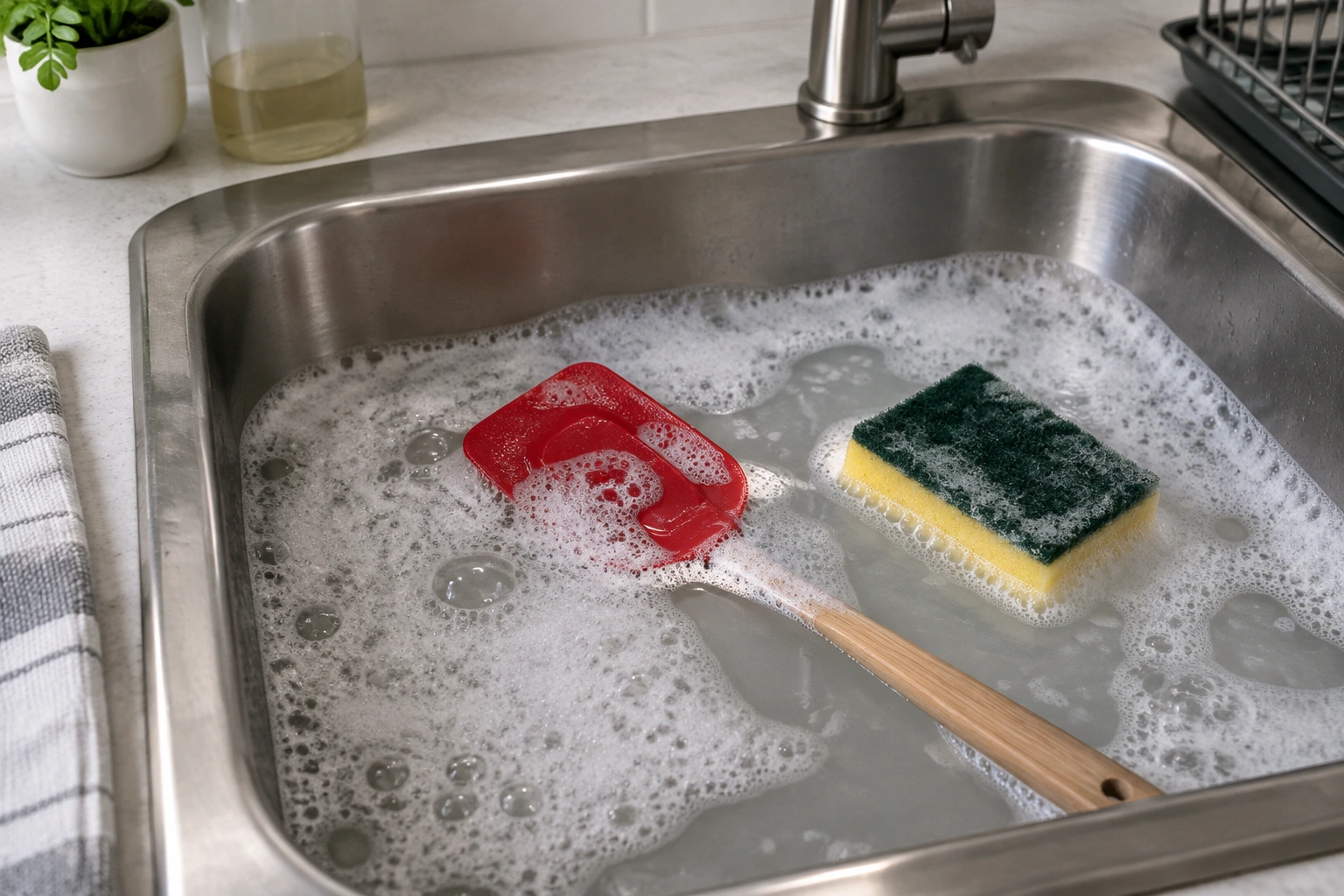
For greasy foods, soap matters more than water temperature. Dish soap breaks up the oily film that plain rinsing leaves behind. If the spatula still feels slick after one wash, repeat the soap step rather than scrubbing harder.
When to Soak Instead of Rinsing
Soaking is the better choice when food has dried on, hardened, or turned tacky. That includes dried batter, sticky fillings, and sugary residue that has cooled on the spatula.
Use soaking when:
- the residue does not lift with a quick rinse
- the spatula has been sitting for a while
- the food is thick, sticky, or greasy
- you need to clean several tools at once and want to reduce scrubbing time
A short soak in warm, soapy water often loosens residue enough that it wipes away with little effort. That is the practical trade-off: you spend a few extra minutes waiting, but you avoid scraping at the silicone surface.
If you are in the middle of batch cooking, soaking can be the smartest move. Drop the spatula into a bowl or sink of warm, soapy water while you finish the rest of the cleanup, then wash it at the end. That keeps dried residue from turning into a stubborn cleanup job.
How to Remove Different Types of Stuck-On Food
Different foods fail in different ways. Batter dries into a film, dough clings in lumps, sauce leaves grease, and sugar hardens into a tacky shell. Matching the cleanup method to the residue saves time.
Batter
Cake, pancake, and muffin batter usually come off easily if you rinse right away. If it has dried, soak the spatula in warm water for a few minutes, then wash with dish soap. A soft sponge is enough in most cases.
Dough
Dough is best handled in two steps. First, scrape off the excess with your fingers or the edge of another utensil. Then wash the remaining film with warm, soapy water. If you try to wash a thick lump of dough before removing the bulk, you usually just spread it around.
Sauce and gravy
Sauces often leave an oily coating even when the visible food is gone. Warm water helps, but dish soap is the real fix. Wash, rinse, and check whether the spatula still feels slick. If it does, wash it again rather than switching to a harsher scrubber.
Caramel and sticky sugar
Sticky sugar is the most annoying residue because it grips the silicone as it cools. Warm water can help, but a soak is often the faster route. Let it sit until the residue softens, then wash with soap and a non-abrasive sponge. Avoid aggressive scraping; that is how flexible edges get nicked.
Thick fillings and nut butters
These can leave both residue and grease. Wipe off as much as possible first, then wash with warm water and dish soap. If the spatula still smells oily after washing, it likely needs a second soap wash rather than a stronger cleaner.
Is a Silicone Spatula Dishwasher Safe?
Many silicone spatulas are dishwasher safe, but not all are built the same way. The safest answer is to check the manufacturer’s care guidance for your specific utensil. If the spatula is labeled dishwasher safe, the dishwasher is a convenient option for everyday cleanup.
Dishwashing works well when:
- the spatula has only normal food residue
- you want a hands-off cleanup
- the utensil is fully silicone or otherwise rated for dishwasher use
If the manufacturer allows dishwasher use, top-rack placement is usually preferred. That helps keep the utensil farther from the highest heat. Hand-washing is still the better choice when residue is thick or sticky, when the spatula has a handle insert that may not tolerate repeated high heat, or when you are not sure whether the utensil is dishwasher safe. It is also smart to check the care label before machine washing.
The trade-off is simple. The dishwasher is easier, but hand-washing gives more control over stubborn residue and lets you inspect the utensil for hidden buildup. If you are cleaning multiple tools after meal prep, a quick rinse followed by the dishwasher can be a good compromise.
For food-contact safety, Consumer Reports notes that standard food-grade silicone is regulated by the FDA and considered safe for contact with food, but it may still retain flavors or odors more than some other silicone types. That means a spatula can be safe to use and still need extra cleaning after strong foods. Consumer Reports on cleaning silicone kitchen utensils
What to Use and What to Avoid
The safest cleaning tools are the ones that remove food without damaging the silicone.
Use these
- warm water
- dish soap
- a non-abrasive sponge
- a soft cloth
- your fingers for loose residue
- a brief soak for dried-on food
Avoid these
- sharp knives or metal scrapers
- abrasive pads
- steel wool
- harsh scrubbing that can tear the edge
- unnecessary strong chemicals for routine food residue
Silicone is flexible, which is helpful during cooking but also means the edge can be damaged if you scrape it with something hard. Once the edge is nicked, food can cling there more easily, and cleanup becomes harder over time.
If a bit of residue remains after the first wash, do not jump straight to a rough scrubber. A second wash or short soak is usually safer and more effective.
How to Remove Grease, Odor, and Staining
Sometimes the food is gone, but the spatula still smells like garlic, curry, or oil. That usually points to grease or odor retention, not visible residue.
For greasy smell or film, wash the spatula again with warm water and a degreasing dish soap. If the odor persists, a longer soak in warm soapy water can help. If your spatula’s care instructions allow it, some manufacturers or cleaning guides suggest optional spot treatments such as a diluted vinegar soak, baking soda paste, or hydrogen peroxide for stubborn odors or stains. These are not routine steps, and they should only be used according to the utensil’s care instructions. Consumer Reports on odor removal from silicone
For staining, the first question is whether the stain affects performance. A light discoloration from tomato sauce or spice may be cosmetic only. If the spatula is still clean, odor-free, and intact, the stain may not matter for everyday use.
If you want to try a deeper clean, some sources suggest baking soda or hydrogen peroxide for silicone stains, but those methods are best treated as occasional problem-solvers, not routine steps. Use them only when simple washing has failed and always follow the utensil’s care guidance.
How to Keep Food from Sticking Next Time
A cleaner spatula starts with better use during cooking.
These habits help:
- scrape bowls before the mixture dries
- rinse the spatula during long cooking sessions instead of waiting until the end
- use one spatula for savory foods and another for sweet or strongly flavored foods
- wash oily residue promptly so it does not build up
- dry the spatula fully before storing it
If you cook in batches, keep a small bowl of warm soapy water nearby. Dropping the spatula in right away can save you from later scrubbing, especially when you are working with sticky batters or sugary fillings.
Seamless silicone tools are also easier to keep clean because there are fewer crevices for food to hide in. That does not eliminate cleanup, but it reduces the places residue can collect.
For readers who want to compare silicone care with other kitchen tools, this guide on whether silicone containers are safe for everyday food storage and meal prep is a useful follow-up.
Quick Cleanup Checklist
If you want the shortest practical routine, use this:
- Rinse the spatula while the food is still fresh.
- Wash with warm water and dish soap.
- Use a non-abrasive sponge.
- Soak briefly if residue has dried or turned sticky.
- Rinse well and dry fully.
- If odor remains, repeat the soap wash or use an odor-removal soak only when needed.
That sequence handles most day-to-day cleanup without overcomplicating it. For busy kitchens, the goal is not perfection after every use. It is a clean, ready-to-use spatula that does not waste food, time, or effort.
FAQs
Can I just rinse a silicone spatula?
Yes, if the food is still fresh and not greasy. A warm rinse often removes thin residue quickly. If the food has dried or the spatula feels slick, use soap.
Will hot water help remove stuck-on food?
Warm water usually helps enough for routine cleanup. Very hot water is rarely necessary and may be unnecessary for tools with mixed materials. Soap and soaking matter more than extreme heat.
Why does my silicone spatula still smell after washing?
That usually means grease or odor has lingered in the material or on the surface. Wash again with a degreasing soap, then consider an odor-removal soak if needed.
Can I put a silicone spatula in the dishwasher?
If the manufacturer says it is dishwasher safe, yes. Top-rack placement is usually preferred when dishwasher use is allowed, and checking the care label first is a good idea. If it is not labeled dishwasher safe, hand-washing is the safer choice.
What is the safest way to remove caramel or sticky sugar?
Let it soften first. A short soak in warm water makes the residue easier to wipe away, and a non-abrasive sponge protects the silicone edge.
Should I replace a stained silicone spatula?
Not necessarily. Staining alone does not always mean the spatula is unusable. Replace it if the silicone is torn, worn, or no longer cleaning properly.