
How to Sift Flour Without a Sifter: Easy Kitchen Methods That Work
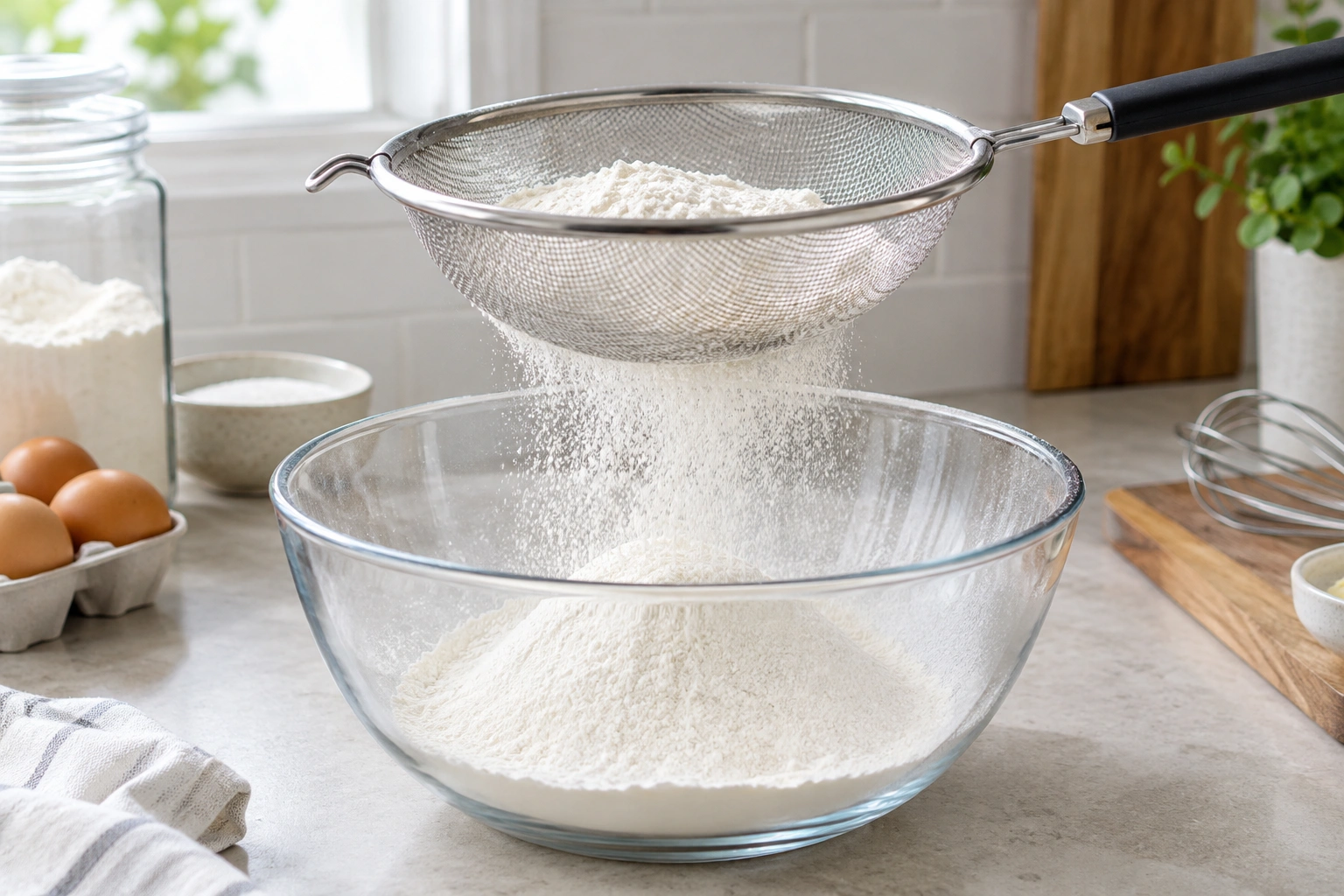
If a recipe calls for sifted flour and you do not own a sifter, the easiest fix is usually a fine-mesh strainer. Set it over a bowl, add the flour, and gently tap or shake it through. That gives you the closest home-kitchen substitute with very little fuss.
Do you need to sift all-purpose flour every time? Usually, no. If the flour is already loose and the recipe is forgiving, you can often skip it. Sift all-purpose flour when the recipe is delicate, the flour is clumpy or compacted, or the instructions specifically call for sifted dry ingredients.
If you do not have a strainer, a whisk is the next best backup for loosening compacted flour and breaking up mild clumps. A fork can work too, especially for small amounts. It is not as efficient as a strainer, but it can still help you get a lighter, more even dry mix.
Here is the short version:
- Best choice: fine-mesh strainer
- Good backup: whisk
- Last-resort simple tool: fork
If you are baking something delicate, like a cake, use the strainer method. If you are making a forgiving recipe, like many cookies or brownies, whisking the flour and dry ingredients together may be enough.
Why Flour Is Sifted in Baking
Sifting has three practical jobs in home baking:
- It breaks up clumps. Flour can compact in the bag or storage container, especially if it has been sitting a while.
- It adds air. That makes the flour feel lighter and easier to mix into batter.
- It helps dry ingredients combine evenly. This matters when flour is mixed with cocoa powder, baking powder, baking soda, or salt.
That last point is often the real reason a recipe asks for sifted flour. The goal is not just a fluffy texture; it is even distribution. If a pocket of cocoa or baking powder stays in one spot, you can end up with streaks, uneven rise, or a bitter bite.
Sifting matters most when the recipe is delicate or the texture is meant to be fine and tender. For sturdier batters and doughs, the difference is usually less dramatic.
Best Substitute Tools, Ranked
Here is the simplest way to choose based on what you have.
| Tool | Speed | Effort | Lumps removed well? | How close to a true sifter? | Best use |
|---|---|---|---|---|---|
| Fine-mesh strainer | Fast | Low | Yes | Closest | Cakes, cupcakes, cocoa mixes |
| Whisk | Fast | Very low | Somewhat | Moderate | Quick dry mixing, light aeration |
| Fork | Slower | Low | A little | Lowest | Small amounts, emergency backup |
A fine-mesh strainer is the closest stand-in for a sifter because it actually separates and loosens the flour as it passes through the mesh. It also breaks up clumps and aerates the flour, so the texture and measurement behavior are the most similar to a true sifter. A whisk is better at fluffing and combining than truly sifting, so it improves texture but does not remove clumps as completely. A fork can do the same job in a pinch, but it works best only when you are dealing with a small amount of flour or a recipe that is not especially sensitive.
How to Sift Flour with a Fine-Mesh Strainer
This is the method I recommend most often.
What you need
- A clean, dry fine-mesh strainer
- A mixing bowl
- The flour, or your dry ingredients
Step-by-step
- Place the strainer over your bowl.
- Add the flour to the strainer in small batches if needed.
- Tap the side of the strainer lightly with your hand.
- Shake it gently so the flour falls through the mesh.
- If a few clumps remain, break them up with a spoon or your fingers and sift them again.
The key is to let gravity do the work. Do not press hard with a spoon or spatula. Forcing the flour through can compact it again and defeat the purpose. If you see a clump that will not pass through, break it apart first rather than trying to push it through whole.
A fine-mesh strainer works especially well for recipes where you want a smooth batter, such as sponge cake or a light chocolate cake. It is also useful when you are combining flour with cocoa powder, which tends to form stubborn lumps.
A note on colanders
A colander is not as effective as a fine-mesh strainer because the holes are usually too large. It may be fine for a very loose, quick shake, but it will not catch small lumps the way a mesh strainer does. If you have both, use the mesh strainer.
How to Aerate Flour with a Whisk or Fork
If you do not have a strainer, a whisk can still help.
Whisk method
- Put the flour in a large bowl.
- Hold the whisk low in the bowl.
- Move it briskly through the flour in wide strokes.
- Lift and repeat until the flour looks lighter and any small clumps are gone.
This works best for loosening compacted flour and combining dry ingredients. It does not remove lumps as cleanly as a strainer, but it is a good practical workaround when you only need the flour to be lighter and evenly blended.
Fork method
A fork is a smaller, slower version of the same idea.
- Add the flour to a bowl.
- Use the tines to break up clumps.
- Fluff the flour with quick, light motions.
- Stir in the other dry ingredients until the mix looks uniform.
A fork is especially handy for small batches. Think one cup of flour for a simple cookie recipe, not a big cake batter. It is a backup, not a perfect replacement.
How to Sift Flour with Other Dry Ingredients
Often, the goal is not just flour. It is the whole dry mix.
You can sift or combine flour with:
– Cocoa powder
– Baking powder
– Baking soda
– Salt
– Powdered sugar
This is one of the best uses for a fine-mesh strainer. Add the dry ingredients together and pass them through the strainer into a bowl. That gives you a more even mixture before the wet ingredients go in.
For example, if a chocolate cake recipe calls for flour, cocoa powder, and baking powder, sifting them together helps prevent cocoa streaks and keeps the leavening evenly distributed. If you are making a quick batter and the recipe is forgiving, whisking the dry ingredients together in a bowl is often enough.
One useful rule
If the recipe has multiple dry ingredients that need even distribution, combine them first.
If the flour is very clumpy or compacted, sift it separately before mixing.
That small distinction helps you choose the right method instead of doing extra work for no benefit.
Should You Sift Before or After Measuring?
This is where many bakers get tripped up.
If a recipe says “1 cup sifted flour,” measure the flour before sifting unless the recipe specifically says otherwise. If it says “1 cup flour, sifted,” that usually means measure first, then sift.
A simple example: if you need 1 cup sifted flour, you would scoop or spoon out 1 cup of flour, then sift that measured amount. If the recipe says 1 cup flour, sifted, you measure 1 cup first and then sift it afterward. Those two phrasings are not always used perfectly by every recipe writer, so when the wording is unclear, check the context. If the recipe is very precise or delicate, follow the written order as closely as you can; if it is a casual home recipe, measuring first and then sifting is usually the safer default.
Why this matters: sifted flour takes up more space than packed flour. If you measure after sifting without adjusting, you may end up using less flour than the recipe expects.
Easy decision rule
- “1 cup sifted flour” = measure, then sift
- “1 cup flour, sifted” = measure first, then sift
- “Sift flour” without a quantity qualifier = sift the flour first, then measure it unless the recipe gives another instruction
- No wording about sifting = use the recipe’s measuring method and only sift if needed for texture or mixing
When precision matters, especially in some cakes, this distinction can affect the batter’s structure, but the impact depends on the recipe and how the flour is measured.
If you want to reduce measurement confusion in general, it also helps to use a consistent flour-to-gram conversion method. Our guide on how to convert cups of flour to grams can help when recipes are written in cups but you want more precision.
When You Can Skip Sifting
Not every recipe needs sifted flour. In fact, many do not.
You can usually skip it when:
– The recipe is forgiving, like many brownies or drop cookies
– The flour looks light and has no visible clumps
– The batter will be mixed thoroughly anyway
– Texture precision is less important than convenience
Bread dough is another example where sifting is usually unnecessary unless the recipe specifically calls for it. Bread relies more on hydration and gluten development than on a fluffy dry mix.
Cake flour and pastry flour are finer than all-purpose flour, so they often need less help breaking up clumps. All-purpose flour is the one most likely to benefit from a quick sift or whisk if it has been stored a while.
Plain answer
Do you need to sift all-purpose flour every time? No. Most of the time, you can skip it unless the recipe is delicate, the flour is clumpy, or the instructions specifically call for sifted dry ingredients.
When I would not skip it
If a recipe is meant to be very light and tender, or if it specifically says to sift the dry ingredients, do the extra step. That is especially true for cakes, sponge-style batters, and recipes with cocoa powder.
Troubleshooting Lumps, Compact Flour, and Uneven Results
If the flour is still clumpy after you try one method, check these common issues.
The flour is packed too tightly
Scoop it into a bowl and whisk it first. A packed bag of flour often needs loosening before it can be sifted well.
The strainer mesh is too coarse
A coarse strainer will let bigger lumps through. Use a fine-mesh strainer instead.
The flour is damp
If flour has picked up moisture, it may form stubborn clumps. Break them up with a spoon or discard the flour if it smells off or seems spoiled.
You are forcing it through
Pressing hard with a spoon can compact the flour again. Shake gently and let it fall through naturally.
The dry ingredients are not mixed evenly
If you are combining flour with cocoa, baking powder, or salt, whisk the mix after sifting if needed. That gives you a more uniform result than sifting alone.
Best Method by Recipe Type
Here is the practical version I use when deciding how careful to be.
Cakes and cupcakes
Use a fine-mesh strainer if you can. These batters benefit most from light, evenly distributed flour.
Cookies
Whisking is often enough unless the flour is clumpy or the recipe is especially delicate.
Brownies
You can usually skip sifting unless cocoa powder is lumpy or the recipe specifically asks for it.
Bread
Sifting is usually optional. Focus on accurate measurement and proper mixing.
Recipes with cocoa powder
Sift or strain the dry ingredients together. Cocoa lumps are common and easy to avoid with a quick pass through a mesh strainer.
FAQs
Can I use a colander instead of a sifter?
Sometimes, but it is not ideal. A colander usually has holes that are too large to catch small lumps, so a fine-mesh strainer works better.
Is whisking flour the same as sifting it?
No. Whisking can loosen flour and combine dry ingredients, but it does not separate flour through a mesh the way sifting does.
What if my flour is already soft and lump-free?
You may not need to sift it at all unless the recipe specifically says to. Many recipes work fine without that step.
Can I sift powdered sugar and cocoa powder the same way?
Yes. A fine-mesh strainer works well for both, especially if they are clumpy.
Do I measure flour before or after sifting?
Follow the recipe wording. If it says “1 cup sifted flour,” measure first, then sift. If it says “1 cup flour, sifted,” measure first and then sift the measured flour. If it simply says “sift flour,” sift first, then measure.
Will skipping sifting ruin my recipe?
Usually not. It matters most in delicate cakes and recipes where even dry ingredient distribution affects texture. For many cookies, brownies, and breads, skipping it is fine.
What is the fastest way to sift flour without a sifter?
A fine-mesh strainer over a bowl is the fastest and most reliable substitute in a home kitchen.
Can I mix all my dry ingredients before sifting?
Yes, and that is often a smart move. Flour, cocoa powder, baking powder, baking soda, and salt can be sifted or whisked together so they distribute evenly before the wet ingredients go in.

